 Everett
 Siding in Mukilteo: A Different Set of Conditions Than Inland Snohomish County
Mukilteo sits right on the water, and that changes what a home's exterior has to deal with year after year. Homes a few miles inland in Everett or Lynnwood are dealing with a lot of rain and moss, full stop. Homes in Mukilteo are dealing with rain, moss, and a steady dose of salt-laden air coming off Possession Sound and the Puget Sound shipping lanes. That combination is harder on exterior materials than either factor alone, and it's a big part of why we standardized on one siding product instead of offering a menu of options that perform differently in this environment.
We're a local Everett-based crew that works throughout Snohomish County, and Mukilteo is one of the areas where the difference between a siding job done right and a siding job done fast shows up fastest — sometimes within a couple of winters.
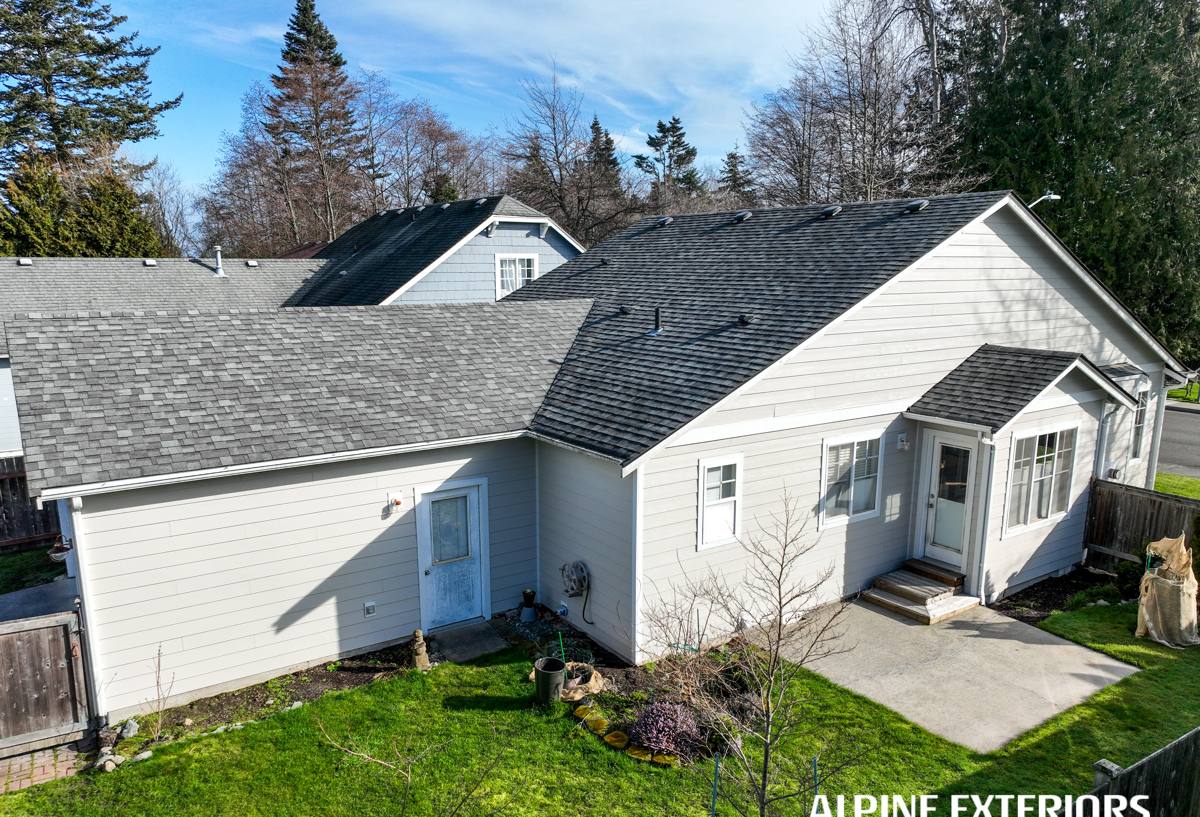
What Salt Air, Driving Rain, and Moss Actually Do to a House
Salt Air
Airborne salt doesn't just affect metal fasteners and flashing near the beach. It settles on siding surfaces, gets carried into seams and laps by wind-driven rain, and accelerates the breakdown of anything not engineered to resist it. Paint films can chalk and fade faster in salt-exposed coastal microclimates. Untreated or lower-grade wood-based products can see faster surface degradation. This is a real factor for homes with a water-facing exposure or an open line of sight to the Sound, and it's worth being honest about rather than glossing over.
Driving Rain
Mukilteo doesn't get dramatically more annual rainfall than the rest of the Everett area, but the exposure is often more direct — homes on bluffs or open lots facing the water take wind-driven rain straight-on with less tree buffering than more sheltered inland lots. Driving rain finds weak points: unsealed seams, poor flashing details, and butt joints that weren't caulked or capped correctly. Water that gets behind siding and can't dry out is the single biggest cause of exterior failure we see, regardless of which product is on the wall.
Long Moss Season
Western Washington's mild, wet climate means moss and algae have a long growing window — often nine or ten months of the year on north-facing walls, shaded siding, and anywhere moisture lingers. Moss holds water against the siding surface longer than the material would otherwise experience, which matters a lot for anything with a wood component and matters less, but not zero, for fiber cement.
Why We Only Install James Hardie Fiber Cement Siding
We used to get asked why we don't offer vinyl, LP SmartSide, or lower-cost fiber cement alternatives like Cemplank or Allura. The honest answer is that after years of installing and repairing exteriors around Snohomish County, we made a call: on the coast and in this climate, we only want our name on one product, installed correctly, because it's the one we trust to hold up without turning into a maintenance burden for the homeowner five or ten years down the line.
Non-Combustible Core
James Hardie siding is fiber cement — primarily sand, cement, and cellulose fiber. It doesn't burn, which matters more every year as wildfire smoke and fire risk become a bigger part of Pacific Northwest summers, even west of the Cascades.
ColorPlus Factory Finish
Rather than field-painted siding that depends entirely on install-day weather and site conditions for a good bond, ColorPlus finishes are baked on in a controlled factory environment. That finish is formulated to resist fading and chalking better than typical field-applied paint, which is a real advantage in a salt-air environment where UV and airborne salt both work against a painted surface.
HZ5 and HZ10 Climate Engineering
Hardie manufactures different formulations for different climate zones. The HZ10 line is engineered specifically for wetter, harsher climates like the Pacific Northwest coast, with moisture management built into the product design rather than added after the fact. That's a meaningful distinction for a house facing Possession Sound versus one three states away in a dry climate.
Warranty Structure
Hardie backs its siding with a long, transferable limited warranty, and ColorPlus finishes carry their own separate finish warranty. A transferable warranty also matters for resale — buyers and their inspectors increasingly recognize the product and understand what they're getting.
What We Won't Install, and Why That's a Standard, Not a Knock
We're not going to tell you a competing product is garbage — that's not honest and it's not our call to make about every installation everywhere. What we will say is why we personally stopped installing certain products on Snohomish County homes:
- Vinyl siding can warp or distort under sustained direct sun exposure and doesn't offer the same fire resistance or dent resistance as fiber cement.
- LP SmartSide and other wood-strand products perform reasonably in the right conditions, but any breach in the factory coating or field-cut edge treatment creates a path for moisture into a wood-based substrate — and in a long moss season near saltwater, that margin for error gets thinner.
- Primed spruce or cedar siding requires an ongoing maintenance commitment (repainting, caulking, monitoring) that many homeowners don't fully sign up for when they first hear the word "cedar." It can look great, but it's a real, recurring obligation.
- Lower-cost fiber cement alternatives use similar core chemistry to Hardie but don't have the same climate-specific product engineering or the same factory finish warranty backing.
Every one of those is a legitimate product with a legitimate use case somewhere. We just don't think a Mukilteo waterfront or near-waterfront exposure is the place to gamble on the trade-offs.
How We Approach a Mukilteo Siding Job
Assessment
We start by walking the exterior and looking at exposure — which walls face the water and prevailing wind, where moss and staining are already showing up, and where existing flashing, trim, and butt joints are in rough shape. A house on an open bluff lot gets a different install approach at the seams and laps than a sheltered lot a half-mile inland.
Moisture Management First
Correct installation matters as much as the product itself. That means proper flashing above windows and doors, correct clearance between siding and grade or hardscape, rainscreen or drainage plane details where called for, and sealed joints done to manufacturer spec — not just nailed up and caulked as an afterthought. Fiber cement that's installed poorly can still have problems; fiber cement installed to spec is what earns the warranty and the performance.
Full Exterior Scope
Siding, roofing, windows, and decks all interact on a coastal home — a roof that's shedding water onto a wall, a window that's not flashed correctly, or a deck ledger board that's trapping moisture against the house can undermine even the best siding job. Because we handle all four, we can look at the whole envelope instead of just the wall cladding in isolation.
Cost Factors for a Mukilteo Siding Project
| Factor | Why It Matters Here |
|---|---|
| Home size and wall complexity | More corners, dormers, and cutouts mean more labor and material waste |
| Existing siding removal | Tear-off of old wood, vinyl, or damaged fiber cement adds time and disposal cost |
| Water/wind exposure | Bluff or waterfront-facing walls may need extra flashing and sealing detail |
| Trim and detail work | Corner boards, window trim, and fascia work add finish quality and cost |
| Underlying sheathing or moisture damage | Rot repair discovered during tear-off is common on older coastal homes and affects final price |
| Color and finish selection | ColorPlus factory colors versus field-painted options can shift material cost |
We don't quote a job without walking it first — anyone giving you a firm number over the phone for a coastal Snohomish County home hasn't seen your actual exposure and substrate condition.
Signs a Mukilteo Home May Need Siding Attention
- Persistent moss or dark streaking on north- or shade-facing walls that keeps returning after cleaning
- Soft spots, bubbling, or visible warping, especially near ground level or under windows
- Peeling or chalking paint that reappears within a year or two of repainting
- Visible gaps at seams, corners, or butt joints where caulking has failed
- Rising energy bills that could point to a compromised weather barrier behind the siding
- Any siding older than 20-25 years that hasn't had recent maintenance, particularly on the water-facing side of the home
Why a Local Crew Matters for This Kind of Work
A contractor who works across all of Snohomish County sees the difference between a Mukilteo waterfront exposure and a sheltered lot in south Everett or a drier microclimate inland — and adjusts flashing, sealing, and product placement accordingly instead of using one generic approach everywhere. We're not a national franchise cycling crews through the area for a season; we're based in Everett, we work this region continuously, and we're the ones you'll call if something needs a look five years after installation. That local accountability is part of what backs up the workmanship, alongside the manufacturer's own warranty on the product itself.
If you're seeing moss buildup, paint failure, or general wear on your Mukilteo home's exterior, we're happy to take a look and give you a straightforward, no-pressure estimate — for siding, roofing, windows, or decks. Use the form below to get started.