 Everett
 Exterior Work in North Everett's Climate
North Everett sits close enough to Possession Sound and the broader Puget Sound waterways that homes here deal with a mix of weather stresses that inland Snohomish County properties don't face as intensely. Salt-tinged marine air moves through the neighborhood on a regular basis, prevailing wind off the water drives rain sideways into wall assemblies rather than letting it fall straight down, and the long stretch of gray, wet months from October through May keeps exterior surfaces damp for days at a time. That combination is hard on siding, trim, roofing, and anything wood-based that isn't detailed and maintained correctly.
We work on homes throughout North Everett and the surrounding Snohomish County area, and we've built our exterior services around what actually happens to a house in this specific climate, not a generic weather profile. Siding is our core focus, but we also handle roofing, windows, and decks, because those systems all interact with each other at the flashing, the trim, and the transitions where most real-world water problems start.
What Salt Air Actually Does
Homes closer to the water pick up airborne salt and moisture that settles on siding, trim, and metal fasteners. Over years, that exposure accelerates corrosion on unprotected or poorly coated fasteners and hardware, and it can degrade paint films and less durable siding materials faster than the same product would wear further inland. It's not dramatic and it's not sudden — it's a slow, cumulative effect that shows up as premature fading, chalking, or fastener staining well before a homeowner expects to be thinking about their siding again.
Driving Rain and Wind-Driven Moisture
Rain that falls straight down is relatively easy for a wall assembly to shed. Rain that's being pushed sideways by wind — which is common on days with weather rolling in off the Sound — finds every lap, seam, and penetration point and tests it. Poor flashing details, gaps at trim, or siding installed with insufficient overlap can let that wind-driven moisture behind the cladding, where it causes damage you don't see until it's already extensive: rot in sheathing, mold behind walls, or soft spots around windows and doors.
The Moss and Algae Season
Snohomish County's long wet season, combined with the tree cover common in North Everett's residential streets, creates ideal conditions for moss and algae growth on north-facing walls, roofs, and shaded siding runs. Materials that hold moisture or have porous surfaces give moss more to grab onto and more time to do it, which accelerates surface breakdown and creates an ongoing maintenance chore for homeowners who'd rather not be power-washing or treating their siding every year.
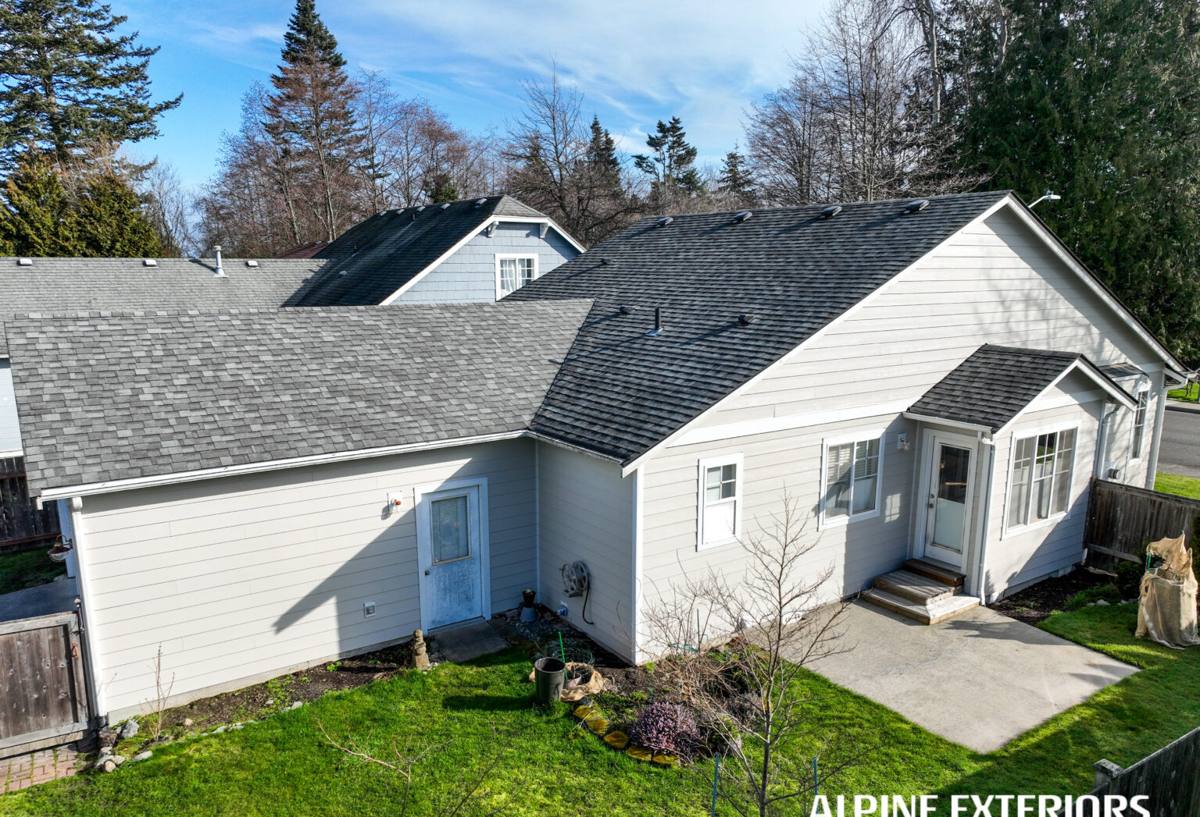
Why We Install James Hardie Fiber Cement — and Nothing Else
We made a decision as a company to install only James Hardie fiber cement siding. We don't install vinyl, LP SmartSide, Cemplank, Allura, primed spruce, or cedar. That's not a marketing angle — it's a standard we hold because we've seen how exterior materials actually perform over time in exactly the conditions North Everett homes deal with, and we'd rather stand behind one product system we trust completely than offer a menu of options with different long-term risk profiles.
James Hardie fiber cement is engineered specifically to resist the things that wear down other materials in a marine-influenced, wet climate:
- It's non-combustible, which matters increasingly as wildfire smoke and regional fire risk become part of Pacific Northwest homeowners' thinking, even in areas not directly in a fire zone.
- It doesn't absorb and swell with moisture the way wood-based or wood-composite products can, which reduces the risk of rot and warping at seams and cut edges.
- Hardie's HZ5 product line is engineered for climates with more moisture exposure, which fits Western Washington's conditions specifically.
- The ColorPlus factory finish is baked on under controlled conditions, which gives more consistent, longer-lasting color performance than field-applied paint, and it holds up better against the fading and chalking that salt air and UV exposure cause over time.
- It carries a strong, transferable manufacturer warranty, which matters both for a homeowner's own peace of mind and for resale value down the line.
None of that means other siding products are without merit — vinyl is inexpensive and low-maintenance in mild climates, cedar has genuine visual appeal, and engineered wood products have improved over the years. But when we weigh moisture behavior, long-term appearance retention, fire performance, and installation forgiveness against what North Everett's climate actually does to a house, fiber cement is what we're willing to put our name behind.
Siding Installation Done Right
Fiber cement performs the way it's supposed to only when it's installed correctly. That means proper flashing at every window, door, and roofline intersection; correct fastener spacing and type (especially important given the corrosive potential of salt-influenced air); correct clearances at grade and at roof-to-wall transitions; and factory-finished panels handled and cut in a way that preserves that finish. A rushed or under-detailed installation can undercut even the best material, which is why our crews follow manufacturer installation specs closely rather than treating them as optional guidance.
Common Local Failure Points We Watch For
| Area | Typical Issue | Why It Matters Here |
|---|---|---|
| Window and door flashing | Missing or improperly lapped flashing | Wind-driven rain finds these gaps first |
| Bottom edge / grade clearance | Siding installed too close to soil or hardscape | Traps moisture and invites the wet-season moss and rot cycle |
| Fasteners | Wrong fastener type or spacing | Salt air accelerates corrosion on the wrong hardware |
| North-facing walls | Shaded, slow-drying surfaces | Highest moss and algae exposure in the neighborhood |
| Roof-to-wall transitions | Inadequate step flashing or kick-out flashing | A frequent hidden source of water intrusion behind siding |
Roofing, Windows, and Decks — The Same Envelope
Siding doesn't work in isolation. A roof that's shedding water improperly, windows with failed flashing, or a deck ledger board that's trapping moisture against the house all put stress on the same wall assembly your siding is trying to protect. We handle roofing, window replacement, and deck construction alongside our siding work specifically because it lets us look at a home's exterior as one connected system rather than a set of separate projects, which matters a lot in a climate that punishes weak transitions between systems.
Where These Systems Intersect
- Roof edges and eaves that direct water either away from or straight down onto siding below
- Window and door openings where flashing has to integrate correctly with the siding around it
- Deck ledger connections, which are one of the most common sources of hidden rot when not flashed properly
- Gutters and downspouts that, when undersized or poorly placed, dump concentrated water onto walls below
Why a Local Crew Matters in North Everett
A contractor who works regularly in Snohomish County knows how this climate behaves differently than a generic Pacific Northwest job — the difference between an inland Snohomish County property and one closer to the water in North Everett is real, and it shows up in flashing details, material choices, and maintenance recommendations. Local crews also understand Everett's permitting process, typical construction of homes in this area, and the practical scheduling realities of working around a long wet season, which affects everything from cure times to when it makes sense to start a project.
What to Expect From a North Everett Project
Every home is different, but a typical siding project follows a similar path: an on-site assessment of your current siding condition and any underlying moisture or rot issues, a review of what James Hardie product line and color fit your home, a written scope covering flashing and trim details (not just the siding panels themselves), and a realistic timeline that accounts for Western Washington's weather patterns rather than ignoring them.
Questions Worth Asking Any Contractor Before You Hire
- Are you licensed and insured to work in Washington State, and can you provide proof?
- What specific flashing details will you use at windows, doors, and roof transitions?
- What fastener type and spacing will you use, and why?
- Will you provide the manufacturer's written warranty, and is it transferable?
- Do you have references for completed projects in this area, particularly ones exposed to similar conditions?
Maintenance Realities for This Climate
Even the best material benefits from basic upkeep. In North Everett, that mostly means keeping gutters clear so water isn't overflowing onto walls, watching shaded and north-facing areas for early moss growth, and doing a visual check after major storms for any damaged trim or flashing. James Hardie's factory finish substantially reduces the repainting and sealing burden compared to wood-based siding, but no exterior material is entirely maintenance-free in a climate this wet.
If you're evaluating siding, roofing, window, or deck work for a home in North Everett, we're happy to take a look and give you a straightforward, no-pressure assessment of what your house actually needs. There's a form below to request a free estimate — we'll walk the property, talk through what we're seeing, and give you honest options.