 Everett
 Siding Built for Marysville's Corner of Snohomish County
Marysville sits just north of Everett along the Puget Sound shoreline, and that location shapes everything about how exterior materials perform here. Homes throughout this part of Snohomish County deal with a steady mix of salt-tinged marine air moving in off the water, driving rain that arrives sideways as often as it falls straight down, and a moss season that can stretch across most of the year on shaded roof planes and north-facing walls. None of that is exotic weather for western Washington, but it's exactly the kind of sustained exposure that separates siding installed correctly from siding that starts failing well before its warranty period is over.
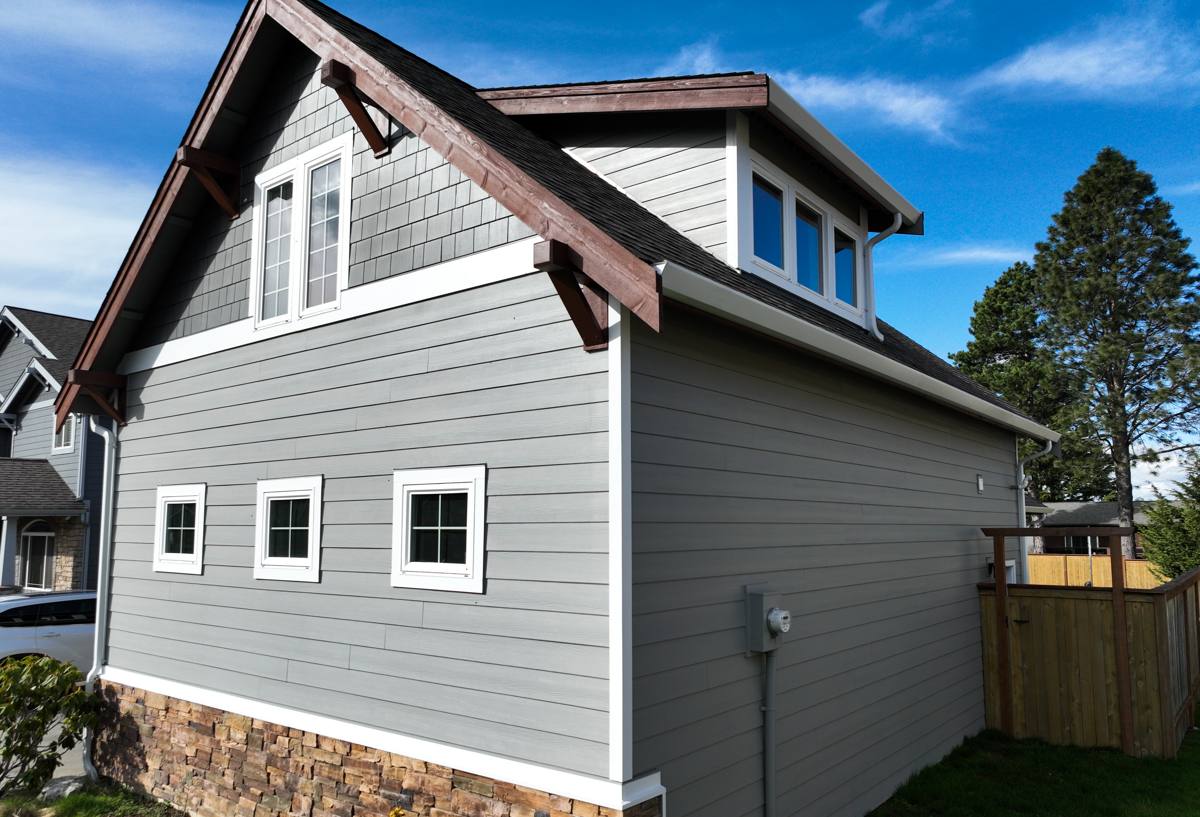
We install James Hardie fiber cement siding exclusively. We also handle roofing, windows, and decks, and we treat all four as connected parts of the same exterior system rather than separate line items. On siding, our position is simple: after years of installing, inspecting, and tearing off exterior systems in this exact climate, James Hardie is the only product we're willing to put our name on.
What This Climate Actually Does to a House
Salt Air and Corrosion
Marysville's proximity to Puget Sound means a lot of homes, even ones set back from the water, get regular exposure to salt-laden air. Salt accelerates corrosion in fasteners, flashing, and metal trim, and it can break down lower-grade finishes faster than they'd wear in a drier, inland climate. Material and hardware choices need to account for that corrosion risk from day one, not just for how a wall looks when it's freshly installed.
Driving Rain
Rain in this part of the state rarely just falls down onto a roof. Wind off the Sound pushes it sideways into wall assemblies, window flashing, and the transitions where roof meets wall. That sideways load is a different and more demanding test than a simple annual rainfall number suggests. A product or installation detail that would hold up fine somewhere calmer and drier can fail here specifically because water finds a way in from the side, not just from above.
A Long Moss Season
Mild year-round temperatures, shade from mature trees, and near-constant moisture add up to a moss and mildew season that runs long in Marysville and across Everett. It shows up first on north-facing siding and shaded roof valleys that don't get much direct sun to dry them out. Any material that's even a little porous, or that holds water against its own substrate, becomes a growth surface over time rather than shedding water and drying out between storms.
Why We Only Install James Hardie Siding
We used to offer a wider range of siding products. We don't anymore, and that change came from what we kept finding on service calls and tear-offs in this specific climate, not from a supplier deal or a sales angle.
- Non-combustible core: Fiber cement doesn't feed a fire the way wood-based siding products can, which matters for both safety and, in many cases, insurance considerations.
- Factory-applied ColorPlus finish: The color is baked on in a controlled factory process rather than brushed on at the jobsite, so it holds its finish longer against fading, chalking, and moisture than field-applied paint typically does.
- Climate-engineered HZ product lines: Hardie's HZ5 formulation is built for regions with significant moisture exposure and freeze-thaw cycling, which describes the Marysville and Everett area well.
- Dimensional stability: Fiber cement doesn't swell, cup, or warp the way engineered wood products can after repeated wetting over a long rainy season.
- A strong transferable warranty: Hardie backs its products with one of the more robust warranty structures in the industry, provided the installation follows their published spec.
We won't install LP SmartSide, vinyl siding, Cemplank, Allura, primed spruce, or cedar. Each of those has a place in the market and homeowners who are happy with them. We've simply made a professional call that in a climate with this much sustained moisture and salt exposure, we'd rather install one system we fully stand behind than offer a cheaper alternative that quietly shifts maintenance risk onto the homeowner over the next decade.
What Correct Installation Actually Involves
Hardie siding performs the way it's rated to only when it's installed to spec, and that's where a lot of the real-world difference between a good job and a problem job comes from. Proper installation means correct clearances above rooflines, decks, and grade so water can't wick up into the bottom edge of the boards. It means rain-screen or drainage-plane detailing behind the siding so any moisture that does get past the surface has somewhere to go. It means butt joints, corners, and penetrations sealed and flashed the way the manufacturer specifies, not just caulked over and painted. Skipping any of that doesn't usually show up as a problem on day one — it shows up two or three wet seasons later, which is exactly why installation quality matters as much as the product itself.
Roofing for Marysville and Everett Homes
Roofing takes the most direct hit from this climate, since sun, wind-driven rain, and moss all land on the roof plane before they reach anything else. A roof system needs solid underlayment, properly lapped flashing at every penetration and wall transition, and ventilation that lets the attic and roof deck actually dry out between storms instead of trapping moisture underneath the shingles. We treat those fundamentals as the baseline on every roofing job, not an upsell, because a roof that's cutting corners on flashing or ventilation will show it within a few wet seasons, not decades down the line.
Windows: Where a Lot of Exterior Problems Start
Window replacement and window flashing are often where exterior damage actually begins, even when the visible sign of trouble shows up somewhere else on the wall. A poorly flashed window lets wind-driven rain track down into the wall cavity behind it, and by the time that shows up as staining, soft trim, or a musty smell inside, the moisture intrusion has usually been going on for a while. When we install windows or coordinate window work alongside a siding project, we integrate the flashing details into the whole wall assembly instead of treating the window as a standalone swap that gets caulked in and left alone.
Decks in a Wet, Shaded Climate
Decks around Marysville and Everett take on rain, standing moisture, and moss on horizontal surfaces where water doesn't drain or dry as quickly as it does on a vertical wall. Framing choices, fastener corrosion resistance, and board spacing all matter more here than they would in a drier climate, because a deck built without those considerations tends to develop soft spots, rot at the ledger board, and slippery moss buildup well before it should.
Cost Factors Across Siding, Roofing, Windows, and Decks
| Project | What Drives Cost | Climate-Specific Consideration |
|---|---|---|
| Siding | Home size, tear-off vs. new construction, trim and corner complexity | Substrate repair if moisture has already gotten behind old siding or house wrap |
| Roofing | Roof size, pitch, number of penetrations and valleys | Underlayment quality and flashing detail for wind-driven, sideways rain |
| Windows | Number of openings, frame material, full-frame vs. insert replacement | Flashing integration with the surrounding wall and siding assembly |
| Decks | Size, framing material, railing style, ledger attachment | Drainage detailing and fastener corrosion resistance in salt-influenced air |
Exact numbers depend on the specific home and scope, which is why we walk the property before giving a real estimate rather than quoting off a generic price list over the phone.
Signs a Marysville or Everett Home Needs Exterior Attention
- Moss or dark staining on siding or roof surfaces that returns quickly after cleaning
- Soft or spongy siding, especially low on the wall or around window and door trim
- Peeling paint, chalking, or visible warping on shaded, north-facing walls
- Missing, curling, or granule-shedding shingles on the roof
- Drafts, fogging between panes, or visible gaps around window frames
- Soft boards, rust staining at fasteners, or spongy footing on an older deck
- Water staining or a musty smell on interior walls near windows or exterior corners
Hiring an Exterior Contractor in Marysville: What to Actually Check
The exterior contracting market in this area includes everyone from small local crews to large regional companies, and quality varies a lot within both categories. A few things are worth confirming before signing anything:
- Current Washington state contractor licensing and active liability insurance, verified independently rather than taken on their word.
- A clear answer on which specific siding products they install and why, not just a price per square foot.
- How they handle unexpected substrate damage discovered during tear-off, since it's common enough that a vague answer is a red flag.
- Whether the crew doing the physical installation is direct employees or subcontracted out, and how much experience that crew has with the specific product being installed.
- A written scope that specifies flashing, clearances, and drainage details, not just "siding replacement" as a line item.
A contractor who can walk through those points in plain language, rather than just handing over a number, is usually the one worth spending more time with.
Why a Local Crew Matters Here
A crew that works Snohomish County day in and day out, across siding, roofing, windows, and decks, sees how salt air, wind-driven rain, and moss actually behave on real houses over a full year, not just how a product performs on a spec sheet. That repeated local exposure shapes practical decisions on the job: where extra flashing attention pays off, which wall orientations stay wet the longest, and which details are worth the extra time on install day so a homeowner isn't dealing with a callback two winters later. Marysville's location along the Sound, and its mix of open, wind-exposed lots and tree-sheltered neighborhoods closer to Everett, means those details aren't identical from one property to the next. A crew with real local experience accounts for that instead of applying the same generic approach to every house.
Get a Free, No-Pressure Estimate
If your Marysville or Everett home needs new siding, a roof inspection or replacement, window work, or a deck built for this climate rather than against it, we're glad to come take a look. Reach out using the form below to schedule a free, no-pressure estimate and get a straightforward assessment of what your home actually needs.