 Everett
 Bayside's Exterior Challenge: Salt, Rain, and Moss
Bayside sits close to Everett's waterfront, and that proximity to Port Gardner Bay and the Puget Sound shoreline shapes what happens to a house over time. Homes here deal with a combination most inland Snohomish County neighborhoods don't face in the same intensity: airborne salt off the water, wind-driven rain that gets pushed sideways into wall assemblies, and a moss season that can run from October well into spring. Any one of these on its own is manageable. Together, over years, they expose the weak points in cheaper siding materials and sloppy installation work faster than almost anywhere else in the area.
Salt air is corrosive to exposed metal fasteners, flashing, and trim, and it accelerates the breakdown of coatings that aren't formulated to resist it. Driving rain off the water doesn't just fall straight down — it finds horizontal laps, unsealed seams, and butt joints and pushes moisture behind the cladding if those details weren't built right the first time. And moss doesn't just grow on roofs. It colonizes north-facing siding, trim, and anything that stays damp and shaded through our wet months, holding moisture against the surface and giving organic growth a foothold that untreated or absorbent materials can't shrug off.
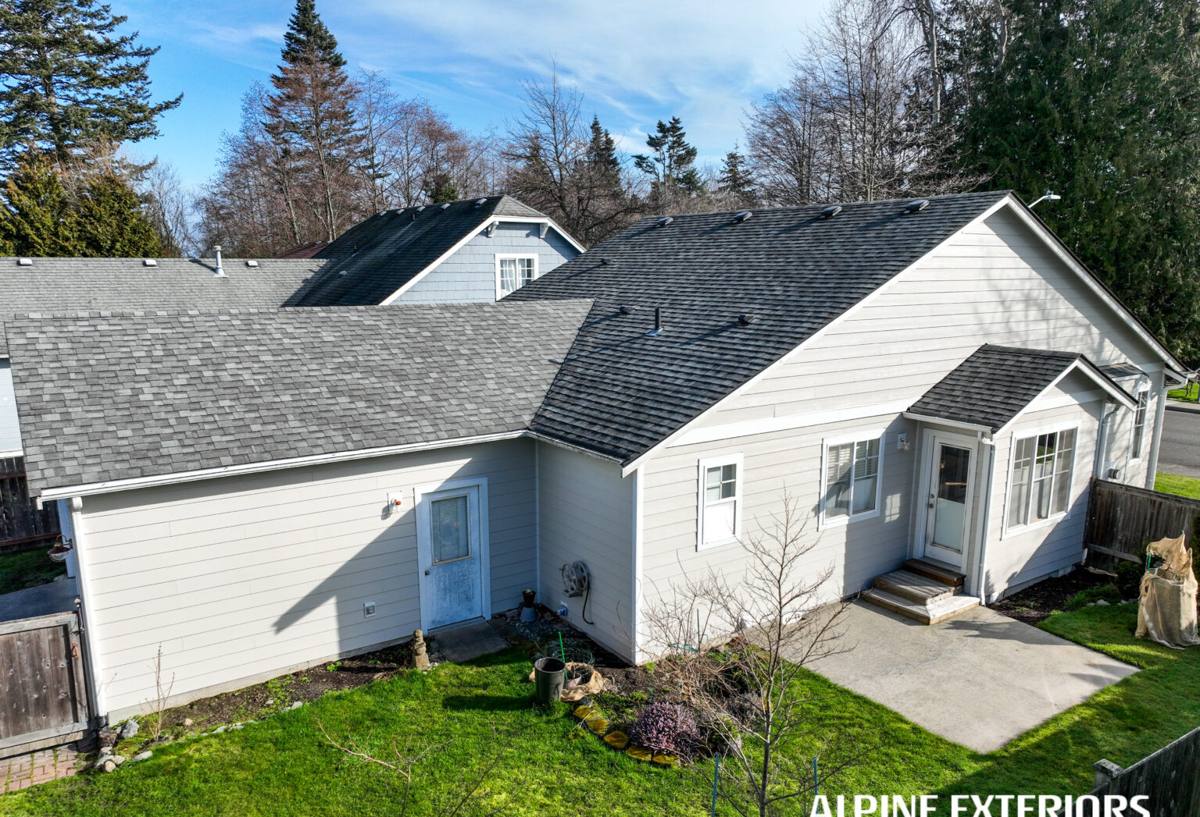
Why We Only Install James Hardie Fiber Cement
We made a deliberate decision as a company to install one siding system: James Hardie fiber cement, with the factory-applied ColorPlus finish. We don't install vinyl, LP SmartSide, Cemplank, Allura, primed spruce, or cedar. That's not a marketing position — it's a practical one, built on what actually holds up in a climate like Bayside's.
Fiber cement is non-combustible, which matters increasingly to insurers and homeowners alike. It doesn't absorb moisture the way wood-based products do, so it isn't the same kind of food source for the moss and mildew that thrive in our wet season. It doesn't warp, buckle, or soften at the seams the way vinyl can when it's exposed to sustained wind-driven rain and temperature swings. And Hardie's HZ5 product line is specifically engineered for climates like ours — freeze-thaw cycles, sustained moisture exposure, and coastal-influenced weather — rather than being a general-purpose product stretched to cover every region.
The ColorPlus factory finish is baked on under controlled conditions, not brushed or sprayed on site, which gives it more consistent coverage and better resistance to fading and chalking than field-applied paint. Combined with a transferable warranty that follows the house rather than just the original owner, it's the system we're willing to put our name behind.
What We Won't Install, and Why
- Vinyl siding: Lightweight and inexpensive, but it expands and contracts with temperature swings, can deform under sustained direct sun exposure, and offers limited protection where wind-driven rain is a regular factor.
- LP SmartSide and other engineered wood products: Treated wood-strand products perform reasonably in moderate climates, but any breach in the factory coating exposes wood fiber that can swell or deteriorate faster in a consistently wet, salt-influenced environment.
- Cemplank and Allura: Other fiber cement manufacturers make a legitimate product category, but we've standardized on Hardie's specific formulations, HZ engineering, and warranty structure rather than mixing brands across jobs.
- Primed spruce and cedar: Natural wood siding can look great initially, but it demands a maintenance schedule — re-staining, re-caulking, spot repairs — that most homeowners underestimate, especially in a climate that gives wood little time to fully dry out between rain events.
How We Approach a Bayside Siding Job
Every siding project starts with an assessment of the existing wall assembly, not just the visible siding. In a neighborhood this close to the water, we're specifically checking for moisture intrusion around window and door openings, at butt joints, and anywhere flashing may have been undersized or skipped during a prior remodel. Water damage found early is a repair; water damage found late is a rebuild.
From there, installation follows manufacturer specification on fastener spacing, clearance from grade and roofing, joint treatment, and flashing at every penetration. This isn't optional detail work — it's the difference between a fiber cement install that performs for decades and one that fails early because water got behind it anyway. We also pay attention to how the house is oriented relative to prevailing wind and rain direction, since the water-facing and north-facing elevations of a Bayside home typically need the most conservative detailing.
Siding Installation Checklist
- Full moisture inspection of existing sheathing and framing before any new siding goes up
- Correct weather-resistive barrier installation and lap sequencing
- Flashing at every window, door, and roof-to-wall transition, not just the obvious spots
- Manufacturer-specified fastener type, spacing, and embedment depth
- Proper clearance between siding bottom edge and grade, decks, and roofing
- Factory-finished ColorPlus panels installed with touch-up only where cuts occur
- Final walk-through covering caulking points, trim details, and drainage paths
Beyond Siding: Roofing, Windows, and Decks
Siding rarely fails in isolation. A roof with compromised flashing sends water down behind the wall assembly. Windows with failed seals let moisture track into the framing around the rough opening. Decks attached without proper ledger flashing create a chronic wet spot right where the house structure is most vulnerable. Because we handle all four — siding, roofing, windows, and decks — we look at a Bayside home's whole exterior envelope rather than treating each component as a separate, disconnected job.
That matters most at the transitions: where a roof meets a wall, where a deck ledger attaches to the house, where a window is set into a fiber cement opening. Those junctions are where most long-term moisture problems start, and they're easiest to get right when one crew is thinking about the whole system instead of coordinating between separate trades who never talk to each other.
Moss, Roofs, and North-Facing Surfaces
Moss season deserves its own mention because it's such a consistent issue in this part of Snohomish County. Shaded roof slopes and north-facing siding stay damp longer after every rain event, and once moss establishes itself, it holds moisture against the surface underneath it, whether that's asphalt shingles or old wood-based siding. On a roof, that means accelerated wear on shingles and, eventually, leaks at the areas where moss growth has been heaviest. On siding, it means surface staining at minimum and, on absorbent materials, real degradation over time.
Fiber cement doesn't eliminate the need for basic maintenance — homeowners should still keep gutters clear and address overhanging vegetation that keeps a wall surface shaded and damp — but it removes the material itself as a food source and moisture reservoir the way untreated wood products can become.
Cost Factors for Bayside Homeowners
Every home is different, and a real number only comes from an on-site look, but the factors below are what typically move a siding estimate up or down in this area.
| Factor | Why It Matters Locally |
|---|---|
| Existing moisture damage | Water-facing homes near Bayside sometimes have hidden sheathing damage that adds repair scope before new siding goes on |
| Home elevation and access | Multi-story homes or steep lots increase scaffolding and staging requirements |
| Trim and detail complexity | Homes with more window and roofline transitions require more flashing and cut work |
| Siding profile chosen | Hardie offers lap, shingle, and panel styles at different material and labor costs |
| Scope: full replacement vs. partial | Water-facing elevations sometimes need replacement sooner than the rest of the home |
Why a Local Crew Matters Here
A crew that works across Snohomish County regularly, including neighborhoods close to the water like Bayside, learns which details actually matter in this climate instead of applying a generic installation approach built for a drier region. We know which elevations of an Everett home typically take the worst of the driving rain, where moss tends to establish first, and how salt air affects fastener and trim choices over time. That local pattern recognition shows up in faster, more accurate assessments and installation decisions that hold up rather than needing revisiting in a few years.
It also means we're accountable locally. We're not a crew that shows up once and disappears — we're doing this work in the same neighborhoods, year after year, which is part of why we've been selective about the products we stand behind.
Ready for a No-Pressure Estimate?
If your Bayside home's siding, roofing, windows, or decking needs an honest assessment, we're glad to take a look. There's no obligation and no pressure — just a straight read on what your home actually needs and what it would take to do it right. Use the form below to request a free estimate.