 Everett
 Two Very Different Materials, One Big Decision
If you're re-siding a home in Everett, you've almost certainly narrowed the field down to two contenders: vinyl siding and James Hardie fiber cement. Both are widely available, both have decades of track record in the Pacific Northwest, and both get marketed hard by whoever sells them. This page skips the sales pitch and walks through how these two materials actually perform on Snohomish County homes — through the wet winters, the marine air rolling off Port Gardner Bay, and the long stretches of shade and moss pressure that define our climate here.
We'll say upfront where we land: this company installs James Hardie exclusively. We don't install vinyl. That's not because vinyl is a scam or a bad product for every market — it's because after years of doing exterior work in this specific climate, we decided we could no longer put a product on a home that we felt made compromises we weren't comfortable standing behind. The rest of this page explains why, product by product, so you can make your own informed call.
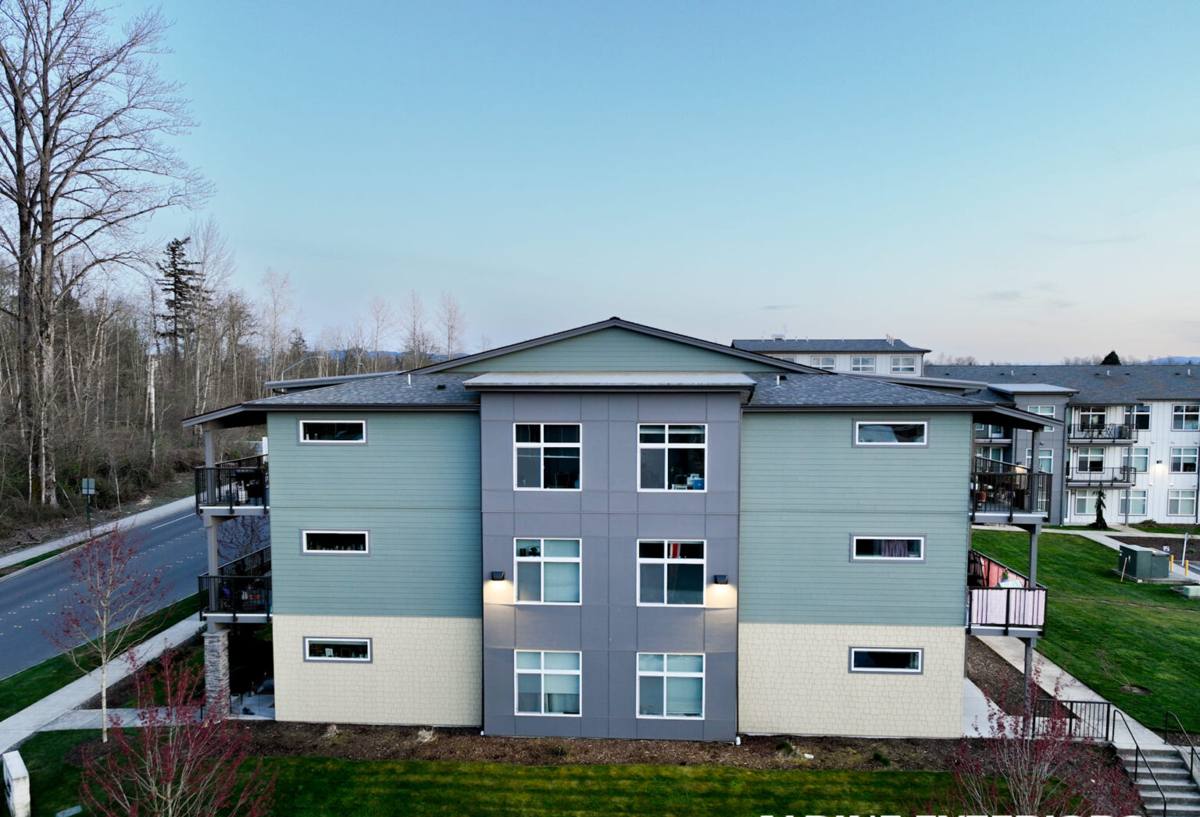
What Vinyl Siding Actually Is
Vinyl siding is extruded PVC (polyvinyl chloride) formed into interlocking panels. It's been the most common siding material in North America for decades because it's inexpensive, lightweight, and fast to install. Modern vinyl has improved a lot since the thin, brittle panels of the 1980s and 90s — thicker-gauge products, better locking systems, and UV-stabilized formulations are all real improvements worth acknowledging.
Where Vinyl Gets It Right
- Lower material and labor cost than fiber cement, often by a meaningful margin
- Lightweight, which speeds up installation
- Won't rot, and doesn't need repainting the way wood does
- Wide color and profile selection from most manufacturers
Where It Runs Into Trouble Here
Vinyl is a plastic product, and plastic behaves differently in the Pacific Northwest than it does in drier climates. It expands and contracts with temperature swings, which is why it's installed with "hanging" nail slots rather than fastened tight — done wrong, panels buckle or rattle in wind. In Everett's wind-driven rain events, water can work behind loosely fitted panels and sit against the weather barrier longer than homeowners expect, since vinyl itself isn't a moisture management system — it's a rain-shedding shell that relies entirely on what's behind it. Vinyl also fades unevenly over time, especially on south and west-facing walls, and once it fades, there's no repainting it back — the color is the material, all the way through.
What James Hardie Fiber Cement Actually Is
James Hardie siding is fiber cement — a mix of Portland cement, sand, and cellulose fibers, formed under pressure and cured. It's not plastic, it's not wood, and it doesn't burn (it's rated non-combustible, a genuinely relevant fact given how much of the year our region spends under wildfire smoke advisories in late summer). Hardie's HZ5 product line is specifically engineered for climates like ours — freeze-thaw cycling, prolonged moisture exposure, and the kind of persistent damp that defines a Snohomish County winter.
Where Hardie Gets It Right
- Dimensionally stable — doesn't expand/contract with temperature the way vinyl or wood does
- Non-combustible core material
- ColorPlus factory-applied finish resists fading far better than field-applied paint or vinyl's baked-in pigment
- Holds up to moss, mildew, and algae pressure better than wood, and doesn't trap moisture behind the panel the way loosely fitted vinyl can
- Backed by a strong, transferable manufacturer warranty when installed to spec
Where It's Not Automatically Better
Fiber cement isn't magic — it's a product that rewards correct installation and punishes shortcuts. It's heavier than vinyl, so it needs a crew that knows proper fastening patterns, clearances, and caulking practices. It costs more upfront. And it still needs paint eventually (though ColorPlus finishes push that timeline out considerably compared to job-site painted fiber cement or wood). None of that makes it the wrong choice — it just means the installation quality matters more, which is exactly why we're selective about how it goes on a wall.
How They Compare Side by Side
| Factor | Vinyl Siding | James Hardie Fiber Cement |
|---|---|---|
| Material | PVC plastic | Cement, sand, cellulose fiber |
| Fire rating | Combustible under sustained heat | Non-combustible |
| Moisture behavior | Sheds water, relies fully on WRB behind it | Sheds water, dimensionally stable, engineered HZ5 line for wet climates |
| Dimensional stability | Expands/contracts with temperature | Minimal expansion/contraction |
| Color longevity | Fades over time, cannot be repainted to match easily | ColorPlus factory finish resists fading; repaintable |
| Upfront cost | Lower | Higher |
| Warranty structure | Varies widely by manufacturer/grade | Strong transferable manufacturer warranty |
| Installation sensitivity | Moderate — nailing technique matters | High — fastening, clearances, and flashing detail matter a great deal |
Why Everett's Climate Changes the Calculus
A lot of siding comparisons you'll find online are written for a national audience, and they miss what actually matters here. Everett sits on Puget Sound, which means salt-laden marine air is a constant, not an occasional event. That air accelerates corrosion on fasteners and hardware, and it keeps humidity elevated even on days without active rain. Layer on our driving rain — wind-driven storms off the Sound that push water sideways into wall assemblies rather than straight down — and you've got a climate that's genuinely tougher on siding than most of the country experiences.
Then there's moss. Everett's tree canopy and persistent shade on north-facing walls create a long moss season, often running most of the year on homes with heavy landscaping or tight lot lines. Moss and algae growth thrive on materials that hold surface moisture, and the joints and seams on any siding product are where that growth tends to start. This is less about which material is "moss-proof" — nothing fully is — and more about which material sheds water cleanly and dries out fastest after each event. That combination of salt air, driving rain, and moss pressure is exactly the environment James Hardie's HZ5 line was engineered to handle, which is a meaningful part of why we standardized on it rather than a general-purpose product.
What "Installed to Spec" Actually Means
Warranty coverage on both vinyl and fiber cement depends heavily on correct installation — this isn't a Hardie-specific caveat, but it's especially important with fiber cement because the margin for error is smaller. Correct Hardie installation in our climate involves:
- Proper clearance from grade, decks, patios, and roof lines to keep the bottom edge of the siding out of standing water and splash-back
- Correct fastener type, spacing, and depth — over-driven or under-driven nails are one of the most common failure points on any fiber cement job
- Rain screen or drainage plane detailing appropriate for our precipitation levels
- Proper caulking and sealing at joints, penetrations, and trim — done with products rated for sustained damp exposure
- Correct panel overlap and butt joint treatment to shed wind-driven rain rather than trap it
Skip any of these and you can undermine a good product's performance regardless of brand. It's a big part of why we don't treat installation as an afterthought to the material choice.
Cost Over Time, Not Just Upfront
Vinyl will almost always win on day-one price. But the fair comparison isn't upfront cost — it's cost over the life of the siding. Vinyl doesn't need repainting, but it also can't be repainted easily if it fades or gets damaged, which sometimes means panel replacement instead of a simple touch-up, and matching older, sun-faded panels to new stock is rarely seamless. Fiber cement costs more to install but holds its factory finish far longer, resists impact and moisture-driven degradation better, and comes with a stronger warranty structure. Neither answer is universally "cheaper" — it depends on how long you plan to own the home and how much you value not thinking about your siding for the next 15-20 years.
A Practical Checklist for Comparing Bids
- Ask what siding material and specific product line is being quoted — "fiber cement" and "vinyl" both cover a wide range of quality tiers
- Confirm whether the finish is factory-applied (like ColorPlus) or field-painted, since that affects long-term color performance
- Ask about fastening schedule and clearance details specific to your home's exposure — south/west walls and street-facing walls take more weather than shaded sides
- Get the manufacturer warranty terms in writing, including whether it's transferable if you sell the home
- Ask how the contractor handles moisture management — house wrap, rain screen, flashing — regardless of which siding material you choose
Where We Land
We don't install vinyl siding, and we're upfront about why: in a climate with this much sustained moisture, salt air, and moss pressure, we've found that fiber cement — specifically James Hardie's engineered product lines — gives homeowners a material that's more forgiving of our weather over the long haul, holds its finish longer, and carries a warranty structure we're comfortable standing behind. That's our professional standard, not a claim that vinyl can't work anywhere. If a lower upfront cost is the deciding factor for your project, vinyl remains a legitimate option from other contractors — we just won't be the ones installing it.
If you're weighing this decision for your own Everett home, we're happy to walk your property, look at your specific exposure — sun, shade, wind direction, moss history — and give you a straight answer about what we'd recommend and why. Reach out for a free, no-pressure estimate; there's a form below.