 Everett
 Siding Built for What South Everett Weather Actually Does to a House
South Everett sits close enough to Possession Sound and the broader Puget Sound corridor that homes here deal with a mix of conditions that a lot of siding products simply weren't designed around: salt-tinged marine air, long stretches of driving rain that comes in sideways during winter storms, and a moss and algae season that can run eight or nine months out of the year in shaded, north-facing exposures. Add in Snohomish County's mild but persistent humidity and the freeze-thaw swings we get a handful of times each winter, and you have an exterior environment that rewards materials and installation practices built for moisture management — and punishes anything that isn't.
We work on homes throughout South Everett and the surrounding Snohomish County area, and the failure patterns we see are consistent: siding that trapped water behind it instead of shedding it, caulk joints that failed years before the manufacturer's warranty implied they should, and paint or factory finishes that couldn't hold up to repeated wet-dry cycling. None of that is really about "bad luck." It's about material choice and installation detail, and it's the whole reason we've standardized on one product system rather than offering a menu of options.
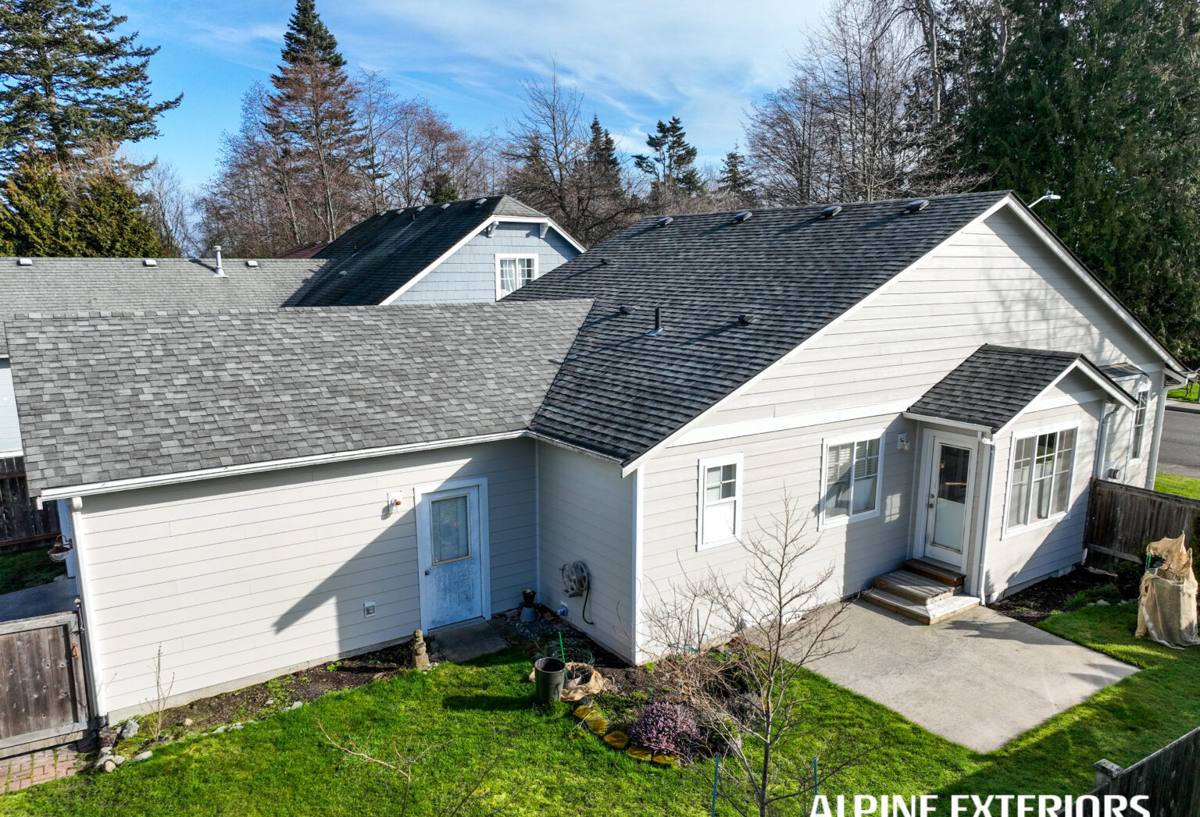
Signs Your Siding Is Losing the Battle
Because moisture damage often starts behind the siding before it's visible on the surface, homeowners in this area should know what to look for before a small problem becomes a sheathing or framing repair.
- Soft or spongy spots when you press on the siding, especially near the bottom courses and around window trim
- Paint that's peeling, bubbling, or chalking heavily rather than just fading evenly
- Persistent moss or dark streaking on north- and west-facing walls that comes back within weeks of cleaning
- Visible warping, cupping, or gaps opening up at seams and butt joints
- A musty smell in adjacent interior rooms, which can point to moisture already past the siding layer
- Nail heads popping or siding boards that flex or rattle in wind
Any one of these on its own isn't necessarily an emergency, but in combination — or if they're showing up on a house less than fifteen years old — it's worth having someone look at the wall assembly, not just the surface.
Why South Everett's Microclimate Makes This Worse
Homes closer to the water and in low-lying, tree-shaded pockets of South Everett tend to hold moisture longer after storms than homes on higher, more exposed lots. Combine that with the salt component in the air and you get accelerated corrosion of fasteners and trim, plus a longer window each year for moss and mildew to establish themselves on north-facing walls. Siding that can't dry out quickly between rain events is siding that's working against the climate instead of with it.
Why We Install Only James Hardie Fiber Cement — Not Vinyl, LP SmartSide, or Cedar
We get asked fairly often why we don't offer vinyl, engineered wood siding like LP SmartSide, or traditional cedar as options. Each of those products has real strengths, and we're not going to pretend otherwise — but after years of exterior work in this climate, we made a deliberate decision to install James Hardie fiber cement exclusively, because it's the product we trust to perform over the full life of a house here.
Vinyl Siding
Vinyl is inexpensive and low-maintenance in the sense that it doesn't need painting, but it's a petroleum-based product that expands and contracts significantly with temperature swings, which stresses seams and fasteners over time. In direct salt air it can also chalk and fade unevenly, and impact damage (branches, hail, even aggressive pressure washing) tends to crack rather than dent. It's also a poor match aesthetically for the more substantial, painted-wood look many Snohomish County homes are going for.
LP SmartSide and Other Engineered Wood
Engineered wood products are wood-based at their core, which means their long-term performance depends heavily on the integrity of the factory coating and how well every cut edge gets sealed on site. In a climate with this much sustained moisture exposure, any breach in that coating — a missed edge seal, a nail pop, a scratch from a ladder — gives water a path into a wood-fiber substrate that can swell and deteriorate. We've seen this play out on real houses in wet Western Washington conditions, and it's a maintenance burden we'd rather not hand a homeowner.
Cedar and Other Natural Wood
Cedar looks great and has genuine rot resistance built in, but it's a natural material that needs ongoing refinishing — typically every few years in a climate this wet — to keep that resistance intact. Once maintenance lapses, cedar is vulnerable to moisture absorption, cupping, and insect activity. For homeowners who want that look but not the maintenance schedule, we'll talk through options, but we won't install it as a "set it and forget it" product, because it isn't one here.
Side-by-Side: How the Materials Compare
| Factor | Vinyl | LP SmartSide / Engineered Wood | Cedar | James Hardie Fiber Cement |
|---|---|---|---|---|
| Moisture resistance | Doesn't absorb, but seams/fasteners stress in wet-cold cycles | Coating-dependent; vulnerable at cut edges | Absorbs without regular refinishing | Engineered for wet climates, doesn't rot or swell |
| Combustibility | Melts/deforms in heat | Combustible (wood-based) | Combustible | Non-combustible |
| Finish longevity | Fades/chalks, not repaintable easily | Factory coating, edge-sensitive | Needs refinishing every few years | ColorPlus factory finish, long repaint intervals |
| Typical maintenance | Low but limited lifespan | Moderate — coating inspection | High — regular staining/sealing | Low — occasional wash, no rot protection needed |
| Warranty structure | Varies widely by brand | Manufacturer-specific, often shorter | None (natural material) | Long-term transferable manufacturer warranty |
What James Hardie Actually Is — and Why It Fits This Climate
James Hardie fiber cement siding is made from cellulose fiber, sand, and Portland cement, cured into boards that are dimensionally stable and non-combustible. It doesn't absorb water the way wood-based products can, it doesn't expand and contract the way vinyl does, and it holds paint and factory finish far longer than either. For a region that sees this much sustained rain and marine humidity, that stability matters more than almost any other single property.
Climate-Engineered Product Lines
James Hardie engineers its siding by climate zone (HZ5 for our colder, wetter zones and HZ10 for milder/coastal zones), which affects the formulation and moisture engineering of the product. Snohomish County falls in a zone where that engineering is directly relevant — it's not a marketing detail, it's a real difference in how the board handles freeze-thaw cycling and prolonged wet exposure.
ColorPlus Technology
Most of our installs use Hardie's ColorPlus factory-applied finish rather than field-painted siding. It's baked on in a controlled environment, resists fading and chipping far better than site-applied paint, and comes with its own finish warranty. For a climate where UV exposure alternates with long wet seasons, a factory-cured finish holds up in ways that on-site painting, done in variable weather, often can't match.
Warranty
James Hardie backs its siding with a long-term, transferable limited warranty — a meaningful detail if you plan to sell the home down the line. Transferability is part of why we consider Hardie the more defensible long-term investment compared to products with shorter or non-transferable coverage.
What Correct Installation Looks Like on a South Everett Home
Fiber cement siding only performs as well as its installation. A big part of why we standardized on one product is that it lets our crews specialize in doing that installation correctly, every time, instead of splitting attention across multiple systems.
- Proper rain-screen or drainage plane behind the siding so any moisture that gets past the surface can drain and dry rather than sit against the wall
- Correct fastener type, spacing, and penetration depth — under- or over-driven nails are one of the most common causes of premature siding failure
- Flashing detail at every window, door, and roofline intersection, since that's where the vast majority of water intrusion problems originate
- Manufacturer-specified clearances at grade, decks, and patios to keep siding from sitting in standing water or constant splash-back
- Caulking and sealant only where Hardie's specifications call for it — over-caulking can trap moisture just as easily as under-caulking lets it in
These aren't optional refinements; they're the difference between siding that lasts decades in this climate and siding that needs attention again within a few years.
Beyond Siding: How Roofing, Windows, and Decks Fit Into the Picture
Siding doesn't work in isolation. Roofing, window flashing, gutters, and decks all interact with the same wall assembly, and a weak point in any one of them can undermine even well-installed siding. Since our crews also handle roofing, window replacement, and deck construction, we look at the exterior as one connected system rather than a series of unrelated projects — a leaking roof valley, a poorly flashed window, or a deck ledger board attached without proper flashing can all send water into a wall long before the siding itself is the problem. If you're already having siding work done, it's worth a quick look at those adjacent systems while the wall is open, since it's far cheaper to address them together than to re-open finished siding later.
What Drives the Cost of a South Everett Siding Project
| Factor | Why It Matters |
|---|---|
| Home size and wall complexity | More corners, dormers, and trim details mean more cutting, flashing, and labor time |
| Extent of existing damage | Rotted sheathing or framing found during tear-off adds repair work before new siding goes on |
| Siding profile and finish | Lap width, shingle-style panels, and trim choices affect material cost and install time |
| Access and site conditions | Steep lots, limited driveway access, or mature landscaping can add setup and staging time |
| Tear-off vs. overlay | Full removal of old siding allows inspection of the wall assembly, which we generally recommend over covering up unknown conditions |
We don't publish blanket per-square-foot pricing because these variables swing costs meaningfully from house to house — an accurate number comes from an on-site look, not a phone estimate.
Why a Local Crew Matters for This Kind of Work
A crew that works Snohomish County regularly knows which wall orientations in this area tend to hold moisture longest, which neighborhoods see heavier moss growth, and how local building department expectations around flashing and weather barriers typically get inspected. That local familiarity translates into fewer surprises during tear-off and installation decisions that are made with this specific climate in mind, not a generic install spec written for a drier region.
What to Expect After Installation
Correctly installed Hardie siding is genuinely low-maintenance, but "low-maintenance" isn't "zero-maintenance." An occasional gentle wash to keep salt residue and organic growth from building up, a yearly walk-around to check caulking at penetrations, and prompt attention to any impact damage will keep the system performing the way it's designed to for decades. Because the ColorPlus finish is factory-cured, most homeowners go many years before repainting is even a consideration.
If your South Everett home's siding is showing its age, or you're planning ahead for a replacement rather than waiting for a failure, we're happy to take a look and talk through what we're seeing — no pressure, no obligation. Reach out using the form below to schedule a free estimate.