 Everett
 Why Color Choice Matters More Here Than Most Places
Picking a siding color in Everett isn't the same exercise as picking one in Spokane or Boise. Between the salt air rolling off Puget Sound, driving rain off the Olympics, and a moss season that can run eight or nine months out of the year, Snohomish County homes take a beating that shows up first as color problems: fading on the sun-exposed south and west walls, streaking under gutters and eaves, and a dull, chalky look that creeps in a few years after a fresh paint job. If you're re-siding a home here, the finish behind the color matters just as much as the color itself.
This page walks through how James Hardie's ColorPlus Technology actually works, how to pick a color that fits an Everett home and its microclimate, and what to expect from the process — without the sales pitch.
What ColorPlus Technology Actually Is
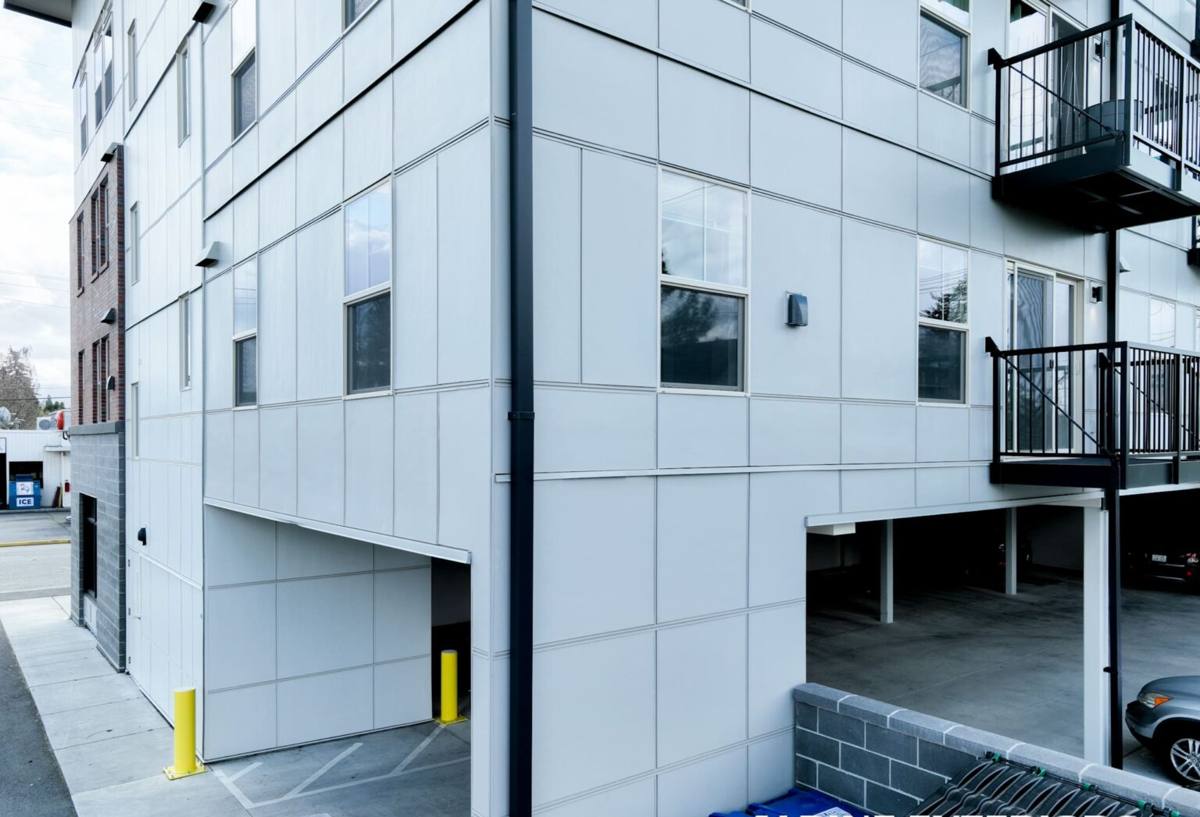
ColorPlus isn't paint you choose off a fan deck and have a crew roll on after installation. It's a factory-applied, baked-on finish system. Hardie's fiber cement panels and trim go through multiple coats of color, each cured in a controlled environment before the next is applied, resulting in a finish that's bonded to the substrate rather than sitting on top of it like field-applied paint.
That distinction matters in a marine climate. Field-applied paint depends on weather conditions at the time of application — humidity, temperature, dry time — all of which are hard to control on a job site in Everett between October and May. A factory finish removes that variable entirely. The color goes on before the product ever gets wet on your house.
What This Means in Practice
- Color consistency panel to panel, since every piece comes from the same controlled process
- A finish warranty backing the color itself, not just the substrate
- No on-site wait for paint to cure before the siding can be installed in wet weather
- Touch-up paint matched specifically to each ColorPlus color for nail heads and cut edges
How ColorPlus Holds Up to Salt Air and Coastal Moisture
Everett sits close enough to Puget Sound that salt-laden air is a real factor on many properties, especially anything with west or water-facing exposure. Salt air accelerates the breakdown of ordinary paint finishes and speeds up corrosion on unprotected fasteners and trim. Fiber cement itself doesn't corrode, and ColorPlus's multi-coat finish is formulated to resist the fading and chalking that salt exposure speeds up on standard paint.
The other side of coastal moisture is straightforward driving rain — wind-blown, sideways, and frequent. Fiber cement is dimensionally stable in a way that wood and some other siding materials aren't; it doesn't swell and shrink significantly with moisture cycling, which is one of the reasons the factory finish stays put over time instead of cracking along expansion and contraction lines the way field paint on a less stable substrate can.
Moss, Mildew, and Why Color Choice Affects Maintenance
Anyone who's owned a home in Snohomish County for more than a season knows the moss issue isn't limited to roofs. North-facing walls, anything shaded by mature trees, and low-sun areas under eaves all pick up green and black staining over time. This is a maintenance reality for every siding material — no factory finish stops organic growth from landing on a surface — but color and sheen affect how visible it is and how it should be cleaned.
| Color Family | How It Reads With Moss/Mildew Staining | Maintenance Note |
|---|---|---|
| Deep, dark tones (e.g., near-black, deep bronze) | Hides early-stage green/black staining longer | Shows dust and pollen film more; needs periodic rinsing to look its best |
| Mid-tone grays and greens | Blends reasonably well with regional moss tones | Good middle ground for low-maintenance appearance |
| Whites and light neutrals | Shows moss and mildew staining earliest and most obviously | Best on sun-exposed elevations; needs more frequent gentle washing on shaded walls |
None of this is a reason to avoid light colors — plenty of Everett homes carry white or cream trim well. It's a reason to think about which color goes where. A soft gray field color with a darker accent on the north wall or under a covered porch will look better, longer, than the same light color wrapped uniformly around a heavily shaded lot.
Matching Color to Everett's Housing Stock and Neighborhoods
Everett has a wide mix of architecture — Craftsman and bungalow homes in the older core neighborhoods, mid-century ranch homes throughout, and newer construction in the growth areas toward South Everett and unincorporated Snohomish County. Color choice should take the house's era and roofline into account, not just personal preference.
General Guidance by Style
- Craftsman/bungalow: Earthy, muted tones — deep greens, warm grays, clay tones — with contrasting trim tend to read as authentic to the style
- Mid-century ranch: Understated neutrals with a single bolder accent (often the front door or a gable) suit the low, horizontal lines of these homes
- Newer construction: Cooler grays, blacks, and blues are common in current builds and pair well with modern rooflines and larger window packages
Roof color is worth checking before finalizing a siding color. A lot of undoing-and-redoing on color choice happens when a homeowner picks a siding tone in isolation and it clashes with an existing composition roof that isn't being replaced at the same time.
The HZ5 Factor: Color Performance Tied to Product Engineering
Everett falls within James Hardie's HZ5 climate zone designation, meaning the products specified for this region are engineered for wet, temperate Pacific Northwest conditions — not the same formulation used in hot, arid climates. This matters for color performance specifically because the moisture-management engineering in the panel itself (how it manages freeze-thaw cycling, moisture absorption at cut edges, and long-term dimensional stability) is what keeps the ColorPlus finish adhered and performing as intended over decades, not just years.
Installing an out-of-zone product, or installing correctly-specified product without properly sealing cut edges, can undercut even the best factory finish. This is a big part of why installation quality and product selection go hand in hand with color performance — a beautiful color choice installed incorrectly will show problems at the seams and cuts long before the field of the siding fades.
Comparing ColorPlus to Repainting Down the Road
A common question we get: "Can I just pick a color now and repaint it myself in ten years if I get tired of it?" Yes — ColorPlus siding can be repainted with standard exterior paint if a homeowner wants a change later, and doing so doesn't damage the panels. But it's worth understanding what you're giving up and gaining at each stage.
| Factor | Factory ColorPlus Finish | Repainting Later (Field-Applied) |
|---|---|---|
| Application conditions | Controlled, defect-free environment | Dependent on Everett's weather window and prep quality |
| Warranty coverage | Backed by Hardie's finish warranty | Typically only the paint manufacturer's product warranty, if any |
| Upfront cost | Built into the ColorPlus product pricing | Labor and material cost at time of repaint |
| Flexibility to change color later | Fully repaintable when desired | N/A — this is the repaint step |
The practical takeaway: pick a ColorPlus color you're genuinely happy with for the long haul, since the whole advantage of the system is not having to repaint on a normal maintenance cycle. It remains an option later, not a requirement.
A Practical Checklist for Choosing Your Color
- Look at large physical samples outdoors, in Everett's actual gray daylight — not under indoor lighting or on a screen
- View samples at different times of day; overcast morning light and afternoon light change how a color reads
- Check the color against your roof, and against any brick, stone, or concrete that won't be changing
- Identify which walls get the most shade and moss exposure, and consider a slightly darker or accent tone there
- Ask about trim and accent color pairings within the same ColorPlus line for a coordinated look
- Confirm which HZ5-appropriate product line the color is available on before falling in love with it
- Walk the neighborhood — not to copy a neighbor, but to see how similar tones actually age on real homes in this climate
Getting It Right the First Time
Color selection is one of the few parts of a siding project a homeowner gets to enjoy rather than just endure. It's worth slowing down on. But no color, however well engineered, performs the way it should without correct installation — proper flashing, correct fastening, sealed cut edges, and manufacturer-spec clearances. We install exclusively James Hardie products because we've found that pairing a factory-engineered color system with disciplined installation is what actually delivers the low-maintenance, long-lasting result Everett homeowners are after.
If you're weighing colors, product lines, or just want a straight answer on what would hold up best on your specific home, we're happy to walk your property with you. Reach out for a free, no-pressure estimate using the form below.