 Everett
 Siding for Silver Lake's Particular Mix of Weather
Silver Lake sits in south Everett, tucked among mature tree canopy and residential streets that ring the lake itself. That setting is part of what makes the neighborhood appealing — shade, greenery, a bit of distance from the busier commercial corridors — but it's also exactly the combination that wears down exterior siding faster than homeowners expect. Between the humidity that collects around the lake, the driving rain that blows through Snohomish County in fall and winter, and the salt-laden air that reaches inland from Puget Sound on a west wind, Silver Lake homes take on more moisture stress over a year than most people realize until their siding starts showing it.
We're a local exterior contractor, and Silver Lake is inside our regular service area — not a stretch job we drive across the county for once a year. That matters for siding work specifically, because the right approach here isn't generic. It's shaped by what we've actually seen fail on homes a few blocks from the lake versus homes on more exposed, open lots elsewhere in Everett.
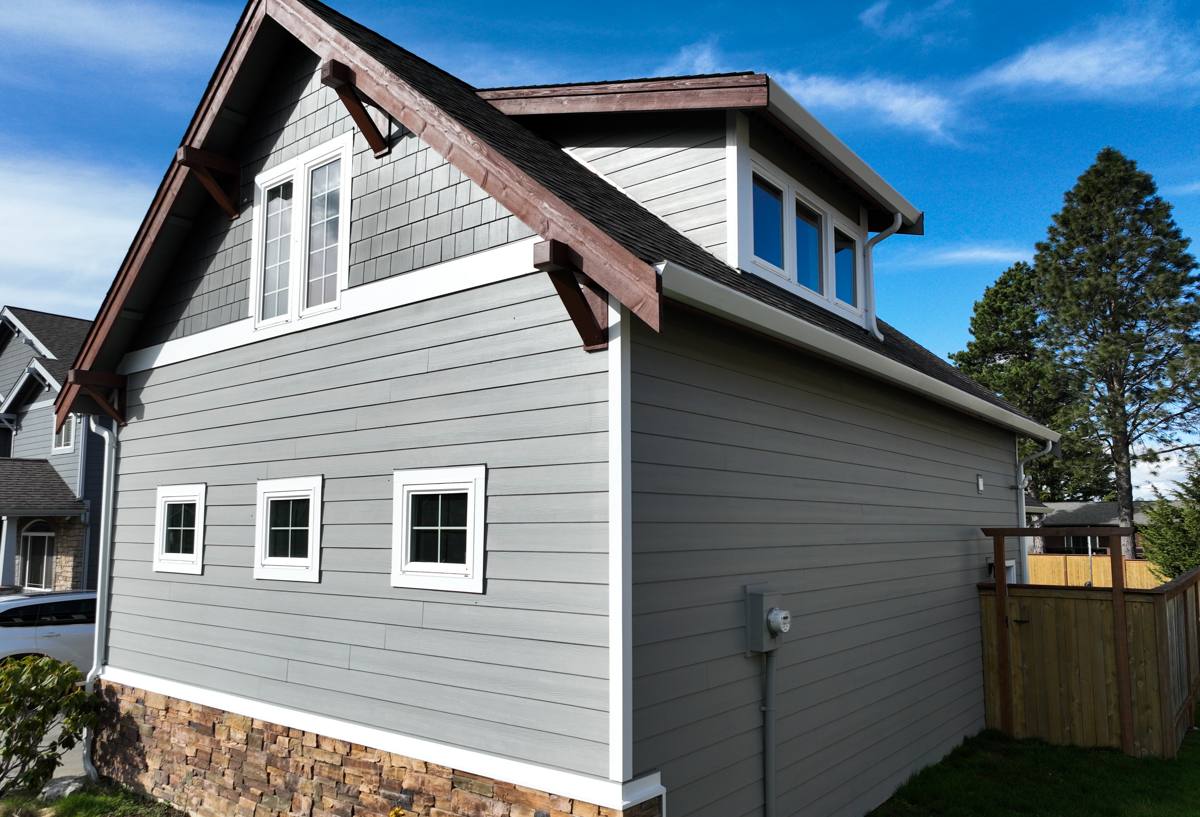
What Silver Lake Homes Are Actually Up Against
Shade, Moisture, and a Long Moss Season
The tree cover around Silver Lake is a mixed blessing for siding. It cuts down on direct sun exposure, which sounds like a good thing — less UV fading, less thermal cycling on the wall assembly. But less sun also means siding stays damp longer after every rain, especially on north- and east-facing walls that don't get a midday dry-out. That's the setup for moss, algae, and mildew to take hold, and once they do, they hold moisture against the siding surface even longer. In Snohomish County, the moss season isn't really a season — it's most of the year, and shaded lakeside lots see more of it than open ones.
Lake Humidity and Wind-Driven Rain
Proximity to open water raises ambient humidity, which slows drying time for any siding material that absorbs moisture. Combine that with the wind-driven rain that comes through on winter storms — rain that doesn't just fall straight down but gets pushed sideways into wall assemblies, especially around windows, corners, and anywhere flashing details are marginal — and you get a lot of repeated wet-dry cycling over the life of a siding job. That cycling is what breaks down inferior materials and exposes bad installation work, sometimes years after the fact.
Salt Air, Even This Far In
Silver Lake isn't waterfront on the Sound, but Everett as a whole sits close enough to Puget Sound that salt-bearing air reaches most of the city on the right wind pattern. Salt air accelerates corrosion of fasteners, flashing, and any exposed metal trim, and it interacts poorly with finishes that aren't engineered to handle it. It's one more reason we don't treat "coastal-adjacent" as a special category reserved for houses with a water view — it's baseline regional climate for anyone in this part of Snohomish County.
Why We Only Install James Hardie Fiber Cement
We made a deliberate decision to install one siding system: James Hardie fiber cement. We don't offer it as one option among several — it's what we put on every home, and Silver Lake's climate is a good illustration of why.
- Non-combustible material — fiber cement doesn't feed a fire the way wood-based products can, which matters as wildfire smoke and dry-season risk have become more of a regional concern even west of the Cascades.
- Engineered for Pacific Northwest moisture — Hardie's HZ5 product line is formulated for our climate zone specifically, not a one-size-fits-all national spec.
- Factory-applied ColorPlus finish — baked-on color and a sealed finish that resists the fading and moisture intrusion that field-applied paint struggles with under constant damp-shade conditions like Silver Lake's tree-covered lots.
- A strong, transferable warranty — backed by a manufacturer with decades of fiber cement manufacturing behind it, not a newer entrant still building its track record.
None of that is marketing spin — it's the reasoning we'd walk any homeowner through in person, and it's why we don't hedge our recommendation.
What We Don't Install, and Why
Homeowners in Silver Lake often ask us to bid against a quote that specifies vinyl, LP SmartSide, cedar, or a competing fiber cement brand like Allura or Cemplank. We're upfront that we don't install those products, and we think the reasoning is worth explaining rather than just declining the job.
Vinyl Siding
Vinyl is inexpensive and low-maintenance in mild, dry climates, but it's a poor match for the moisture load a shaded lake lot deals with. It can trap moisture behind it if installation isn't precise, it softens and warps under sustained heat, and it doesn't hold up structurally the way fiber cement does over decades.
LP SmartSide and Other Engineered Wood
Engineered wood siding has improved a lot over the years, but it's still a wood-based product at its core — meaning it's more vulnerable to moisture intrusion at cut edges, seams, and fastener penetrations than fiber cement is. In a climate with our humidity and rain exposure, that's a maintenance burden we don't think is worth taking on for a homeowner.
Cedar and Primed Spruce
Real wood siding looks great and has genuine appeal, but it demands a maintenance schedule — recoating, caulking, spot repairs — that most homeowners underestimate going in. In a shaded, humid pocket like Silver Lake, that maintenance interval only gets shorter.
Other Fiber Cement Brands
Allura and Cemplank are legitimate fiber cement manufacturers, and we're not making claims against the material itself. Our decision comes down to product line depth, factory finish quality, and warranty structure — areas where we think James Hardie's HZ5 system and ColorPlus process are the stronger fit for Pacific Northwest installations.
How We Approach a Silver Lake Siding Job
The climate factors above change how we actually run a project, not just what material we recommend.
- Moisture assessment first. Before we talk siding color or product line, we look at what's happening behind the current siding — sheathing condition, any existing rot or trapped moisture, especially on shaded walls.
- Rain screen and flashing detail. Wind-driven rain finds gaps. Correct flashing at windows, doors, and butt joints, plus a proper drainage plane behind the siding, matters more here than on a drier, more exposed lot.
- Fastener and trim spec. Given regional salt exposure, we use fasteners and trim details rated for it rather than defaulting to whatever is cheapest.
- Manufacturer-spec installation. Hardie's warranty is only as good as the installation behind it — nailing patterns, gaps, caulking, and clearances all have to be done to spec, not approximated.
Beyond Siding: The Whole Exterior Envelope
Siding doesn't work in isolation. We also handle roofing, windows, and decks, because the same moisture and shade conditions that affect siding on a Silver Lake home usually show up in those other systems too — a roof that holds moss longer under tree cover, window flashing that has to handle the same wind-driven rain, deck boards exposed to the same humidity. When we're on-site for a siding estimate, we'll flag anything we notice in those other areas, without any pressure to bundle work you don't need.
Comparing Siding Options for a Home Like Yours
| Factor | Vinyl | Engineered Wood | Cedar | James Hardie Fiber Cement |
|---|---|---|---|---|
| Moisture resistance in shaded, humid conditions | Moderate — can trap moisture if poorly installed | Lower — vulnerable at cut edges | Lower — requires ongoing sealing | High — engineered for this climate |
| Maintenance burden | Low, but limited repair options | Moderate — periodic recoating | High — regular refinishing | Low — factory-cured finish |
| Fire resistance | Combustible | Combustible | Combustible | Non-combustible |
| Typical warranty structure | Varies widely by manufacturer | Manufacturer-dependent, often shorter | Material only, no finish warranty | Long-term, transferable |
What Affects Your Project's Cost
| Cost Factor | Why It Matters |
|---|---|
| Extent of moisture or rot repair needed | Shaded, humid lots around Silver Lake more often reveal hidden sheathing damage once old siding comes off |
| Home size and wall complexity | More corners, dormers, and trim details mean more labor and material |
| Hardie product line selected | Lap siding, panel systems, and shingle-style profiles carry different material and labor costs |
| Color and finish choice | Standard ColorPlus colors versus custom or premium options |
| Access and site conditions | Tree-lined lots and tighter setbacks can add labor time for scaffolding and material staging |
We don't publish blanket price lists because every one of these factors changes the number — but we'll walk through them plainly during an on-site estimate.
Choosing a Contractor for This Neighborhood
Fiber cement is a forgiving material when it's installed correctly, and an unforgiving one when it isn't. Poor flashing or nailing mistakes don't usually show up as a visible problem for a year or more — by which point the crew that made the mistake is long gone. A few things worth checking before you hire anyone for siding work in Silver Lake or elsewhere in Everett:
- Ask specifically whether the crew is trained and experienced with James Hardie installation requirements, not just "fiber cement" in general.
- Confirm they'll address any moisture or sheathing issues found once old siding is removed, not just re-side over a problem.
- Ask how they handle flashing at windows, doors, and roof-to-wall intersections — this is where most real-world failures start.
- Check that the warranty offered is transferable, in case you sell the home down the road.
- Look for a contractor who's actually done work in your specific area and understands its shade, moisture, and wind exposure — not a generic regional pitch.
If your siding in Silver Lake is showing moss buildup, soft spots, or peeling paint, we're happy to take a look and give you a straight assessment — no pressure, no obligation. Reach out for a free estimate using the form below.