 Everett
 Siding in Glenhaven: Built for This Corner of Snohomish County
Glenhaven sits inside the exterior-punishing climate zone that defines most of Everett and the surrounding Snohomish County lowlands: marine air pushing in off Puget Sound, long stretches of driving rain from fall through spring, and shaded, damp pockets where moss and mildew get a serious head start every year. None of that is unique to any one street or subdivision here — it's the baseline every exterior surface in this area has to survive, year after year. What changes from house to house is how well the siding, trim, roofing, and windows were built and installed to handle it.
We're a local crew that works this area regularly, and we install one siding product: James Hardie fiber cement. That's not a marketing angle — it's a standard we settled on after years of tearing old, failed siding off Snohomish County homes and seeing exactly which materials held up and which didn't.
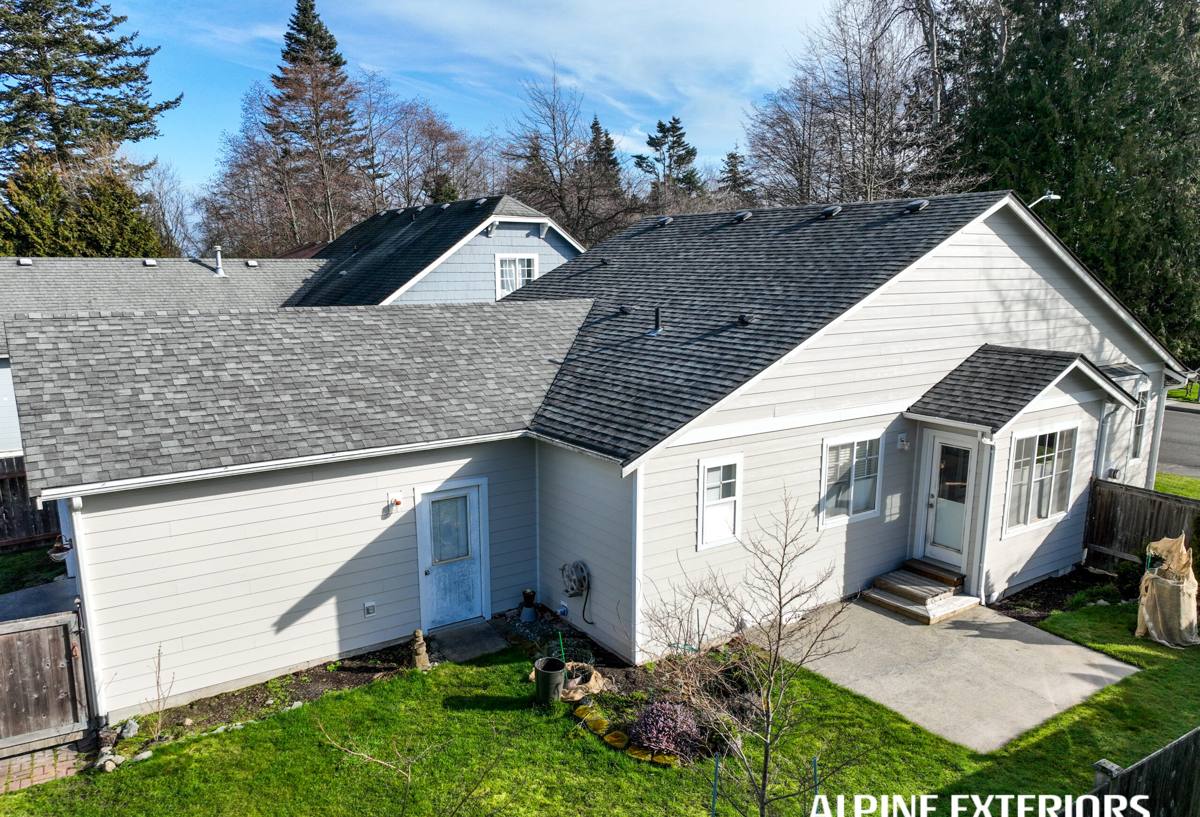
What Glenhaven Homes Are Up Against
Salt Air and Moisture Cycling
Everett's proximity to Puget Sound means homes in Glenhaven deal with a steady low-level dose of salt-laden moisture in the air, even away from the immediate waterfront. Combined with our wet-to-dry cycling through the seasons, siding here is constantly absorbing moisture and releasing it. Materials that swell, warp, or delaminate when wet show that damage faster in this environment than they would somewhere drier.
Driving Rain
Storms in this part of Washington don't just fall straight down — wind-driven rain gets pushed sideways into wall assemblies, working its way into seams, butt joints, and anywhere caulking or flashing has started to fail. Over a 20- or 30-year ownership timeline, that's thousands of wetting cycles concentrated on the same joints and edges.
Moss, Algae, and Shade
Mature trees and long overcast stretches mean a lot of homes in and around Glenhaven have north- and east-facing walls that rarely get direct sun. Those shaded sections grow moss and algae faster than the sunny side of the same house, and organic material sitting against siding holds moisture against the surface even longer.
Why a Local Crew Actually Matters Here
Siding installation is a detail trade — the difference between a wall that sheds water for thirty years and one that fails in eight often comes down to flashing, house wrap integration, fastener placement, and caulk joints that most homeowners never see once the job is done. A crew that works Everett and Snohomish County full-time knows the failure patterns specific to this climate: where water tends to find its way in on a typical Pacific Northwest wall assembly, which details get skipped by crews that rush, and how local wind and rain exposure should influence trim and joint choices on a given elevation.
It also means accountability. If a warranty issue comes up five or ten years down the road, you're calling a company that's still working in your neighborhood — not searching for a name that pulled a permit once and moved on.
Why We Only Install James Hardie
We get asked why we don't offer vinyl, LP SmartSide, or other fiber cement brands. The honest answer: we used to install a wider range of products, and the callbacks and premature failures we kept seeing on wet, shaded, coastal-influenced homes were concentrated in a few predictable places.
- Vinyl can warp or crack in temperature swings and tends to show its age faster under UV and moisture exposure than fiber cement.
- Engineered wood siding performs well when installation and maintenance are perfect, but it's more sensitive to moisture intrusion at cut edges and joints than fiber cement — and those joints are exactly where our rain patterns concentrate stress.
- Some other fiber cement brands are reasonable products, but we've standardized on one manufacturer so our crews build deep, repeatable expertise with a single system rather than splitting attention across several.
James Hardie fiber cement is non-combustible, holds paint and factory finish far longer than wood-based products, and doesn't feed moss and mildew the way organic siding materials can. Hardie's HZ5 product line is engineered specifically for climates like ours — freeze-thaw cycling, sustained moisture, and coastal-influenced weather. Combined with the factory-applied ColorPlus finish, which is baked on and backed by its own finish warranty, it's a system built for exactly the conditions Glenhaven sees.
Our Siding Process for Glenhaven Homes
Assessment and Water Path Review
Before we talk products or colors, we look at how water currently moves across the house — roofline runoff, grade slope near the foundation, shaded wall sections, and any existing moisture damage behind the current siding. This tells us where extra flashing attention or drainage plane detailing is worth prioritizing.
Tear-Off and Sheathing Check
Old siding comes off, and we inspect the sheathing underneath. Any rot or soft spots get addressed before anything new goes up — covering over hidden water damage just guarantees a bigger problem later.
Weather Barrier and Flashing
A correctly lapped house wrap and properly flashed windows, doors, and penetrations are what actually keep water out — the siding itself is the last line of defense, not the first. This is the step that separates a durable installation from one that looks fine for a few years and then doesn't.
Hardie Installation to Manufacturer Spec
Fastener spacing, joint treatment, clearance from grade and roof lines, and caulking all follow James Hardie's published installation requirements. Installing to spec isn't optional if you want the manufacturer's warranty to actually mean something — it's also just how you get thirty-plus years out of the product.
We Handle the Whole Exterior, Not Just Siding
Siding doesn't work in isolation. A leaking roof, a failing window seal, or rotting deck framing can undermine even a perfect siding job by feeding moisture into the wall assembly from somewhere else. We do roofing, windows, and decks alongside siding so the exterior gets treated as one connected system rather than four separate contractors who never talk to each other.
| Exterior Component | What It Protects Against Here | Common Failure Point in This Climate |
|---|---|---|
| Siding | Wind-driven rain, salt air, UV | Failed joints, poor flashing at transitions |
| Roofing | Sustained rain, moss buildup | Aging flashing, moss holding moisture on shaded slopes |
| Windows | Air and water infiltration | Deteriorated seals, poor flashing integration with siding |
| Decks | Standing water, ground moisture | Ledger board rot, inadequate drainage |
What Affects the Cost of a Siding Project in Glenhaven
Every home is different, but a few factors consistently move the price up or down on siding jobs in this area:
| Factor | Why It Matters |
|---|---|
| Amount of existing damage behind old siding | Rot repair and sheathing replacement add labor and material cost before new siding even goes up |
| Home size and wall complexity | More corners, gables, and trim details mean more cutting, fitting, and flashing work |
| Siding profile and trim selection | Lap siding, panel systems, and shingle-style Hardie products carry different material and labor costs |
| Access and site conditions | Tight lots, mature landscaping, or multi-story sections affect staging and labor time |
| Paired projects | Bundling siding with roofing, windows, or a deck can reduce total mobilization and scheduling overhead |
We won't quote a number without seeing the house, but we're upfront about ranges during the estimate so there are no surprises once work starts.
Living With Fiber Cement Siding Through a Northwest Winter
One advantage of switching to James Hardie is how little ongoing maintenance it demands compared to wood-based siding. It won't need repainting on the same schedule wood does, and it doesn't provide the same food source for moss and mildew. That said, no siding is entirely maintenance-free in a climate like ours. A simple seasonal routine keeps it performing the way it's supposed to:
- Rinse siding annually with a garden hose (avoid high-pressure washing, which can force water behind joints)
- Keep gutters clear so roof runoff isn't sheeting directly down wall sections
- Trim back vegetation and tree limbs holding shade and moisture against north- and east-facing walls
- Check caulking at trim joints and penetrations every couple of years and re-caulk where it's cracked or pulled away
- Watch for moss buildup at the base of walls near grade and address drainage or grading issues that keep that area wet
Choosing a Contractor for a Glenhaven Project
Whoever you hire, a few things are worth confirming before signing anything: current Washington contractor licensing and insurance, a written scope that specifies the exact siding product and installation details (not just "Hardie siding" with no spec), and a willingness to explain how they'll handle flashing and moisture management — not just the finished look. A contractor who can walk you through their water-management approach, not just their color samples, is usually the one who'll still be standing behind the work a decade from now.
If you're weighing a siding project in Glenhaven — or want roofing, windows, or a deck looked at alongside it — we're glad to come take a look and put together a straightforward, no-pressure estimate.