 Everett
 Siding in Pinehurst: Built for What This Neighborhood Actually Deals With
Pinehurst homes sit inside the same weather system that shapes exterior work all across Everett and Snohomish County, but that doesn't make the climate any easier on a house. Between the salt-laden air moving in off the water, driving rain that comes in sideways during fall and winter storms, and a moss season that can stretch for months on shaded lots, siding here works harder than siding almost anywhere else in the state. We've built our whole approach around that reality, and we install exactly one siding product because of it: James Hardie fiber cement.
This page walks through what Pinehurst's climate actually does to a home's exterior, how we handle siding, roofing, windows, and decks for houses in this area, and why the product we standardize on matters more here than it would somewhere drier and calmer.
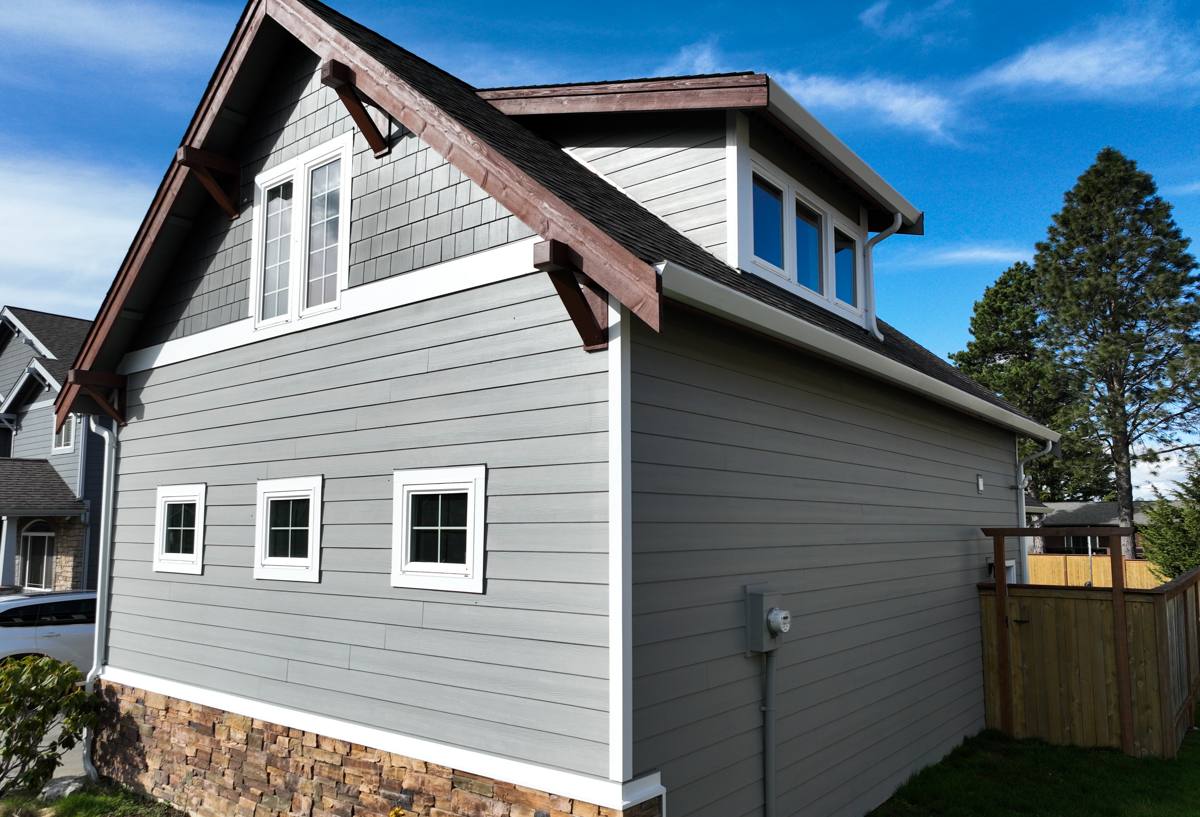
What Pinehurst's Climate Does to a Home Over Time
Salt Air
Proximity to Puget Sound means airborne salt is a constant, low-level presence on exterior surfaces throughout the Everett area, including Pinehurst. Salt accelerates corrosion on fasteners and metal trim, and it works against certain paint and coating systems by pulling moisture into the substrate faster than it would evaporate back out. Siding materials that rely on a surface-applied finish are more exposed to this cycle than materials with a factory-cured finish baked into the product itself.
Driving Rain
Wind-driven rain is a different problem than a straight-down downpour. It gets pushed sideways into laps, seams, and butt joints, which means the weak points in a siding installation — not just the material — end up mattering as much as the product choice. A perfectly good siding product installed with poor flashing detail, wrong nailing, or tight-butted joints will still let water in during a Pinehurst winter.
Moss and Sustained Moisture
Shaded lots, mature tree cover, and long stretches of overcast, damp weather give moss and algae plenty of time to establish on north-facing walls, under eaves, and anywhere airflow is limited. Moss holds moisture against the wall assembly long after the rain has stopped, which is exactly the condition that causes swelling, delamination, and rot in moisture-sensitive materials.
Why We Only Install James Hardie Siding
We made a deliberate decision not to install LP SmartSide, vinyl, Cemplank, Allura, primed spruce, or cedar. That's not a knock on every homeowner who has one of those products on their house today — plenty of them perform fine under the right conditions and with the right maintenance. It's a statement about what we're willing to warranty our labor against, given what we see this climate do to exteriors over a 10, 20, and 30-year timeline.
- Fiber cement, not wood-based composite: James Hardie siding is cement, sand, and cellulose fiber — it does not swell, delaminate, or feed rot the way wood-based products can when a seam takes on water repeatedly.
- Non-combustible: It carries a noncombustible rating, which matters for insurance conversations and for peace of mind, independent of climate.
- Factory-cured ColorPlus finish: Rather than relying on field-applied paint to hold up against salt air and UV, Hardie's ColorPlus finish is baked on at the factory and backed by its own finish warranty — a meaningfully different proposition than repainting every several years.
- Climate-engineered product lines: Hardie makes region-specific HZ5 product engineered for wetter, harsher climates like ours, rather than a one-size-fits-all board.
- Transferable warranty: A strong, transferable warranty is worth more in a market like this one, where buyers are increasingly asking what the siding is and how old it is.
None of that means other products are without merit — cedar has real aesthetic appeal, vinyl is inexpensive, LP SmartSide has improved over the years. But when we weigh maintenance burden, moisture behavior, and long-term performance against what Pinehurst's air and rain actually do, fiber cement is the product we're willing to put our name behind.
How Siding Installation Works for a Pinehurst Home
Assessment
We start by looking at the house as a system, not just the siding surface. Orientation to prevailing wind and rain, tree cover and shade patterns, existing moisture damage, and the condition of the water-resistive barrier underneath all factor into the plan before a single board goes up.
Moisture Barrier and Flashing
This is where a lot of siding jobs succeed or fail, regardless of the product on top. Proper house wrap, correctly lapped and taped seams, and flashing at every window, door, and penetration are what actually keep driving rain out of the wall assembly. We treat this step as non-negotiable.
Installation to Manufacturer Spec
James Hardie's warranty depends on installation to their specification — correct nailing patterns, proper clearances from grade and roofline, and gapping or caulking done the way the manufacturer requires. We install to that spec as a baseline, not an upsell.
Finish Details
Trim, corners, and butt joints are where amateur installs tend to show first — and where water tends to find its way in first, too. We pay close attention to these details specifically because of how much sideways rain this area sees.
Siding, Roofing, Windows, and Decks — Handled as One Exterior
A home's exterior doesn't fail one component at a time in isolation. A roof that's shedding water poorly onto a wall, windows that aren't flashed correctly into new siding, or a deck ledger board that's trapping moisture against the house all affect how the siding performs. Because we handle siding, roofing, windows, and decks, we can look at a Pinehurst property as one connected system rather than four separate contractors pointing fingers at each other's work when something leaks.
Roofing
Roof condition directly affects siding longevity — poor drainage or failing flashing at the roofline sends water down the wall assembly. We check this relationship whenever we're on a property for siding work.
Windows
New siding is a natural point to address window flashing and, where it makes sense, window replacement — getting both done together avoids re-opening the wall assembly twice.
Decks
Deck ledger boards and attachment points are a common source of hidden moisture intrusion against the house. We look at these connections as part of a full exterior evaluation.
Why a Local Crew Matters in Pinehurst
A crew that works across Everett and Snohomish County regularly sees how the same product performs differently depending on a lot's sun exposure, tree cover, and distance from the water. That's not something you get from a general contractor working from a national playbook. Knowing which walls in this area tend to hold moss longest, which orientations take the worst of the driving rain, and how salt air behaves on trim and fasteners over a decade shapes real decisions — where we add extra flashing attention, how we sequence a job around wet weather, and what we tell a homeowner to expect year one versus year ten.
Cost Factors for Pinehurst Siding Projects
Every project is different, but the following factors tend to move the price on siding work in this area more than anything else:
| Factor | Why It Matters Locally |
|---|---|
| House size and complexity | More corners, dormers, and roof lines mean more flashing detail and labor time |
| Existing wall condition | Moisture damage or rot discovered under old siding adds repair work before new siding can go on |
| Siding profile and color | Lap width, texture, and ColorPlus color selection affect material cost |
| Tree cover and access | Heavily treed lots common in Pinehurst can affect staging, drying time, and moss remediation needs |
| Trim and detail work | Corner boards, window trim, and fascia detailing add labor beyond the flat wall area |
Signs a Pinehurst Home May Need Siding Attention
- Persistent moss or algae growth that returns quickly after cleaning, especially on shaded or north-facing walls
- Soft spots, bubbling, or visible swelling in the siding material
- Paint that's peeling or failing faster than expected, particularly near the ground or roofline
- Visible gaps at seams, corners, or trim where wind-driven rain could be getting behind the siding
- Interior signs like musty smells, staining, or soft drywall near exterior walls
- Siding that's original to a home over 20-25 years old, especially wood-based products
What to Expect When You Reach Out
We'll walk the property, look at the current siding and the condition underneath where relevant, and talk through what we're seeing specific to that lot's exposure and shade. From there we'll put together a straightforward estimate — no pressure, no inflated scare tactics about moss or moisture, just an honest read on the house and what it needs.
If you're in Pinehurst and thinking about siding, roofing, windows, or a deck, we'd be glad to take a look and put together a free, no-pressure estimate. There's a form below to get started.