 Everett
 Siding in Eastmont: Built for This Corner of Snohomish County
Eastmont homeowners deal with a specific mix of weather that a lot of siding products simply weren't designed for. You've got moisture pushing in off the water, wind-driven rain that finds every gap in a wall system, and long stretches of gray, damp months where anything organic on your siding — algae, moss, mildew — gets a running start and doesn't let up. If you've owned a home in this part of Everett for more than a few years, you've probably already seen what that does to paint, trim, and lower-grade siding materials.
We're a local exterior contractor working siding, roofing, windows, and decks across Everett and Snohomish County, and Eastmont is squarely in our service area. This page walks through what the climate actually does to a house here, how we approach siding work for it, and why we install James Hardie fiber cement exclusively — not vinyl, not LP SmartSide, not primed wood, not other fiber cement brands. That's a deliberate standard, and we'll explain the reasoning rather than just asserting it.
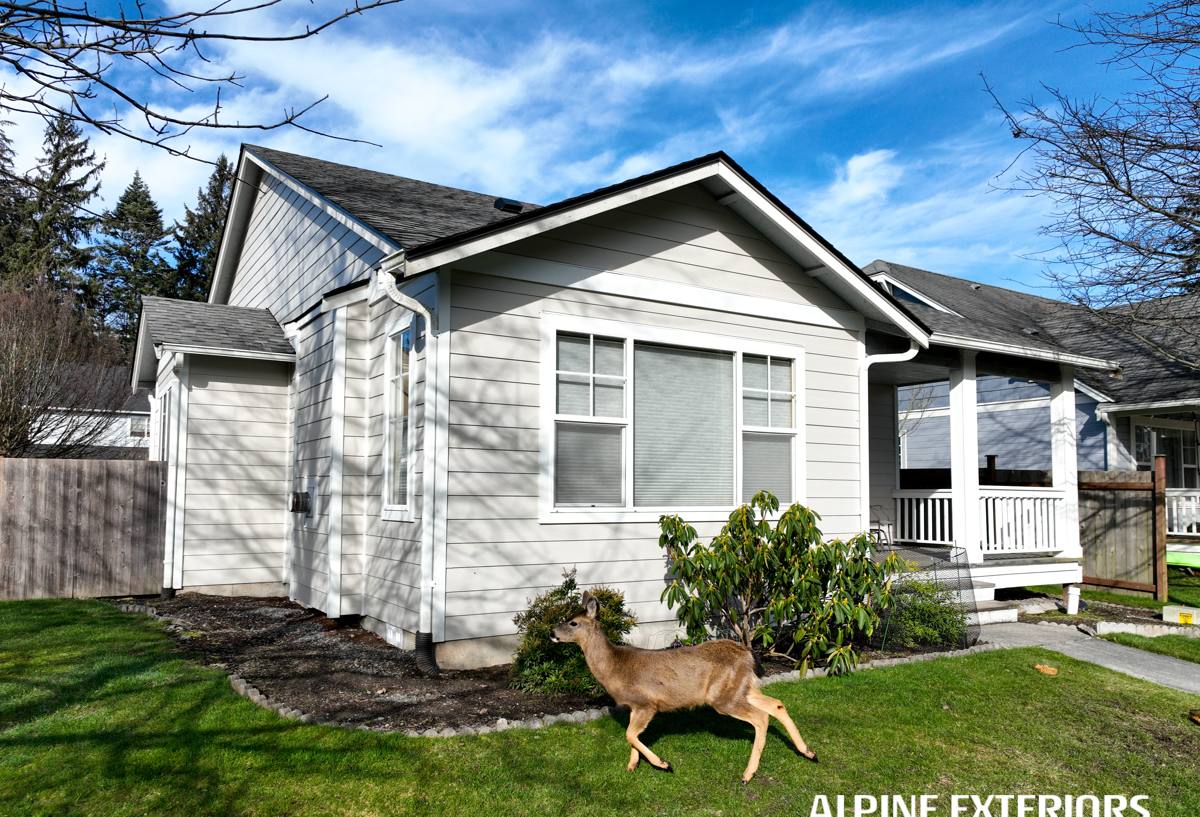
What the Local Climate Does to a House
Salt Air and Moisture
Homes in and around Everett sit close enough to Puget Sound that salt-laden air is a real factor in how exterior materials age. Salt air accelerates corrosion on fasteners and metal trim, and it interacts badly with certain coatings — especially on products that rely on a thin factory or field-applied finish to keep moisture out. Over years, that combination shows up as chalking, fading, and eventually finish failure at seams and edges.
Driving Rain
This isn't a region of gentle, straight-down drizzle. Storms here regularly come with wind, which pushes rain sideways into wall assemblies — around window trim, at butt joints, behind poorly lapped siding courses. A siding system that isn't dimensionally stable, or that swells and contracts significantly with moisture, opens up gaps at exactly the joints where wind-driven rain wants to get in.
The Long Moss Season
Snohomish County's wet season runs long — often eight or nine months where surfaces stay damp more often than they dry out. That's ideal growing conditions for moss, algae, and mildew on north-facing walls, shaded siding, and anywhere airflow is limited. Some siding materials are more porous or more prone to holding surface moisture, which gives organic growth a foothold faster and makes it harder to fully clean off without damaging the finish.
Why We Only Install James Hardie Fiber Cement
We used to install a broader range of products. We narrowed to James Hardie exclusively after seeing, on real homes in this climate, which materials held up and which ones created recurring maintenance and warranty headaches. Here's the honest breakdown of the alternatives and why we stepped away from them:
Vinyl Siding
Vinyl is inexpensive and low-maintenance in dry climates, and it has real advantages there. In a marine climate with driving rain, vinyl's weak point is that it's a cladding, not a water barrier — it relies heavily on what's behind it, and its panels can warp or bow with temperature swings and UV exposure over time. It also can't be painted to match a home's evolving color scheme without voiding warranties, and impact resistance in cold weather is lower than fiber cement.
LP SmartSide
LP SmartSide is an engineered wood product, and engineered wood — even with resin treatments — is still wood at its core. Wood-based siding is more sensitive to sustained moisture exposure than fiber cement, which matters directly in a region with a long wet season. It performs fine when installation and maintenance are perfect; the trade-off is a narrower margin for error over decades of driving rain and moss growth.
Other Fiber Cement Brands (Cemplank, Allura)
These are legitimate fiber cement products and share the same base material advantages as Hardie. Where they differ is in factory finish technology, product line engineering for specific climates, and the depth of the manufacturer's installed track record and warranty backing in the Pacific Northwest. We standardized on Hardie because of its ColorPlus factory-baked finish and HZ product engineering specifically for moisture-prone climates like ours — not because competing fiber cement is a bad material.
Primed Spruce or Cedar
Cedar has real aesthetic appeal and a long tradition in this region. Natural wood siding also demands the most ongoing maintenance of anything on this list — recoating, caulking, and moisture monitoring on a schedule that most homeowners underestimate when they choose it. In a climate with this much sustained dampness, unmaintained wood siding is the fastest path to rot, especially at grade and around penetrations.
James Hardie: What You're Actually Getting
Fiber cement siding is a mix of cement, sand, and cellulose fibers, pressed and cured into planks and panels. It's non-combustible, which matters both for wildfire-adjacent risk and for standard homeowner's insurance considerations. It doesn't rot, doesn't attract insects, and holds paint and factory finishes far longer than wood-based products because it doesn't expand and contract with moisture the way wood does.
Hardie's ColorPlus finish is baked on at the factory under controlled conditions, rather than field-painted on site. That matters for the salt-air and UV exposure this area sees — a factory finish is more uniform and more resistant to fading and chalking than most field-applied paint jobs, and it comes with its own finish warranty separate from the substrate warranty.
Hardie also makes climate-specific product lines (their "HZ" designations) engineered for different moisture and temperature zones. We install the versions specified for our climate zone, which is a detail that gets skipped more often than homeowners realize when a crew isn't paying attention to regional engineering specs.
How Our Siding Process Works
Assessment and Estimate
We start with a walk-around of the house — checking existing siding condition, trim, flashing, and any signs of moisture intrusion at windows, doors, and roof-to-wall transitions. We're not just quoting siding panels; we're looking at the whole water-management system of the exterior, because siding failures are very often flashing and detailing failures, not material failures.
Prep and Water Management
Correct installation starts underneath the siding, not with the siding itself. That means proper weather-resistive barrier, correct flashing at every window and door opening, and attention to how water is directed away from the wall assembly at the bottom of the wall and around penetrations. This is the step that determines whether driving rain stays outside the wall or works its way in over the following winters.
Installation to Manufacturer Spec
James Hardie publishes detailed installation requirements — fastener spacing and type, minimum clearances from grade and roofing, caulking and sealant specifications, and lap and joint treatment. Installing off-spec is one of the most common ways a fiber cement product underperforms, and it's also the fastest way to void a manufacturer warranty. We install to spec, full stop.
Finish Details
Trim, corner treatments, and caulking get finished with attention to how they'll perform under sustained wind-driven rain, not just how they look on install day. Small gaps at trim joints are exactly where this region's weather finds its way in over time.
Cost Factors to Understand Before You Budget
Every home is different, and we won't quote a number without seeing the house, but these are the variables that actually move the price on a siding project:
| Factor | Why It Matters |
|---|---|
| Home size and wall complexity | More corners, dormers, and roof lines mean more cutting, flashing, and labor time |
| Existing siding removal | Tear-off adds cost versus siding over a properly prepped surface (when that's an option) |
| Underlying moisture damage | Rot or water intrusion found during tear-off needs to be repaired before new siding goes on |
| Siding profile and finish selection | Lap width, shingle-style panels, and specific ColorPlus finishes vary in material cost |
| Trim and accessory scope | Window trim, corner boards, and fascia work are often bundled into a full exterior refresh |
| Access and site conditions | Steep lots, limited staging space, and multi-story walls affect labor and equipment needs |
Why a Local Crew Matters Here
A crew that only works this region learns things that don't show up in a manufacturer's general installation guide: which wall orientations in Snohomish County take the worst of the wind-driven rain, where moss tends to establish first on a given roof-to-wall detail, and how salt air behaves differently a few miles inland versus right along the water. That local pattern recognition affects real decisions — flashing details, ventilation choices, and where to spend extra attention during installation.
It also matters for warranty support after the job is done. A contractor who's still working in Everett and Snohomish County five and ten years from now is the one who can actually stand behind a Hardie installation warranty claim, rather than a crew that moved on to other regions.
Maintenance: What Eastmont Homeowners Should Actually Do
James Hardie siding is low-maintenance, not no-maintenance. A little seasonal attention goes a long way in this climate:
- Rinse siding with a garden hose once or twice a year to clear pollen, dust, and early moss spores before they establish
- Keep gutters clear so overflow doesn't run down and saturate wall sections repeatedly
- Trim back vegetation and tree limbs that keep siding shaded and damp for extended periods
- Inspect caulking at trim joints and penetrations every couple of years and recaulk where it's cracked or pulled away
- Address any soft spots, staining, or bubbling paint promptly rather than waiting — early attention is cheaper than a repair after moisture gets behind the siding
- Walk the exterior after major windstorms to check for loose trim or panels that need resecuring
Roofing, Windows, and Decks: The Rest of the Envelope
Siding doesn't work in isolation. We also handle roofing, window replacement, and decks, because a home's exterior is one connected water-management system. A roof that's shedding water improperly onto a wall, or a window that isn't flashed correctly, will undermine even a perfectly installed siding job. When we're on site for a siding estimate, we'll flag anything we see in those other areas that's worth addressing at the same time — not to upsell, but because it directly affects how well the siding performs.
Getting Started
If your Eastmont home is showing its age — fading paint, soft trim, moss that keeps coming back no matter how often you clean it — it's worth having a local crew take a look before those issues turn into structural repairs. We'll walk the exterior with you, point out what we see, and give you a straightforward estimate for James Hardie siding installed to spec for this climate. No pressure, no obligation — just a clear look at what your home actually needs. Fill out the form below to schedule a free estimate.