 Everett
 Roofing Built for Delta's Weather, Not Just Any Weather
Delta sits close enough to the Snohomish River and Puget Sound that homes here deal with a weather mix that's tougher on a roof than what you'd find further inland. Salt-tinged air off the water, long stretches of driving rain, and a moss season that can run eight or nine months out of the year all put steady wear on roofing materials. A roof that's rated fine for "Pacific Northwest weather" in general doesn't always account for the specific combination Delta homes see. When we install a new roof in this neighborhood, we're building for those exact conditions, not a generic climate zone.
This page focuses on one job: full new roof installation for Delta homes. Not repairs, not roof-over patches — a complete, correctly installed system suited to this location.
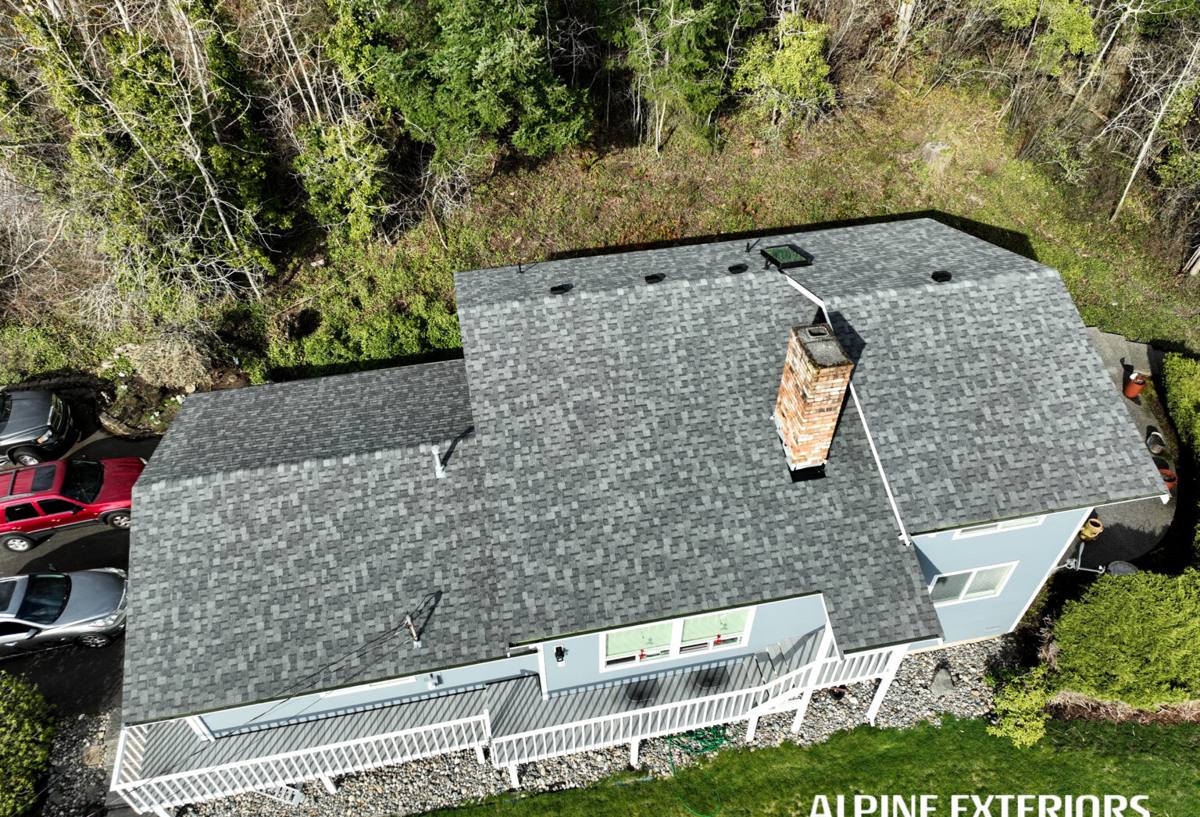
What Delta's Climate Actually Does to a Roof
It helps to understand the specific ways local weather shortens a roof's life, because it changes what "correct installation" means here.
Salt Air and Metal Fasteners
Proximity to the water means airborne salt and moisture settle on roofing surfaces and metal components. Cheap or mismatched fasteners, flashing, and drip edge can corrode faster than the shingles around them, which is often where leaks start — not in the field of the roof, but at the metal details. Using fasteners and flashing rated for coastal exposure is a small cost difference during installation and a large difference in how the roof holds up over 15-20 years.
Driving Rain and Wind-Driven Water
Snohomish County rain doesn't always fall straight down. Wind-driven rain gets pushed sideways and upward under shingle edges, around vents, and into any gap in the underlayment or flashing. A roof built for light, vertical rainfall in a drier climate can underperform here even if the shingles themselves are a fine product. Installation detail — how laps are sealed, how underlayment is run, how valleys and penetrations are treated — matters more in this climate than shingle brand alone.
Moss and Sustained Moisture
Everett's tree cover, humidity, and shaded rooflines create long moss seasons. Moss holds moisture against the roof surface, works into shingle granules and seams, and can lift edges over time if left unmanaged. A new roof installed with moss-resistant materials and proper ventilation is a very different long-term proposition than one installed without those factors in mind.
Signs a Delta Home Needs a New Roof, Not a Repair
- Granule loss heavy enough that you're finding grit in gutters and downspouts regularly
- Shingles that are curling, cupping, or cracking across multiple areas of the roof, not just one spot
- Moss or moss staining that keeps returning within a season or two of cleaning
- Daylight visible through the roof deck from inside the attic
- Soft or spongy decking underfoot when walked, or sagging visible from the ground
- Repeated leaks in different locations rather than one recurring spot
- A roof that is at or past its expected service life for its material type
- Rising energy bills tied to poor attic ventilation or insulation loss at the roofline
If a roof is showing one or two of these in isolation, a repair may still make sense. When several show up together, or the roof is old enough that repairs are just delaying the inevitable, a full replacement is usually the more honest recommendation — and the more cost-effective one over time.
What a Correct New Roof Installation Involves
A new roof is more than laying new shingles over what's there. Done right, it includes several steps that are easy to skip and hard to notice until the roof starts failing early.
Tear-Off and Deck Inspection
We remove the old roofing down to the deck rather than layering over it. This lets us actually see the plywood or OSB underneath, which is the part of the system doing the structural work. Any soft, delaminated, or water-damaged decking gets identified and replaced before anything new goes down — installing new roofing over a compromised deck just hides a problem that will resurface.
Underlayment and Ice/Water Protection
Given how much wind-driven rain Delta sees, underlayment choice and installation matter. Self-adhered ice-and-water membrane at eaves, valleys, and around penetrations gives a second line of defense where wind-driven rain is most likely to find a way in, backing up the primary roofing material.
Flashing and Metal Details
Step flashing at walls, valley flashing, drip edge, and vent flashing are where most roof leaks actually originate — not in the open field of shingles. We use flashing and fasteners suited to coastal-influenced air rather than generic hardware that corrodes faster in this environment.
Ventilation
Proper intake and exhaust ventilation keeps the attic temperature and moisture level balanced. In a climate with Everett's humidity and moss pressure, poor ventilation shortens shingle life from underneath, not just from weather exposure on top. It also plays a role in ice damming during cold snaps and in keeping condensation from forming inside the attic.
Material Selection
We install roofing systems chosen for how they perform under sustained moisture and moss pressure specifically, not just for upfront cost or appearance. That includes discussing algae-resistant shingle options, appropriate underlayment systems, and metal components rated for coastal air, so the choices made during installation match the climate the roof will actually live in for the next two decades.
Roofing Material Comparison for Delta Homes
| Material | Typical Lifespan Here | Moss/Moisture Behavior | Maintenance Burden |
|---|---|---|---|
| Asphalt composition shingle (standard) | 18-25 years | Prone to moss without algae-resistant granules | Periodic moss/debris cleaning recommended |
| Asphalt composition shingle (algae-resistant) | 20-30 years | Copper/zinc granules resist moss growth better | Lower, still benefits from gutter/debris maintenance |
| Metal (standing seam or panel) | 40-60 years | Sheds moisture fast, minimal moss adhesion | Low, but higher upfront cost |
| Cedar shake (untreated) | 15-25 years, shorter in shaded/damp areas | Absorbs moisture, higher moss and rot risk locally | High — regular treatment needed in this climate |
None of these is universally "right." The choice depends on the home's roofline, budget, shading from trees, and how much ongoing maintenance the homeowner wants to take on. We'll walk through the honest trade-offs for a specific roof rather than pushing one material as a default.
How Our Process Works
1. On-Site Assessment
We walk the roof and attic, check the deck condition where accessible, note ventilation setup, and identify any trouble spots specific to the home's layout, tree cover, and sun exposure.
2. Written Scope and Estimate
You get a clear, itemized plan covering materials, flashing details, ventilation work, and any deck repair contingencies — no vague line items and no pressure to decide on the spot.
3. Scheduling Around Weather
Given Snohomish County's rain patterns, we plan installation windows carefully and use dry-in materials to keep the home protected if weather shifts mid-project.
4. Installation
Tear-off, deck inspection and repair, underlayment, flashing, ventilation, and final roofing material go in, in that order, with each stage checked before moving to the next.
5. Final Walkthrough
We walk the finished roof and attic ventilation with you, review what was done, and make sure the site — gutters, landscaping, driveway — is cleaned up.
Why Hiring a Crew That Already Works in Delta Matters
Roofing crews who work regularly in this part of Snohomish County have already seen how local conditions play out over years, not just at installation. That means knowing which flashing details tend to fail first near the water, which rooflines in tree-heavy areas need extra ventilation attention, and how moss pressure behaves differently on a shaded north-facing slope versus a sun-exposed one. It also means being familiar with local permitting and inspection processes, so the project moves without unnecessary delays. A crew unfamiliar with this specific coastal-and-tree-cover combination may build a technically sound roof for the wrong climate.
Cost Factors Worth Understanding Upfront
- Roof size and pitch — steeper or more complex rooflines take more labor and material
- Number of layers being removed — tear-off of multiple old layers adds time and disposal cost
- Deck condition — plywood/OSB replacement is priced separately since it's only known once tear-off begins
- Material choice — standard shingle, algae-resistant shingle, or metal carry different price points
- Ventilation and flashing upgrades — bringing an older roof's ventilation up to current standards
- Access and site conditions — steep lots, limited driveway access, or dense tree cover can affect logistics
We put these in writing before work starts so there aren't surprises partway through the job.
Let's Look at Your Roof
If your Delta home's roof is showing wear, aging out, or you just want an honest read on where it stands, we're happy to take a look. There's no pressure and no cost to get a clear picture of your options — use the form below to request a free estimate.