 Everett
 Edmonds and Everett Sit in a Tough Neighborhood for Siding
Edmonds is a Puget Sound waterfront community in Snohomish County, and that location is exactly what makes siding decisions here different from siding decisions inland. Homes close to the water deal with salt-laden air moving off the Sound. Homes up the hill and further into Everett still get the same marine weather pattern — long wet winters, short dry summers, and a lot of gray days in between where moisture just sits against a house instead of drying off quickly. None of that is exotic information to anyone who has lived here a while, but it matters enormously when you're choosing what material is going to sit on the outside of your home for the next 20 to 40 years.
We work throughout Everett and the surrounding Snohomish County communities, including Edmonds, and we see the same failure patterns repeat on certain siding products year after year. That pattern is the reason our company made a deliberate decision: we install James Hardie fiber cement siding, and we don't install vinyl, LP SmartSide, Cemplank, Allura, primed spruce, or cedar. This page explains why, and what that means for a home in this specific area.
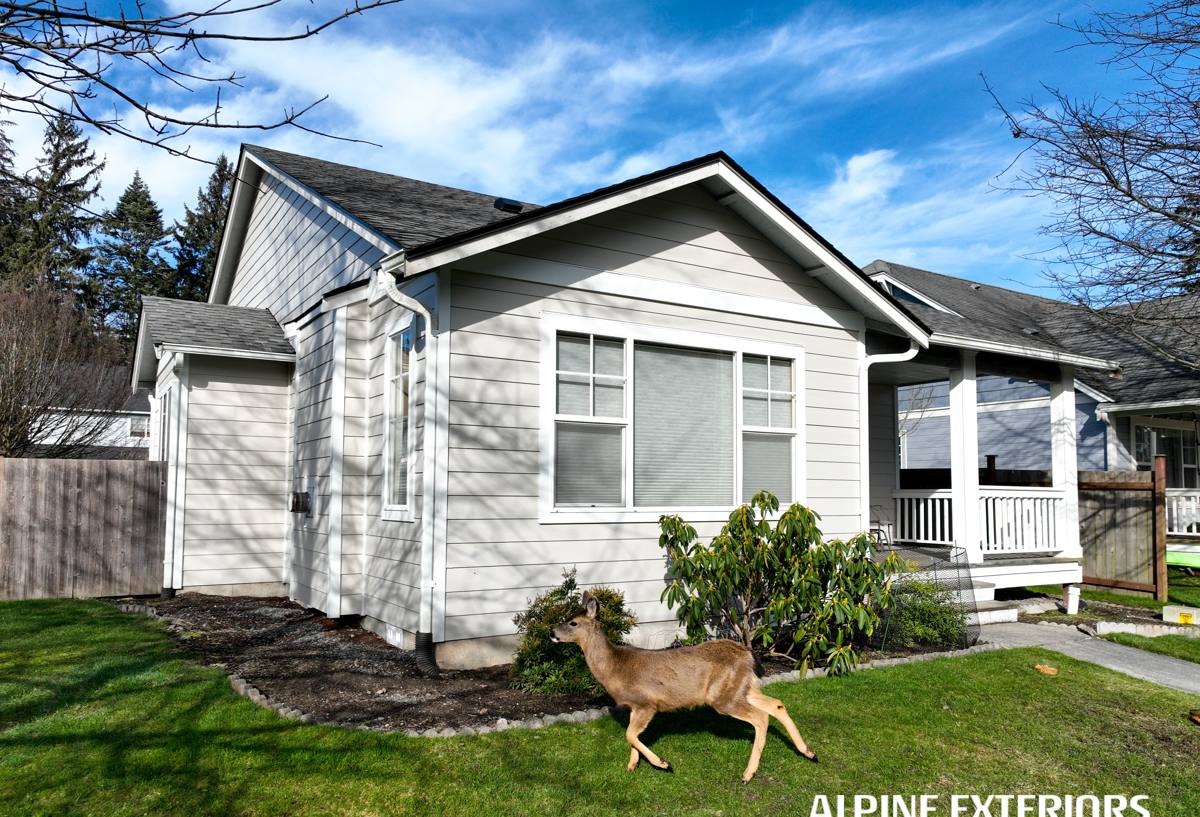
What the Local Climate Actually Does to Siding
Salt Air and Corrosion
Proximity to Puget Sound means airborne salt is a real, ongoing factor for Edmonds homes, and it doesn't stop at the waterfront — wind carries it inland. Salt air accelerates corrosion of fasteners, flashing, and any exposed metal trim, and it degrades certain coatings and finishes faster than a dry, inland climate ever would. Siding materials and installation hardware that aren't specified for a coastal-adjacent environment tend to show their weak points here sooner than the manufacturer's marketing would suggest.
Driving Rain
Wind-driven rain off the Sound doesn't just fall straight down — it gets pushed sideways into wall assemblies, corners, and window returns. That means water intrusion risk is concentrated at seams, joints, and butt ends far more than it would be in a calmer climate. A siding system's water-shedding detail — how laps are cut, how joints are flashed, how caulk and sealant are used (or not used) — matters as much as the material itself.
Moss and Sustained Dampness
Snohomish County's long wet season gives moss, algae, and mildew a lot of time to establish themselves on north-facing walls, shaded elevations, and anywhere siding stays damp for days at a stretch. Organic material that gets a foothold on a wall surface doesn't just look bad — sustained dampness against wood-based or wood-fiber products can accelerate rot at edges and fastener points if the material isn't built to resist moisture uptake.
Why We Standardized on James Hardie Fiber Cement
James Hardie fiber cement is a cement, sand, and cellulose fiber composite, engineered and factory-finished specifically to handle the kind of climate exposure Edmonds and Everett homes deal with. A few things about it matter directly to this area:
- Non-combustible core — fiber cement doesn't burn, which matters for wildfire-adjacent risk and for insurance conversations, even in a wet climate where fire isn't the first thing homeowners think about.
- Engineered for moisture — Hardie's HZ5 product line is formulated and rated for climates with sustained moisture exposure, which describes the Puget Sound region well.
- ColorPlus factory finish — the color is baked on in a controlled factory process rather than field-painted, which gives far more consistent, long-lasting coverage against UV and moisture than job-site painting, and it holds up better against the salt-air fading and chalking we see on lesser coatings locally.
- Doesn't rot or delaminate — because it isn't wood or a wood derivative, it doesn't provide the same food source for moss, algae, and fungal growth that wood-based siding does, and it doesn't swell, warp, or delaminate the way some engineered wood products can when moisture gets behind them.
- Strong transferable warranty — Hardie backs its product with a warranty that can transfer to a new owner, which is a real selling point if you ever list the house.
None of this means fiber cement is magic or maintenance-free. It still needs correct installation, proper caulking at joints, and periodic washing to keep moss and grime from building up — but the material itself isn't the weak link the way some alternatives are.
Why We Don't Install Vinyl, LP SmartSide, or Cedar
Vinyl Siding
Vinyl is inexpensive and low-maintenance in the sense that it doesn't need repainting, and we understand why it's popular. But vinyl is a thin plastic product that expands and contracts significantly with temperature swings, and its seams and J-channels rely heavily on overlap and gravity rather than a sealed, engineered joint. In a driving-rain environment like this one, that reliance on overlap rather than a true water-managed seam is a real trade-off. Vinyl also has a lower impact and heat tolerance than fiber cement, and its color is molded-in rather than factory-baked, so long-term UV fading is a known limitation.
LP SmartSide, Cemplank, and Allura
LP SmartSide is a wood-strand product with a resin-saturated overlay, and while it has improved over the years, it's still fundamentally a wood-based product — which means its long-term performance depends heavily on caulking, paint maintenance, and keeping cut edges sealed. In a climate with this much sustained dampness and moss pressure, that's a maintenance burden we don't think is worth the upfront savings. Cemplank and Allura are both fiber cement competitors to Hardie, and while fiber cement as a category is the right call for this region, we've standardized on one manufacturer, one installation system, and one warranty structure so we can guarantee our work with confidence rather than juggling multiple product specs.
Primed Spruce and Cedar
Solid wood siding, whether primed spruce or cedar, is a beautiful traditional material, and cedar in particular has real appeal in the Pacific Northwest. But real wood is the most moisture-sensitive siding option available, and in a climate defined by salt air, driving rain, and long moss seasons, it demands the most upkeep — regular refinishing, vigilant caulking, and active moss and mildew management — to avoid rot. We'd rather be honest about that trade-off upfront than sell a product we know will cost a homeowner more in maintenance over time.
What Correct Installation Looks Like in This Climate
Fiber cement only performs as well as its installation. A crew that doesn't understand local exposure conditions can undermine even the best material. On every Edmonds and Everett project, correct installation means:
- Proper clearance between siding and grade, decks, and roof lines to avoid wicking moisture
- Rain-screen or drainage-plane detailing so water that gets behind the siding has somewhere to go
- Correctly flashed windows, doors, and penetrations — the majority of water intrusion problems start at these transitions, not in the field of the wall
- Stainless or coated fasteners appropriate for a salt-air environment
- Manufacturer-specified nailing patterns and joint treatment, including sealed butt joints where required
This is also where a local crew matters. Installers who work Snohomish County year-round know which elevations catch the worst of the wind-driven rain, which walls stay shaded and damp longest, and how to detail a home accordingly — rather than applying a one-size-fits-all approach.
Beyond Siding: Roofing, Windows, and Decks Face the Same Climate
Siding doesn't work in isolation. The same salt air, rain, and moss pressure that affects your walls affects your roof, windows, and any deck attached to the house. We handle all four because they need to work together as one weather-resistant envelope — flashing at a roof-to-wall transition has to coordinate with the siding detail below it, and window flashing has to integrate with the siding around it. A window or roof replacement done without attention to how it ties into the siding is a common source of leaks we get called out to fix.
Cost Factors to Understand
| Factor | Why It Matters Here |
|---|---|
| Home size and elevation complexity | More corners, dormers, and roof-wall transitions mean more flashing and cut work, which affects labor more than material cost |
| Existing siding removal | Removing old cedar, vinyl, or damaged material adds labor and may reveal sheathing repairs needed before new siding goes on |
| Moisture damage found during tear-off | Coastal-adjacent homes with a history of moisture intrusion sometimes need sheathing or framing repair before siding can go back on |
| Trim and accessory selection | Hardie trim, soffit, and fascia matched to the siding line adds cost but keeps the whole exterior performing as one system |
| Color and texture line | ColorPlus factory finishes and certain textures within the Hardie lineup carry different price points |
We give straightforward, itemized estimates rather than vague lump-sum numbers, so you can see what you're actually paying for.
Choosing a Contractor for a Siding Project in This Area
A few things worth checking before you hire anyone to work on your home:
- Are they licensed and insured to work in Washington State, and can they show it without hesitation?
- Do they have specific experience with fiber cement installation, not just general siding experience?
- Will they explain flashing and water-management detail, or just talk about the color and finish?
- Do they work in your specific area regularly, and do they understand its exposure conditions?
- Is the warranty — both manufacturer and workmanship — explained clearly and in writing?
A crew that's unfamiliar with Puget Sound conditions can install a product correctly by the manual and still get the detailing wrong for this climate. Local, repeat experience in Snohomish County is worth asking about directly.
Get a Free, No-Pressure Estimate
If your Edmonds or Everett home has aging siding, visible moss buildup, or you're just planning ahead for a future exterior project, we're happy to take a look and walk you through what we'd recommend and why. There's no cost and no pressure — just a straightforward assessment from a crew that works in this climate every day. Use the form below to request your free estimate.