 Everett
 Serving Forest Park's Older Housing Stock
Forest Park sits close enough to Puget Sound that homes here deal with a different exterior workload than houses further inland in Snohomish County. Between the marine air drifting up from the water, the long stretches of steady rain that define an Everett winter, and the shade thrown by the mature trees the neighborhood is known for, siding, trim, and roofing in this area age differently than they would in a drier, sunnier part of the state. We've worked on homes throughout Everett long enough to know what that combination does to an exterior over ten, twenty, and thirty years, and we plan every job around it rather than treating it as an afterthought.
A lot of the housing in and around Forest Park predates today's fiber cement products, which means many of the homes we're called to still have their original wood siding, or a vinyl or composite retrofit installed at some point in the last few decades. When we're out for an estimate, we're not just quoting a like-for-like replacement — we're looking at what's actually happened to the wall assembly underneath, and what product will genuinely hold up going forward given the site conditions.
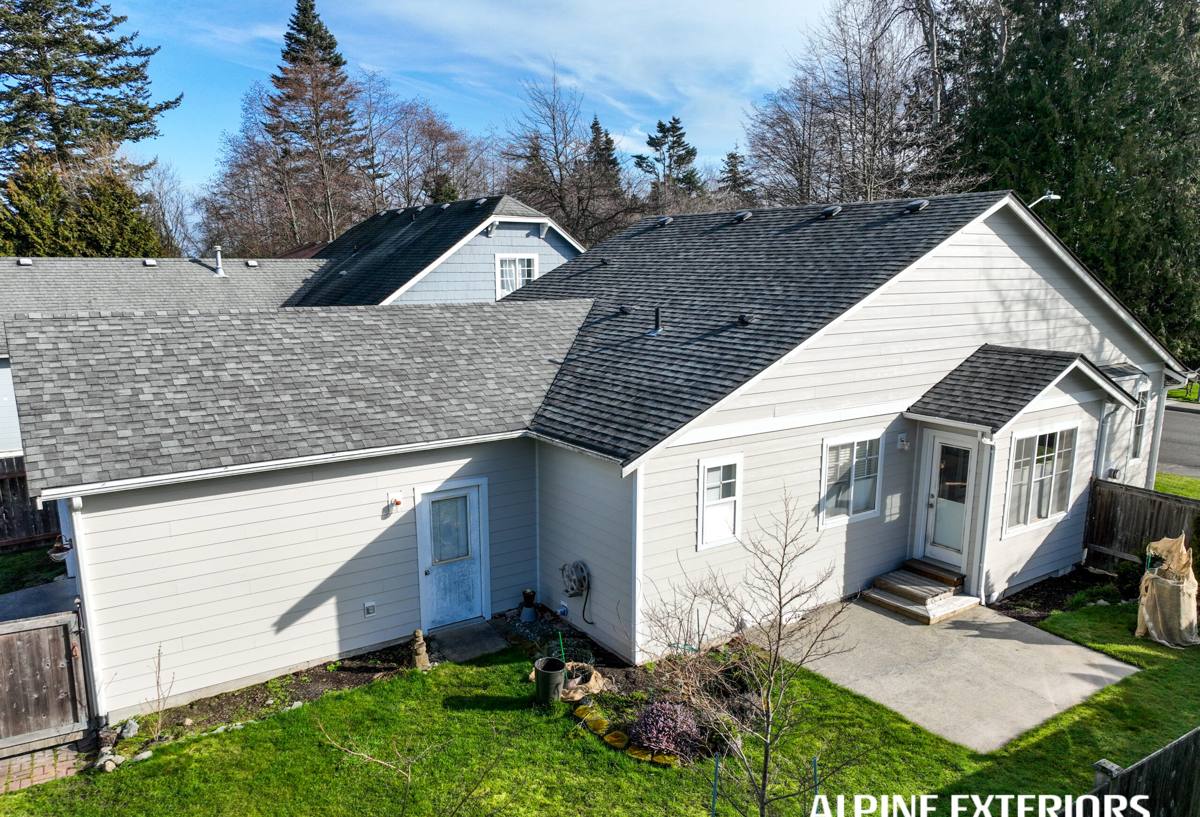
What Salt Air, Rain, and Moss Actually Do to a House
Salt Air and Moisture
Everett isn't oceanfront, but it's close enough to Puget Sound that airborne salt and moisture reach exterior surfaces, especially on homes with more open exposure. Salt-laden moisture accelerates corrosion on fasteners, flashing, and any metal trim components, and it keeps painted and coated surfaces damper longer than they'd stay in a purely inland climate. Over years, that shows up as premature paint failure, rust bleed at nail heads, and softer performance from materials that weren't engineered with coastal-adjacent exposure in mind.
Driving Rain
Western Washington rain isn't usually violent, but it's persistent, and wind-driven rain finds every gap in a building envelope that isn't detailed correctly. Lap siding with poor overlap, caulk joints that have shrunk and cracked, or trim that was face-nailed instead of properly flashed all become entry points over time. The real damage from Everett's rain pattern isn't any single storm — it's cumulative moisture intrusion behind the cladding that you don't see until there's rot, staining, or a soft spot in the wall.
Moss and Shade
Forest Park's tree cover is part of what makes the neighborhood pleasant to live in, but shaded, damp surfaces are exactly where moss and algae take hold. On roofing, moss growth lifts shingles and holds moisture against the roof deck. On siding, algae staining and moss creep at ground level or under eaves signal that a surface is staying wet far longer than it should. A siding material that resists moisture absorption and doesn't feed organic growth the way bare wood can matters more here than in a drier neighborhood across town.
Quick Signs Your Exterior Is Losing the Fight
- Paint that's peeling, bubbling, or chalking faster than the last time you painted
- Soft or spongy siding, especially near the bottom courses or around window trim
- Persistent moss or dark streaking on siding or roofing that comes back after cleaning
- Visible gaps, cracked caulk, or warped boards at butt joints and corners
- Rust staining running down from nail heads or metal flashing
- Higher heating bills that suggest air and moisture are getting past the exterior
Our Services in Forest Park
We handle the full exterior envelope, not just one component, because siding, roofing, windows, and decks all interact with each other on a real house. A re-side without attention to flashing and window integration just relocates the moisture problem; a new roof that ignores failing fascia boards underneath doesn't actually solve anything.
Siding
We install James Hardie fiber cement siding exclusively — more on why below. That includes lap siding, shingle-style panels, and trim, fitted to the specific look of the home rather than a one-size approach.
Roofing
Roof work in a shaded, damp neighborhood like Forest Park is as much about moss prevention and proper ventilation as it is about the shingles themselves. We look at ventilation, underlayment, and flashing details, not just surface material.
Windows
Old, poorly sealed windows are a major source of both heat loss and water intrusion around the rough opening. When we replace siding near existing windows, we check that flashing and trim integration is done correctly — a lot of moisture problems we find start at window openings, not the siding field itself.
Decks
Exterior decks in this climate take a beating from the same rain and shade that affects siding. We build and repair decks with materials and detailing meant to shed water and resist the rot that comes from constant damp exposure.
Why We Only Install James Hardie Siding
We used to install a range of siding products. We don't anymore, and it's worth explaining why, especially for a neighborhood like Forest Park where the climate load on an exterior is genuinely higher than average.
Vinyl siding is inexpensive and low-maintenance in the sense that it doesn't need painting, but it's a petroleum-based product that expands and contracts significantly with temperature swings, can warp or crack in impact or extreme cold, and doesn't offer the same fire resistance as fiber cement. In a damp, shaded neighborhood, vinyl also tends to trap moisture behind it if installation isn't precise, since it relies heavily on a working drainage plane rather than the material itself resisting water.
LP SmartSide and other engineered wood products use a resin-treated wood strand core, which performs reasonably well when installation and maintenance are kept up perfectly — but wood-based products are inherently more vulnerable to moisture intrusion at cut edges and joints than fiber cement is. Given how much sustained moisture Everett's climate throws at an exterior, that's a maintenance burden we're not willing to put on a homeowner's shoulders.
Primed spruce and cedar are beautiful, traditional choices, and cedar in particular has real appeal. But both are natural wood products requiring disciplined, recurring maintenance — sealing, painting, and moisture monitoring — to avoid exactly the rot and moss issues Forest Park's tree cover and rain pattern encourage. We've seen too many wood-sided homes in shaded lots fall behind on that maintenance schedule and pay for it in decay.
James Hardie fiber cement siding is non-combustible, dimensionally stable across temperature and moisture swings, and factory-finished with Hardie's ColorPlus coating, which holds color and resists the chalking and peeling that plague field-painted surfaces in wet climates. Hardie's HZ5 product line is engineered specifically for climates with significant moisture exposure, which describes Forest Park well. It doesn't feed moss and algae growth the way wood does, and it comes with a strong transferable warranty when installed to Hardie's specification. That combination — durability, moisture resistance, and warranty backing — is why we standardized on it and stopped installing everything else.
Comparing Siding Options for a Marine-Adjacent Climate
| Material | Moisture Resistance | Maintenance Load | Fire Resistance | Typical Lifespan Here |
|---|---|---|---|---|
| James Hardie Fiber Cement | High — HZ5 line engineered for wet climates | Low — factory finish, no field painting needed for years | Non-combustible | 30+ years with correct install |
| Vinyl | Depends heavily on install quality behind panel | Low, but can crack/warp with age and impact | Combustible, can melt/deform | 15-25 years, variable |
| LP SmartSide / Engineered Wood | Moderate — vulnerable at cut edges and joints | Moderate — needs sealed edges maintained | Combustible | 20-25 years with upkeep |
| Cedar / Primed Spruce | Low without diligent upkeep | High — regular sealing/painting required | Combustible | 15-25 years, upkeep-dependent |
What Correct Installation Looks Like
Fiber cement siding is only as good as its installation. In a climate like Everett's, the details that get overlooked are usually the ones that fail first: proper flashing at windows and doors, correct nail placement and spacing per Hardie's fastening schedule, adequate clearance at grade and roof lines so siding isn't wicking moisture from standing water or debris buildup, and a functioning weather-resistive barrier and drainage plane behind the cladding. We install to Hardie's published specifications because that's what keeps the manufacturer's warranty valid and what actually performs in wet, shaded conditions over decades, not just years.
Why a Local Everett Crew Matters
A crew that works Snohomish County regularly understands things a traveling or out-of-area contractor might miss: how far moss creep tends to reach up a shaded wall by year five, how local permitting and inspection processes work, and which detailing choices actually hold up against a Puget Sound-adjacent winter versus which ones look fine on paper. We're not guessing at how a product will perform in this climate — we're seeing the results on homes we've already worked on across the area.
What to Expect From an Estimate
When we come out to a Forest Park property, we're assessing the current condition of the siding, trim, roofing, and any related water damage, not just measuring square footage. We'll walk you through what we find, what's driving the wear we're seeing, and what a Hardie siding system would look like for that specific house — including how trim, color, and profile choices fit the home's style.
If you're noticing paint failure, moss that keeps coming back, soft trim, or you're just planning ahead for a home in Forest Park, we're happy to come take a look. The estimate is free, there's no pressure, and you'll get a straight answer about what your exterior actually needs.