 Everett
 Snohomish's Climate Is Harder on Siding Than It Looks
Snohomish sits in that stretch of Snohomish County where Puget Sound weather meets river-valley humidity. It doesn't get the ice storms some parts of the country deal with, but it gets something arguably tougher on a house: months on end of low-intensity moisture. Misting rain, morning fog off the river bottoms, salt-tinged air drifting in from the Sound, and long stretches where surfaces just never fully dry out. That combination is exactly what wears down exterior siding faster than homeowners expect.
Wood-based products swell, check, and rot when they can't dry between wet spells. Vinyl becomes brittle over time and gaps at the seams, giving moisture a path behind the cladding. And almost every siding material in this climate eventually grows moss, algae, or mildew on north-facing walls and anywhere shaded by mature trees, which are common throughout Snohomish's older, tree-lined lots. None of this is a defect in any one house — it's just what happens when a building material meets this particular stretch of the Pacific Northwest, year after year, for decades.
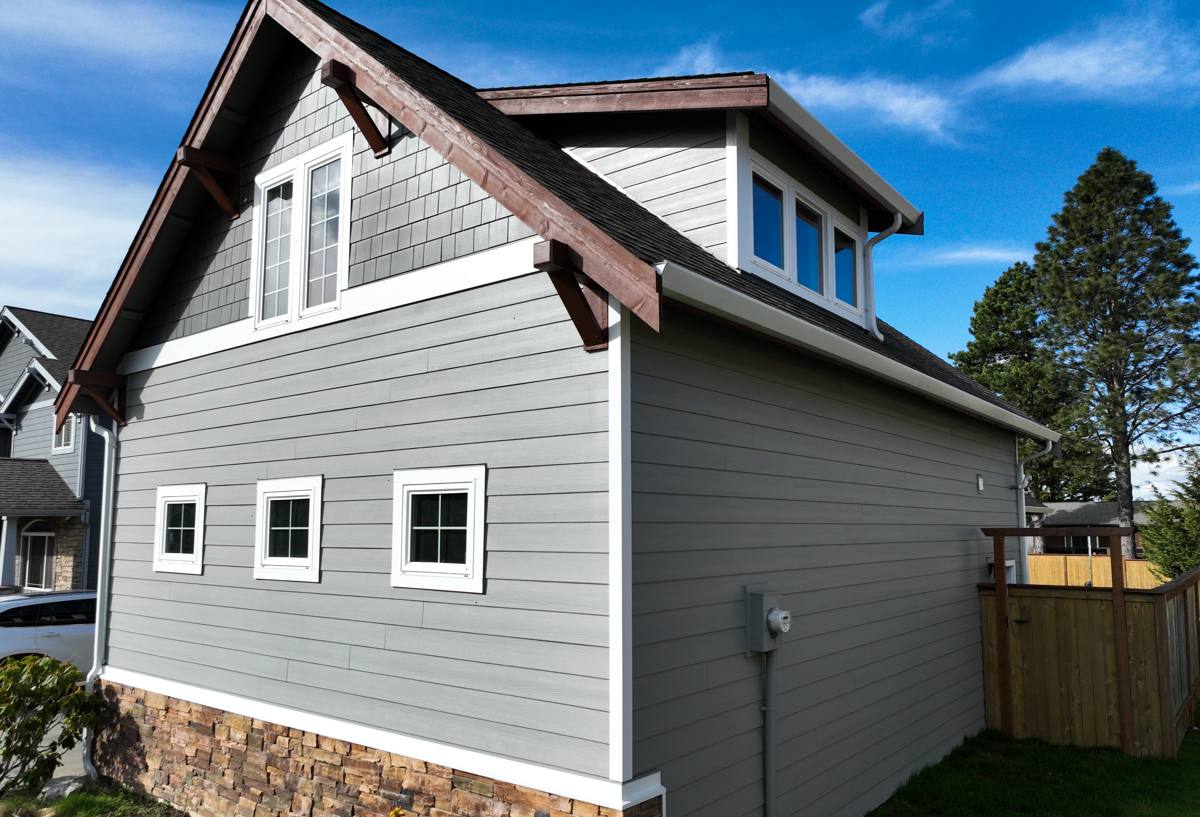
What We See on Snohomish Homes
Moss and Organic Growth
Moss doesn't just look bad — it holds moisture against the siding surface, which accelerates rot in wood products and can stain or degrade paint film on any material not built to resist it. Homes with heavy tree cover or a north-facing wall in constant shade are the ones we see it on most.
Paint and Finish Failure
Field-applied paint on wood or fiber cement breaks down faster here than in drier climates. Repainting every 3-7 years is normal for painted siding in this area, and every repaint cycle is labor and material cost the homeowner carries indefinitely.
Salt Air and Coastal Drift
Snohomish isn't right on the water, but it's close enough that salt-laden air moving up the Sound and through the river valley reaches exposed fasteners, trim, and finishes over time. Corrosion-prone fasteners and lower-grade finishes show their age faster in this environment than they would further inland.
Moisture Behind the Cladding
The real damage from Snohomish's wet season usually isn't visible on the surface — it's what happens behind the siding when water finds a way in through a poor seam, a missed flashing detail, or a gap that opened up as the material aged. That's an installation and material issue as much as a weather issue.
Why We Install Only James Hardie Fiber Cement
We made a deliberate decision to install one siding system on every home we side: James Hardie fiber cement. We don't offer vinyl, LP SmartSide, cedar, primed spruce, or other fiber cement brands like Cemplank or Allura. That's not because those products have no merit — some are less expensive up front, and some homeowners like the look or the price point. It's because, after years of doing this work in Western Washington's climate specifically, we decided we didn't want to keep repairing or repainting siding that couldn't handle what this region throws at it.
| Material | Common Trade-Off in This Climate |
|---|---|
| Vinyl | Can warp or become brittle over time; seams can open and let moisture behind the cladding |
| Cedar / Primed Spruce | Absorbs moisture, prone to rot and repeated repainting in a wet, low-drying climate |
| LP SmartSide (engineered wood) | Requires strict edge-sealing and maintenance discipline to prevent moisture intrusion at cuts and joints |
| Other fiber cement (Cemplank, Allura) | Similar base material to Hardie but different factory finish systems and warranty structures |
| James Hardie fiber cement | Non-combustible, engineered for Pacific Northwest moisture, factory-baked ColorPlus finish, strong transferable warranty |
James Hardie's HZ5 product line is engineered specifically for climates like ours — freeze-thaw cycles, sustained moisture, and everything Snohomish's weather pattern includes. The ColorPlus factory finish is baked on under controlled conditions rather than applied on-site, which means better fade resistance and no repaint cycle for years longer than field-painted alternatives. Fiber cement is also non-combustible, which matters given the wildfire smoke seasons the Pacific Northwest has seen in recent summers. None of this makes Hardie maintenance-free — it still needs periodic caulking checks and normal upkeep — but it's built to hold up to this specific climate far longer than the alternatives we chose not to carry.
How Correct Installation Actually Prevents These Problems
Fiber cement siding is only as good as the installation behind it. Most of the failures homeowners blame on "bad siding" actually trace back to installation shortcuts: nailing patterns that don't match manufacturer spec, missing or undersized flashing at windows and doors, insufficient gaps at butt joints, or caulking used to compensate for gaps that should have been engineered out from the start. A siding job done right in Snohomish's climate means:
- Correct flashing and water-resistive barrier detailing at every window, door, and penetration
- Manufacturer-specified fastening patterns and clearances so the material can expand and contract properly
- Proper starter strips and ground clearance to keep siding away from sustained ground moisture and splash-back
- Factory-finished panels installed with minimal field cutting, and any cut edges sealed per Hardie's specifications
- Attention to shaded, moisture-prone wall sections where moss and mildew are most likely to take hold
This is where a crew's experience with the local climate matters as much as the material itself. A contractor who mostly installs in a drier region may not think twice about a detail that's a real problem in a valley community that stays damp for months at a time.
Roofing, Windows, and Decks Work Together With Siding
Siding doesn't function in isolation. A roof with poor drainage or failing flashing sends water down onto siding it was never meant to absorb. Windows with degraded seals let moisture track into wall cavities behind otherwise sound siding. Decks attached to the house create another penetration point where flashing and water management have to be right. We handle all four — siding, roofing, windows, and decks — because on a home in this climate, they're really one connected water-management system, not four separate products. When we look at a Snohomish home, we're looking at how the whole exterior sheds water, not just how one wall looks.
Why a Local Crew Matters Here
Snohomish County's mix of river-valley lots, mature tree canopy, and proximity to the Sound creates microclimates that vary block to block. A crew that works this specific area regularly knows which streets tend to hold moisture longer, which lots need extra attention to drainage and grading before siding goes up, and how much clearance to leave for the moss and algae growth that's normal here. That local knowledge shows up in small decisions — where to add extra flashing, which walls need better ventilation clearance — that a crew unfamiliar with the region might not think to address.
What a Siding Project Looks Like
Every home is different, but most projects follow a similar path: an on-site inspection to assess the current siding, sheathing, and any moisture damage; a written scope covering tear-off, repair of any compromised sheathing, and installation; then the actual install, which typically takes anywhere from several days to a couple of weeks depending on the home's size and complexity. We walk homeowners through product and color selection from James Hardie's lineup before work begins, so there are no surprises about what's going on the house.
Questions Worth Asking Any Contractor Before You Hire
- Are you licensed and insured in Washington State, and can you provide proof?
- Will you provide manufacturer-specific installation training or certification documentation?
- What does your workmanship warranty cover, separate from the manufacturer's material warranty?
- Who handles flashing and water-resistive barrier detailing — your crew or a sub?
- Can I see a written scope of work before any deposit changes hands?
Cost Factors Homeowners Should Understand
Siding costs vary widely based on the size of the home, the condition of the existing wall assembly, and how much repair work is needed underneath before new siding goes up. Rather than quote a number that won't apply to your house, here's what actually drives the cost:
| Factor | Why It Matters |
|---|---|
| Home size and wall complexity | More square footage and more corners, gables, and trim details mean more labor and material |
| Condition of existing sheathing | Rot or moisture damage found during tear-off requires repair before new siding can go on |
| Product selection | Panel vs. lap siding, trim style, and color all affect material cost |
| Access and site conditions | Multi-story homes, tight lots, or landscaping obstacles affect labor time |
If you're weighing whether it's time to replace your siding, we're glad to come take a look and give you a straightforward, no-pressure estimate — including an honest assessment of whether repair or full replacement makes more sense for your home.