 Everett
 Siding in Lynnwood: Built for a Wet, Green, Salt-Touched Climate
Lynnwood sits inland from Puget Sound but still lives inside the same weather system that soaks the rest of Snohomish County — long stretches of steady rain from fall through spring, humidity that never really goes away, and enough tree canopy in many neighborhoods to keep siding shaded and damp for days after a storm passes. Add the faint but real salt-air influence that carries in off the Sound, and you have a climate that is quietly hard on exterior materials, even when nothing dramatic ever happens. There's no hurricane season here. The damage is slower and less obvious: wood that softens at the bottom edge, paint that chalks and peels early, and moss that creeps up the north side of a house nobody thought to check.
We're an Everett-based siding, roofing, window, and deck contractor working throughout Snohomish County, and Lynnwood is one of the areas we're in regularly. This page is about what that means for a home here specifically — what the climate does to siding over time, how we approach the work, and why we've standardized on one product for every siding job we take on.
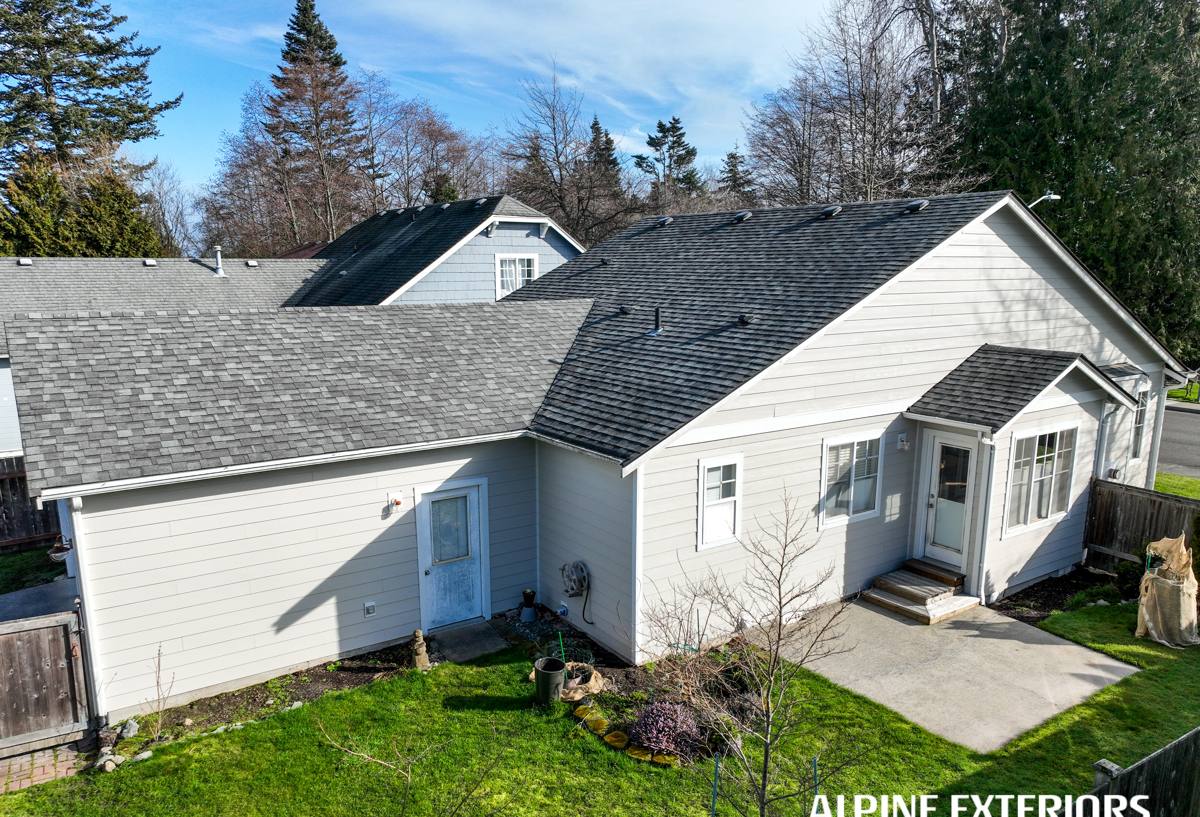
What the Climate Actually Does to Lynnwood Homes
Driving Rain and Wind-Driven Moisture
Rain in this region rarely falls straight down. Storms moving in off the Sound push moisture sideways into wall assemblies, and that matters more than most homeowners realize. Siding that handles vertical rain fine can still let water track behind panels, into seams, or up under poorly lapped joints when wind is pushing it horizontally. Over years, that's how rot starts — not from one big storm, but from thousands of smaller ones finding the same weak points.
Moss, Algae, and Long Shade
Lynnwood's mature trees and mix of open and wooded lots mean a lot of homes have at least one side of the house that rarely sees direct sun for weeks at a time. That's exactly the condition moss and algae need. On wood-based siding, that green film isn't just cosmetic — it holds moisture against the surface far longer than it would otherwise sit there, which accelerates rot underneath paint or coatings that look fine from the ground.
Salt Air, at a Lower but Real Level
Lynnwood isn't waterfront the way parts of Everett are, but Puget Sound's influence still reaches inland — enough humidity and airborne salt to matter for fasteners, trim metal, and any siding material sensitive to moisture cycling. It's a smaller factor here than on the water, but it adds to the cumulative load a home's exterior carries year over year.
Freeze-Thaw, Occasionally
Cold snaps aren't constant here, but they happen, and any siding material that has already absorbed moisture is more vulnerable when temperatures drop. It's another reason moisture management, not just paint color, is the real conversation with siding in this climate.
Why a Local Crew Matters More Than It Sounds Like It Should
Siding installation is not one-size-fits-all, and a crew that mostly works drier inland climates makes different assumptions than one that works Snohomish County full time. Flashing details, house wrap choices, caulking and sealant selection, and even how tight to run panel gaps all shift depending on how much moisture a wall assembly needs to shed and how often. A local crew has already seen what happens to different setups after five or ten Pacific Northwest winters — which details hold up and which ones quietly fail. That's not something you can fully substitute with a manufacturer's install manual alone.
We also know the practical side of working in Lynnwood specifically: permitting through Snohomish County or the city as applicable, typical lot layouts, and the kind of access and staging that make a job go smoothly without surprises mid-project.
Our Services
We handle the full exterior envelope, because siding rarely exists in isolation from the rest of the house:
- Siding — full replacement, repair, and new construction, James Hardie fiber cement only
- Roofing — replacement and repair, worked alongside siding projects when both are due
- Windows — replacement windows, often coordinated with siding jobs since flashing details around openings matter for both
- Decks — built and repaired to hold up to the same wet climate that affects siding
When siding, roofing, and windows are addressed together, the flashing and moisture-management details at every transition — roofline, window openings, deck ledger boards — get handled as one connected system instead of separate projects patched together over time.
Why We Only Install James Hardie Fiber Cement
We don't install vinyl siding, LP SmartSide, Cemplank, Allura, primed spruce, or cedar. That's a deliberate standard, not a lack of options, and it's worth explaining honestly rather than just asserting.
Each of those alternatives has real strengths — vinyl is inexpensive and low-maintenance in dry climates, engineered wood products like LP SmartSide are workable and warm-looking, cedar has genuine natural beauty, and other fiber cement brands compete directly with Hardie on paper. But in a climate like Snohomish County's, the trade-offs stack up:
- Wood-based products (cedar, primed spruce, engineered wood like LP) depend heavily on maintained paint or sealant to keep moisture out. In a region with this much sustained rain and shade-driven damp, any gap in that maintenance schedule opens the door to rot — and it's easy to miss a failing spot on a shaded wall.
- Vinyl is a plastic product that expands and contracts with temperature and can become brittle over time; it's also non-structural cladding that doesn't offer the fire performance or impact resistance of fiber cement.
- Other fiber cement brands compete on cost but don't all carry the same factory-finish warranty structure or the region-specific engineering Hardie has built into its HZ5 product line for the Pacific Northwest.
James Hardie is non-combustible, holds its factory-baked ColorPlus finish far longer than field-applied paint, and its HZ5 formulation is specifically engineered for wetter, more humid climate zones like ours. It doesn't eliminate maintenance entirely, but it removes the single biggest failure point we see in this climate — moisture getting past a coating and into the substrate underneath.
Siding Materials: How They Compare in This Climate
| Material | Moisture Resistance Here | Maintenance | Typical Lifespan |
|---|---|---|---|
| James Hardie Fiber Cement | Strong — engineered for humid climates, doesn't rot | Occasional wash; no repainting for the life of the ColorPlus finish | 30+ years with proper install |
| Cedar / Primed Spruce | Moderate — vulnerable in shaded, damp areas without upkeep | Repainting or resealing every few years | Varies widely with maintenance |
| Vinyl | Sheds water but can allow moisture behind panels at seams | Low, but limited repair options if damaged | 20-30 years, variable in PNW conditions |
| Other Fiber Cement Brands | Generally solid, but factory finish and warranty vary by brand | Low | Varies by manufacturer and finish system |
What Correct Installation Looks Like
Fiber cement performs the way it's supposed to only when it's installed to spec, and in a climate like this, the details matter more than they would somewhere drier. That includes proper house wrap and flashing behind the siding, correct panel gaps and fastening per Hardie's installation guidelines, careful flashing and caulking at every window, door, and roofline transition, and painted or factory-finished cut edges so raw material is never left exposed to weather. Skipping any of these doesn't usually cause a visible problem right away — it shows up years later as a moisture issue that's expensive to trace back to its source. We install to manufacturer spec because we've seen what happens when that gets shortcut.
A Homeowner's Maintenance Checklist for Lynnwood
- Rinse siding annually, especially shaded or north-facing walls, to keep moss and algae from taking hold
- Walk the exterior after major windstorms to check for loose trim, damaged flashing, or gutter issues that could direct water onto siding
- Keep gutters clear — overflow during heavy rain is one of the most common causes of localized siding damage
- Trim back tree limbs and shrubs that keep any section of the house shaded and damp longer than the rest
- Check caulking around windows, doors, and trim every couple of years and have gaps resealed before they become entry points for moisture
What to Expect When You Work With Us
We start with an in-person look at the home — not just the siding itself, but the roofline, window flashing, and any trouble spots that tend to go together in this climate. From there we walk through what's actually needed versus what can wait, give you a straightforward estimate, and if you move forward, install to the same James Hardie specifications on every job, no shortcuts based on budget. We're not the contractor for you if you're set on vinyl or a wood-look budget product — we'll say so upfront rather than take the job and cut corners on a material we don't stand behind.
Cost Factors to Expect
| Factor | Why It Affects Price |
|---|---|
| Home size and wall complexity | More corners, gables, and transitions mean more cutting, flashing, and labor time |
| Existing siding removal | Tear-off and disposal of old material, especially if there's hidden rot to address |
| Siding profile and finish | Lap width, texture, and ColorPlus color selection affect material cost |
| Underlying wall condition | Sheathing or framing repairs found once old siding comes off |
| Scope bundling | Combining siding with roofing, window, or trim work can improve overall efficiency |
Every home is different, and the only way to get real numbers is to have someone look at yours in person. If you'd like a free, no-pressure estimate for your Lynnwood home, the form below will get you started — there's no obligation, and we're happy to answer questions even if you're just in the early stages of thinking about it.