 Everett
 Roofing in Eastmont: A Climate That Doesn't Forgive Shortcuts
Eastmont sits within Everett, in Snohomish County, where homes deal with a specific combination of weather stresses that most of the country never has to think about. Salt-laden air drifts in off Puget Sound and slowly works on exposed metal fasteners and flashing. Driving rain, pushed sideways by wind off the water, finds every gap in a poorly lapped shingle course. And for roughly half the year, shade, moisture, and mild temperatures create ideal conditions for moss and algae to take hold on anything that isn't shedding water fast and drying out in between storms. None of this is dramatic on its own, but stacked together, year after year, it's what separates a roof that makes it to twenty-five years from one that starts failing at twelve.
Asphalt shingle roofing is still the right call for the vast majority of homes in this neighborhood — it's cost-effective, proven, and available in products genuinely built for wet coastal climates. But "asphalt shingles" covers a wide range of quality and installation practice, and in a place like Eastmont, the details of the job matter more than they would somewhere drier and calmer.
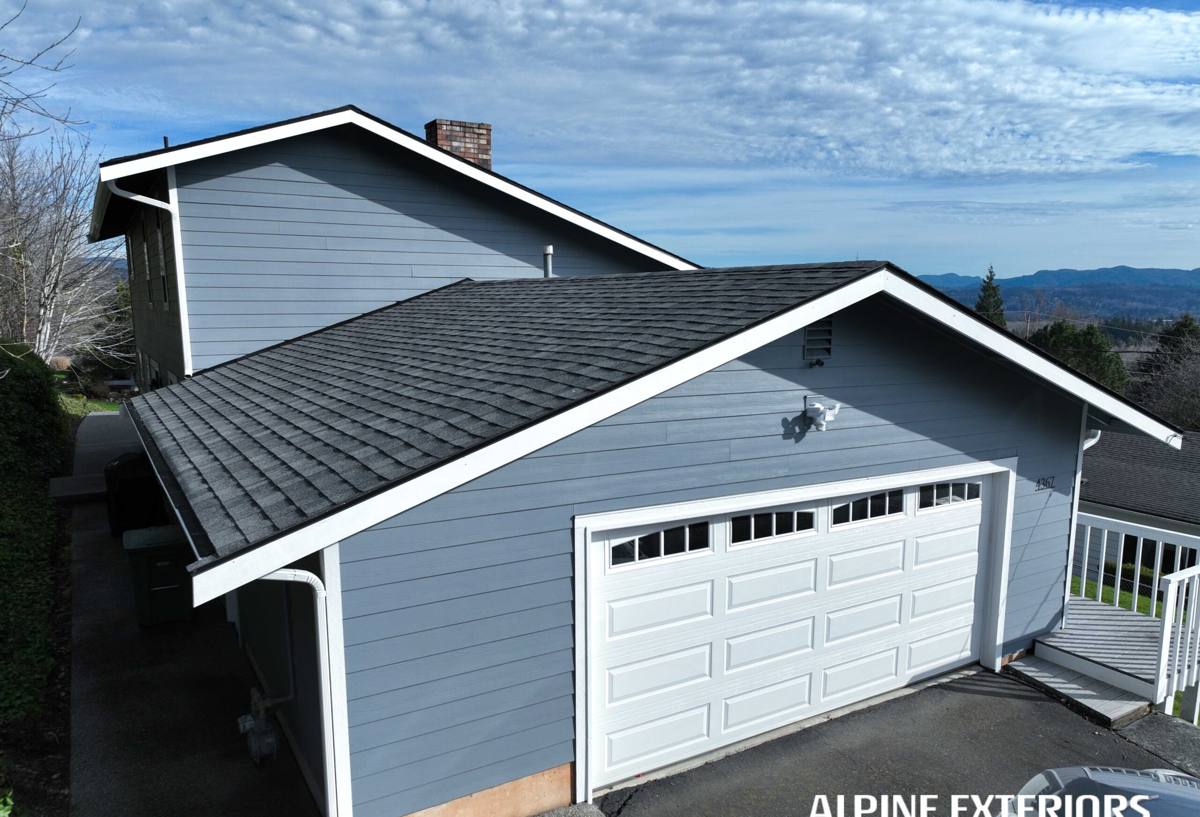
What Correct Asphalt Shingle Roofing Actually Requires Here
A shingle roof is a system, not just a layer of shingles nailed to plywood. In this climate, every part of that system has to pull its weight, because the margin for error is smaller than in a dry inland town.
Underlayment That Handles Wind-Driven Rain
Standard felt underlayment can work, but synthetic underlayment or a self-adhered membrane at eaves, valleys, and rakes gives real protection against wind-driven rain that gets pushed uphill under the shingle tabs — a common failure point during winter storms coming off the Sound.
Flashing That Won't Corrode Prematurely
Salt air accelerates corrosion on cheap or thin-gauge metal. Step flashing, valley flashing, and pipe boots need to be a material and thickness that holds up over decades near the water, not just at install day.
Ventilation That Actually Balances
Intake at the eaves has to match exhaust at the ridge. Get this wrong and you trap moisture in the attic, which shows up as premature sheathing rot, mold, and shingles that fail from underneath — a problem that's invisible from the ground until it's expensive.
Fastening Pattern for Wind Exposure
Nail placement and count matter more in an area that gets regular wind events. Under-nailed shingles are the single most common cause of blow-offs in windstorms, and it's a detail that's invisible once the roof is done — you're trusting the installer's habits, not just the shingle brand.
Signs an Eastmont Roof Needs Attention
Because moss, algae, and moisture damage build slowly, most homeowners don't notice a problem until it's visible from the street. Here's what we look for, and what you can check yourself from the ground with binoculars.
- Dark streaking running down from the ridge — usually algae, not dirt
- Moss clumps along the shaded, north-facing slopes or under overhanging trees
- Granules collecting in gutters or downspouts after a hard rain
- Shingle edges that look curled, lifted, or cupped
- Soft or spongy feel when walked on (a job for a professional, not a homeowner)
- Water stains on interior ceilings, especially near exterior walls or valleys
Any one of these on its own might just mean a cleaning or a minor repair. Several together, especially on a roof over fifteen years old, usually means it's time for a full inspection before a bigger repair becomes unavoidable.
Choosing the Right Shingle for This Climate
Not every asphalt shingle product is built the same way, and in a moss-prone, wind-exposed area, the difference shows up over time rather than on install day. This is a general comparison of shingle classes we commonly discuss with homeowners in this area — actual product lines and warranties vary by manufacturer.
| Shingle Class | Wind Rating | Algae/Moss Resistance | Typical Lifespan | Best Fit |
|---|---|---|---|---|
| Standard 3-tab | Lower | Minimal unless treated | 15-20 years | Budget-focused re-roofs, low wind exposure areas |
| Architectural / dimensional | Moderate to high | Better with algae-resistant granules | 25-30 years | Most Eastmont homes — balance of cost and durability |
| Premium/impact-rated | High | Best available options | 30-50 years | Homes with heavy tree cover, high wind exposure, or longer hold periods |
We generally steer homeowners toward architectural shingles with algae-resistant granules (often marketed under names referencing copper or zinc content) as the practical baseline for this area. Standard 3-tab shingles aren't a bad product, but without algae-resistant granules, moss and algae growth tends to show up faster in shaded, damp spots — which describes a lot of rooflines around here.
A Note on Moss Prevention
No shingle is moss-proof if the roof stays wet and shaded long enough. Algae-resistant granules slow growth considerably, but tree trimming for sun exposure, keeping gutters clear, and periodic soft washing still matter. We treat the shingle choice as one part of a moss-management plan, not a replacement for one.
Our Process for Eastmont Roofing Projects
We approach every roof the same methodical way, whether it's a full replacement or a targeted repair.
- Inspection: We walk the roof (weather permitting) and check the attic from inside, looking at ventilation, decking condition, and any existing moisture damage before quoting anything.
- Honest scope: We tell you plainly whether you need a full replacement, a partial repair, or just maintenance — we don't upsell a tear-off when a repair will genuinely hold.
- Tear-off and decking check: Old material comes off down to the deck, and we inspect sheathing for soft spots or rot before anything new goes down — this is where hidden moisture damage usually surfaces.
- Underlayment and flashing: Synthetic underlayment and corrosion-resistant flashing go in at every valley, wall intersection, and penetration.
- Shingle installation: Correct nailing pattern, proper exposure, and manufacturer spec — the details that determine whether the roof performs in a windstorm ten years from now.
- Ventilation correction: If intake and exhaust are out of balance, we address it as part of the job rather than leaving it for later.
- Cleanup and walkthrough: Magnetic sweep for nails, debris removal, and a walkthrough so you know exactly what was done.
Repair vs. Replacement: How We Decide
Not every roof in Eastmont needs full replacement, and we don't treat every inspection as a sales opportunity. Age, extent of moisture intrusion, decking condition, and how much of the roof is affected all factor in. A roof with isolated flashing failure or a handful of wind-damaged shingles is usually a repair. A roof with widespread granule loss, multiple leak points, or decking rot spread across sections is usually past the point where repair makes financial sense. We'll walk you through the reasoning either way, in plain terms, before you commit to anything.
Maintenance That Extends Roof Life in This Climate
A well-installed roof still needs upkeep in a climate this wet and shaded. Here's what we recommend homeowners stay on top of between professional inspections.
- Clear gutters and downspouts at least twice a year, more often near tall trees
- Trim overhanging branches to reduce shade and debris buildup on the roof
- Look for moss growth after the wet season and address it before it spreads
- Check attic ventilation isn't blocked by insulation or storage
- Have a professional inspection every few years, or after any major windstorm
- Avoid pressure washing shingles yourself — it strips granules and shortens lifespan
Why Local Experience in Eastmont Matters
A crew that regularly works in this part of Everett already knows which details tend to get skipped on roofs built or re-roofed without this climate in mind — thin flashing that's already showing corrosion, ventilation that was never balanced, valleys that were cut short instead of properly woven or laced. That familiarity means faster, more accurate inspections and fewer surprises mid-project. It also means we're not guessing at what holds up here; we're building on what we've already seen work and fail across similar homes in similar conditions, in the same salt air and the same rain patterns.
What Influences the Cost of a Shingle Roof Here
Pricing depends on several factors that vary from home to home, and we won't quote a number without seeing the roof, but the main drivers are consistent across most projects.
| Factor | Why It Matters |
|---|---|
| Roof size and pitch | Steeper roofs take longer and require more safety setup |
| Number of layers to remove | Tear-off of multiple old layers adds labor and disposal cost |
| Decking condition | Rotted sheathing found underneath adds replacement material and time |
| Shingle class chosen | Standard vs. architectural vs. premium changes material cost and lifespan |
| Flashing and ventilation scope | More valleys, walls, and vents mean more detail work |
We'd rather walk your roof and give you real numbers than throw out a broad range that doesn't reflect your actual home.
If you're noticing moss, streaking, or granule loss on your Eastmont roof — or you just want an honest read on how much life is left in it — we're glad to come take a look. The estimate is free, there's no pressure, and you'll get a straight answer either way. The form below is the easiest way to get started.