 Everett
 Why Edmonds Windows Wear Out Differently Than Windows Inland
Edmonds sits right on Puget Sound, and that location shapes what windows have to survive here. Salt-laden air drifts in off the water and settles on everything, including window frames, hardware, and exterior trim. Add Snohomish County's long wet season — driving rain that comes in sideways during winter storms, followed by months of damp, shaded conditions that feed moss and algae growth — and you have a climate that is genuinely harder on windows than a lot of homeowners realize until something starts failing.
None of this is exotic weather. It's just persistent. A window that would last two or three decades in a dry inland climate can start showing seal failure, frame softening, or hardware corrosion years earlier here if it wasn't built or installed with this environment in mind. That's the whole case for custom windows in Edmonds: not luxury for its own sake, but windows sized, sealed, and specified correctly for a house that sits in salt air and gets soaked from the west and south for a good chunk of the year.
What "Salt Air" Actually Does
Salt air doesn't rust a window overnight, but it accelerates corrosion in metal components — hinges, cranks, balance systems, screen frames — especially on homes with a clear line of sight to the water or that catch onshore wind. Over years, this shows up as stiff or seized hardware, pitting on aluminum components, and finish breakdown on lower-grade vinyl and cladding. It's a slow tax that inland homes simply don't pay.
What "Driving Rain" Does
Wind-driven rain doesn't just sit against a window — it gets pushed into every gap, lap joint, and fastener penetration in the assembly. Windows and flashing details that would be fine in a light, straight-down rain can leak under lateral pressure. This is where poor installation shows up years later as rot in the framing around the window, not as an obvious leak on day one.
What "Moss Season" Does
Long stretches of shade and moisture around the Sound support moss and algae growth on north- and west-facing walls, sills, and anywhere water sits instead of draining. On windows, that means sills and exterior trim that stay damp longer than they should, which is exactly the condition wood components and poor sealants fail in.
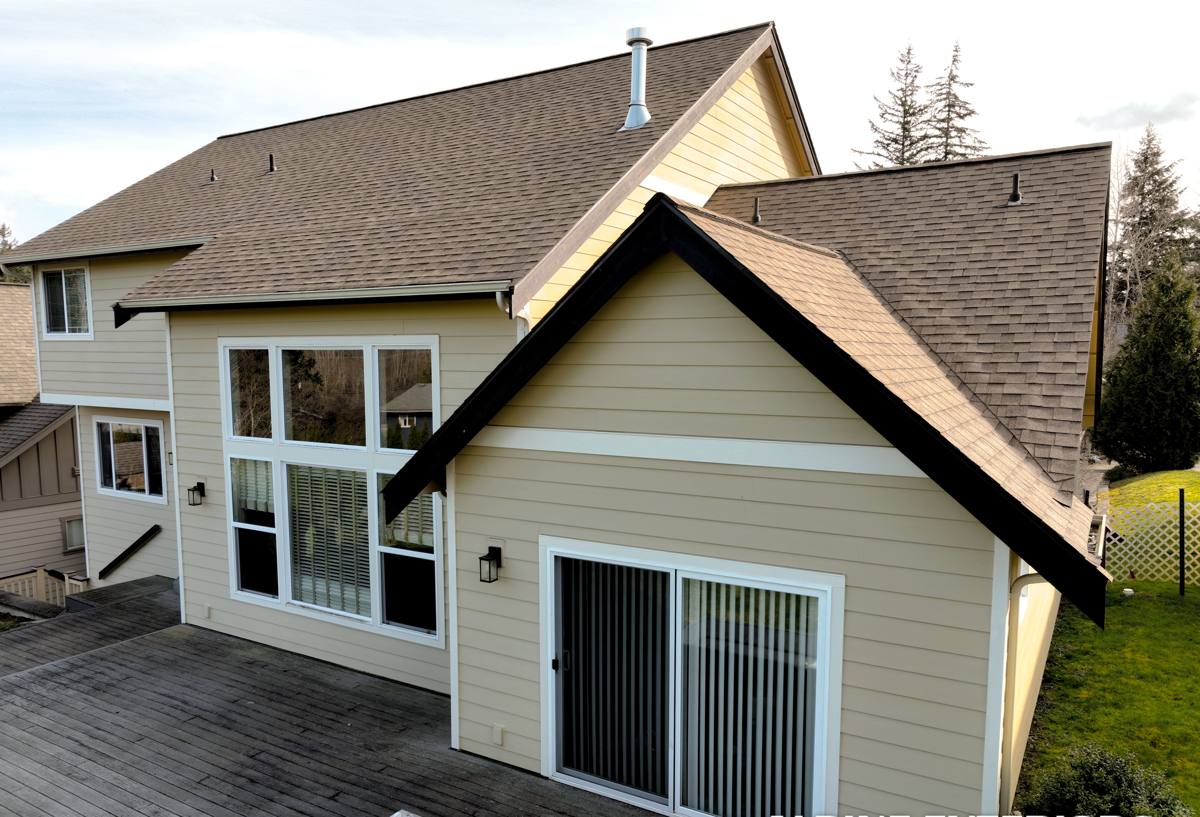
Signs an Edmonds Home's Windows Are Losing the Fight
Most window failure is gradual. By the time it's obvious, moisture has usually already been getting into the wall assembly for a while. Homeowners in Edmonds should treat these as early warning signs, not cosmetic annoyances:
- Condensation forming between the panes (not on the inside surface) — this means the seal has failed and the insulating gas is gone
- Windows that are hard to open, close, or lock, especially on the water-facing side of the house
- Visible gaps, soft or discolored wood at the sill or lower frame corners
- Persistent moss, black staining, or algae on the sill or exterior trim that keeps returning after cleaning
- Noticeably colder rooms near certain windows, or a draft you can feel with your hand near the frame
- Paint or finish that's bubbling or peeling specifically around the window opening, not the wall in general
Any one of these on its own isn't an emergency. Several of them together, especially on the same window, usually means it's time for a real assessment rather than another round of caulk and paint.
What "Custom" Should Actually Mean
A lot of "custom windows" marketing just means a window ordered to fit a standard rough opening. That's part of it, but it's not the whole job — especially in Edmonds, where housing stock ranges from older bungalows and mid-century homes near the bluff to newer construction closer to I-5. Real custom work means:
- Accurate field measurement of openings that have shifted or settled over decades, rather than assuming factory-standard dimensions
- Matching sightlines and proportions to the home's existing architecture, especially on older homes where mismatched grid patterns or frame widths stand out immediately from the street
- Specifying glass and hardware for exposure — a window on the west or south side taking direct weather off the water needs a different spec than a sheltered window on the lee side of the house
- Planning for non-standard openings common in older Edmonds homes, including out-of-square framing, odd bay or corner configurations, and openings that were altered by a previous remodel
Ordering the wrong window for the opening — even a good-quality one — just moves the same water and air-sealing problems into a brand-new frame.
Material and Glass Choices That Actually Hold Up Here
There's no single "best" window material for every house. The right call depends on exposure, budget, and how much maintenance a homeowner wants to take on. Here's how the common options compare specifically for a salt-air, high-rain environment like Edmonds:
| Material | How It Handles This Climate | Maintenance |
|---|---|---|
| Vinyl | Good moisture and corrosion resistance; quality varies a lot between grades | Low — no painting, occasional cleaning |
| Fiberglass | Very stable in temperature swings and moisture; holds paint well if color changes are wanted later | Low to moderate |
| Wood (unclad interior, clad exterior) | Excellent look for older/craftsman homes; exterior cladding handles rain well, but any exposed wood needs attention | Higher — exterior clad side is low-maintenance, interior wood may need periodic finish care |
| Aluminum | Prone to corrosion in salt air over time and conducts cold; we generally steer clients away from it for water-facing exposures | Moderate to high |
On glass, standard dual-pane with a low-E coating is the practical baseline for most Edmonds homes — it manages heat loss and condensation well without a big cost jump. Triple-pane adds real value on rooms facing direct wind and weather off the Sound, or where road or ferry-traffic noise is a factor, but it's a cost-to-benefit decision, not a must-have on every opening. For bedrooms, code-required egress sizing and tempered glass in specific locations (near doors, low sills, wet areas) aren't optional — we account for that at the measuring stage so it's never a surprise later.
How the Installation Process Works
1. On-Site Assessment
We look at each opening individually — framing condition, existing flashing, signs of past water intrusion, and the specific exposure that window faces. This is where we catch hidden rot or sealant failure before it becomes a bigger repair mid-project.
2. Measurement and Spec
Every window is measured on-site, not assumed from a floor plan. We spec material, glass, and hardware per opening based on exposure — the window facing prevailing wind and rain doesn't have to be identical in spec to one on a sheltered wall.
3. Removal and Opening Prep
Old windows come out carefully so we can inspect and, where needed, repair the framing and sill underneath before anything new goes in. Installing a new window over a compromised opening just hides the problem.
4. Flashing and Weatherproofing
This is the step that matters most in a driving-rain climate. Proper flashing tape and sealant sequencing directs water out and down, not into the wall cavity, and it's the difference between a window that's dry in a sideways storm and one that isn't.
5. Install, Seal, and Finish
The window is set, shimmed level and square, insulated, and finished on both the interior and exterior trim. We test operation and check the seal before calling the job done.
6. Walkthrough
We walk the finished work with the homeowner, explain what was done at each opening, and cover basic care specific to the materials installed.
Permits, Code, and Practical Local Considerations
Window replacement in Edmonds and unincorporated Snohomish County can require a permit depending on scope — particularly if the rough opening size is changing, if it's a full frame replacement versus an insert, or if egress windows in bedrooms are involved. Older Edmonds homes near the waterfront or in some established neighborhoods may also fall under design or view-related considerations depending on the property. We flag anything that looks like it needs a permit or extra review before work starts, not after, so there are no surprises partway through the job.
Egress code is worth calling out specifically: any window serving as a legal emergency exit from a bedroom has minimum size and opening-height requirements. If a custom window is going into a bedroom, we confirm it meets egress rules as part of the spec, not as an afterthought.
What Drives the Cost of a Custom Window Project
Every Edmonds home is different, so we won't quote a number without seeing the openings, but these are the factors that actually move the price:
| Factor | Why It Matters |
|---|---|
| Number of windows | Per-window cost drops somewhat with volume; full-house jobs are more efficient than one-off replacements |
| Full-frame vs. insert replacement | Full-frame replaces down to the studs and costs more but is necessary when there's frame rot or the opening is being resized |
| Material and glass package | Vinyl, fiberglass, and wood-clad price differently; triple-pane and specialty glass (tempered, obscure, tinted) add cost per opening |
| Opening condition | Hidden rot or old water damage found during removal adds repair scope that's hard to estimate until the window is out |
| Accessibility | Second-story, tight side-yard, or hard-to-reach openings take more labor and sometimes equipment |
| Custom sizing or shapes | Non-standard openings, bays, or matching historic proportions cost more than stock-size replacements |
Why Hire a Crew That Already Works in Edmonds
A contractor who's spent time working on homes in this specific area already knows what to expect from the housing stock, the exposure patterns off the Sound, and the way local weather actually behaves through the winter — not just what a spec sheet says on paper. That translates into fewer surprises: knowing which orientation on an Edmonds lot tends to take the worst of the wind-driven rain, recognizing early rot patterns typical of the area's older wood-frame homes, and understanding how salt air ages hardware faster than a generic maintenance schedule assumes.
It also matters for accountability. A crew that works this area regularly has a reputation here to protect and is easy to reach if a question comes up after the job is done — not a one-time visit from a company with no ongoing presence in Snohomish County.
Keeping Custom Windows Performing Long-Term
Good installation buys years of trouble-free performance, but a little seasonal attention extends that further, especially with the salt air and moss exposure common around Edmonds:
- Rinse exterior frames and sills periodically to clear salt residue, especially on water-facing sides
- Clear debris and moss buildup from sills and tracks before it holds moisture against the frame
- Operate locks and cranks a few times a year, even on windows you don't open often, to keep hardware from seizing
- Check exterior caulking annually for cracking or gaps, particularly after a hard winter
- Watch for condensation between panes — it won't go away on its own and signals a failed seal, not a cleaning issue
If you're weighing custom windows for a home in Edmonds, we're happy to take a look and give you a straightforward assessment — no pressure, no inflated quote to "close the deal." Fill out the form below for a free estimate, and we'll walk your specific openings with you before recommending anything.