 Everett
 Roofing in Edmonds Has to Answer to the Sound
Edmonds sits right on Puget Sound, and that location shapes what a roof has to put up with year after year. Salt-laden air drifts off the water and settles on every exposed surface, including your roof. Add Snohomish County's long, wet fall-through-spring stretch of driving rain, and a moss season that can run from October well into April, and you've got a combination that ages roofing materials faster than it would inland. A roof replacement here isn't just about swapping old shingles for new ones — it's about choosing materials and details that are built to handle salt exposure, sustained moisture, and moss pressure specifically.
We work on homes throughout Edmonds and the surrounding Snohomish County waterfront communities, and the roofs we see fail early almost always failed for the same reasons: underlayment that wasn't rated for how much rain this area actually gets, ventilation that couldn't keep pace with condensation, or moss that was left to work its way under shingle edges for one season too many. A correctly done replacement addresses all three from the start.
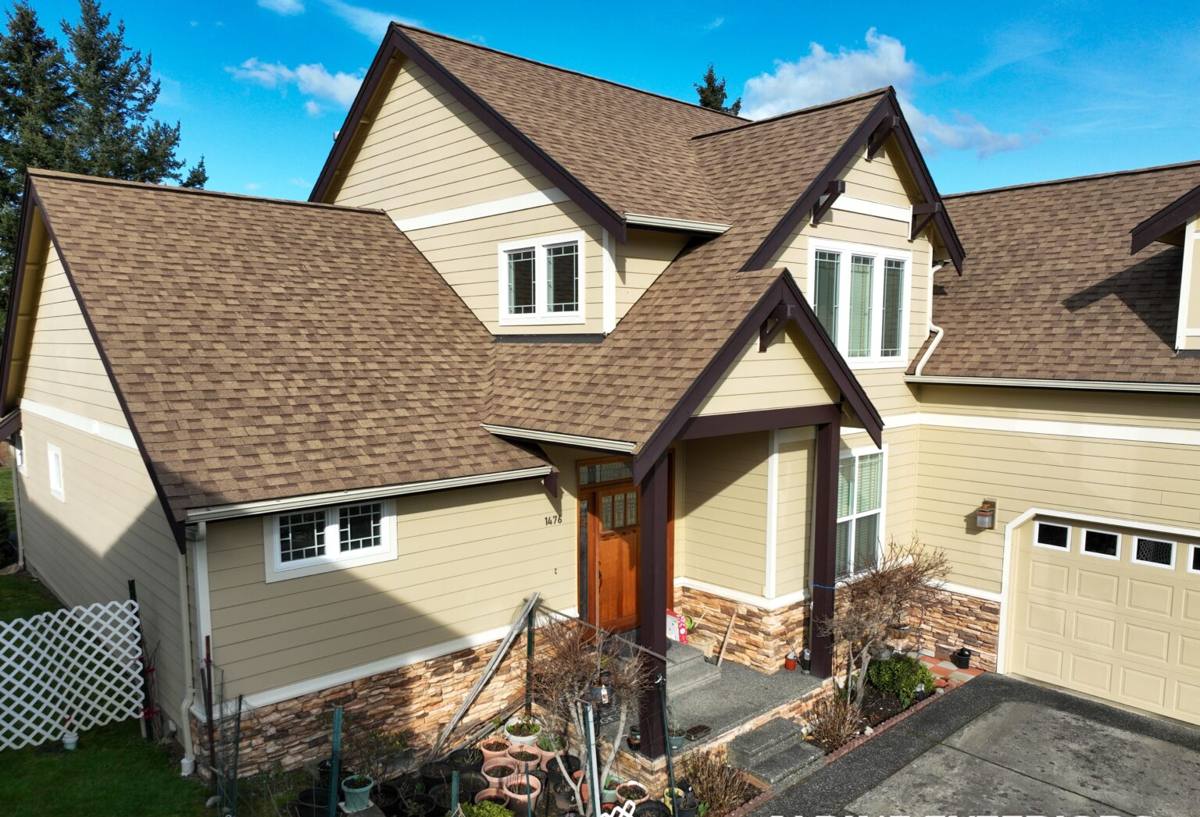
Why Roofs Near the Sound Wear Out Differently
Salt Air and Metal Components
Every roof has metal in it somewhere — flashing, fasteners, vents, drip edge, valley metal. Near Puget Sound, salt-carrying air accelerates corrosion on anything that isn't properly rated for coastal exposure. Standard fasteners and flashing that would last decades in a drier, inland part of the state can start showing rust and pitting much sooner here. This is one of the most common oversights we find on older Edmonds roofs: perfectly good shingles undermined by corroding metal underneath or around them.
Driving Rain and Wind-Driven Water
Edmonds gets its share of storms that push rain sideways off the Sound, not just straight down. That matters because a roof designed only to shed water vertically can still let moisture work its way under shingle tabs, around vents, and into valleys during a hard blow. Proper underlayment, correctly lapped flashing, and sealed penetrations matter more here than they would in a calmer inland climate.
Moss and Prolonged Dampness
Western Washington's moss season is long, and Edmonds' proximity to the water only adds to how much moisture stays on a roof surface between storms. Moss holds water against shingles, works into seams, and — left unchecked — lifts shingle edges enough to let water underneath. North-facing slopes and roof sections shaded by mature trees are almost always the first to show moss growth and the first to need attention.
What a Correct Replacement Involves
A roof replacement is really several layered systems working together, not just the visible shingle layer. Skipping or shortcutting any one of these is where early failures come from.
- Tear-off and deck inspection: Full removal of the old roofing so the deck underneath can be checked for rot, soft spots, or moisture damage before anything new goes down.
- Underlayment: A synthetic or self-adhered underlayment rated for sustained wet climates, not a minimum-grade product that's adequate for drier regions.
- Ice and water shield at vulnerable points: Valleys, eaves, and roof-to-wall transitions get extra protection where wind-driven rain and moss-related water buildup are most likely to find a way in.
- Flashing rated for coastal exposure: Corrosion-resistant metal at chimneys, skylights, valleys, and wall intersections — the details that fail first near salt air.
- Ventilation balance: Intake and exhaust ventilation sized correctly so moisture from inside the home doesn't condense against the underside of the new roof deck.
- Shingle or roofing material: Matched to the home's slope, exposure, and your maintenance preferences — with moss-resistant options genuinely worth considering here.
- Fasteners: Corrosion-resistant nails or screws suited to a salt-air environment, not standard-grade hardware.
Choosing Materials for This Climate
There's no single "best" roofing material for every home, but in a salt-air, high-moisture, moss-prone environment like Edmonds, some choices hold up more predictably than others. We walk homeowners through the real trade-offs rather than pushing one product.
| Material | Moss Resistance | Moisture Behavior | Maintenance Reality |
|---|---|---|---|
| Standard asphalt shingles | Moderate — depends on slope, shade, and upkeep | Reliable when underlayment and flashing are done right | Periodic moss treatment and gutter care recommended |
| Algae/moss-resistant shingles | Better — copper or zinc granules discourage growth | Same underlying moisture protection as standard shingles | Lower moss maintenance over the roof's life |
| Metal roofing | Strong — moss struggles to hold on smooth, sloped metal | Sheds wind-driven rain well when panels and seams are installed correctly | Fastener and finish quality matter more near salt air |
| Cedar shake | Requires diligent upkeep — moss and moisture-related decay are the main long-term risk | More sensitive to sustained dampness than other options | Higher ongoing maintenance in this climate |
We're upfront when a material carries real trade-offs for this environment. Cedar shake, for example, can look excellent, but it demands more consistent upkeep to manage moisture and moss in a climate this damp — that's a maintenance conversation, not a knock on the product itself. Our job is to lay out what each option actually asks of you over the next 20-30 years, not just what it costs on install day.
Signs an Edmonds Roof Needs Replacing Rather Than Repairing
Not every issue means a full replacement, but certain signs point that direction — especially on roofs that have already been through many Puget Sound winters.
- Granule loss heavy enough that shingles look bald or patchy, especially on south- and west-facing slopes
- Persistent moss growth that returns quickly after cleaning, or moss that's visibly lifted shingle edges
- Rusted or deteriorating flashing around chimneys, vents, or valleys
- Staining or sagging on interior ceilings, which often points to a moisture problem that's been building for a while
- Shingles curling, cracking, or missing after storm seasons
- A roof approaching or past its expected service life, particularly if the original installation used standard rather than coastal-rated materials
If your roof is showing one or two of these signs, a targeted repair may still make sense. If several are present at once, or the deck itself has moisture damage, replacement is usually the more cost-effective path — patching a roof that's failing systemically tends to buy a year or two at best.
Our Replacement Process in Edmonds
1. On-Site Assessment
We look at the whole roof system — shingles, flashing, ventilation, deck condition, and any moss or moisture patterns specific to your home's slopes and shading — not just what's visible from the ground.
2. Straightforward Material Recommendation
Based on your home's exposure, existing ventilation, and how much moss maintenance you want to take on long-term, we recommend materials suited to this specific coastal climate and explain the reasoning, not just the price tag.
3. Tear-Off and Deck Repair
Old roofing comes off completely so we can address any deck damage before it's covered up again — a step that's easy to shortcut and expensive to regret later.
4. Full System Installation
Underlayment, flashing, ventilation, and roofing material go in as a coordinated system, with particular attention to the valleys, eaves, and penetrations where wind-driven rain and moss cause the most trouble.
5. Final Walkthrough
We review the completed roof with you, cover basic moss and gutter maintenance for the climate, and make sure you know what a well-installed roof should look like going forward.
Why a Crew That Knows Edmonds Matters
Roofing crews who mostly work drier, inland areas don't always default to coastal-rated fasteners, flashing, or underlayment — because in their usual climate, standard-grade materials hold up fine. In Edmonds, that gap shows up a few years later as premature rust, leaks, or moss-driven damage that shouldn't have happened yet. Working regularly in Snohomish County's waterfront communities means we default to the details this climate actually requires, rather than treating salt air and driving rain as an afterthought.
It also means we're realistic about timing. Roofing work in this region needs a stretch of workable weather, and scheduling around the wetter months is part of doing the job right rather than rushing it between storms.
Maintaining Your New Roof
A correctly installed roof still benefits from basic upkeep in this climate, and a little attention goes a long way toward hitting its full service life.
- Keep gutters and downspouts clear so water isn't backing up under the roof edge
- Have moss treated or removed before it has a chance to lift shingle edges, especially on shaded or north-facing slopes
- Trim back overhanging branches that keep sections of the roof damp and shaded longer than necessary
- Schedule a periodic visual inspection after major storms, particularly ones with significant wind off the Sound
- Address minor flashing or fastener issues promptly, before salt-air corrosion has time to spread
Get a Straightforward Estimate
If your Edmonds roof is showing its age or you're planning ahead for a replacement, we're happy to take a look and give you an honest read on where things stand. Use the form below to request a free, no-pressure estimate, and we'll walk you through what your roof actually needs for this climate — no upsells, no guesswork.