 Everett
 Why Forest Park Homes Need a Climate-Smart Deck
Forest Park sits among some of Everett's older, more established residential blocks, many of them shaded by mature conifer and maple canopy and close enough to Puget Sound to catch the marine air rolling in off the water. That combination is tough on outdoor structures. A deck here doesn't just deal with rain — it deals with shade that slows drying, tree debris that traps moisture against the boards, and salt-laden air that speeds up corrosion on anything metal. Composite decking, installed correctly for this specific environment, holds up to that combination far better than a standard pressure-treated wood deck left to fend for itself.
The key phrase there is "installed correctly for this environment." Composite boards are a big improvement over wood, but they are not maintenance-proof or mistake-proof. A deck built with the wrong fastening pattern, poor airflow underneath, or the wrong board for a shaded, mossy lot will still have problems — they'll just show up as staining, board movement, or substructure rot instead of the surface cupping and splintering you'd see with wood.
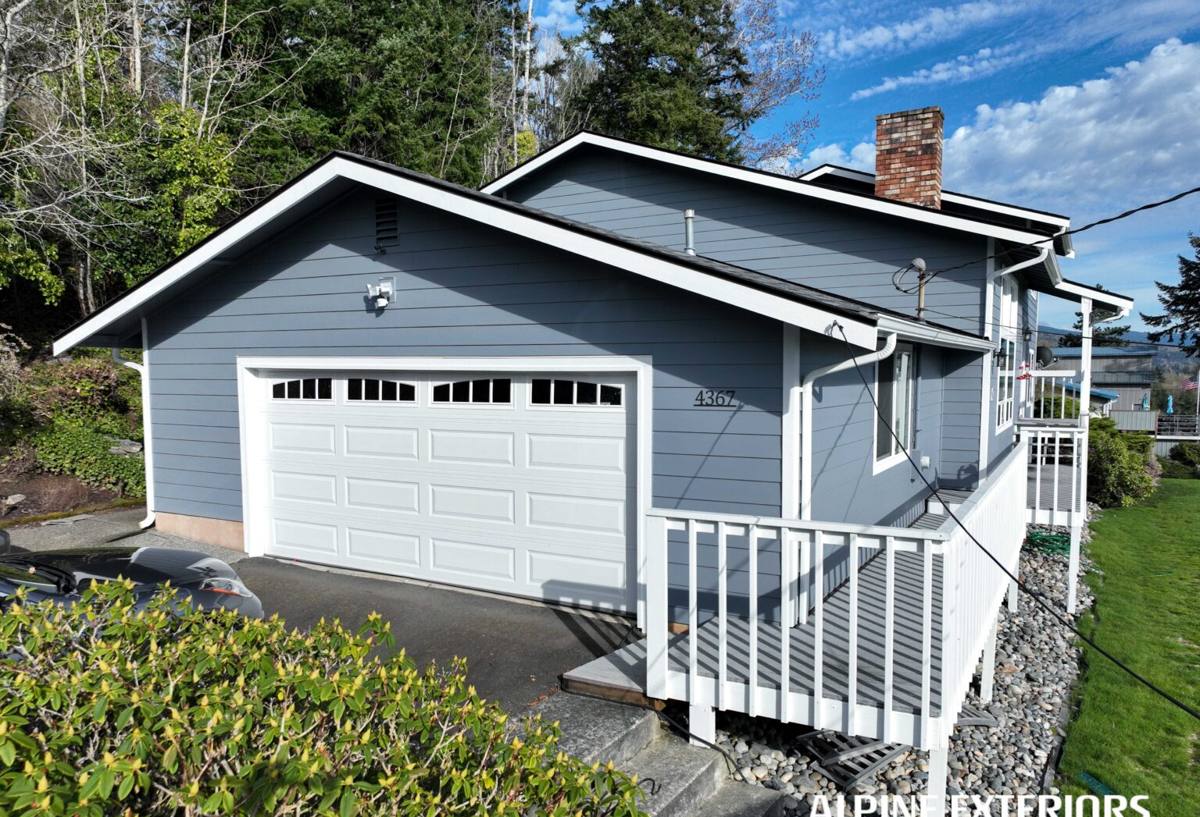
What Snohomish County's Climate Actually Does to a Deck
Driving Rain and Standing Moisture
Everett gets a long, steady wet season, and Forest Park's tree cover means decks here often stay damp longer after a storm than a deck out in the open would. Water that can't drain or evaporate quickly sits against fasteners, in board grooves, and in the gap between boards and joists. Over years, that's what turns a small problem into a structural one underneath a perfectly good-looking composite surface.
Moss and Algae Growth
Shade plus moisture plus organic debris (needles, leaves, maple seed pods) is exactly the recipe moss and algae need. On a wood deck, that growth eats into the fibers. On composite, it mostly sits on the surface, but it will still grow in the board grooves and around fastener heads if a deck is never cleaned and doesn't get enough airflow or sun exposure to dry out between rains.
Salt Air and Metal Fatigue
Forest Park's proximity to the water means homes here get low-level salt exposure even without being waterfront. It's not as aggressive as a beachfront property, but over a decade or more it accelerates corrosion on lower-grade screws, brackets, and railing hardware. This is one of the most overlooked failure points on decks in this part of Everett — the boards look fine while the hardware holding them down is quietly deteriorating.
Composite vs. Wood vs. PVC: What Actually Fits This Area
| Material | Performance in Shade & Moisture | Moss/Algae Resistance | Long-Term Maintenance |
|---|---|---|---|
| Pressure-treated wood | Absorbs moisture, slower to dry under tree cover | Low — organic material feeds growth | Annual sealing/staining needed |
| Uncapped composite | Better than wood, but edges can wick moisture | Moderate — surface growth is common without cleaning | Periodic washing, no sealing |
| Capped composite | Best moisture resistance of the group | Higher — sealed shell resists staining and growth | Occasional washing only |
| PVC decking | Excellent moisture resistance | High, but can look less like natural wood | Minimal, though can flex more in temperature swings |
For most Forest Park properties — shaded lots, moderate to heavy rain exposure, some salt air — we generally steer homeowners toward capped composite. It gives you the moisture and staining resistance this climate calls for without the higher cost jump to full PVC, and it holds a more natural wood-grain look that fits the neighborhood's older housing stock.
What a Correct Composite Deck Build Actually Involves
Substructure Preparation
The composite boards get the attention, but the framing underneath is what determines whether the deck lasts. Joists need proper spacing for the specific board being installed (composite typically needs tighter joist spacing than wood, especially on angled or diagonal patterns), and every cut joist end and top surface should get a protective tape or coating before boards go down. Skipping this is one of the most common shortcuts we see on decks that were "cheaply redone" before a homeowner calls us.
Fastening and Board Spacing
Hidden fastener systems are standard on most composite installs now, and the gap they leave between boards is not cosmetic — it's there to let water shed through and air move underneath. In a shaded, wet yard, that gap needs to be sized correctly and kept clear during installation. Board ends also need proper expansion gaps, since composite moves with temperature more than most homeowners expect.
Flashing and Ledger Connections
Where the deck attaches to the house is the single highest-risk point for water intrusion on any deck, composite or wood. Correct ledger flashing, proper standoff from the siding, and stainless or coated fasteners at that connection matter more in a marine-influenced climate like Everett's than almost anywhere else in the build. This is also the spot most likely to be under-detailed on a fast, low-bid install.
Choosing the Right Composite Board for a Shaded, Wet Lot
Capped vs. Uncapped
Capped composite boards have a plastic shell wrapped around a wood-composite core, which is what gives them their stain and moisture resistance. Uncapped boards are more affordable but absorb more moisture at cut ends and in surface pores, which under Forest Park's tree canopy means more visible mildew staining over time. For a heavily shaded yard, we typically recommend spending the extra for a capped product, especially on ground-level decks with limited airflow.
Color and Heat Considerations
Because so many lots here have partial shade, heat buildup is less of a concern than it would be on a full-sun deck elsewhere in the county — which gives homeowners more flexibility to choose darker, richer color tones without worrying as much about surface temperature. That said, darker boards do show pollen and organic debris differently than lighter tones, which is worth considering if the deck sits under trees that drop a lot of material seasonally.
Our Installation Process
Every deck starts with an honest look at the site — sun exposure, drainage, tree cover, and how the deck ties into the house — before we recommend a specific product or fastening approach. In practice, a Forest Park composite deck build follows this sequence:
- Site evaluation for drainage, shade, tree debris load, and existing structural condition
- Ledger and flashing inspection or replacement at the house connection
- Framing repair or upgrade, including joist spacing appropriate for the chosen board
- Joist-top protection to block moisture absorption into the substructure
- Composite board installation with hidden fasteners and correct expansion gaps
- Corrosion-resistant hardware throughout, given the area's salt air exposure
- Final walkthrough covering board care and what to expect through the wet season
Long-Term Care in a Wet, Mossy Climate
Composite decking cuts down on maintenance, but "low-maintenance" isn't "no-maintenance," especially in this part of Snohomish County. A seasonal rinse to clear pollen, needles, and organic buildup before it has a chance to compost in place will do more for a Forest Park deck's long-term appearance than almost anything else. Keeping nearby branches trimmed back to let in more light and airflow also meaningfully reduces moss growth over time. Railings and fastener heads are worth a periodic visual check too, since that's where salt-air corrosion tends to show up first.
What Drives the Cost of a Composite Deck Here
| Cost Factor | Why It Matters in This Area |
|---|---|
| Board tier (uncapped vs. capped vs. premium capped) | Shaded, moist lots benefit most from capped or premium capped products |
| Substructure condition | Older Forest Park decks often need partial or full framing replacement |
| Ledger and flashing work | Proper waterproofing at the house connection adds labor but protects the home itself |
| Railing and hardware grade | Corrosion-resistant hardware costs more upfront but avoids early failure near the coast |
| Site access and tree cover | Tight, shaded, or sloped lots can add labor time versus an open, flat site |
We'd rather walk a homeowner through these factors honestly during an estimate than quote a number that doesn't account for what their specific lot actually needs.
Why Hiring a Crew That Already Works Forest Park Matters
A contractor who's built decks across Everett and Snohomish County knows how differently a shaded, tree-covered lot near Forest Park performs compared to an open, sun-exposed yard elsewhere in the region. That shows up in small decisions — joist spacing, board selection, hardware grade, where extra flashing attention is worth the time — that don't show up on a spec sheet but do show up in how the deck holds up ten years in. Composite decking is a real investment, and it deserves a build that accounts for exactly the climate it's going to sit in, not a generic install pulled from a manual written for a drier part of the country.
If you're planning a new composite deck or replacing an aging one in the Forest Park area, we're happy to take a look and give you a straightforward, no-pressure estimate. Use the form below to get started.