 Everett
 Glenhaven sits close enough to Puget Sound that its homes take a different kind of beating than houses further inland in Snohomish County. Salt-laden air moves through the neighborhood off the water, rain arrives sideways more often than straight down during winter storms, and the long stretch of overcast, damp months between fall and spring gives moss and mildew months to establish themselves on anything that stays wet. Siding installed without that reality in mind tends to look tired well before its time — not because the product failed outright, but because it was never matched to the job it had to do.
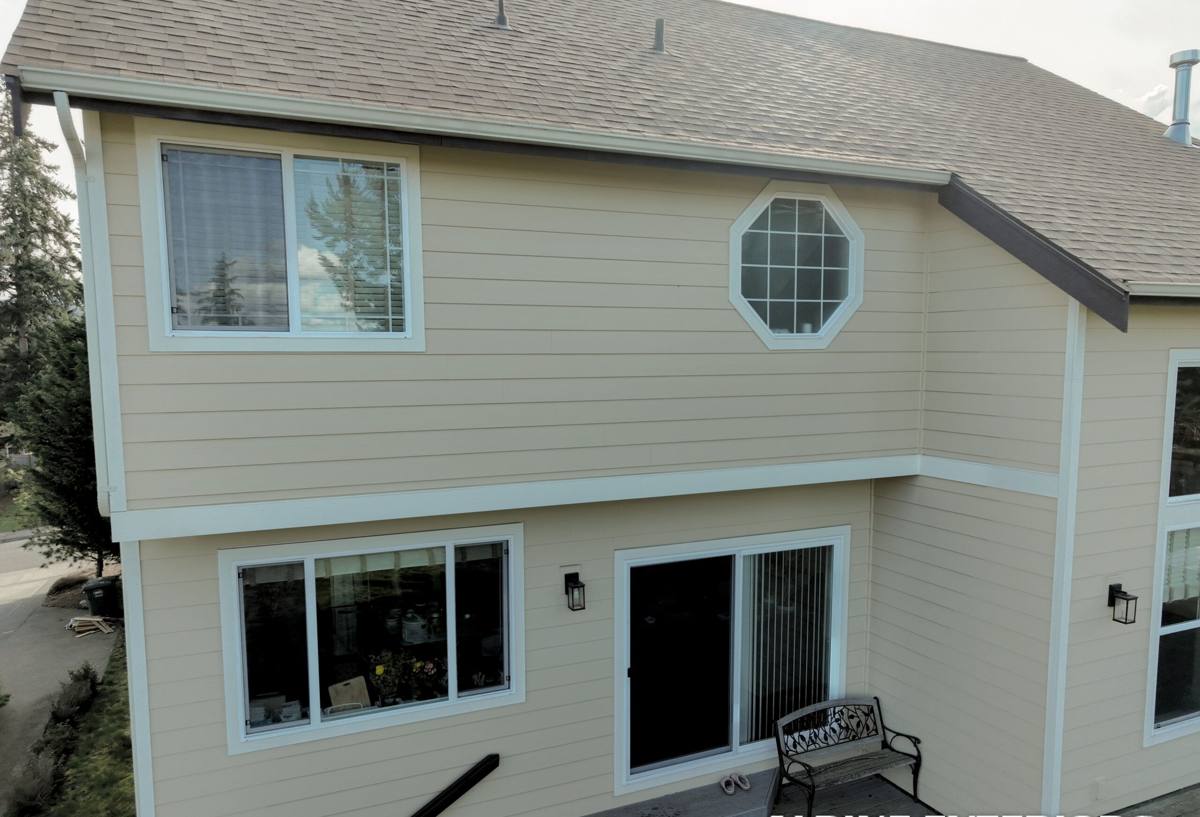
This page is about one thing specifically: what it takes to install siding correctly on a Glenhaven home, why the climate here changes the calculus, and how we approach that work as a crew that installs James Hardie fiber cement exclusively.
Living With Puget Sound Weather in Glenhaven
Everett's coastal position means Glenhaven homes deal with three climate pressures at once, all year, every year:
- Salt air from Puget Sound accelerates corrosion on exposed metal fasteners, flashing, and trim, and it slowly breaks down finishes that aren't formulated to resist it.
- Driving rain during winter storm systems pushes water sideways into seams, laps, and penetrations that would stay dry in a gentler climate — this is a wind-driven rain problem, not just a volume-of-rain problem.
- A long moss season — extended cloud cover, high humidity, and shaded north- and west-facing walls give moss, algae, and mildew a real foothold, especially where siding stays damp longer than it should.
None of these are exotic problems. They're the normal cost of living in this part of Snohomish County. But they mean the margin for error in a siding installation is smaller here than it is in a drier climate — details that are cosmetic elsewhere are functional here.
What Correct Siding Installation Actually Involves
Siding looks simple from the curb: boards, overlapped, nailed to the wall. What actually determines whether it lasts happens underneath and at the edges, in places a homeowner rarely inspects until something goes wrong.
Moisture Management Comes First
Correct installation starts with a continuous water-resistive barrier (WRB) over the sheathing, lapped shingle-style so water is always directed outward and down, never into a seam. Every penetration — windows, doors, hose bibs, vents, light fixtures — needs proper flashing integrated with that barrier, not just a bead of caulk around the trim. Where the manufacturer calls for a drainage gap behind the siding, that gap has to actually exist and stay clear, so any water that does get past the surface can drain and the wall can dry.
Fastening matters just as much. Nails placed at the wrong height, spaced too far apart, or driven at the wrong angle can split boards, void warranty coverage, or leave gaps that widen as the material moves through seasonal humidity swings. None of this is visible once the job is finished — it's only visible five or ten years later, when a poorly installed wall starts failing and a correctly installed one doesn't.
Why We Install Only James Hardie Fiber Cement
We install James Hardie exclusively because it's the product we trust to hold up to this specific combination of salt air, wind-driven rain, and sustained damp weather without the maintenance burden that comes with wood-based or vinyl alternatives. It's non-combustible fiber cement, it comes with a factory-applied ColorPlus finish that's baked on rather than field-painted, and Hardie's HZ5 product line is engineered specifically for climates like the Pacific Northwest's — freeze-thaw cycling combined with sustained moisture exposure. It also carries a strong transferable warranty, which only means something if the installation underneath it was done to spec, which is the whole reason installation quality is the actual subject of this page.
Our Installation Process for Glenhaven Projects
- Inspection and moisture check. Before any siding comes off, we check the condition of the existing sheathing and framing, particularly around windows, at the base of walls, and on north- and west-facing sides where trapped moisture is most common.
- Tear-off and sheathing repair. Old siding comes off, and any water-damaged sheathing gets replaced rather than covered over. Installing new siding over compromised sheathing just hides a problem that will resurface.
- Weather barrier and flashing. A continuous WRB goes on with correctly lapped seams, and flashing is integrated at every window, door, and penetration before any siding is hung.
- Hardie installation to spec. Panels or lap siding go up following James Hardie's fastening schedule, clearances, and gap requirements — including ground clearance and drainage details that matter in a wet climate.
- Trim, caulking, and finish details. Field-cut edges get sealed, trim is fitted and fastened correctly, and finish details are checked against manufacturer specification, not just eyeballed for appearance.
- Final walkthrough. We review the completed work with the homeowner and clean up the site before calling the job done.
Choosing the Right Hardie Products for a Glenhaven Home
James Hardie makes several product lines, and the right choice depends on the home's architecture, existing trim details, and how much wall exposure it gets to weather off the Sound.
| Product | Typical Use | Why It Fits Glenhaven's Climate |
|---|---|---|
| HardiePlank lap siding | Traditional horizontal siding, most common residential choice | Overlapping profile sheds driving rain well when installed with correct exposure and clearance |
| HardiePanel vertical siding | Modern or mixed-material facades, accent walls | Fewer horizontal seams for water to find, works well as a rain-screen assembly |
| HardieShingle siding | Craftsman and cottage-style homes | Staggered or straight-edge profiles that hold up to damp, shaded exposures without the upkeep of real wood shingle |
| HardieTrim boards | Corners, window and door casing, fascia | Non-combustible, dimensionally stable trim that won't rot at the joints the way wood trim does in this climate |
Cost Factors for a Glenhaven Siding Project
Every project is different, so we don't quote firm numbers without seeing the home, but the price of a siding installation in Glenhaven is generally driven by a consistent set of factors:
- Square footage and wall complexity — more corners, gables, and dormers mean more cutting, flashing, and trim work.
- Condition of the sheathing underneath — repairs from moisture damage add material and labor before the first piece of new siding goes up.
- Tear-off versus new construction — removing and disposing of old siding adds cost compared to new-build installation.
- Product line and profile — lap, panel, and shingle products differ in material and installation labor.
- Trim and color selection — factory ColorPlus finishes and custom trim packages affect material cost.
- Access and site conditions — tight lot lines, landscaping, or difficult roof lines can affect labor time.
Signs Your Current Siding Is Already Losing the Fight
Because of the moisture and salt exposure typical in this part of Everett, siding problems here tend to show up earlier than a homeowner expects. It's worth checking your home for these signs before they become structural issues:
- Persistent moss or dark streaking on north- or west-facing walls that comes back shortly after cleaning
- Soft or spongy spots when you press on siding, especially near the bottom of walls or below windows
- Paint or finish that's peeling, bubbling, or chalking well before it should
- Visible gaps opening up at seams, corners, or where trim meets siding
- Warping, cupping, or boards that no longer sit flat against the wall
- Rust staining running down from fasteners or metal flashing
Any one of these can be minor on its own. Several appearing together, especially on the sides of the house most exposed to weather off the Sound, usually means water has been getting behind the siding for a while.
Why a Crew That Already Works Glenhaven Matters
A siding installation isn't just a product choice — it's a set of judgment calls about flashing details, fastening, and drainage that get made on-site, wall by wall. A crew that regularly works homes in this part of Snohomish County has already seen which orientations take the worst of the driving rain, which older homes tend to have sheathing issues under the existing siding, and what the City of Everett's permitting and inspection process actually requires. That familiarity shows up as fewer surprises mid-project and fewer callbacks after the fact — not because the work is different, but because the judgment behind it is informed by having done it here before.
What to Expect During Your Project
Most Glenhaven siding installations run from roughly one to two weeks depending on the home's size and how much sheathing repair is needed, though weather can shift that timeline in either direction. During the project you should expect noise and dust typical of exterior construction, materials staged on-site, and daily cleanup so the property isn't left in disarray overnight. We'll walk the finished work with you before considering the job complete, and address anything that doesn't meet spec before we leave.
If your Glenhaven home needs new siding, or you're not sure whether what's on the walls now is holding up the way it should, we're happy to take a look and give you a straightforward, no-pressure estimate — just fill out the form below.