 Everett
 Board & Batten Siding for Lynnwood Homes
Board and batten has become one of the most requested looks in Lynnwood and the greater Everett area — the clean vertical lines read as modern farmhouse on a new build and as a tasteful accent on a remodel, whether it's covering a full elevation, a gable, or a porch surround. But the look is only half the job. In a Snohomish County climate where homes sit close to Puget Sound's salt air, absorb months of driving rain, and grow moss on anything that stays damp too long, how that vertical siding is built matters as much as how it looks. This page covers what board and batten needs to hold up in Lynnwood specifically, what correct installation involves, and why we install it only in James Hardie fiber cement.
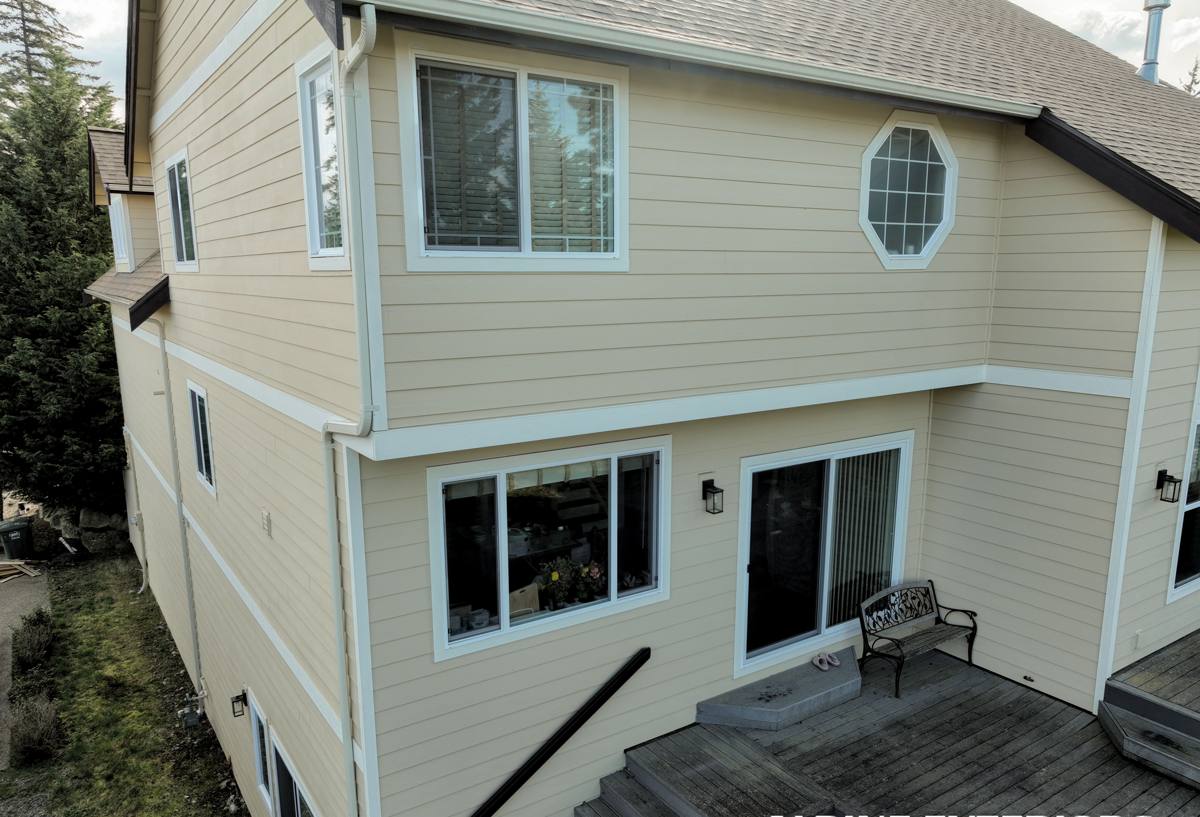
What This Climate Does to Vertical Siding
Board and batten's vertical seams are its signature — and its vulnerability. Unlike horizontal lap siding, where each course sheds water onto the one below it, a board and batten wall relies on the battens and the water-resistive barrier behind the panels to keep moisture out of the wall assembly. In Lynnwood's marine climate, that assembly gets tested constantly: wind-driven rain off the Sound pushes water sideways into vertical joints, prolonged gray-sky humidity keeps siding damp for days at a time, and a long moss season means north-facing and shaded walls stay wet even longer. Add in the salt-tinged air common to this stretch of Snohomish County, which accelerates corrosion on fasteners and hardware, and it's clear why vertical siding installed without real attention to detail fails faster here than it would in a drier region.
Why Lynnwood in Particular
Lynnwood's mix of mature tree canopy and closely spaced newer developments means a lot of homes have walls that rarely get direct sun or wind exposure to dry out between rain events. That's exactly the condition moss, mildew, and slow-moving rot problems prefer. A board and batten installation that isn't detailed for drainage and drying will show streaking, soft spots, or moss growth years before it should.
What a Correct Board & Batten Installation Involves
The visual appeal of board and batten is simple — vertical boards with battens covering the seams — but the assembly behind it is not something to shortcut. A correct install starts before the first panel goes up.
Substrate and Water Management
Every wall gets a code-compliant water-resistive barrier, properly lapped and taped at seams, with flashing integrated at every window, door, and penetration so water is directed out and down rather than trapped behind the siding. On many board and batten applications we install over a rainscreen or furring strip system, creating a small air gap behind the panels. That gap lets any incidental moisture drain and lets the wall dry from both sides — a detail that matters far more in a wet climate like this one than in drier parts of the country.
Fastening and Batten Spacing
Panels and battens have to be fastened per the manufacturer's engineering, not just "close enough" — correct fastener type, spacing, and embedment depth affect both wind performance and how the assembly handles seasonal expansion and contraction. Batten spacing and reveal need to be consistent across the elevation; sloppy spacing is one of the most common ways an otherwise decent board and batten job looks amateurish.
Trim, Corners, and Terminations
Outside corners, inside corners, and the transition where board and batten meets soffit, trim, or a different siding profile are the places water finds a way in if they're not detailed correctly. These termination points get the same attention as the field of the wall — not treated as an afterthought once the "easy part" is done.
The James Hardie Board & Batten System
We install James Hardie fiber cement exclusively, and board and batten is one of the styles their product line handles well. Vertical HardiePanel siding paired with HardieTrim battens gives you the board and batten look in a non-combustible, dimensionally stable material that isn't going to cup, crack, or absorb water the way some alternatives will. The factory-applied ColorPlus finish means the color is baked on before the material ever reaches Lynnwood, with a finish warranty that a job-site paint job can't match — no repainting every few years to keep the vertical lines looking sharp.
Hardie's HZ5 product formulation, engineered for wetter, harsher climates, is a good fit for this part of Washington. The material resists moisture intrusion, doesn't feed mold or moss growth the way organic wood-based products can, and holds paint and factory finish far longer in sustained damp conditions.
Why We Don't Install Board & Batten in Cedar or Engineered Wood
Cedar board and batten has real appeal — natural grain, a warm look many homeowners want — and engineered wood products have improved over the years with better resin treatments and coatings. We're not going to tell you those products don't work anywhere. But in a climate that delivers this much sustained moisture, salt air, and shade, both categories carry maintenance and moisture-management burdens we're not willing to build a business on. Cedar moves with humidity, is a food source for the same organisms that cause the region's moss problems, and needs disciplined refinishing to keep water out of its seams. Engineered wood products depend heavily on intact factory coatings and correct field sealing at every cut edge — miss one, and moisture finds its way into the substrate. Vinyl board and batten sidesteps rot but expands and contracts significantly with temperature and can look visibly cheap up close, with seams and fastening details that don't hold up to close inspection on a nicer home. We made the call to standardize on fiber cement because it's the product that performs consistently in this exact climate without asking the homeowner to stay on top of a maintenance schedule to keep it that way.
Comparing the Options
| Material | Moisture Resistance | Maintenance | Fire Rating | Typical Lifespan |
|---|---|---|---|---|
| Cedar board & batten | Moderate — needs sealed cuts and finish upkeep | High — refinishing every few years | Combustible | 15-25 years with upkeep |
| Engineered wood (LP-type) | Moderate — coating-dependent | Moderate — field sealing required at cuts | Combustible | 20-30 years |
| Vinyl board & batten | Good — doesn't rot | Low, but fades and can warp | Combustible, low melt point | 20-30 years |
| James Hardie fiber cement | Excellent — engineered for wet climates | Low — factory finish, no sealing at cuts needed with proper install | Non-combustible | 30+ years, backed by transferable warranty |
Our Process for Lynnwood Board & Batten Projects
We handle every board and batten project the same methodical way, whether it's a full house or an accent wall:
- On-site assessment — checking existing sheathing condition, drainage patterns, and any moisture already present before proposing a plan.
- Design and layout — panel and batten spacing planned to the actual dimensions of the elevation, not just estimated in the field.
- Water management install — barrier, flashing, and rainscreen detailing done first and inspected before panels go up.
- Panel and batten installation — fastened to manufacturer spec with consistent reveal and tight, properly caulked terminations.
- Final walkthrough — checking corners, trim, and penetrations before we call the job complete.
Keeping Board & Batten Siding Healthy in a Marine Climate
Correct installation removes most of the risk, but a little homeowner attention goes a long way in Snohomish County's wet, shaded conditions:
- Rinse pollen, debris, and organic buildup off the siding once or twice a year, especially on shaded or north-facing walls where moss takes hold fastest.
- Keep gutters clear so overflow doesn't run down the wall and stay trapped behind battens.
- Trim back landscaping and tree limbs that keep siding in constant shade — airflow and sun exposure are what let a wall dry out between rains.
- Inspect caulking at trim and penetrations every year or two; recaulk before gaps let water behind the siding rather than after you notice a stain.
- Address any soft spots, streaking, or moss growth early — on a Hardie installation these are usually surface issues, not structural ones, if caught in time.
Why Local Experience in Lynnwood Matters
A crew that works Lynnwood and Everett regularly already understands the wind-driven rain exposure common on Sound-facing elevations, the shade patterns typical of this area's tree cover, and how local permitting and inspection expectations run. That familiarity shows up in the details — where extra flashing attention goes, how rainscreen gaps are sized, which elevations need the most drainage consideration. It's the difference between a crew installing board and batten from a generic spec sheet and one installing it for the specific conditions your Lynnwood home actually faces.
If you're considering board and batten siding for a home in Lynnwood or elsewhere in the Everett area, we're happy to take a look and talk through what's realistic for your home — no pressure, no obligation. Fill out the form below to request a free estimate.