 Everett
 Why Pinehurst Homes Go Through Siding Faster Than Homeowners Expect
Pinehurst sits inside Everett, which means every home there deals with the same combination of conditions that make Snohomish County exteriors work harder than siding in drier parts of the country: proximity to salt-laden marine air off Puget Sound, long stretches of driving, wind-blown rain in fall and winter, and a wet season that stretches for months. Add in the mature tree canopy common to established Everett neighborhoods, and you get shaded siding that never fully dries out between storms. That combination is exactly what accelerates moss and algae growth, softens vulnerable siding materials, and quietly rots trim and sheathing behind siding that looks fine from the curb.
None of this means Pinehurst homes are doomed to constant siding problems. It means the material and the installation have to be matched to the climate, not just picked for upfront price. A lot of the siding failures we get called out to inspect in this area aren't failures of "siding" in general — they're failures of a specific product or a specific installation shortcut that couldn't handle what this climate actually does to a house year after year.
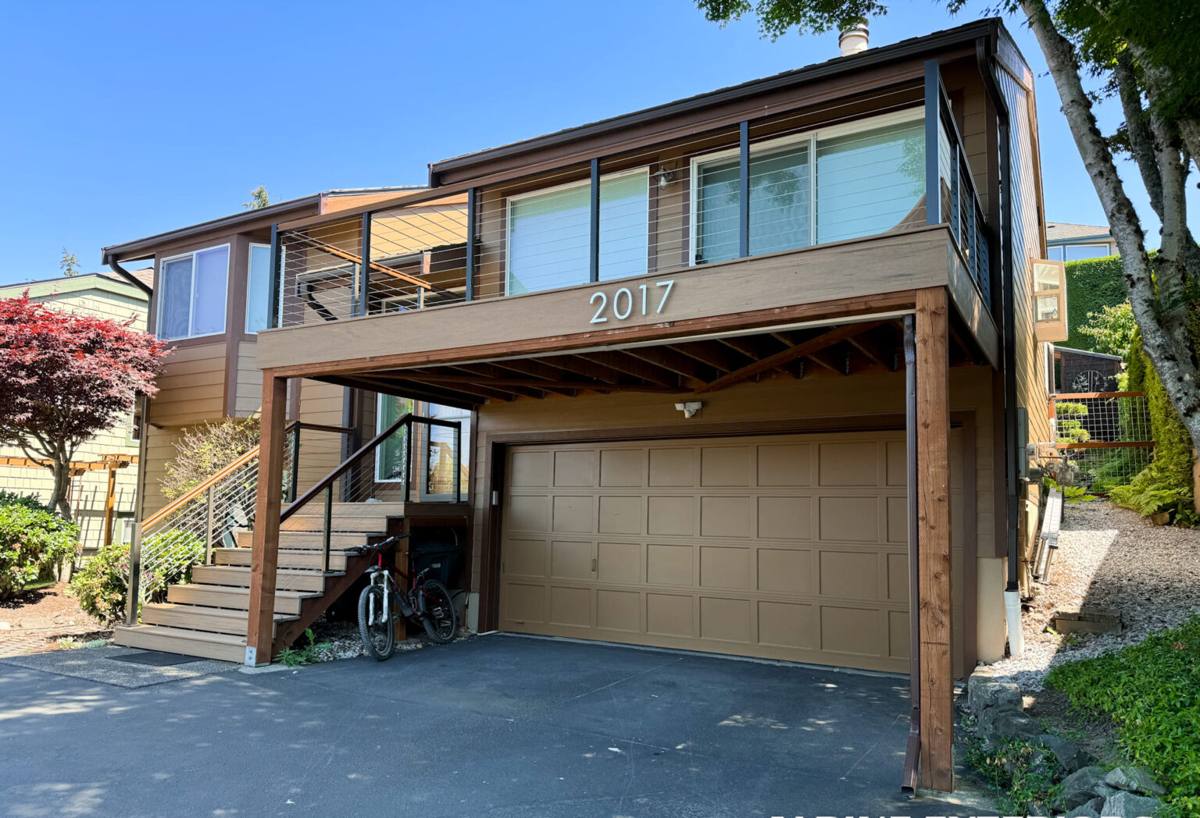
Signs a Pinehurst Home Needs Replacement, Not Another Repair
Siding repair makes sense when the problem is isolated — a cracked board, a dented section, one spot where flashing failed. Replacement becomes the honest recommendation when the damage is systemic, meaning it shows up in multiple places or points to a problem with the whole assembly behind the siding, not just the surface layer.
- Soft, spongy, or crumbling siding when you press on it, especially near the bottom edges and around window trim
- Persistent moss or algae staining that returns within weeks of cleaning, even in the same spots every year
- Visible cupping, warping, or separation at seams and butt joints
- Paint that won't hold — peeling, bubbling, or needing repainting far more often than it should
- Soft or discolored drywall, trim, or sheathing on the interior side of an exterior wall
- Siding that's original to a home built more than 20–25 years ago and was never a durable fiber cement product to begin with
- Gaps, missing caulk, or nail pops that keep reappearing after being addressed
If you're only seeing one of these in one spot, a repair may genuinely be the right call. If you're seeing several of them, or seeing them on more than one wall, that's usually a sign the underlying moisture management has broken down and patching individual boards won't fix the cause.
What a Correct Siding Replacement Job Actually Involves
Tear-Off and Inspection
A real replacement starts with removing the existing siding down to the sheathing — not installing over it. That's the only way to find out what's actually happening underneath: soft sheathing, failed old building paper, missing flashing, or framing that's been quietly absorbing moisture. Skipping this step to save time just seals existing problems inside the wall.
Weather-Resistive Barrier and Flashing
Everett's rain load means the barrier behind the siding matters as much as the siding itself. A correctly installed weather-resistive barrier, properly lapped and sealed, combined with correct flashing at every window, door, and roofline intersection, is what actually keeps water out. Siding is the visible layer; the drainage plane behind it is what does the real work during a driving rainstorm.
Installation to Manufacturer Specification
Fastener placement, nailing patterns, gaps at butt joints, clearance from grade and roof lines, and caulking at penetrations all have documented specifications for a reason — they're what the material's warranty is actually based on. Installed off-spec, even a good product will fail early. Installed to spec, it performs the way it's engineered to.
How Common Siding Materials Hold Up in Pinehurst's Climate
Homeowners often assume all siding materials are roughly interchangeable and the choice comes down to look and price. In a climate like this one, the material matters as much as the workmanship. Here's an honest comparison of how the main options actually perform under sustained coastal moisture and moss pressure:
| Material | Moisture Resistance | Moss/Algae Resistance | Maintenance Burden |
|---|---|---|---|
| Vinyl | Doesn't rot, but seams and edges let moisture behind the panel where it's invisible | Prone to surface algae staining, especially on shaded walls | Low labor, but hidden moisture issues can go undetected for years |
| Cedar / wood | Attractive but absorbs moisture directly; needs a sound finish to stay protected | High — bare or worn wood is a preferred surface for moss and algae | High — regular refinishing, caulking, and inspection required |
| Engineered wood (LP SmartSide and similar) | Better than raw wood, but edges and cut ends remain moisture-sensitive if not sealed correctly | Moderate — better than cedar, still vulnerable at damaged spots | Moderate — depends heavily on installation quality and touch-up over time |
| James Hardie fiber cement | Non-combustible, dimensionally stable, engineered specifically for wet climates in its HZ5 line | Low — factory-cured composition resists the moisture retention that feeds growth | Low — ColorPlus factory finish holds up without repainting on the original manufacturer's schedule |
This is why we standardized on one material instead of offering all of them. We'd rather install the product that's actually engineered for what this climate does than sell a homeowner something that looks similar on day one but behaves differently by year eight.
Why We Install Only James Hardie Fiber Cement
We don't install vinyl, LP SmartSide, Cemplank, Allura, primed spruce, or cedar. That's not a marketing position — it's a standard we set because of what we've seen play out on homes in exactly this kind of climate. James Hardie's fiber cement is non-combustible, holds its shape and paint line in freeze-thaw and constant-damp conditions, and comes in HZ product lines specifically engineered for regional moisture exposure like what Puget Sound-area homes see. The ColorPlus factory finish is baked on under controlled conditions, which is a meaningfully different process than field-applied paint on wood or engineered wood products, and it's backed by a strong transferable warranty when the installation itself is done to spec.
We're not saying every other product is worthless — cedar has real appeal, engineered wood has its place, vinyl has its price point. We're saying that after years of doing this work in Snohomish County's climate, this is the one system we're willing to put our name behind and warranty our installation against.
Our Siding Replacement Process
- Inspection and estimate — we walk the exterior, check for soft spots, moisture damage, and existing flashing condition before quoting anything
- Material and color selection — choosing the Hardie profile, plank width, and ColorPlus finish for the home
- Tear-off — full removal of existing siding and trim down to the sheathing
- Sheathing repair — replacing any rotted or damaged sheathing found during tear-off, not covering it up
- Weather barrier and flashing installation — new house wrap, properly lapped, with correct flashing at every window, door, and penetration
- Siding installation — installed to James Hardie's fastening and clearance specifications
- Trim, caulking, and final detail work — the finish work that determines how clean the job looks and how well it sheds water
- Final walkthrough — reviewing the completed work with the homeowner before calling the job done
What Affects the Cost of a Pinehurst Siding Replacement
Every home is different, so we don't quote pricing sight unseen — but these are the factors that actually move the number up or down on a real estimate:
| Factor | How It Affects Cost |
|---|---|
| Total square footage of siding | The most direct driver of material and labor cost |
| Condition of sheathing underneath | Hidden rot found during tear-off adds repair work that can't be priced until the old siding is off |
| Home height and access | Multi-story sections, steep grades, or tight access require more setup and safety equipment |
| Trim and detail complexity | Homes with more corners, windows, and architectural trim take more labor per square foot |
| Siding profile and color | Plank width, texture, and custom ColorPlus colors carry different material costs |
We'll always walk you through which of these apply to your home before giving a number, so the estimate reflects your actual house rather than a generic average.
Why Hiring a Crew That Already Works Pinehurst Matters
Siding installed correctly in a dry inland climate can still fail in a coastal, high-rainfall neighborhood if the crew doesn't adjust for it. A crew that regularly works Pinehurst and the rest of Everett already knows to pay closer attention to flashing detail on shaded, tree-covered lots, to expect and check for moisture intrusion patterns common to this area's building stock, and to plan installation timing around the region's wet season rather than fighting it. That local familiarity shows up in the details — the extra attention at grade clearance, the flashing choices at rooflines, the way trim is caulked and sealed — the parts of the job that don't show up on a brochure but determine whether the siding is still performing well in fifteen years.
It also means faster, more accurate estimates. We're not guessing at how Everett's climate affects a specific product or install detail — we've already seen how it plays out on homes like yours.
Caring for New Siding Through Everett's Wet Season
Even the right material benefits from basic upkeep in this climate. A yearly rinse to knock down early moss and algae growth, keeping gutters clear so water isn't sheeting down the wall, and trimming back vegetation that keeps siding shaded and damp all go a long way. James Hardie fiber cement doesn't demand the intensive maintenance schedule that wood or engineered wood products do, but no siding is entirely maintenance-free in a climate that sees this much sustained moisture. A few minutes of seasonal attention protects the investment for the long run.
If your Pinehurst home is showing signs of aging siding, or you just want an honest read on whether repair or replacement makes sense, we're glad to take a look. Reach out for a free, no-pressure estimate using the form below.