 Everett
 Siding Installation Built for Port Gardner's Waterfront Exposure
Port Gardner sits close enough to the water that its siding problems aren't quite like the rest of Everett's. Homes here take a steadier dose of salt-laden air off Port Gardner Bay, more wind-driven rain than inland Snohomish County neighborhoods, and a moss and mildew season that stretches longer than most homeowners expect. Siding installation in this area isn't just about picking a product and nailing it up — it's about understanding how that combination of salt, moisture, and shade behaves against a wall system over ten, twenty, thirty years.
We install siding across the Everett area, but Port Gardner gets treated as its own case. The prep work, the flashing details, and the product choice all account for a waterfront-adjacent climate that's harder on siding than a typical suburban lot a few miles inland.
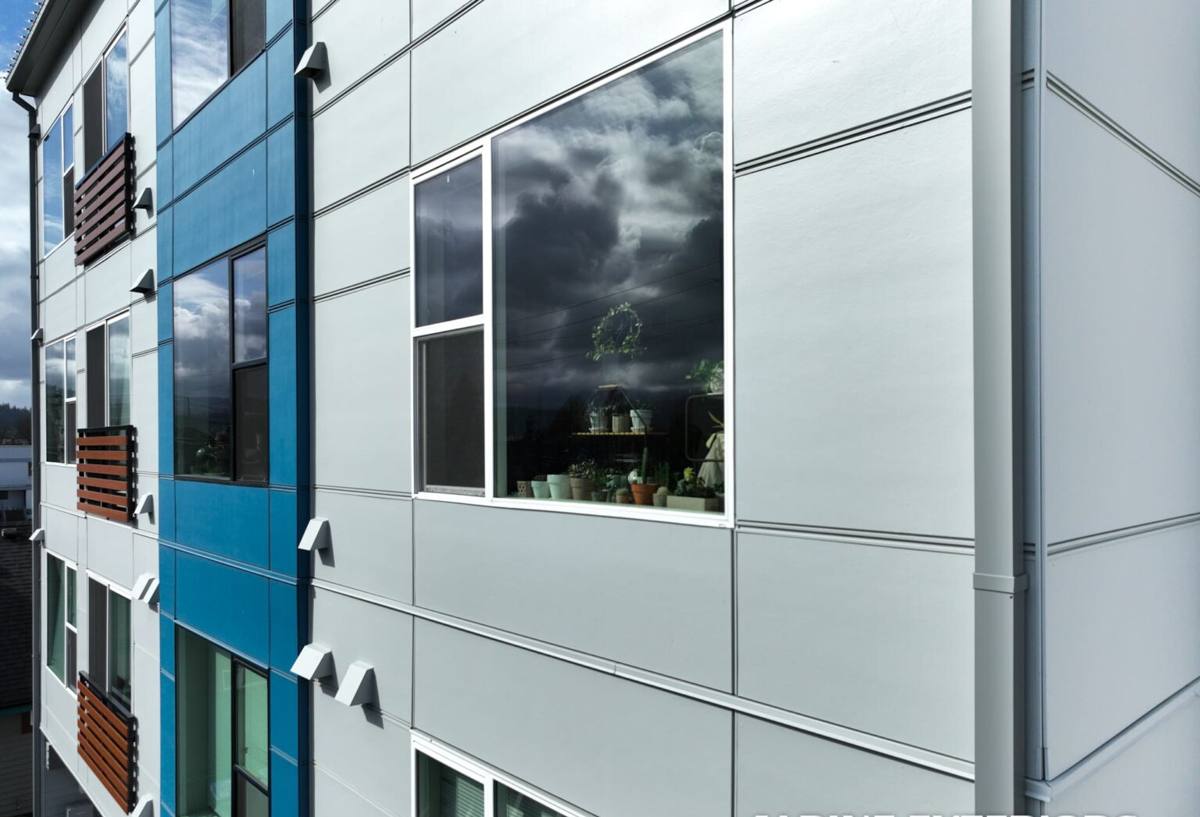
Why Port Gardner's Climate Is Tougher on Siding
Salt Air
Airborne salt from Port Gardner Bay settles on exterior surfaces and accelerates corrosion on fasteners, trim flashing, and any metal components in a siding assembly. Over time, salt exposure also breaks down lower-grade paint finishes faster than it would on a home twenty minutes inland — chalking, fading, and clear-coat failure show up sooner near the water.
Driving Rain
Wind off the bay doesn't just bring rain straight down — it pushes it sideways into wall assemblies, seams, and butt joints. Siding that relies on caulk and paint alone to keep water out struggles here. What matters more is how the siding is lapped, flashed, and drained, because wind-driven rain will find any gap that gravity-fed water would never reach.
A Long Moss Season
Shaded north and west-facing walls in Port Gardner, especially under mature trees or close to neighboring structures, stay damp longer through the fall, winter, and spring than most people realize. That extended damp period is exactly what moss and mildew need to take hold on siding surfaces, in seams, and behind poorly ventilated trim.
What This Means for a Correct Siding Job
Given those three factors, a siding installation in Port Gardner has to do more than look good on install day. It has to:
- Shed wind-driven rain through proper lap, overlap, and flashing details — not rely on sealant as the primary water barrier
- Use a water-resistive barrier and correctly integrated flashing at every window, door, and penetration
- Maintain proper clearance from grade, decks, and roof lines so moisture doesn't wick into the bottom edge of the siding
- Hold a factory finish that resists fading, chalking, and moisture intrusion better than field-applied paint
- Resist moss and mildew growth on shaded walls without needing constant pressure-washing to stay clean
- Stand up to a non-combustible standard, which matters regionally given Washington's wildfire seasons even on the west side of the Cascades
Why We Install Only James Hardie Fiber Cement
We don't install vinyl, LP SmartSide, primed wood, or other fiber cement brands, and that's a deliberate standard, not an oversight. In a climate like Port Gardner's, the weak points of those products show up faster than they would in a drier region:
Vinyl siding expands and contracts significantly with temperature swings, and its seams and panel joints depend on lap geometry that can loosen or gap over time — not ideal when wind-driven rain is a regular event. It also isn't a water-shedding assembly in the way a properly flashed fiber cement system is; water can get behind it and has to find its own way out.
Primed wood and engineered wood products like LP SmartSide are organic-based, meaning they're more vulnerable to moisture absorption and rot if the factory coating is ever compromised — a real risk in a moss-prone, high-moisture environment where any nick or unsealed cut edge becomes an entry point.
James Hardie fiber cement is cement-based, not wood-based, so it doesn't feed moss, mildew, or rot the way organic siding materials can. It's also non-combustible, holds its factory ColorPlus finish far longer than field-applied paint, and Hardie's HZ5 product line is engineered specifically for cold, wet climates like ours — freeze-thaw cycling and sustained moisture exposure are part of what it's built to handle. It's not the cheapest material on the market, and we're upfront about that. It's the one we're willing to put our name behind on a Port Gardner home.
What Correct Installation Actually Involves
The product only performs as well as the installation. On every Port Gardner project, that means:
Prep and Moisture Management
Removing old siding down to the sheathing, checking for hidden rot or water damage (common on waterfront-adjacent homes with a history of driving rain exposure), and installing a continuous water-resistive barrier before a single piece of siding goes up.
Flashing at Every Penetration
Windows, doors, hose bibs, light fixtures, and vents all need properly integrated flashing so water is directed out and down, never trapped behind the cladding. This is the detail that separates a siding job that lasts thirty years from one that starts showing rot in five.
Fastening and Clearance to Spec
Hardie siding has manufacturer-specified nailing patterns, fastener types, and minimum clearances from roofing, decks, and grade. Skipping these to save time is one of the most common causes of premature failure and voided warranty claims — and it's non-negotiable on our jobs.
Caulking and Sealant, Used Correctly
Sealant has a role, but it's a secondary defense, not the primary water barrier. We use it where Hardie's installation instructions call for it — not as a substitute for proper flashing and lap technique.
Our Process for a Port Gardner Home
- On-site assessment — we walk the whole exterior, checking wall orientation, tree cover, drainage, and any existing moisture or moss damage before quoting anything
- Product and color selection — matching a Hardie line and ColorPlus finish to the home's exposure, with extra attention to shaded, moss-prone walls
- Tear-off and sheathing inspection — old siding comes off, sheathing gets checked and repaired as needed before anything new goes on
- Water-resistive barrier and flashing installation — the part of the job that determines whether the siding lasts
- Hardie installation to manufacturer spec — correct fastening, clearances, and lap detail throughout
- Final walkthrough — trim, caulking, and touch-up review with the homeowner before we consider the job done
Cost Factors for Port Gardner Siding Installation
Every home is different, but the same handful of factors drive most of the cost variation we see on Port Gardner projects:
| Factor | Why It Matters Here |
|---|---|
| Home size and wall complexity | More corners, gables, and dormers mean more cut edges and flashing detail — more labor per square foot |
| Existing siding removal and repair | Waterfront-adjacent homes more often need sheathing repair from long-term moisture exposure before new siding goes on |
| Product line (HZ5 vs. standard) | Cold- and moisture-engineered Hardie lines cost more but are matched to this climate |
| Trim and accessory scope | Fascia, soffit, and trim replacement alongside siding adds cost but keeps the whole envelope consistent |
| Access and site conditions | Tight lots, slopes, or limited equipment access near the water can affect labor time |
Signs a Port Gardner Home Needs New Siding
- Persistent moss or dark streaking on shaded walls that returns shortly after cleaning
- Soft or spongy spots near the base of the siding or around window trim
- Visible warping, buckling, or gaps at panel seams
- Paint that's chalking, peeling, or fading unevenly, especially on walls facing the water
- Rising energy bills that suggest the wall assembly is no longer sealing properly
- Rot or staining discovered after removing gutters, trim, or attached fixtures
Why a Local Crew That Already Works Port Gardner Matters
A siding crew that mainly works drier, inland neighborhoods can install a technically correct job and still miss the details that matter here — the extra flashing attention a bay-facing wall needs, the clearance adjustments around a low grade near the water, or the finish choice that holds up against sustained salt exposure. A crew that's worked Port Gardner before has already seen how these homes age, where moisture tends to find its way in, and what a Snohomish County winter actually does to an exterior wall over several years, not just on install day.
If your Port Gardner home is due for new siding, or you're not sure whether what's on the wall now is doing its job, we're happy to take a look. We offer free, no-pressure estimates — walk the home with us, ask questions, and decide from there. There's a form below to get started.