 Everett
 Building a Deck That Actually Holds Up in Snohomish
Snohomish sits close enough to Puget Sound and the Snohomish River basin that decks here deal with a specific combination of problems: months of steady rain, humid air carrying salt from the Sound, and shaded yards where moss and algae take hold fast. A deck built to a generic national spec will often look fine for a season or two and then start showing problems — soft spots near the house, green film on the walking surface, fasteners bleeding rust through the boards. Building correctly for this climate from day one costs little or nothing extra compared to building it wrong, but it changes how long the deck lasts and how much work it asks of you every year.
This page covers what we build into every deck we put up in the Snohomish area, why those choices matter given the local weather, and what our process looks like from first call to final walkthrough.
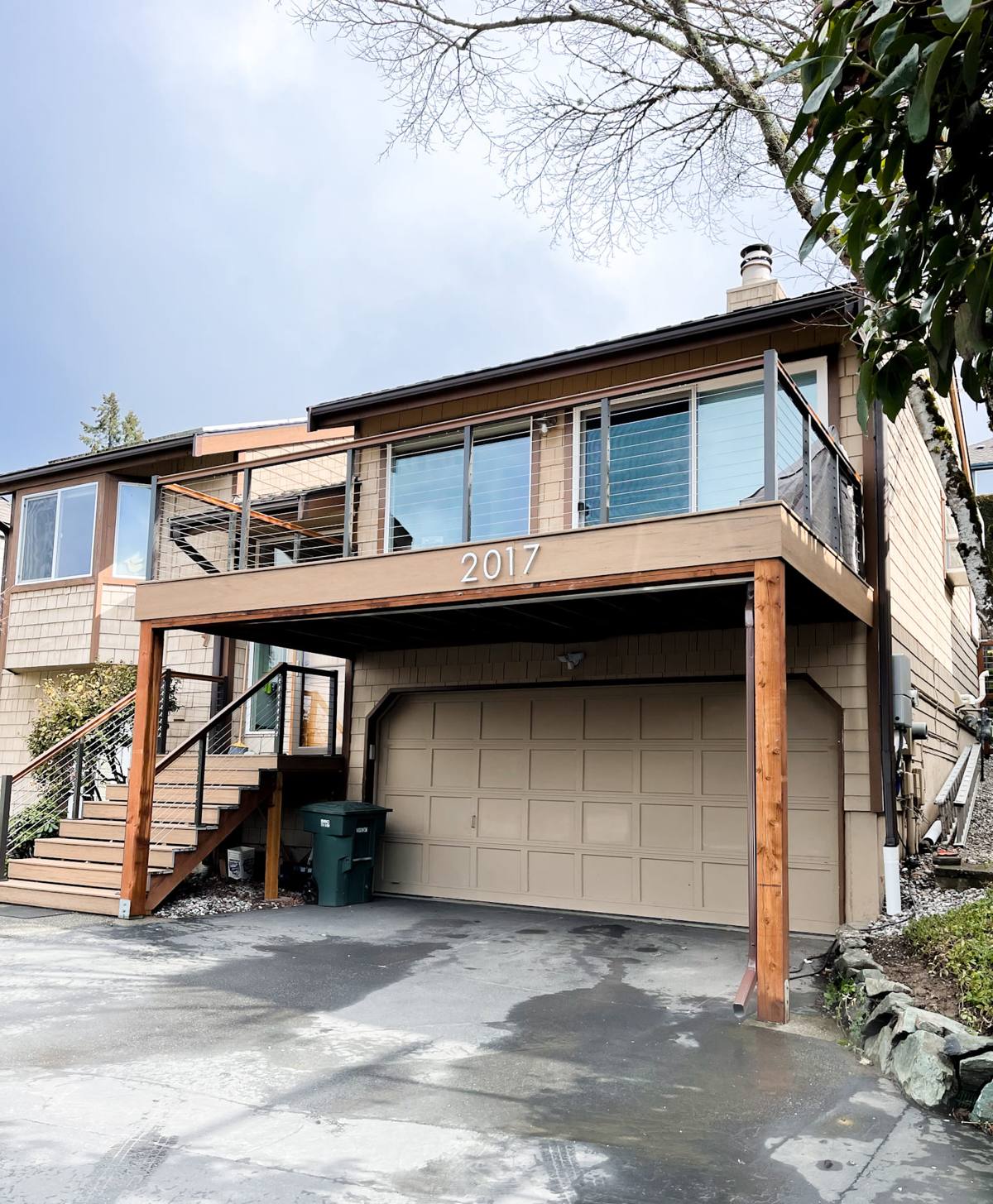
The Climate Snohomish Decks Have to Survive
Three conditions do most of the damage to decks in this area, and they compound each other:
Driving Rain and Prolonged Wet Seasons
Western Washington doesn't just get rain — it gets long stretches of low-intensity, wind-driven rain that finds its way into every gap, seam, and fastener hole. Wood that stays damp for weeks at a time is what actually rots, not wood that gets briefly wet and dries. Any deck detail that traps moisture instead of shedding it will fail early here, regardless of how good the lumber grade is.
Salt Air
Proximity to Puget Sound means airborne salt reaches inland further than most homeowners expect, especially on exposed or elevated decks. Salt accelerates corrosion in fasteners, connectors, and any exposed metal hardware. Standard carbon-steel screws and nails will rust and stain long before the decking itself wears out.
Moss, Algae, and Shade
Snohomish's tree cover and long overcast season keep many decks damp and shaded for much of the year, which is exactly what moss and algae need to establish. Once moss gets a foothold in the grain of wood decking or in the texture of a composite board, it holds moisture against the surface and makes the deck slippery — a real safety issue on stairs and ramps, not just a cosmetic one.
Choosing the Right Decking Material for This Climate
There's no single "best" decking material — the right choice depends on how much maintenance you're willing to do, your budget, and how much sun or shade the deck actually gets. Here's how the common options hold up under Snohomish conditions specifically:
| Material | Moss/Algae Resistance | Salt Air Behavior | Maintenance | Typical Lifespan Here |
|---|---|---|---|---|
| Pressure-treated fir/hem-fir | Needs regular cleaning and sealing to resist growth | Requires corrosion-resistant fasteners; wood itself is unaffected by salt | Annual cleaning, re-sealing every 1-2 years | 15-20 years with upkeep |
| Cedar | Naturally more rot- and insect-resistant, but still needs cleaning in shaded spots | Handles salt air well; needs stainless or coated fasteners | Periodic cleaning, occasional oil or stain | 20-25 years with upkeep |
| Capped composite | Textured surfaces can hold moss in deep shade; smoother-face boards resist it better | Excellent — the cap layer doesn't corrode | Occasional wash-down, no sealing or staining | 25-30+ years, manufacturer-backed |
| PVC decking | Very resistant; low water absorption limits growth | Excellent | Low — occasional wash-down | 25-30+ years, manufacturer-backed |
For decks in heavily shaded Snohomish yards, we lean toward capped composite or PVC precisely because they don't feed moss the way bare wood grain can. For sunnier, more open lots, a well-maintained cedar deck is a perfectly reasonable choice and often the better value. We'll walk your specific site — sun exposure, tree cover, how the yard drains — before recommending one over the other, rather than pushing whatever's easiest to install.
What a Correctly Built Deck Involves
Most deck failures we get called out to inspect aren't decking-material problems — they're structural and detailing problems that let water sit where it shouldn't. A correct build addresses this at every layer.
Footings and Framing
Footings need to be sized and set to the depth required by Snohomish County code for our soil and frost conditions, not just "deep enough to look right." Framing lumber should be rated for ground contact where it's within splash range of soil or standing water, and joist spacing should account for the actual decking material chosen — composite and PVC boards generally need tighter joist spacing than solid wood to avoid flexing over time.
Ledger Board Attachment and Flashing
The ledger board — where the deck attaches to the house — is the single most common source of rot and structural failure on decks anywhere in the Pacific Northwest. It has to be through-bolted (not just lag-screwed) in most configurations, flashed properly so water sheds away from the house framing rather than behind it, and separated from the siding with the right gap and moisture barrier. Get this detail wrong and the damage happens invisibly, inside the wall, long before it shows up on the surface.
Decking and Fastening
Boards should be gapped correctly for the material's expansion and contraction in our wet-to-dry swings, and fasteners should be stainless steel or coated for corrosion resistance given the salt-air exposure common across Snohomish. Hidden fastener systems reduce the small pockets where water and debris collect at screw heads — a real advantage in a climate where anything that traps moisture eventually becomes a moss patch or a rust stain.
Reducing Moss and Standing Water Before They Start
The best moss control isn't a chemical treatment — it's a deck built so water and debris don't have anywhere to sit in the first place. We build in a few details specifically for this:
- Slight slope away from the house so water sheds off the deck surface instead of pooling
- Consistent, code-correct board gapping so water drains between boards rather than sitting on top
- Joist tape or flashing on top of the framing to keep the structural wood dry underneath the decking
- Ventilation gaps at the perimeter and under low-clearance decks so airflow can dry the underside
- Material and finish choices matched to how much shade and tree cover the specific deck location gets
None of this eliminates the need for occasional cleaning in a climate like ours, but it means a seasonal wash-down keeps the deck looking right instead of fighting an uphill battle against standing water and shade.
Our Deck Building Process
We keep the process straightforward, and every step is built around getting the details above right the first time:
- Site visit and consultation — we look at sun exposure, drainage, tree cover, and how the deck ties into your house before recommending a material or layout.
- Design and quote — a clear plan for footings, framing, decking material, railing, and any stairs, with a written estimate before any work starts.
- Permitting — we handle the Snohomish County or City of Everett permit application and inspections that apply to your project, so you're not chasing paperwork.
- Construction — footings and framing first, inspected before decking goes down, then decking, railing, and finish work.
- Final walkthrough — we go over the finished deck with you, including basic care and what to watch for through your first wet season.
Permits and Local Code
Most new deck construction in and around Snohomish requires a building permit, and the threshold depends on height above grade, size, and whether it's attached to the house. Structural elements — footings, ledger attachment, railing height and spacing — are inspected against Washington state building code as adopted locally. We pull the required permits and schedule inspections as part of the job rather than treating it as an optional add-on, because a deck built without proper permitting and inspection can create real problems at resale and, more importantly, real safety risk if the structure wasn't checked.
Maintaining Your Deck Through Snohomish's Wet Seasons
Whatever material you choose, a little seasonal attention goes a long way in this climate. A basic annual routine:
- Sweep debris — leaves and needles trap moisture and feed moss growth if left sitting
- Wash the deck surface at least once a year, more often in heavily shaded areas
- Check for any dark or soft spots near the house where the ledger board attaches
- Inspect railing posts and stair connections for looseness after the wettest months
- Re-seal or re-stain wood decking on the schedule the product calls for — don't wait for it to look obviously worn
- Clear gutters and downspouts near the deck so roof runoff isn't draining onto or under it
Composite and PVC decks cut most of this list down to just cleaning, which is part of why they've become a popular choice for lower-maintenance households in this area.
Why a Crew That Already Works Snohomish Matters
A lot of the details in this page — ledger flashing that accounts for our rain patterns, fastener choices for salt air, joist spacing that respects our soil and frost conditions, drainage details aimed at moss prevention — aren't things you'd know to ask for unless you'd already dealt with how decks actually age in this specific area. A crew that's built and maintained decks around Snohomish knows which details matter here versus which ones are fine to skip, and knows the local permitting process well enough not to slow your project down.
If you're planning a new deck or replacing an old one that's showing its age, we're happy to walk the site, talk through material options honestly, and put together a clear, no-pressure estimate. Use the form below to get started.