 Everett
 Roof Repair Built for the Snohomish Area
Snohomish sits close enough to Puget Sound and the Snohomish River valley that its homes deal with a specific mix of weather stress: damp air carrying salt off the water, long stretches of driving rain in the fall and winter, and enough shade and moisture to grow moss on almost any roof that isn't actively maintained. A roof repair here isn't the same job as a roof repair in a dry inland climate. The materials, the flashing details, and the timing of the work all need to account for how wet this corner of Snohomish County stays for most of the year.
We work on roofs throughout Everett and the surrounding Snohomish neighborhoods regularly, which means we're not guessing at what local homes need. We see the same failure patterns over and over — moss lifting shingles, valleys that back up during heavy rain, and fasteners that corrode faster than they should because of the salt content in the air. Good repair work here means addressing the actual cause of the problem, not just patching the spot where water is currently showing up inside the house.
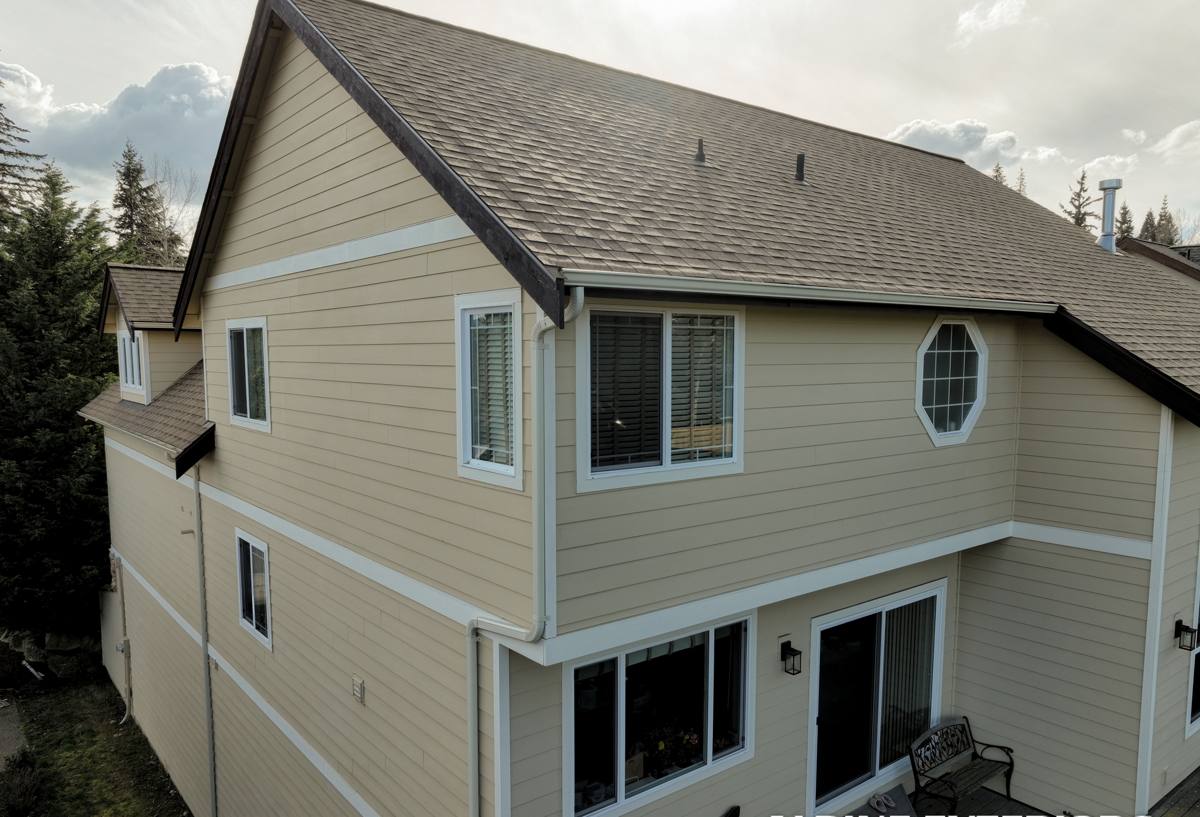
What Snohomish's Climate Does to a Roof
Salt Air and Metal Fatigue
Homes closer to the water pick up airborne salt that settles on roofing metal — flashing, drip edge, nail heads, and any exposed fasteners. Over years, that salt accelerates corrosion in lower-grade or improperly coated metal. Once flashing starts to pit or thin out, it stops shedding water the way it's supposed to, and that's usually where a leak starts, even though the shingles above it might look fine.
Driving Rain and Wind-Driven Water
Rain in this area doesn't always fall straight down. Wind off the Sound and the river valley pushes rain sideways during storms, which means water gets forced up under shingle edges, into vents, and along roof-to-wall transitions that would stay dry in a calmer climate. Repairs that only address the top layer of roofing and ignore the underlayment or flashing behind it tend to fail again in the next big storm.
Moss Season
Shaded roof sections and north-facing slopes in Snohomish can stay damp for weeks at a time, especially under tree cover. That moisture is exactly what moss needs to take hold. Moss doesn't just sit on top of shingles — it grows a root structure that works its way under shingle edges and granule layers, lifting them slightly and creating a path for water to get underneath. A roof that looks "mostly fine" from the ground can have moss damage that's already compromised several courses of shingles.
Signs Your Roof Needs Repair, Not Just Cleaning
- Granules collecting in gutters or at the base of downspouts
- Dark streaking or thick moss growth on shaded or north-facing slopes
- Soft or spongy spots when walking the roof deck
- Water stains on interior ceilings, especially near exterior walls or chimneys
- Flashing around chimneys, skylights, or vent pipes that looks rusted, lifted, or cracked
- Shingles that are curling, cracked, or missing after a windstorm
- Daylight visible through the roof deck from inside the attic
- Ice or moss buildup that never fully clears even in drier months
Any one of these on its own might not be an emergency, but ignoring them through another wet season usually turns a $400-$800 repair into a much larger one.
What a Correct Repair Actually Involves
A roof repair done right in this climate isn't just swapping out a few shingles. It typically involves:
1. Finding the Real Source
Water travels. A stain on a bedroom ceiling might trace back to a flashing gap three feet away, or a valley higher up the slope. We trace leaks back to their actual origin point before doing any repair work, because patching the visible symptom without fixing the source means the same leak comes back.
2. Removing Moss and Debris Properly
Moss and organic debris get cleared without pressure-washing the shingle surface, which can strip granules and shorten the life of otherwise healthy shingles. We use low-pressure methods and hand removal around ridges and valleys where moss tends to concentrate.
3. Replacing Damaged Underlayment and Flashing
If water has been getting under the shingles, the underlayment beneath is often compromised even if the shingles themselves look salvageable. Flashing around chimneys, skylights, and roof-to-wall transitions gets replaced with corrosion-resistant material suited to a salt-exposed environment, not just whatever matches the old flashing.
4. Matching and Integrating New Shingles
New shingles get woven into the existing roof plane correctly — proper nailing pattern, correct exposure, and sealing at the edges — so the repair doesn't stand out as an obvious patch and doesn't create a new weak point at the seam.
5. Checking Ventilation
Poor attic ventilation traps moisture, which speeds up moss growth and can cause the roof deck to stay damp from the underside even when the exterior is dry. A repair visit is a good time to check that intake and exhaust venting are actually balanced.
Repair vs. Replacement: How We Help You Decide
Not every roof problem in Snohomish needs a full replacement, and not every "small leak" is actually small once you're up on the roof. Here's a general framework for how we think through it:
| Situation | Usually Repair | Usually Replacement |
|---|---|---|
| Roof age | Under 12-15 years, otherwise in decent shape | Approaching or past manufacturer's rated lifespan |
| Damage extent | Localized to one slope, valley, or penetration | Widespread across multiple slopes |
| Moss damage | Surface growth, granule loss limited | Moss has lifted shingles across large areas |
| Decking condition | Solid, no soft spots found | Soft, delaminated, or water-stained decking in multiple areas |
| Leak history | First occurrence or isolated to one spot | Recurring leaks in different locations each season |
We'll always tell you honestly which side of that table your roof falls on. If a repair will genuinely hold up through Snohomish's wet season, we'll recommend the repair — a full replacement isn't the right answer just because it's available.
Materials That Hold Up Locally
For repair work in this climate, we favor materials that are proven against salt exposure and constant moisture rather than the cheapest available match. That means corrosion-resistant flashing metals, properly rated underlayment for high-moisture regions, and shingle products with algae-resistant granules where moss and moisture have already been a recurring issue. We don't push premium upgrades on a repair that doesn't need them, but we also won't use a fastener or flashing choice that we know will corrode again in a few salt-air seasons just because it's a cheaper match.
Our Repair Process, Start to Finish
- Inspection and diagnosis — we walk the roof (weather permitting) and check the attic from the inside for moisture, staining, and ventilation issues
- Honest assessment — you get a clear explanation of what's actually wrong, what's causing it, and whether repair or replacement makes sense
- Written estimate — scope and price before any work starts, no surprise add-ons once we're up there
- Repair work — moss removal, underlayment and flashing replacement, shingle integration, and ventilation checks as needed
- Cleanup and walkthrough — debris cleared from gutters and the ground, and we show you what was fixed
Timing Matters in Snohomish
Late spring and summer are the best windows for roof repair here, simply because the roof surface is dry and workable. That said, active leaks don't wait for good weather, and we do handle repair calls through the wetter months when a roof is actively letting water in — we just work around storm windows and prioritize getting the leak stopped first, with more thorough moss and flashing work scheduled for a drier stretch if needed.
Why a Locally Experienced Crew Matters Here
Roofing crews that mostly work drier inland markets sometimes underestimate how aggressive moss and salt-air corrosion are in this part of Snohomish County. That shows up as repairs that don't account for wind-driven rain, or flashing swapped in with standard-grade metal that corrodes again within a few years. Working roofs in and around Everett and Snohomish regularly means we're already familiar with how water moves on the roof styles common in this area, which valleys tend to collect debris, and which flashing details actually hold up through a wet Pacific Northwest winter.
Get an Honest Look at Your Roof
If you're seeing moss buildup, a stain on a ceiling, or storm damage after a windy stretch, it's worth getting a straight answer on what's actually going on before it turns into a bigger repair. We offer free, no-pressure estimates for roof repair throughout the Snohomish and Everett area — just fill out the form below and we'll take a look.