 Everett
 Why West Everett Siding Wears Differently
West Everett sits close enough to Puget Sound that homes here take on a specific mix of punishment: salt-laden air off the water, long stretches of driving rain pushed in by winter storms, and a moss season that can run from fall through spring in Snohomish County's mild, wet climate. None of that is unique to one street or one house — it's a neighborhood-wide condition, and it shows up in siding failures years before homeowners expect them.
Salt air is corrosive to exposed fasteners and metal flashing, and it accelerates the breakdown of finishes that aren't built to resist it. Driving rain finds every gap in caulking, trim, and butt joints and pushes water sideways into wall assemblies instead of letting it run off. And moss, once it gets a foothold on a north-facing wall or a shaded section of siding, holds moisture against the surface around the clock. Repairing siding in West Everett means understanding all three of these forces at once, not just patching whatever is visibly cracked or stained.
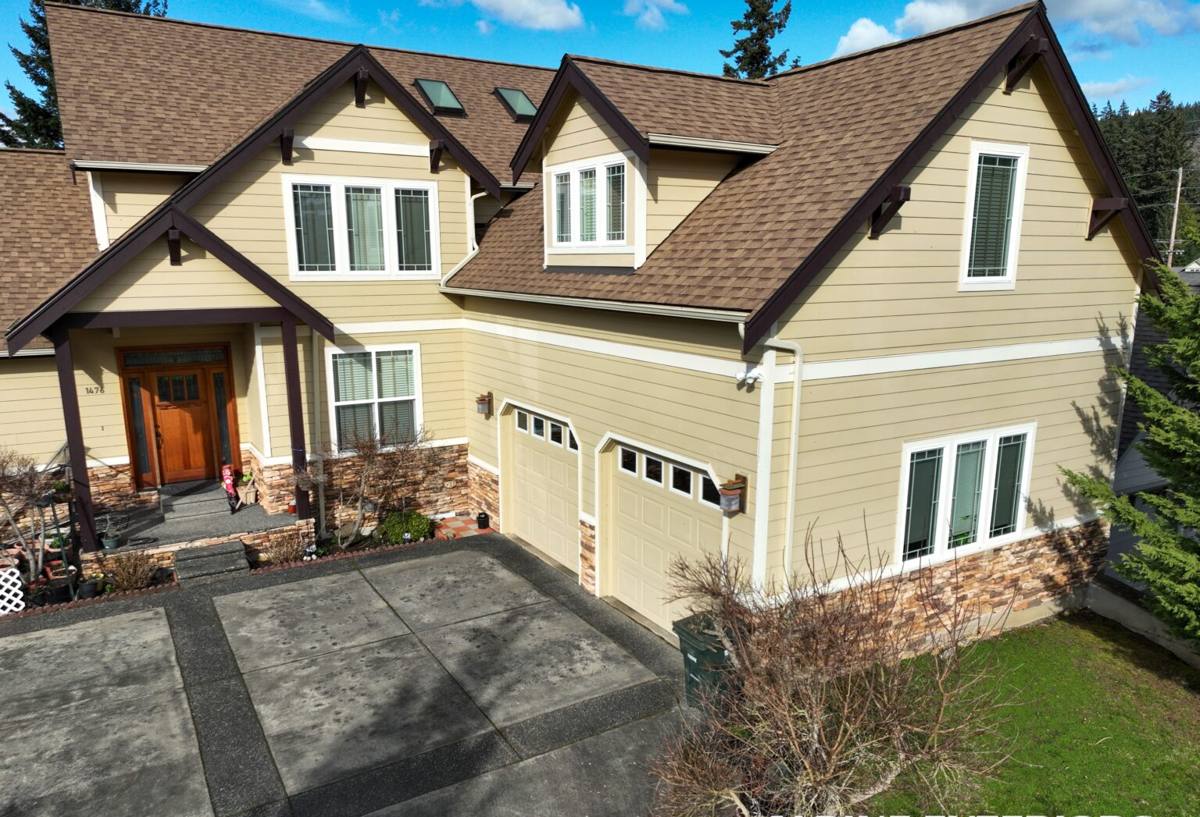
The Repair Problems We See Most in This Area
Every siding repair call is a little different, but in West Everett a handful of issues come up again and again:
- Moisture intrusion at seams and trim — caulking and sealant that has dried out, shrunk, or pulled away, letting wind-driven rain behind the siding.
- Moss and algae staining — dark streaking and soft, spongy patches on shaded or north-facing walls where sun exposure is limited.
- Cupping, warping, or delamination — common on older wood-based or engineered wood siding that has absorbed repeated moisture cycles.
- Cracked or brittle vinyl — vinyl siding that has become stiff with age and cracks under impact or temperature swings, common enough in a marine climate with cold snaps.
- Corroded fasteners and flashing — nail heads and metal trim showing rust or pitting from salt air exposure.
- Impact and pest damage — dings from storm debris, and pecking or nesting damage on softer wood-based products.
The common thread in most of these is water. Siding is a system for managing where water goes — not a waterproof shell — and once a gap opens anywhere in that system, everything behind it is exposed.
What a Correct Repair Actually Involves
A siding repair done right is a diagnosis first and a patch second. Before any panel gets pulled or any caulk gun comes out, the real question is: where is the water actually getting in, and what has it already done to the wall behind the siding? Skipping that step is how homeowners end up paying for the same repair twice.
Diagnosis Before Repair
We look at the damaged area in context — not just the stained or cracked panel, but the flashing above it, the caulking at the seams, the grade and drainage nearby, and whether there's any softness or discoloration in the sheathing behind the siding. In a climate like Everett's, water damage often travels further than the visible symptom suggests.
Matching Materials and Water Management
Once we know the cause, the fix has to address it — not just cover it up. That usually means correcting the water path first (flashing, kick-out flashing, proper caulking joints, grade adjustments where relevant) and then replacing or repairing the damaged siding itself with materials that match in profile, exposure, and finish as closely as possible. A repair that looks fine from the driveway but leaves the underlying moisture problem in place isn't a repair — it's a delay.
Repair vs. Replace: How We Make the Call
Not every problem area needs a full re-side, and not every damaged section is worth patching. The right call depends on how localized the damage is, what the siding material is, and how much of the wall assembly has already been affected.
| Factor | Favors Repair | Favors Replacement |
|---|---|---|
| Extent of damage | Isolated to one or two panels/areas | Spread across multiple walls or elevations |
| Underlying sheathing | Dry, solid, undamaged | Soft, stained, or showing rot |
| Material condition | Rest of the siding is sound and matches available stock | Siding is old, discontinued, or failing broadly |
| Material type | Durable base material with a fixable surface issue | Wood-based or vinyl siding reaching the end of its service life |
| Cause of failure | One correctable defect (bad caulk joint, damaged flashing) | Systemic moisture exposure or chronic maintenance neglect |
We'll always tell you honestly which category your situation falls into. If a targeted repair will hold up in West Everett's climate, that's what we recommend — there's no reason to sell a homeowner a full re-side for a problem that a proper repair solves.
Our Repair Process
- On-site inspection — we look at the damaged area, the surrounding siding, trim, and flashing, and check for signs of moisture behind the surface.
- Honest diagnosis — we explain what's actually causing the problem, not just what's visible, and give you a straight assessment of repair versus replacement.
- Scope and estimate — a clear plan for what gets fixed, what materials are used, and what it will cost, before any work starts.
- Correct the water path — flashing, sealant, and drainage details are addressed first, since a cosmetic patch over an unresolved leak won't last.
- Repair and match — damaged sections are replaced or repaired with materials selected to match appearance and performance as closely as possible.
- Cleanup and walkthrough — the work area is cleaned up and we walk the repair with you before calling the job done.
Why the Material We Repair With Matters
This is where we're upfront about our position: we install James Hardie fiber cement siding exclusively, and we don't install vinyl, LP SmartSide, primed spruce, cedar, or other fiber cement alternatives like Cemplank or Allura. When a repair calls for patching an existing wall of one of those materials, we'll do honest, competent work matching what's there. But when damage is widespread enough that replacement is the right call, we'll tell you why we'd put Hardie on the wall instead rather than replacing like-for-like.
The short version: wood-based products like cedar or LP SmartSide are organic materials that stay vulnerable to moisture, rot, and pest damage no matter how well they're finished, which is a real liability in a climate with as much sustained rain and moss pressure as Everett gets. Vinyl is low-maintenance but becomes brittle with age and offers no fire resistance. James Hardie's fiber cement is non-combustible, engineered for the Pacific Northwest's specific moisture and temperature profile (their HZ5 product line is built for exactly this climate), and backed by a factory-applied ColorPlus finish with a strong transferable warranty. When we're already opening up a wall to make a repair, that's often the most cost-effective moment to make the switch rather than patching a product with a shorter remaining service life.
Why Hiring a Crew That Knows West Everett Matters
Siding repair isn't generic work. A crew that's worked walls in this specific part of Everett already knows what salt air does to fasteners over time, how far driving rain typically pushes water on exposed elevations, and which orientations tend to develop moss first. That local pattern recognition shortens the diagnosis and helps avoid repairs that look fine for a season and fail again the next wet winter.
There's also a practical side: familiarity with Everett and Snohomish County permitting requirements, typical construction types in the area, and realistic scheduling around the region's wet months all make the job go smoother. A contractor working far outside their usual territory is guessing at conditions that a local crew already knows firsthand.
After the Repair: Keeping It From Happening Again
A good repair buys you time, but siding in a climate like this still needs periodic attention. A few habits go a long way:
- Rinse off moss and algae buildup before it gets thick enough to hold moisture against the siding.
- Walk the exterior once or twice a year and check caulking at seams, trim, and window/door edges for cracking or gaps.
- Keep gutters clear so overflow doesn't run down the siding face repeatedly.
- Trim back vegetation and tree cover that keeps a wall shaded and damp longer than the rest of the house.
- Address small stains or soft spots early — they're far cheaper to fix before they spread behind the siding.
What Repair Costs Depend On
| Cost Factor | Why It Matters |
|---|---|
| Size and location of damage | A single ground-level panel is far less work than a section high on a gable end requiring staging or lifts. |
| Underlying moisture damage | If sheathing or framing needs attention behind the siding, that adds scope beyond the surface repair. |
| Material availability | Matching an older or discontinued siding profile can take more time and cost more than working with current stock. |
| Access | Second-story or hard-to-reach areas require more setup time and equipment. |
| Root cause complexity | A repair that also requires new flashing, re-caulking, or drainage correction costs more than a like-for-like patch. |
We won't quote a number without seeing the damage in person — anyone who does is guessing. What we will do is give you a clear, itemized estimate and explain exactly what's driving the cost before any work begins.
If you're dealing with damaged, stained, or failing siding on a West Everett home, we're happy to take a look and give you an honest read on what it needs — repair or replace, no pressure either way. Request a free estimate using the form below.