 Everett
 Bayside's Roof: Built to Handle Salt Air, Rain, and Moss
A roof in the Bayside area of Everett doesn't wear the way a roof does forty miles inland. Between the salt-laden air off Puget Sound, the driving rain that comes in sideways during winter storms, and the long stretch of the year when shaded roof planes barely dry out, an asphalt shingle roof here is under more sustained stress than most manufacturers' warranty language accounts for. That doesn't mean asphalt shingles are the wrong choice — they're still one of the most practical, cost-effective roofing systems for a Snohomish County home. It means the installation details matter more here than they do somewhere dry and calm.
This page covers what an asphalt shingle roof actually needs to hold up in Bayside, what our process looks like on a job like this, and how to think through repair versus replacement decisions without getting oversold.
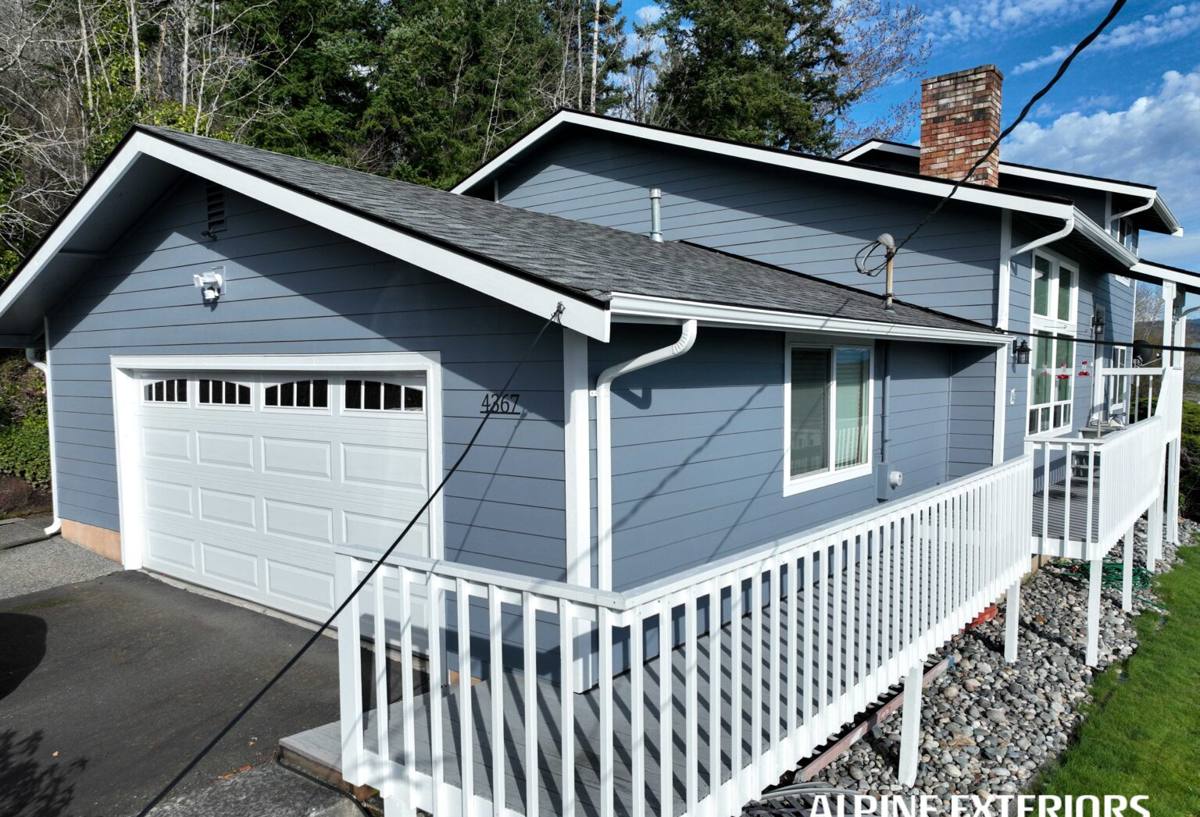
How Puget Sound Weather Wears Down a Shingle Roof
Salt Air and Corrosion
Homes closer to the water pick up airborne salt that settles on roofing metal — flashing, drip edge, nail heads, vent stacks, and gutter hardware. Over time, standard galvanized fasteners and flashing can start to corrode faster than they would further inland. Once a fastener head rusts through or a flashing seam pits and thins, that's a direct path for water into the roof deck, usually long before the shingles themselves are actually worn out.
Wind-Driven Rain
Everett gets plenty of straight-down rain, but the storms that do the most damage are the ones that push rain sideways under wind load. That kind of weather tests the parts of a roof that calm-weather installations can get away with cutting corners on: shingle seal strips, valley construction, and the underlayment beneath the shingles. A roof that looks fine in a light drizzle can still leak during a wind-driven event if those details weren't done right the first time.
Moss and Shade
Bayside has enough tree cover and cloud cover that north-facing and shaded roof slopes can stay damp for days after a storm passes. That moisture, combined with organic debris, is exactly what moss and algae need to take hold. Moss doesn't just look bad — as it grows, it lifts shingle edges, holds water against the roof deck, and shortens the life of the roofing system if it's left unmanaged for multiple seasons.
What a Correctly Installed Shingle Roof Needs in Bayside
The shingle brand on the wrapper matters less than whether the roof underneath it was assembled correctly for this climate. A few details we treat as non-negotiable on Bayside homes:
- Algae-resistant shingles on any slope that gets regular shade, to slow the return of moss and streaking
- Corrosion-resistant flashing and fasteners around chimneys, valleys, and roof-to-wall transitions, especially on homes closer to the water
- Ice-and-water shield membrane at eaves, valleys, and roof penetrations — the areas most likely to take on wind-driven rain
- Proper attic and roof ventilation so moisture from inside the home doesn't condense against the underside of the deck
- Correct nailing pattern and shingle exposure, since under-nailed or over-exposed shingles are far more likely to lift in wind
None of these are upgrades in the marketing sense — they're what a shingle roof needs to actually perform the way it's rated to in a marine climate. Skipping any one of them is usually how a roof that's only 8–10 years old ends up with a leak that should have been another decade away.
Our Asphalt Shingle Roofing Process
Whether the job is a repair, a partial re-roof, or a full tear-off and replacement, the process follows the same order:
- Inspection and honest assessment — we get on the roof (not just a look from the ground) and check the shingle condition, flashing, decking, ventilation, and any moss or moisture damage before recommending anything
- Scope and written estimate — you get a clear explanation of what's actually needed and why, not a bundled number with no detail behind it
- Tear-off and deck check — old roofing is removed and the deck is inspected for soft spots or rot before anything new goes down
- Underlayment and ice-and-water shield — installed to current standards, with extra protection at the vulnerable areas covered above
- Flashing, valleys, and vents — replaced or upgraded rather than reused where corrosion or wear is present
- Shingle installation — correct nailing, exposure, and sealing for the wind exposure your specific roof faces
- Ventilation check — confirming intake and exhaust airflow is balanced so the new roof isn't fighting trapped moisture from day one
- Final walkthrough and cleanup — including a magnetic sweep for stray fasteners and a review of what was done
Repair, Re-Roof, or Full Replacement?
Not every roofing problem in Bayside means a full replacement. The right call depends on the roof's age, how widespread the damage is, and what's underneath the shingles.
| Situation | Repair Usually Fits | Replacement Usually Fits |
|---|---|---|
| Roof age | Under 12–15 years, isolated issue | Approaching or past expected shingle lifespan |
| Damage pattern | Localized — one valley, one vent, storm damage to a section | Widespread granule loss, curling, or cracking across multiple slopes |
| Moss condition | Light growth, treatable and preventable | Heavy, long-term moss with visible shingle lifting or deck staining |
| Deck condition | Solid, no soft spots found on inspection | Soft decking, rot, or repeated leak history |
| Underlayment/flashing | Still intact and correctly installed | Missing ice-and-water shield or corroded flashing throughout |
We'll tell you honestly which category your roof falls into. A repair that genuinely solves the problem is a better outcome for you than a replacement you didn't need — and it's also the kind of judgment call that keeps a homeowner calling us back for the next job.
What Affects the Cost of a Bayside Roofing Project
Every roof is priced individually after inspection, but the same handful of factors drive most of the difference between jobs:
| Cost Driver | Why It Matters |
|---|---|
| Roof size and pitch | More square footage and steeper slopes mean more material and more labor time |
| Number of layers to remove | Tearing off multiple existing layers costs more than a single-layer tear-off |
| Deck repair needs | Rotted or soft decking found during tear-off has to be replaced before new roofing goes down |
| Flashing and valley complexity | Roofs with multiple valleys, chimneys, or dormers need more detail work |
| Shingle class and warranty tier | Higher wind-rated and longer-warranty shingles cost more per square than standard options |
| Access and site conditions | Tree cover, steep lots, or limited staging space can add time to a job |
We'll walk through which of these apply to your home during the estimate, so the number you get reflects your actual roof rather than a generic average.
Keeping a Bayside Roof Healthy Between Services
A well-installed shingle roof still needs some basic upkeep in this climate, especially on shaded or north-facing slopes. A simple maintenance checklist for homeowners in the area:
- Keep gutters and valleys clear of needles and leaf debris, especially heading into fall
- Watch shaded slopes for early moss growth and address it before it spreads across the roof
- Trim back tree limbs that keep a roof section damp or drop debris directly onto it
- After major wind storms, do a visual check from the ground for lifted or missing shingles
- Check attic ventilation isn't blocked by insulation, storage, or debris
- Have the roof professionally inspected every few years, not just when a leak shows up
None of this requires getting on the roof yourself — most of it can be checked from the ground or from inside the attic, and it's the difference between catching a small problem early and paying for water damage later.
Why Local Experience in Bayside Matters
Roofing crews that don't regularly work this specific area tend to treat every Snohomish County roof the same way they'd treat one in a dry, calm climate. We don't. Working in Bayside and the surrounding Everett neighborhoods means knowing which streets sit closer to the water and take more direct salt exposure, which slopes in this area hold shade and moss longest through the year, and how to sequence a tear-off around the rain patterns this part of Washington actually gets rather than the ones a generic install schedule assumes.
It also means we're familiar with the local permitting process. Full roof replacements typically require a building permit in Everett and Snohomish County, while smaller repairs often don't — we handle that determination and the paperwork on jobs where it applies, so it's not something you have to sort out yourself.
Being local also means accountability. If something needs a follow-up look after the first hard storm of the season, we're not driving in from out of the area to get to it.
If you're dealing with a roof that's showing its age, growing moss it didn't used to, or you just want an honest read on where it stands, we're glad to take a look. Fill out the form below for a free, no-pressure estimate on your Bayside home.