 Everett
 Why Snohomish Roofs Wear Differently Than You'd Expect
Snohomish sits close enough to Puget Sound and the Snohomish River corridor that homes here deal with a specific combination of stressors: salt-tinged air moving in off the water, long stretches of driving rain pushed by wind rather than falling straight down, and a moss season that can run most of the year in shaded, north-facing sections of a roof. None of these things alone is unusual for Western Washington. Together, over years, they wear down an asphalt shingle roof faster than the same product would wear in a drier, calmer climate.
That matters when you're choosing materials, planning a repair, or deciding whether it's time to replace. A roof that would hold up fine in a dry inland climate can underperform here if it wasn't detailed with this specific weather pattern in mind. This page is about what a shingle roof actually needs to hold up in Snohomish, not a generic rundown of asphalt roofing in general.
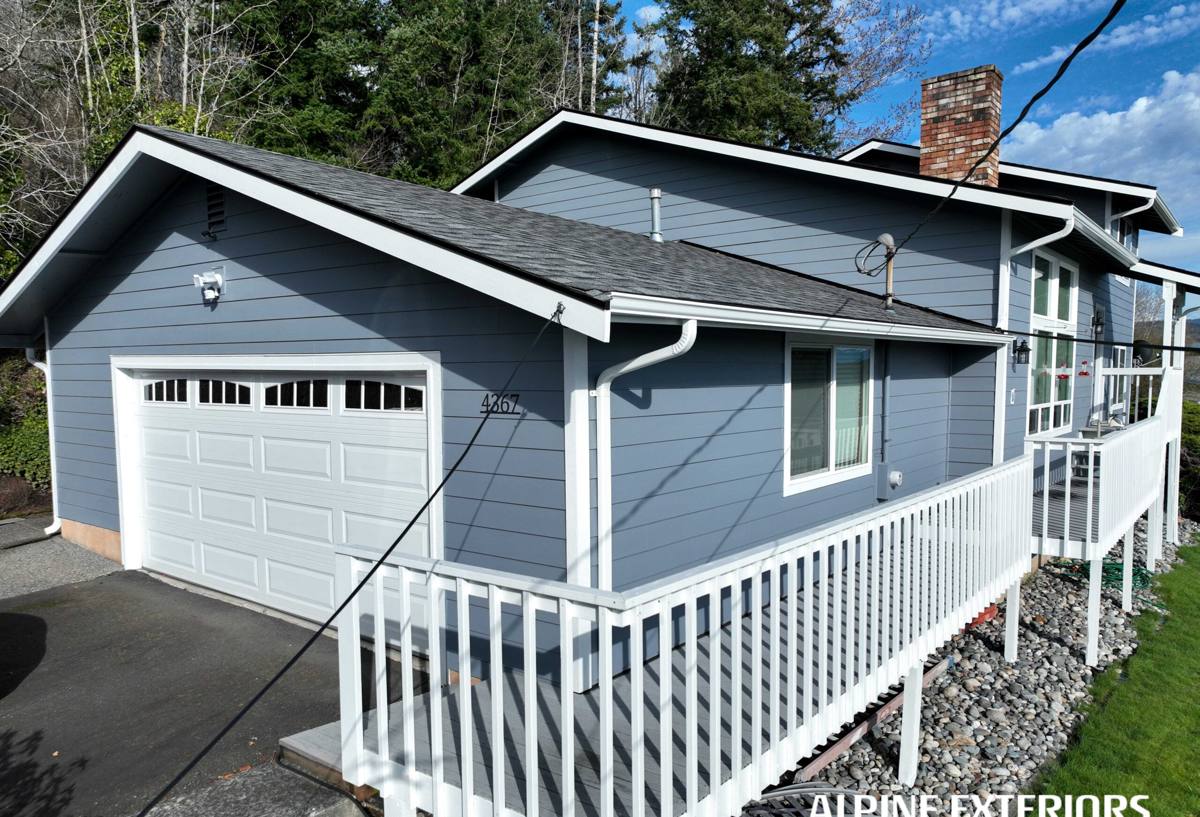
What Salt Air, Rain, and Moss Actually Do to a Shingle Roof
Salt Air and Metal Components
Asphalt shingles themselves aren't especially vulnerable to salt, but the metal parts of a roof system are. Nails, flashing, vent stacks, and drip edge can corrode faster in a marine-influenced air environment, especially lower-grade galvanized products. Once a fastener or flashing seam starts to corrode, it stops sealing the way it should, and that's usually where a leak starts — not in the shingle field itself.
Wind-Driven Rain
Rain that comes in at an angle behaves differently than straight-down rain. It can find its way up under shingle tabs, into valleys, and around penetrations like chimneys and skylights if those areas weren't flashed and sealed with that kind of weather in mind. A roof that looks fine from the ground can still have entry points that only leak during a real wind-and-rain event, which is exactly the kind of weather Snohomish gets on a regular basis.
Moss and Trapped Moisture
Moss doesn't just look bad — it holds moisture directly against the shingle surface for extended periods, which accelerates granule loss and, over time, can lift shingle edges as moss colonies grow underneath them. Shaded roof sections, north-facing slopes, and areas near overhanging trees are the usual trouble spots. Left unaddressed, moss shortens the practical lifespan of an otherwise sound roof.
Signs a Snohomish Roof Needs Attention
Most shingle roof problems give some warning before they turn into an active leak. Worth checking for, especially after a stretch of wind and heavy rain:
- Granules collecting in gutters or at downspout outlets
- Dark streaking or green/black moss growth, particularly on shaded slopes
- Curling, cupping, or lifted shingle edges
- Rust staining around vent stacks, flashing, or exposed nail heads
- Soft spots or sagging when walked on (best assessed by a roofer, not a homeowner on a ladder)
- Daylight visible through the roof deck from inside an attic
- Water stains on interior ceilings, especially near chimneys, skylights, or valleys
Any one of these on its own isn't necessarily an emergency, but it's worth a look before the next wet season.
What a Correct Shingle Roof Installation Involves Here
Underlayment and Ice/Water Barrier Placement
In a climate with this much sustained rain, underlayment choice and placement matter more than they would somewhere drier. Synthetic underlayment holds up better than older felt products under prolonged moisture exposure, and self-adhered ice-and-water membrane belongs at vulnerable points — eaves, valleys, and around penetrations — even though Snohomish doesn't see the heavy ice-damming some colder climates deal with. The driving-rain factor alone justifies it.
Flashing Detail Work
Flashing around chimneys, skylights, sidewalls, and roof-to-wall transitions is where most leaks actually originate, not in the open shingle field. Correct step flashing, counter-flashing, and valley treatment — sealed and layered properly rather than just caulked over — is what keeps wind-driven rain from finding a way in.
Ventilation
A roof deck that can't breathe traps moisture underneath the shingles, which shortens shingle life and can contribute to moss and mildew problems inside the attic space itself. Balanced intake and exhaust ventilation isn't an upgrade — it's a basic requirement for the roof to perform the way the manufacturer's warranty assumes it will.
Fastening and Nail Selection
Given the corrosion risk from salt-influenced air, we don't cut corners on fastener quality. Correctly rated, corrosion-resistant nails placed in the manufacturer's specified nailing zone are a small cost difference that has a real effect on how long flashing and shingle attachment points hold up.
Choosing the Right Shingle for This Climate
Most manufacturers offer several tiers of asphalt shingle, and the differences aren't just cosmetic. For a Snohomish home, algae resistance and wind rating matter more than they would in a drier climate.
| Shingle Type | Typical Lifespan | Algae/Moss Resistance | Wind Rating | Best Fit For |
|---|---|---|---|---|
| 3-tab (economy) | 15-20 years | Low unless treated | Lower | Budget-driven projects, low-slope simple roofs |
| Architectural / dimensional | 25-30 years | Moderate to high (with algae-resistant granules) | Higher | Most Snohomish homes — the standard recommendation |
| Premium / designer | 30+ years | High | Highest | Steep-slope, high-visibility roofs, longer hold periods |
For most homes in this area, an architectural shingle with algae-resistant (copper-infused) granules is the practical middle ground — it costs more than 3-tab up front but meaningfully slows moss and streaking in a climate where those are ongoing issues, not occasional ones.
Repair vs. Replace: How to Think It Through
Not every issue means a full tear-off. A roof with isolated flashing failure, a handful of storm-damaged shingles, or an early moss problem can often be repaired if the underlying deck and majority of the shingle field are sound. Replacement makes more sense when granule loss is widespread, the roof is past or near the end of its expected lifespan, or repeated repairs are addressing symptoms of a system-wide underlayment or ventilation problem rather than a one-off failure. We'll tell you honestly which category your roof falls into — a repair that just delays an inevitable replacement isn't a good use of your money, and a full replacement isn't warranted for a problem that repair can genuinely fix.
Our Process, Start to Finish
1. On-Site Assessment
We walk the roof (or inspect from the attic and exterior when a full walk isn't safe or necessary) and document the actual condition — not just what's visible from the driveway.
2. Straightforward Estimate
You get a written scope covering materials, underlayment, flashing work, ventilation, and cleanup — no vague line items, no pressure to decide on the spot.
3. Scheduling Around Weather
Shingle roofing is weather-sensitive work. We schedule with realistic buffer for the rain patterns typical to this area rather than promising a date we can't reliably hit.
4. The Install
Tear-off (when applicable), deck inspection and repair as needed, underlayment, flashing, shingles, and ventilation — done in the sequence that actually protects the house at every stage, not just at the end.
5. Final Walkthrough
We review the finished roof with you, including flashing points and any deck repairs that were needed, before calling the job complete.
Maintenance That Actually Extends Roof Life Here
Given the moss season and the volume of rain Snohomish gets, a shingle roof here benefits from periodic attention beyond just letting it be:
- Clearing gutters and downspouts before the heavy fall/winter rain sets in, so water isn't backing up under the eave edge
- Removing moss and debris buildup on shaded slopes rather than letting it accumulate season over season
- Trimming back overhanging branches that keep sections of the roof shaded and damp
- Having flashing points and vent boots checked periodically, since these fail well before the shingle field typically does
None of this replaces a proper inspection when something looks off, but it meaningfully slows the wear pattern that's specific to this climate.
Why It Matters That We Already Work in Snohomish
A roofing crew unfamiliar with this specific stretch of Snohomish County will often detail a roof the way they would anywhere else — which isn't wrong exactly, it's just not optimized for what actually shortens roof life here. Knowing which slopes in this area tend to hold moss, how much wind-driven rain a valley needs to be built to handle, and which flashing and fastener grade actually holds up against the salt-air exposure common near the water isn't guesswork for us — it's what we see on every job in this county. That's the difference between a roof that meets code and one that's actually built for where it sits.
If you're dealing with an aging shingle roof, storm damage, a moss problem that's gotten out of hand, or you're just planning ahead, we're happy to come take an honest look. Reach out for a free, no-pressure estimate using the form below.