 Everett
 Why West Everett's Climate Is Hard on Asphalt Shingle Roofs
West Everett sits close enough to Puget Sound that salt-laden air is a daily fact of life for anything on a rooftop. Combine that with the driving, wind-pushed rain that comes off the water and the long, damp moss season that runs from fall through spring in Snohomish County, and you have three separate stresses working on a roof at the same time — corrosion, water intrusion, and organic growth. A shingle roof installed the same way you'd install one in a dry inland climate simply doesn't hold up as long here. The materials, the flashing details, and the ventilation all need to be chosen and installed with this specific combination of conditions in mind.
None of that means asphalt shingles are the wrong choice for this neighborhood — they're still the most cost-effective, widely available, and repairable roofing material on the market. It means the installation has to account for what the roof will actually face over the next 20-30 years, not just what looks good on the day it's finished.
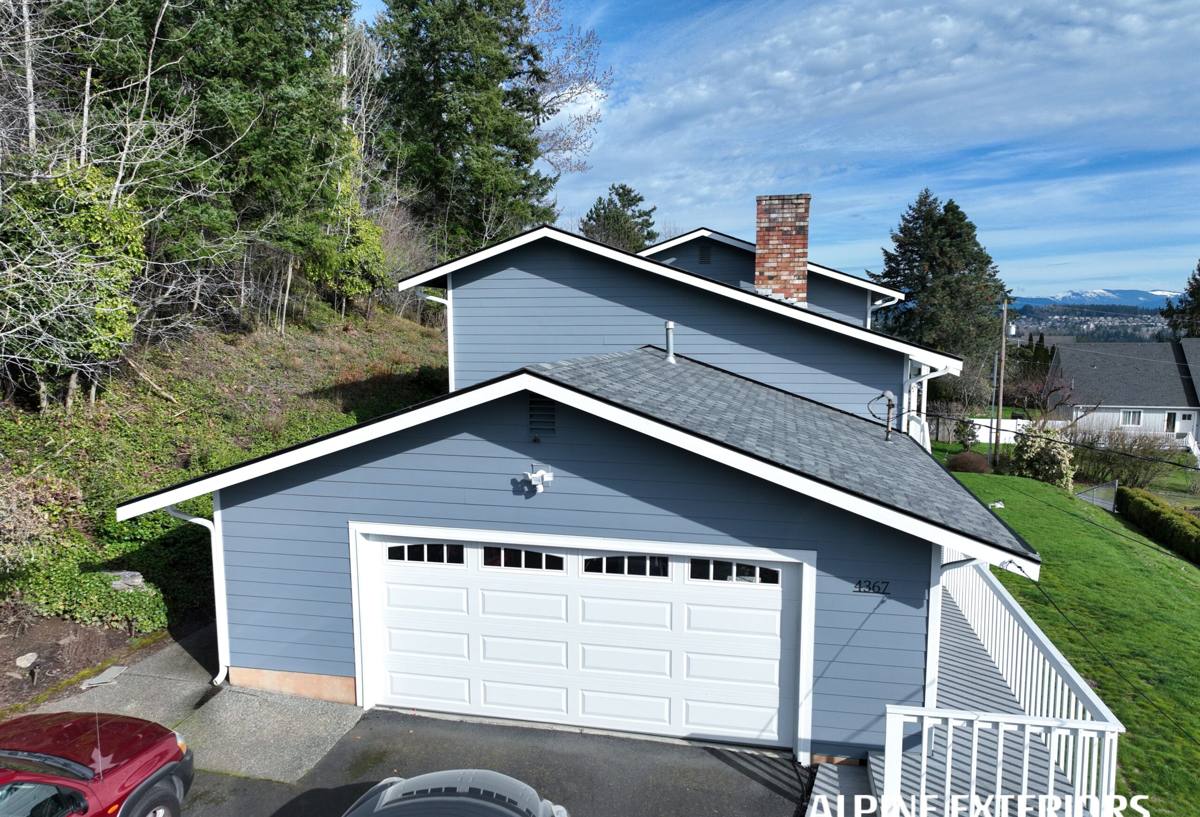
What Correct Asphalt Shingle Installation Actually Involves
A shingle roof is a system, not a single layer. The shingles themselves get most of the attention, but the layers underneath them do most of the work of keeping water out, and they're the layers that fail first if they're skipped or installed wrong.
The Underlayment and Water-Shedding Layers
Underneath every shingle should be a synthetic or felt underlayment, and along eaves, valleys, and any low-slope transitions, a self-adhering ice-and-water membrane. In West Everett, that membrane matters as much for wind-driven rain as it does for winter ice — a hard southwesterly storm can push water sideways under shingles that aren't backed by a proper membrane at the vulnerable points. Flashing at chimneys, skylights, sidewalls, and roof-to-wall transitions needs to be step-flashed and counter-flashed correctly, not just caulked over. Caulk is a maintenance item, not a waterproofing strategy, and it's one of the most common shortcuts we find when we tear off an older roof.
Ventilation Most Homeowners Never Think About
A shingle roof needs balanced intake and exhaust ventilation to let moisture escape from the attic space. Without it, humid indoor air condenses against the underside of the roof deck, which rots sheathing from the inside out and can void a shingle manufacturer's warranty outright. In a marine climate with high ambient humidity for much of the year, under-ventilated attics are one of the more common causes of premature roof failure we see — often years before the shingles themselves would have worn out.
Choosing Shingles That Hold Up Near the Sound
Not every asphalt shingle is built for salt air and constant moisture exposure. The differences that matter most are algae resistance, wind rating, and how the shingle is constructed.
| Shingle Type | Typical Lifespan | Best Fit for West Everett |
|---|---|---|
| 3-tab shingles | 15-20 years | Budget re-roofs; lowest wind rating, least algae resistance |
| Architectural (laminate) shingles | 25-30 years | Most common choice locally; better wind and impact performance |
| Algae-resistant (AR) laminate shingles | 25-30 years, resists staining longer | Recommended for shaded, damp lots common in this area |
| Premium/designer laminate shingles | 30-40+ years | Higher upfront cost, heavier profile, strongest warranty coverage |
Algae-resistant shingles use copper or zinc granules blended into the surface, which discourage the blue-green algae responsible for the dark streaking common on north-facing and shaded roof slopes throughout Snohomish County. It's a small difference in material cost that pays off in appearance and, in some cases, warranty coverage against staining. We'll walk through the manufacturer options that make sense for your roof's slope, sun exposure, and tree cover during the estimate rather than pushing one line across every job.
Moss, Algae, and Salt Air: Practical Defense
Moss doesn't just look bad — it holds moisture against the shingle surface and can work its way under shingle edges over time, lifting them and creating entry points for water. A correctly installed roof won't stop moss spores from landing, but it can be built and maintained to keep moss from taking hold and causing damage.
- Keep overhanging branches trimmed back so roof slopes get more sun and airflow, especially on north- and west-facing pitches
- Clear gutters and valleys of needles and leaf debris at least twice a year — clogged valleys hold standing water against shingles
- Choose algae-resistant shingles on shaded or tree-covered lots rather than relying on treatments after the fact
- Have moss physically removed by hand or soft-washed rather than pressure-washed, which can strip granules and shorten shingle life
- Inspect flashing and exposed fasteners yearly for early corrosion, particularly on homes closer to the water where salt exposure is highest
Our Asphalt Shingle Roofing Process
We run the same process on every West Everett shingle roof, whether it's a straightforward re-roof or one with multiple valleys and penetrations.
1. On-Site Inspection and Written Scope
We walk the roof and attic, note the number of existing layers, the condition of the decking, ventilation setup, and any problem areas — soft spots, past patch jobs, or flashing that's due for replacement. You get a written scope before any work starts, not a verbal estimate that changes once the tear-off begins.
2. Tear-Off and Deck Inspection
Full tear-off to bare decking on every job. This is the only way to actually see the sheathing underneath, check for soft or delaminated spots from long-term moisture, and confirm the deck can be properly nailed. Any damaged sheathing gets replaced and priced separately, with your sign-off before we proceed.
3. Underlayment, Flashing, and Ventilation
Ice-and-water membrane at eaves and valleys, synthetic underlayment across the field, new step and counter-flashing at walls and penetrations, and ventilation components sized to the attic — intake at the eaves, exhaust at or near the ridge.
4. Shingle Installation
Shingles installed to manufacturer nailing patterns and exposure specs, not shortcuts that speed up the job but reduce wind resistance. Starter strips at eaves and rakes, proper valley technique, and hip/ridge caps to match.
5. Cleanup and Final Walkthrough
Magnetic sweep for stray nails, full site cleanup, and a walkthrough where we point out what was done and answer questions before we consider the job finished.
What Affects the Cost of a West Everett Re-Roof
Every roof is priced on its own specifics, but the same handful of factors drive most of the variation we see on West Everett jobs.
| Factor | Why It Matters |
|---|---|
| Roof size and number of facets | More squares and more valleys/hips mean more material and labor time |
| Pitch and walkability | Steeper roofs need more safety setup and slow down installation |
| Number of layers to remove | Tear-off of two existing layers takes longer than one and adds disposal cost |
| Decking condition | Rotted or delaminated sheathing found during tear-off adds replacement cost |
| Access and site conditions | Tight lots, overhead lines, or limited driveway access affect staging and dumpster placement |
| Shingle class chosen | 3-tab, standard laminate, algae-resistant, and premium lines each carry different material costs |
We don't quote a flat per-square number without seeing the roof — the honest range for a typical single-family re-roof in this area is broad enough that a real number only comes from an actual inspection.
Signs Your West Everett Roof Needs Attention
- Granules collecting in gutters or at downspout outlets
- Shingles that look cupped, curled at the edges, or cracked
- Dark streaking or thick moss growth on north-facing slopes
- Daylight visible through the attic roof deck, or damp insulation after storms
- Flashing that's visibly rusted, lifted, or gapped at chimneys and walls
- A roof original to a home built more than 20-25 years ago that's never been replaced
Any one of these on its own may just mean a repair. Several together, especially on an older roof, usually mean it's time to plan a replacement before a leak forces the decision during a storm.
Why a Crew That Already Works West Everett Matters
A roofing crew that regularly works this part of Everett already knows how the weather windows behave here — when the fall rains typically move in, how much moss buildup to expect on shaded lots by winter, and which flashing details tend to fail first on homes exposed to wind off the Sound. That local pattern recognition shows up in smaller ways too: knowing which neighborhoods sit on tighter lots where dumpster and material staging need extra planning, and being familiar with Snohomish County and City of Everett permitting requirements so the paperwork doesn't slow the job down. It also means we're not guessing at material choices — we're specifying shingles and underlayment based on what we've actually seen hold up, and what hasn't, on roofs like yours in this exact area.
After the Install: Warranty and Upkeep
Asphalt shingle manufacturers offer material warranties that typically run from 25 years to limited-lifetime coverage depending on the product line, and we back our installation workmanship separately from that manufacturer coverage. Warranty terms are affected by things homeowners don't always expect — improper attic ventilation, unauthorized roof-mounted equipment, or skipped manufacturer-required underlayment can all limit what's covered later. We'll walk you through what's covered, what voids coverage, and what simple upkeep (gutter clearing, trimming back overhanging limbs, prompt attention to flashing issues) keeps your roof performing for its full expected life in this climate.
If you're weighing a repair against a replacement, or just want an honest read on how much life is left in your current roof, we're happy to take a look. Fill out the form below for a free, no-pressure estimate on your West Everett home.