 Everett
 Bayside's Waterfront Climate Puts Extra Demands on Siding
Homes in Bayside sit close enough to the water off Port Gardner Bay that siding here works harder than siding does ten miles inland. Salt-laden air moves through the neighborhood on a regular basis, driving rain comes in sideways off the water during winter storms, and shaded, moisture-heavy stretches of the yard hold onto a moss season that can run half the year in Snohomish County. None of that is unusual for the Everett area, but it adds up faster on homes closer to the bay, and it means siding decisions that work fine in a drier, more sheltered part of town don't always hold up the same way here.
Salt air is corrosive to exposed metal fasteners and trim, driving rain finds every gap in flashing and caulk, and moss doesn't just sit on the surface — it holds moisture against the wall assembly long after the rain stops. A siding replacement in Bayside has to account for all three, not just replace old material with new material in the same configuration.
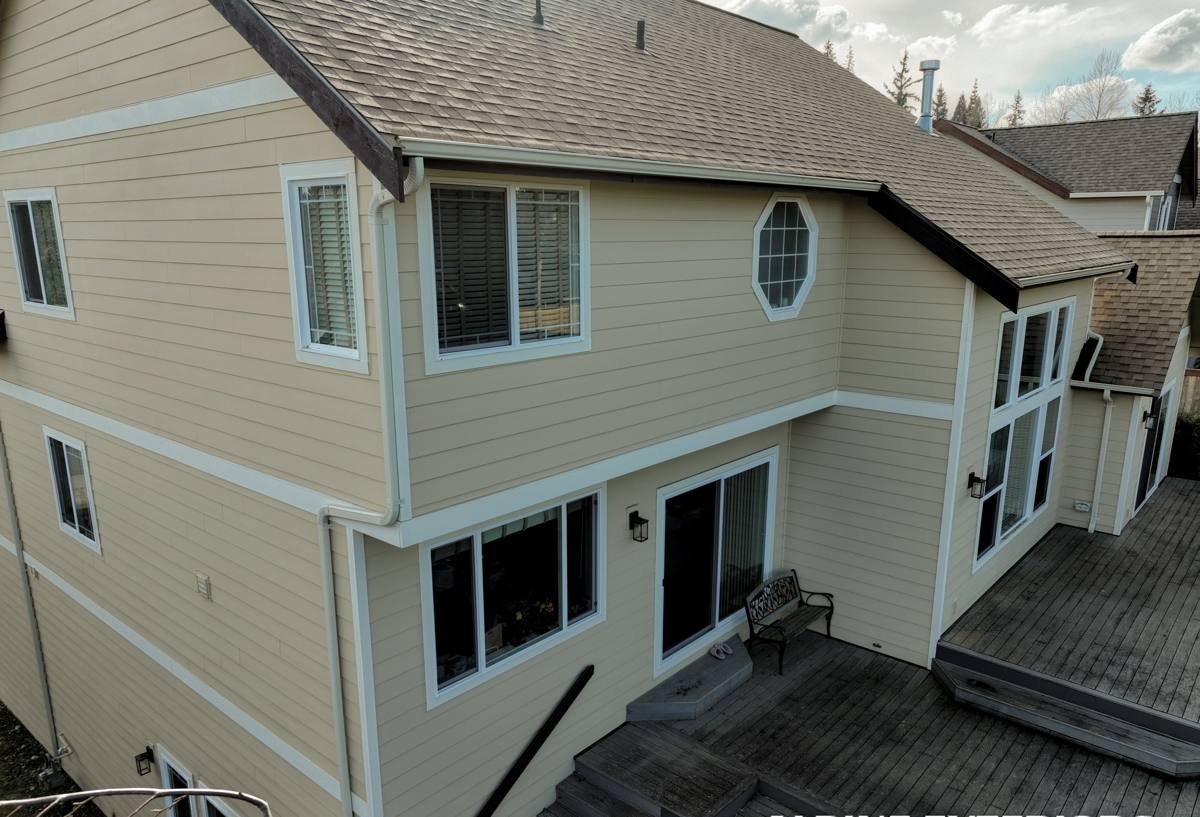
How to Tell Your Siding Has Reached the End of the Road
Some siding problems are cosmetic and can wait. Others are a sign that moisture has already gotten behind the cladding and is doing damage you can't see from the driveway. Before we ever recommend full replacement, we look for the signs that separate a maintenance issue from a structural one.
- Soft, spongy, or crumbling spots when you press on the siding, especially near the bottom courses and around window and door trim
- Persistent moss or algae growth that comes back within weeks of cleaning, particularly on north-facing or shaded walls
- Paint that's peeling, bubbling, or failing faster than it should — often a sign moisture is pushing out from behind the material, not just weathering from the sun
- Visible warping, buckling, or panels that have pulled away from the wall at the seams
- Rust streaking below nail heads or metal trim, common on homes with more salt air exposure
- Rising energy bills or drafts that suggest the wall assembly behind the siding is no longer doing its job
- Interior signs — musty smells, discoloration on interior walls, or soft drywall near exterior corners
One or two of these on their own might mean a repair. Several at once, especially combined with visible rot at trim boards or corners, usually means the siding and possibly some of the sheathing behind it need to come off.
What a Correct Siding Replacement Actually Involves
Pulling old siding off and nailing new siding on is the easy part. What separates a replacement that lasts thirty-plus years from one that fails early is everything that happens in between — the parts of the job that aren't visible once the new siding is up.
Tear-Off and Substrate Inspection
Once the old siding is off, we inspect the sheathing underneath before anything new goes on. This is the point where hidden rot, soft spots, or past water damage finally show themselves. In a bayside environment, we pay close attention to areas that have been chronically damp — under window sills, behind trim boards, and near ground level where splashback and moss have kept moisture in contact with the wall longer than it should be. Any compromised sheathing gets replaced, not covered over.
Moisture Barrier and Flashing
A weather-resistant barrier goes over the sheathing, and flashing gets installed at every horizontal transition — window heads, door tops, roof-to-wall intersections, and butt joints between siding courses. This is the layer that actually keeps driving rain out of the wall assembly. On homes closer to the water, where wind-driven rain hits harder and more often, we don't cut corners here. Flashing details that get skipped are the number one reason siding fails early, regardless of the brand of siding installed over them.
Fastening and Fit
Fiber cement siding has specific fastening requirements — nail type, placement, and spacing all affect how the material performs over time, and getting them wrong voids the manufacturer warranty even if the siding itself is a good product. Proper gaps are left at butt joints and around penetrations to allow for the material's natural expansion and contraction, and corrosion-resistant fasteners are used throughout, which matters more here than in a drier, inland part of the county.
Why We Install Only James Hardie Fiber Cement in Bayside
We don't install vinyl, LP SmartSide, Cemplank, Allura, or primed wood siding. That's not a marketing position — it's a decision based on what actually holds up on homes exposed to salt air and sustained moisture. James Hardie fiber cement is non-combustible, dimensionally stable, and engineered specifically for climates like this one.
Built for Marine Exposure
Hardie's HZ5 product line is engineered for climates with more moisture exposure, which fits the bayside side of Everett well. Fiber cement doesn't rot, doesn't attract wood-boring insects, and doesn't absorb water the way wood-based products can. It also won't warp or buckle the way vinyl can under sustained sun and temperature swings, and it doesn't require the same level of ongoing sealing and repainting that wood-based siding does to keep moisture out.
ColorPlus Finish vs. Field-Painted Siding
James Hardie's ColorPlus finish is baked on at the factory under controlled conditions, which gives it better fade and wear resistance than a coat of paint applied on-site — a real advantage in an area with salt air that accelerates finish breakdown on lesser coatings. It also comes with its own finish warranty, separate from the substrate warranty, which is a level of coverage you don't get with field-applied paint on primed wood or engineered wood products.
We're straightforward with homeowners about why this matters: siding is the single largest surface protecting the structure of the house, and in a bayside environment, the difference between a product built for moisture and a product that merely tolerates it shows up in ten to fifteen years, not immediately.
Comparing Fiber Cement to Common Alternatives
| Factor | James Hardie Fiber Cement | Vinyl | LP SmartSide / Engineered Wood |
|---|---|---|---|
| Moisture resistance | Does not absorb or rot from sustained moisture | Doesn't rot, but seams and gaps can trap water behind it | Engineered wood core can swell or degrade if moisture reaches it |
| Salt air / coastal performance | Purpose-built HZ5 line for higher-moisture climates | Can become brittle and discolor over time | More sensitive to sustained damp conditions |
| Fire resistance | Non-combustible | Combustible, can melt or deform near heat | Combustible |
| Finish durability | Factory-baked ColorPlus finish with its own warranty | Color molded through material, can fade and chalk | Typically field-painted, needs repainting over time |
Our Replacement Process, Start to Finish
Every Bayside project follows the same sequence, adjusted for the specific condition of the home and its exposure to wind and moisture.
| Step | What Happens |
|---|---|
| On-site assessment | We walk the exterior, check for soft spots and moisture signs, and note wind and rain exposure specific to the lot |
| Written estimate | Scope, product line, and pricing laid out clearly before any work begins |
| Tear-off | Old siding removed, sheathing inspected and repaired as needed |
| Moisture barrier and flashing | Weather-resistant barrier and flashing installed at all penetrations and transitions |
| Siding installation | James Hardie panels or lap siding installed to manufacturer fastening specifications |
| Trim, caulking, and final detail | Corners, trim boards, and joints sealed and finished |
| Final walkthrough | Site cleanup and a walkthrough with the homeowner before we consider the job done |
What Affects the Cost of a Bayside Siding Replacement
We don't publish flat per-square-foot pricing because too many variables change the actual number, but these are the factors that move the estimate up or down on a typical bayside home.
| Cost Factor | Why It Matters |
|---|---|
| Square footage and home height | More surface area and multi-story access both add labor time |
| Condition of existing sheathing | Rot discovered during tear-off requires repair before new siding goes on |
| Amount of trim, windows, and corners | More detail work around openings adds time and material |
| Siding profile chosen | Lap siding, panel systems, and shingle-style Hardie products carry different material and labor costs |
| Access and site conditions | Tight lots, slopes, or landscaping close to the house can slow the work |
| Extent of moisture damage | Homes with long-term moss and moisture exposure sometimes need more substrate repair |
Living With Salt Air and a Long Moss Season After Replacement
New siding reduces maintenance, but it doesn't eliminate the climate. A few habits keep a Bayside installation looking and performing the way it should for the long haul:
- Rinse siding periodically, especially shaded and north-facing walls where moss and algae take hold fastest
- Keep gutters clear so overflow doesn't run down the face of the siding during heavy storms
- Trim back vegetation and tree limbs that keep walls shaded and damp longer than necessary
- Inspect caulking at trim and penetrations every year or two, since caulk is the one component that wears out well before the siding does
- Address any impact damage or chips in the finish promptly so moisture can't get behind the material at that point
None of this is heavy maintenance — it's the kind of upkeep any exterior surface needs near the water — but staying on top of it is what lets fiber cement siding reach its full lifespan instead of an early repaint or repair.
Why Hiring a Crew That Already Works Bayside Matters
Siding installed to spec on a dry, inland lot and siding installed to spec on a home exposed to bay winds and salt air aren't quite the same job. A crew that already works this part of Everett knows which walls take the worst of the driving rain, where moss builds up fastest, and which flashing details matter most given the exposure. That local familiarity, combined with manufacturer-trained installation of a single product line we stand behind, is what keeps a siding replacement from becoming a problem again in five or ten years instead of thirty.
We're also familiar with Snohomish County's permitting expectations for exterior work, so there's no guesswork about what's required before the first panel comes off.
If your Bayside home is showing signs of worn or failing siding, we're happy to take a look and walk you through what we find — no pressure, no obligation. Use the form below to request a free estimate.