 Everett
 Why Window Installation in Bayside Is Different
Bayside sits close enough to the water that homes here take a different kind of weather than houses ten or fifteen miles inland in Snohomish County. Salt-laden air moves through the neighborhood on a regular basis, wind-driven rain hits window assemblies at angles a standard installation detail was never designed for, and the long, overcast wet season keeps trim, sills, and glazing damp for months at a stretch. A window that's installed correctly for a dry inland lot can still fail early here if the crew doesn't account for that exposure.
This isn't a knock on any particular window product. It's about installation detailing — flashing sequence, sealant choice, drainage paths — matched to what Bayside actually throws at a house. A builder-grade install can look fine at closeout and still let water behind the cladding within a few wet seasons. We install windows in this specific climate on a regular basis, and the difference shows up in how the house performs five and ten years out, not on day one.
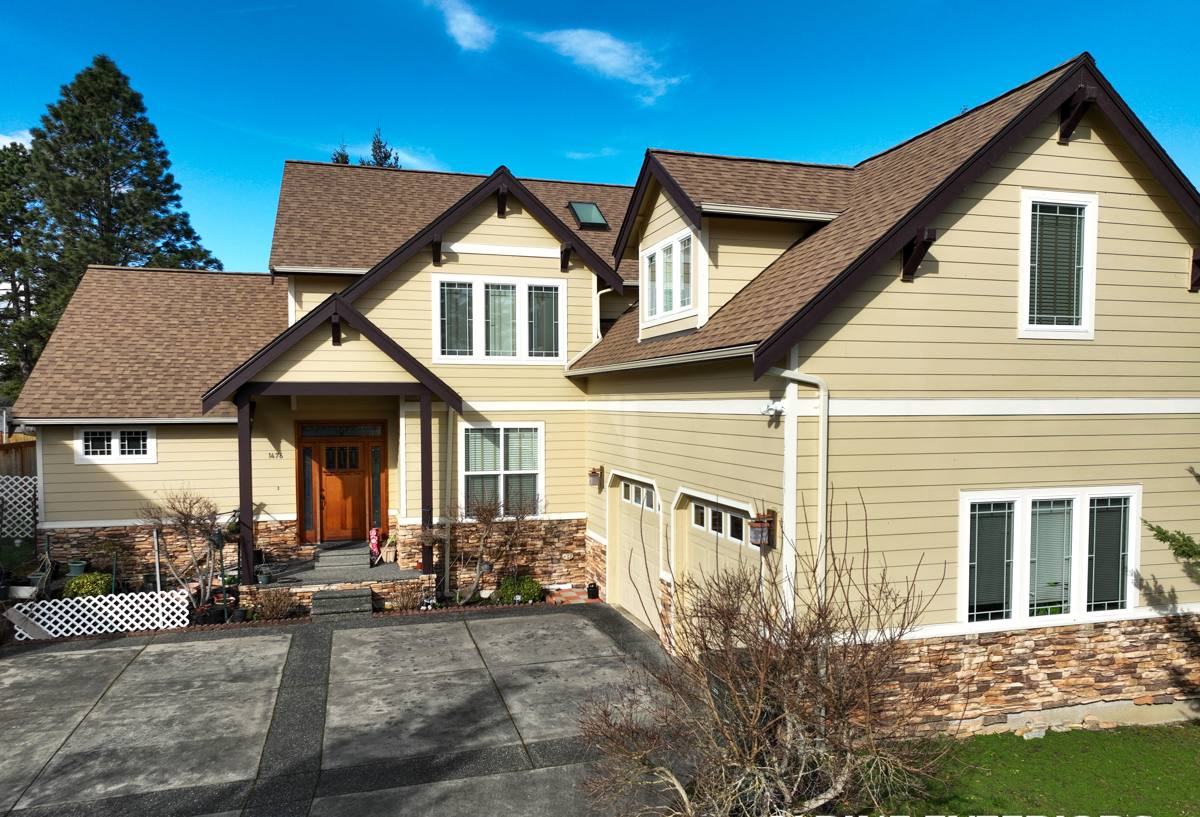
What a Marine Climate Does to Windows Over Time
Salt Air and Metal Components
Airborne salt accelerates corrosion on window hardware, screen frames, and any exposed fasteners. Cheaper hinges, cranks, and balance mechanisms can pit and seize years before they would in a drier, inland setting. It's one reason we pay attention to hardware quality, not just glass package, when we're speccing windows for a Bayside home.
Driving Rain and Wind-Driven Water
Storms coming off the water don't just fall — they push. Wind-driven rain gets forced sideways into gaps that would stay dry in a calmer climate, which means the flashing and drainage plane around a window opening have to actually work, not just be present. A window that relies on caulk alone to keep water out is a window that will eventually leak.
Moss, Mildew, and the Long Wet Season
Snohomish County's damp, overcast stretch from fall through spring gives moss and mildew a long runway. On windows, that shows up as green or black staining on sills and lower sashes, clogged weep holes that stop draining properly, and trim that stays wet long enough to start breaking down. None of that is cosmetic only — trapped moisture is what leads to rot underneath.
Signs Your Bayside Home Needs New Windows
Most window failures don't announce themselves with a dramatic leak. They show up as small, easy-to-ignore symptoms first. Worth checking for:
- Fogging or a cloudy haze between panes of double-pane glass (a failed seal, not a cleaning problem)
- Soft, spongy, or discolored wood at the sill or lower frame
- Moss or dark staining building up on sills, tracks, or exterior trim
- Noticeable drafts near the frame even with the window fully latched
- Windows that are hard to open, close, or lock — often a sign the frame has shifted or swollen
- Visible gaps or cracked caulk lines between the window frame and siding or trim
- Condensation forming on the interior glass or frame regularly during cooler months
- A musty smell near the window that doesn't clear with ventilation
Any one of these on its own isn't necessarily an emergency, but a few together usually means water is getting past the window assembly and it's worth a closer look before it reaches the framing.
What a Correct Window Installation Involves
Flashing and Water Management
This is the part that determines whether a window lasts fifteen years or thirty in a place like Bayside. A sill pan flashing under the rough opening gives any water that gets past the window a path back out instead of into the wall cavity. Head flashing needs to lap correctly over the housewrap or drainage plane above the window, not just get sealed on top of it. Side flashing has to tie into the water-resistive barrier in the right shingle-style order — bottom to top — so gravity is doing the work, not the caulk gun.
Air Sealing and Insulation
Around the frame, we use a low-expansion foam or backer rod and sealant rather than packing the gap with standard expanding foam, which can bow the frame and cause the window to bind or leak. The goal is a continuous air seal without distorting the unit. Interior sealing matters just as much as exterior — a good air seal keeps interior humidity from condensing inside the wall cavity during the colder months.
Frame, Sill, and Rough Opening Prep
Before a new window goes in, we check the rough opening and sheathing for existing water damage. On older Bayside homes, especially ones that have taken decades of coastal weather, it's not unusual to find soft sheathing or a sill that needs repair before the new window can be set correctly. Installing a new window over a compromised opening just hides the problem — it doesn't fix it.
Choosing the Right Window for a Bayside Home
Material choice matters more here than it does in a drier climate, mainly because of how each option handles sustained moisture exposure and salt air over time.
| Material | Moisture & Salt-Air Behavior | Maintenance | Typical Lifespan |
|---|---|---|---|
| Vinyl | Good — won't rot or corrode; seams and hardware are the weak points | Low — occasional cleaning | 20–30 years |
| Fiberglass | Very good — dimensionally stable, resists warping in wet/dry cycles | Low | 30–40 years |
| Wood (unclad) | Poor in direct exposure without diligent upkeep — prone to rot near the coast | High — regular painting/sealing | Varies widely with maintenance |
| Wood-clad (aluminum or fiberglass exterior) | Good on the exterior face; interior wood still needs normal care | Moderate | 25–35 years |
We don't push one material on every job. A lot of it comes down to how exposed the specific elevation of the house is, the look the homeowner wants, and budget. What we do steer people away from is unclad wood on a wall that takes direct wind-driven rain — not because the wood itself is a bad product, but because keeping it properly sealed in this climate is a maintenance commitment most homeowners underestimate.
Our Window Installation Process
- On-site assessment — we look at each window opening individually, not just the house as a whole, since exposure can vary a lot from one wall to the next.
- Check for existing damage — probing sills and framing around current windows before ordering anything, so surprises get found before install day, not during it.
- Product selection — matching material, glass package, and hardware to the specific exposure and the homeowner's budget and style preference.
- Removal and opening prep — old units come out carefully, and any compromised sheathing or framing gets repaired before the new window goes in.
- Flashing and setting the window — sill pan, side flashing, head flashing, and air sealing done in the correct sequence.
- Interior and exterior trim finish — sealed, caulked, and finished to shed water rather than trap it.
- Final walkthrough — operation check on every window, and a look at the whole opening before we call it done.
Cost Factors for Window Installation in Bayside
Every home is different, so we'd rather walk a property and give a real number than quote a blind estimate. Broadly, these are the factors that move the price:
| Factor | How It Affects Cost |
|---|---|
| Number and size of windows | More or larger openings mean more material and labor |
| Frame material | Vinyl generally costs less upfront than fiberglass or wood-clad |
| Full-frame vs. insert replacement | Full-frame costs more but is often necessary when there's rot or the opening needs correction |
| Existing damage | Rotted sheathing or framing found during removal adds repair cost, but skipping it costs more later |
| Access and height | Second-story or hard-to-reach windows take more labor and equipment |
| Trim and siding tie-in | Matching or repairing surrounding trim and siding adds to the scope |
As a broad range, straightforward vinyl replacements run toward the lower end of the market, while full-frame installs with repair work or higher-end materials run higher. We'll give exact numbers after seeing the actual openings.
Why a Crew That Already Works in Bayside Matters
A lot of window problems in this neighborhood aren't caused by a bad product — they're caused by installation details that would be fine in a milder climate but aren't enough here. A crew that regularly works homes in this part of Snohomish County already knows which elevations tend to take the worst of the wind-driven rain, how much extra attention flashing needs near the water, and what kind of rot patterns to expect on older homes that have weathered years of coastal exposure. That local pattern recognition shortens the time it takes to spot a problem during removal and cuts down on surprises mid-project.
It also matters for scheduling. Coastal weather windows can be narrow, and a crew that's used to working around them plans installs to keep openings covered and dry rather than leaving a house exposed overnight waiting on the next dry stretch.
Caring for Your Windows After Installation
A correctly installed window in Bayside still needs a little seasonal attention given the climate:
- Rinse salt residue off exterior frames and glass periodically, especially after storms
- Keep weep holes clear of moss, dirt, and debris so water can drain the way it's designed to
- Wipe down interior sills during the wet months to catch condensation before it sits
- Check exterior caulk lines once a year for cracking or separation
- Operate each window a few times through the seasons so hardware doesn't seize up
None of this is a big time commitment, but skipping it is how a well-installed window ends up with the same moss and staining problems as the one it replaced, just years later instead of decades.
If you're seeing drafts, fogged glass, or moss buildup on your windows in Bayside, we're happy to take a look and put together a straightforward, no-pressure estimate — just fill out the form below.