 Everett
 Why North Everett Roofs Take a Different Kind of Beating
North Everett sits close enough to Port Gardner Bay and the Puget Sound shoreline that salt-laden air is a daily fact of life for roofs here, not an occasional nuisance. Add in the wind-driven rain that comes through during fall and winter storm systems, plus a moss season that can run eight or nine months out of the year in the shade of mature evergreens, and you have a roofing environment that's genuinely tougher than what inland Snohomish County homes deal with. We've repaired enough storm-damaged roofs in this part of Everett to know the damage pattern is rarely just "a few missing shingles." It's usually a combination of wind lift, saturated underlayment, and moss-driven decay that's been building for longer than the storm that finally exposed it.
That's the core problem with treating storm damage as an isolated event: the storm often just reveals weaknesses that salt air and moss had already created. A proper repair has to address both the acute damage and the underlying condition, or you're back on the roof again next winter.
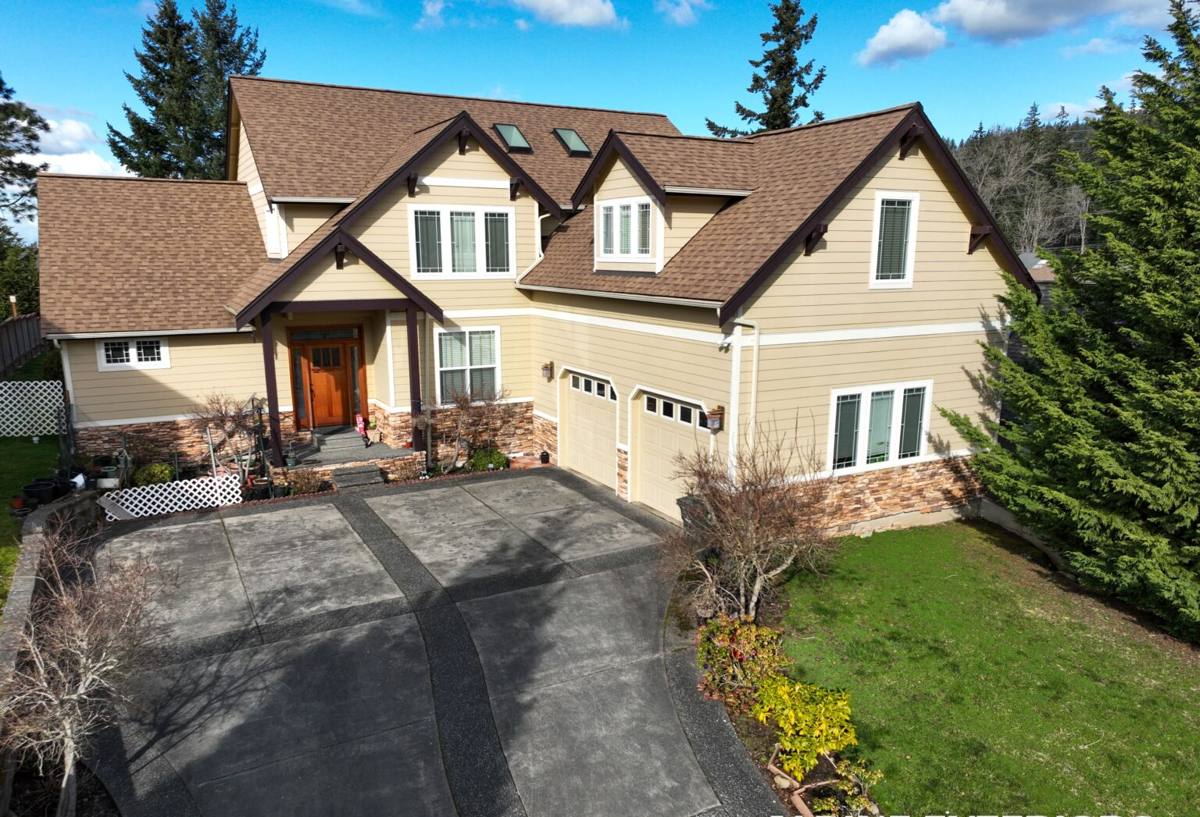
What Actually Causes Storm Damage Here
Wind-Driven Rain and Uplift
North Everett gets exposed to wind coming off the water, and that wind doesn't just push rain sideways — it gets up under shingle tabs and ridge caps that have already lost some of their adhesive bond from age or heat cycling. Once wind gets under a shingle edge, it can peel back a section in a single gust, and rain follows the same path straight into the deck.
Salt Air and Metal Fatigue
Flashing, fasteners, gutters, and any exposed metal roofing components corrode faster this close to salt water. Corroded flashing around chimneys, skylights, and roof-to-wall transitions is one of the most common failure points we find during storm damage inspections in this area — the flashing looks intact from the ground but has thinned out enough that a hard rain finds its way through the seams.
Moss and Trapped Moisture
Moss doesn't just look bad — it holds water against the roofing material long after a storm has passed, which keeps shingles saturated and accelerates granule loss. On shaded North Everett lots, moss can also work its way under shingle edges and physically lift them, creating an entry point for wind and rain that wouldn't exist on a clean roof.
What a Correct Storm Damage Repair Actually Involves
A repair that only patches the visible damage without checking what's underneath is a repair you'll pay for twice. Here's what we look at on every North Everett storm damage call:
- Deck condition under the damaged area — soft spots, discoloration, or delamination that indicate water has been sitting for a while
- Underlayment saturation beyond the immediate damage footprint, since wind-driven rain travels further than it looks from the surface
- Flashing integrity at every penetration and transition near the damaged section, not just the obvious spot
- Fastener condition — corroded or backed-out nails are a common secondary cause of leaks after a storm
- Moss and debris load on the surrounding roof plane, since leaving it in place undermines any repair we make
- Attic-side inspection for water staining, insulation damage, or mold starting where the leak has been traveling
Skipping any one of these steps is how a "fixed" roof leaks again during the next storm. We don't consider a repair complete until we've confirmed the deck is dry and sound, not just that the shingles look right from the street.
Our Process for North Everett Storm Repairs
1. Inspection and Documentation
We start with a full roof inspection, not just a look at the reported problem area, since storm damage in this climate is rarely contained to one spot. We document what we find with photos so you have a clear record for insurance purposes if you're filing a claim.
2. Honest Scope and Options
We'll tell you plainly whether you're looking at a targeted repair, a larger section replacement, or if the damage points to a roof that's near the end of its useful life and a repair would just be a stopgap. We'd rather lose a small repair job than have you call us back in six months with the same leak.
3. Repair Execution
Matching materials as closely as possible, replacing compromised underlayment (not just shingles), correcting flashing rather than just re-sealing it, and re-fastening to current standards. Where moss has damaged the surrounding roof plane, we address that as part of the job rather than leaving it to keep degrading the repair we just made.
4. Final Check and Cleanup
We verify the repair from both the roof surface and, where accessible, the attic side, and we clean the work area thoroughly — including removing debris and old materials, since roofing debris left on a property is one of the most common complaints homeowners have about repair crews.
Repair vs. Replacement: How to Tell the Difference
| Situation | Repair Usually Makes Sense | Replacement Should Be Considered |
|---|---|---|
| Age of roof | Under 12-15 years, healthy elsewhere | Approaching or past typical shingle lifespan |
| Damage extent | Isolated to one section or slope | Multiple areas showing wear or damage |
| Deck condition | Sound, dry once exposed | Soft, delaminated, or repeatedly wet |
| Moss history | Minimal or recently treated | Heavy, long-term moss with granule loss |
| Flashing condition | Localized corrosion or failure | Widespread corrosion from salt exposure |
None of these factors are decisive on their own — a 20-year-old roof with one storm-damaged section and a sound deck everywhere else can still be a smart repair. The point is to look at the whole roof's condition before deciding, not just the damaged spot.
Insurance Claims: What We Can and Can't Do
We're not a public adjuster, and we won't pretend to be one, but we can give you an honest, documented assessment of storm damage that you can bring to your insurer. If wind or a specific storm event caused the damage, that documentation — clear photos, a written scope, and dated inspection notes — is often the difference between a claim that gets approved and one that gets questioned. We'll walk you through what we found and let you decide how to handle the claim from there.
What to Have Ready Before We Arrive
- Your policy's storm or wind damage coverage details, if you have them handy
- Any photos you already took immediately after the storm
- Notes on when you first noticed the leak or damage relative to the storm date
- Access to your attic space if it's safely reachable, so we can check for interior water tracking
Why Hiring a Crew That Already Works North Everett Matters
A crew that only occasionally works this side of Everett will treat every roof the same way regardless of climate. A crew that works North Everett regularly knows to check flashing corrosion first because salt air makes it fail faster here than a few miles inland. We know which roof orientations in this neighborhood tend to hold moss longest based on tree cover and sun exposure, and we know that a "small" leak reported after a windstorm here is more likely to have a flashing or underlayment cause than a simple missing-shingle cause. That local pattern recognition shortens the diagnostic process and reduces the chance of a callback.
It also means we're realistic about timing. Storm season in this part of Snohomish County brings a predictable rush of repair calls, and a local crew can often get to you faster because we're not driving in from across the county for every job.
Preventing the Next Round of Storm Damage
Once a repair is done, a few maintenance habits meaningfully extend how long it lasts in this climate:
- Schedule moss treatment and removal on a regular cycle rather than waiting until it's visibly heavy
- Keep gutters clear so wind-driven rain has somewhere to go instead of backing up under roof edges
- Have flashing checked every couple of years given how much faster salt air corrodes exposed metal here
- Trim back tree limbs that keep sections of the roof shaded and slow to dry after rain
- Address small leaks immediately — in this climate, a small leak rarely stays small through a full winter
Get an Honest Assessment
If a recent storm left you with damage, or you're not sure whether what you're seeing is storm-related or long-term wear catching up with your roof, we're happy to take a look. We'll give you a straight answer on what's actually going on and what it will take to fix it right, whether that's a targeted repair or something more. Fill out the form below for a free, no-pressure estimate.