 Everett
 Building Composite Decks for Pinehurst's Climate
Pinehurst sits inside Everett, close enough to Puget Sound that homes here deal with a specific mix of weather stress: salt-tinged air drifting off the water, long stretches of driving rain, and a moss season that can start in October and not really let go until April or May. None of that is unusual for Snohomish County, but it adds up differently on a deck than it does on siding or a roof, because a deck is horizontal, low to the ground, and in near-constant contact with moisture that has nowhere to go unless the build accounts for it.
A composite deck done right in this neighborhood isn't just about picking a nice-looking board. It's about the substructure underneath, the fasteners holding it together, and the small details — slope, ventilation, flashing — that decide whether the deck is still solid and dry-feeling in ten years or starting to feel spongy and green by year four.
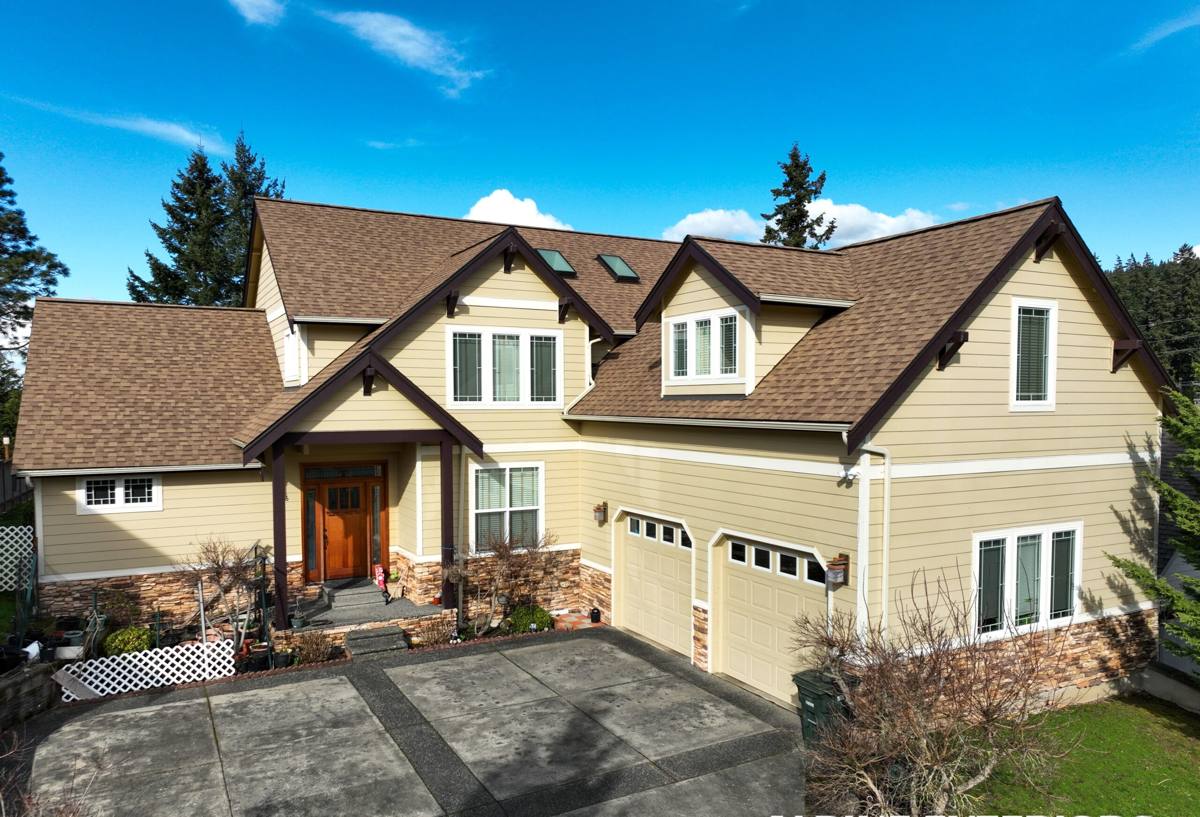
What Pinehurst's Weather Actually Does to a Deck
Three things drive most of the deck problems we see in this part of Everett:
- Salt-laden air — even a few miles inland, marine air carries enough salt to speed up corrosion on cheap or mismatched fasteners, hinges, and railing hardware.
- Driving, wind-pushed rain — rain here doesn't just fall straight down. It gets pushed sideways against ledger boards, house walls, and fascia, which is exactly where poor flashing shows up years later as rot behind the deck rather than on top of it.
- Extended shade and moss season — mature tree cover and long overcast stretches keep deck surfaces damp far longer than they would stay wet in a drier climate, which is what feeds moss and algae growth on any surface that traps moisture.
Composite decking handles all three of these better than untreated wood, but only if it's installed with those conditions in mind. A composite board dropped onto a poorly flashed, poorly ventilated frame will still trap moisture underneath — the board just won't rot the way wood does, so the problem hides longer before it shows up as a failing substructure.
What a Correct Composite Deck Build Involves
Substructure and Moisture Management
The part of the deck nobody sees is the part that matters most in this climate. That means self-adhered flashing membrane at the ledger connection where the deck meets the house, joist tape over every joist top to seal out standing water, and a deliberate slope — typically about a quarter inch per foot — directing water away from the house rather than pooling against it. Footings need to sit at the correct depth for the soil and framing needs enough clearance underneath for air to move, not just for looks but so the space under the deck actually dries out between rain events instead of staying damp for weeks at a time.
Fastening and Board Layout
Most composite systems use hidden fastener clips that run in a groove along the board edge, which gives a clean surface without visible screw heads and also reduces the number of penetration points where water could otherwise work its way in. Board direction and gap spacing matter too — consistent gapping allows drainage and airflow between boards, which shortens how long any given board stays wet after a storm.
Composite, Wood, and PVC — How They Compare for This Area
Homeowners in Pinehurst usually ask us to weigh composite against traditional wood decking and against PVC. There's no universally "best" answer — it depends on budget, how much upkeep you want to do, and how much shade the deck sits in.
| Factor | Pressure-Treated Wood | Composite | PVC (Cellular) |
|---|---|---|---|
| Moisture resistance | Moderate — needs sealing | High | Very high |
| Moss/algae resistance | Low, especially in shade | Good, better with capped boards | Very good |
| Maintenance | Annual sealing/staining | Occasional washing | Minimal |
| Typical upfront cost | Lowest | Mid-range | Highest |
| Expected lifespan here | 10–15 years with upkeep | 20–30 years | 25–30+ years |
Composite lands in the middle for most Pinehurst homeowners — noticeably lower maintenance than wood without the higher upfront cost of full PVC systems, and capped composite boards in particular hold up well against the moss and algae growth this climate encourages.
Our Process for a Pinehurst Deck Project
- On-site assessment — we look at drainage, sun exposure, tree cover, and the condition of any existing deck or ledger connection before quoting anything.
- Permit filing with the City of Everett where required, including engineering details on ledger attachment and guardrail height.
- Tear-out of the old structure, checking the ledger and rim joist for hidden moisture damage once the old boards are off.
- Framing and flashing — ledger membrane, joist tape, correct slope, and fastener hardware rated for this climate.
- Composite board installation with hidden fasteners and consistent gap spacing.
- Railing, stairs, and any fascia or skirting work.
- Final walkthrough and city inspection sign-off.
Moss, Algae, and Keeping a Composite Deck Clean Long-Term
Even the best composite board will collect some surface growth in a shaded, damp Everett yard — that's a function of the climate, not a defect in the material. Capped composite boards (with a protective outer layer bonded over the core) resist staining and moisture absorption noticeably better than older uncapped composite products, which can wick moisture at the edges over time. Either way, a simple seasonal cleaning routine keeps growth from getting a foothold:
- Sweep debris and fallen needles or leaves off the deck regularly, especially in fall — trapped organic matter is what moss actually feeds on.
- Wash with a soft-bristle brush and a mild deck cleaner once or twice a year, more often in heavily shaded spots.
- Avoid high-pressure washing directly into board grooves or fastener channels — it can force water where it shouldn't go.
- Trim back overhanging branches where practical to let more sun and airflow reach the deck surface.
Fasteners and Hardware: The Part That Fails First Near Salt Air
On a lot of failed or failing decks we've looked at around Everett, the boards themselves are fine — it's the hardware that gave out first. Marine-influenced air corrodes cheap, uncoated, or mismatched fasteners faster than most homeowners expect. We use stainless steel or coated fasteners rated for exterior/coastal exposure, and joist hangers and structural hardware in hot-dip galvanized or stainless finishes. Mixing incompatible metals — say, an aluminum fastener against a steel bracket — can also set up galvanic corrosion, so hardware compatibility matters as much as hardware quality.
Permits and Code Considerations Locally
Most new or replacement deck projects in Everett require a building permit, particularly when the deck attaches to the house or sits above a certain height. Code requirements that commonly apply include guardrails at a minimum height once the deck surface is a set distance above grade, proper stair rise-and-run dimensions, and engineered ledger attachment to the house structure — that last one matters even more here because a poorly attached ledger is the most common point where wind-driven rain finds its way into the wall assembly. We handle the permit filing and inspection process as part of the job rather than leaving it for the homeowner to sort out.
What to Ask Before Hiring a Deck Contractor in Pinehurst
- Do they pull a permit and schedule inspections, or suggest skipping it?
- Do they use ledger flashing membrane and joist tape as standard practice, or only "if you want to pay extra"?
- What fastener and hardware grade do they use, and is it rated for coastal/marine exposure?
- Can they explain their drainage slope and airflow plan under the deck?
- Do they carry current licensing and insurance, and will they put warranty terms in writing?
Why a Crew That Already Works Pinehurst Matters
Every neighborhood in Snohomish County has its own quirks, and Pinehurst is no exception — sloped lots, mature tree canopy that keeps parts of a yard shaded most of the day, and older homes where the original ledger attachment may not meet current standards. A crew that's already worked decks in this specific area knows what to expect before the first board comes up: where moisture tends to collect, how much sun a given lot actually gets through the tree line, and how the City of Everett permitting process typically runs for this kind of project. That familiarity shows up as fewer surprises mid-project and a build that's suited to the lot it's actually sitting on, not a generic template.
If you're weighing options for a new or replacement composite deck in Pinehurst, we're happy to come take a look and put together a straightforward, no-pressure estimate — just fill out the form below.