 Everett
 Composite Decking Built for West Everett's Climate
West Everett homes sit close enough to Port Gardner Bay and the greater Puget Sound shoreline that salt-laden air is a daily fact of life, not an occasional nuisance. Add Everett's long wet season, driving rain off the water, and the moss and algae growth that comes with mature tree cover on many West Everett lots, and you have a climate that is genuinely hard on outdoor decking. A deck built here needs to handle more than a typical Snohomish County backyard project — it needs to shrug off corrosion, shed water fast, and resist the slow green film that builds up wherever shade and moisture linger for months at a time.
Composite decking, installed correctly, handles all three of those pressures better than wood. But "installed correctly" is doing a lot of work in that sentence. Most of the composite deck failures and complaints we see on service calls in this area trace back to shortcuts in the framing, fasteners, or drainage underneath the boards — not the composite material itself.
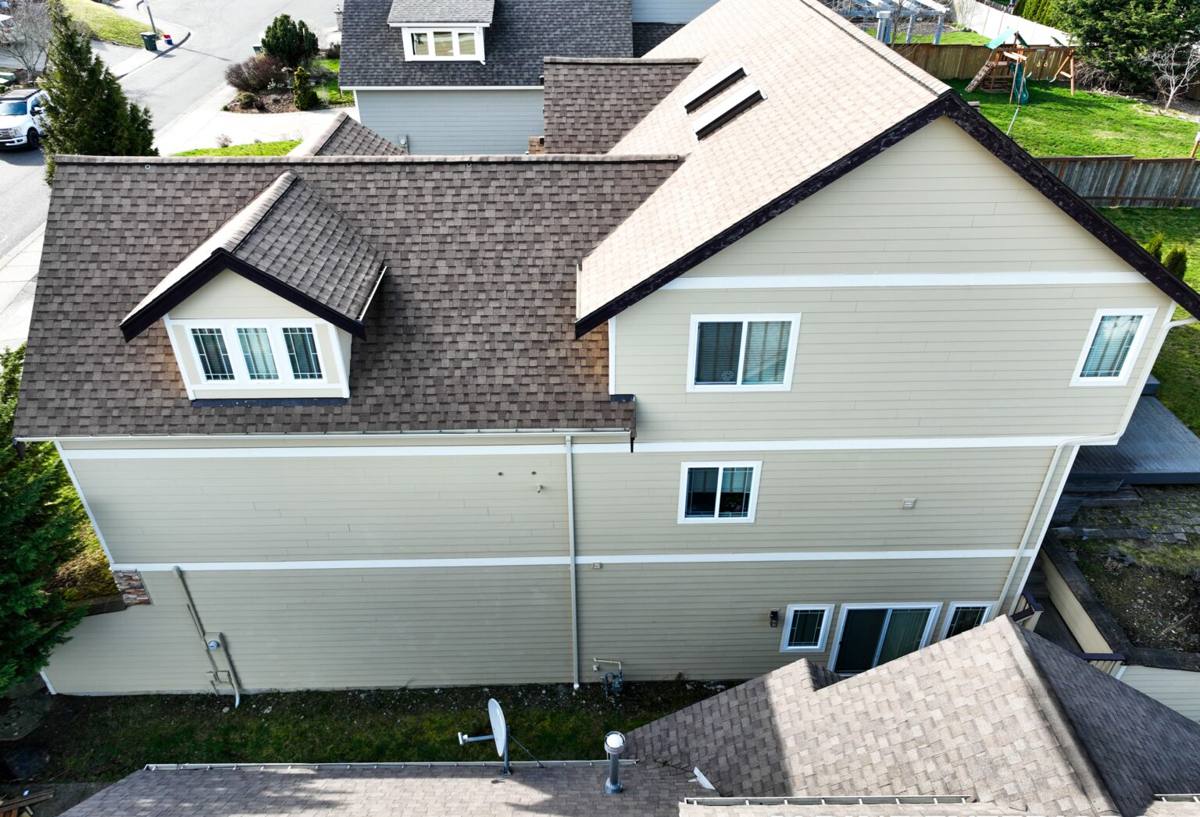
What Salt Air, Rain, and Moss Actually Do to a Deck
Salt Air and Metal Hardware
Salt-laden air accelerates corrosion on anything ferrous. Cheap or mismatched screws, joist hangers, and structural hardware corrode faster in West Everett than they would ten or fifteen miles inland, and once fasteners start rusting, they weaken, stain the decking around them, and eventually fail. This is a hardware and fastener problem more than a decking problem, and it's the single biggest reason we spec corrosion-resistant, coated or stainless fasteners and connectors on every composite deck we build near the water.
Driving Rain and Moisture Intrusion
Wind-driven rain off the Sound doesn't just fall on a deck surface — it gets pushed sideways, under railings, and into ledger board connections where the deck meets the house. If flashing and waterproofing at that ledger connection aren't done right, water tracks behind the siding and into the rim joist, which rots the framing even though the composite boards on top look fine for years. Composite decking's real advantage only matters if the structure underneath it is sealed and flashed properly.
Moss Season and Surface Buildup
Shaded, tree-covered lots — common in West Everett — go through a long moss and algae season, roughly fall through spring. Moss holds moisture against the deck surface, and on a slick composite board it can turn a walkway or stair tread into a fall hazard. Good drainage and airflow underneath the deck, plus a board texture that doesn't trap standing water, reduce how much moss gets a foothold in the first place.
What a Correctly Built Composite Deck Includes
Substructure First
The frame is the part nobody sees and the part that determines whether the deck lasts. That means pressure-treated or naturally durable framing lumber, joist spacing rated for composite board span limits (composite generally needs tighter joist spacing than wood, not the same spacing), and joist tape or a moisture barrier on top of every joist to keep water from wicking into the wood.
Drainage and Airflow
Low-slope or ground-level decks need a real drainage plan — proper slope away from the house, gapping between boards for water to pass through, and enough clearance underneath for air to move and dry the space out between rain events. A deck built tight to grade with no airflow is exactly the setup that grows moss fastest.
Fasteners, Flashing, and Connections
Corrosion-resistant hidden fastener systems, proper ledger flashing with self-adhering waterproof membrane, and hardware rated for exterior/coastal exposure. This is where most of the "why did my deck fail early" problems actually originate.
Railings, Stairs, and Edge Details
Composite fascia and picture-frame edge boards for a finished look, railing posts anchored to blocking (not just to the deck boards), and stair stringers sized and fastened to code — stairs take the most abuse and see the most direct rain exposure of any part of the structure.
Composite Decking Options and Cost Factors
Composite decking is sold in a range of tiers, and the right choice depends on budget, sun/shade exposure, and how much upkeep you want to do. Here's a general comparison to help frame the conversation before an estimate:
| Factor | Entry-level composite | Capped premium composite |
|---|---|---|
| Moisture resistance | Good, but cap-free versions can absorb some moisture over time | Fully capped shell resists moisture and staining better long-term |
| Fade / stain resistance in wet, shaded areas | Moderate | Higher — better for moss-prone, shaded West Everett lots |
| Upfront cost | Lower | Higher |
| Expected maintenance | Periodic cleaning, some boards may need earlier replacement | Mostly rinse-and-clean, longer service life |
| Warranty structure | Shorter, prorated | Longer, often full replacement terms |
Beyond the board tier itself, the biggest cost swings on a real West Everett project come from: the condition of the existing structure (tear-out and framing repair costs add up fast if there's hidden rot), deck size and shape (cutouts, multiple levels, and stairs all add labor), railing style, and whether the site needs extra drainage or grading work to keep water moving away from the house. We'll walk through all of this on-site rather than quoting blind.
Our Process for West Everett Composite Decking Projects
Site Assessment
We start by checking the existing structure if this is a replacement — probing the ledger connection, rim joist, and any support posts for hidden moisture damage, since that's the area most affected by driving rain in this part of Everett. For new builds, we look at grading, drainage paths, and how much shade the site gets, since that shapes both the framing plan and the board choice.
Permitting
Most deck work in Everett requires a building permit through the City of Everett (or Snohomish County if the property falls outside city limits), especially for anything attached to the house or above a certain height. We handle that process as part of the job rather than leaving it to the homeowner.
Framing and Waterproofing
Any compromised framing gets replaced, not patched. Ledger flashing, joist tape, and corrosion-resistant hardware go in before a single composite board is installed — this is the step that determines whether the deck is still solid in fifteen years.
Composite Installation
Boards go down with hidden fastener systems for a clean surface, proper gapping for drainage, and picture-frame or fascia trim for a finished edge. Railings and stairs are built and anchored to code.
Walkthrough and Cleanup
We walk the finished deck with you, cover basic care for this climate specifically, and clear the site of debris and packaging before we leave.
Maintenance in a Marine, Moss-Prone Climate
Composite decking is lower-maintenance than wood, but "low-maintenance" isn't "no-maintenance" in a climate like West Everett's. A short seasonal routine keeps a composite deck performing the way it's supposed to:
- Sweep or rinse debris off the surface regularly through fall, when leaves and moisture combine fastest into moss growth
- Clean visible moss or algae with a soft-bristle brush and a composite-safe cleaner — avoid pressure washing directly into board grooves or fastener points
- Check that gaps between boards stay clear so water keeps draining rather than pooling
- Inspect railing posts and stair connections once a year for any looseness, which can signal a fastener or blocking issue underneath
- Keep gutters and downspouts near the deck clear so roof runoff isn't dumping extra water onto or under the structure
Why Composite Makes Sense for This Area
Wood decking can absolutely be built well, but it asks more of a homeowner in a climate like this — regular sealing or staining, closer attention to moss and rot in shaded sections, and more frequent board replacement near ground contact or high-splash areas. Composite decking, especially capped composite, removes most of that ongoing sealing and staining cycle and holds up better against the moss and moisture that West Everett's tree cover and rainfall create. It's not that wood fails here — it's that composite trades a lower upfront cost for a meaningfully lighter maintenance burden over the life of the deck, which is a fair trade for a lot of homeowners in this area.
Why Local Experience in West Everett Matters
A crew that has already built decks throughout Everett and Snohomish County knows the practical details that don't show up in a generic estimate: which fastener and hardware coatings actually hold up against the salt air here, how much drainage slope a shaded West Everett lot really needs to avoid moss buildup, and what the City of Everett permitting process expects for ledger attachments and railing height. That local pattern-recognition is what keeps a deck performing well in year eight, not just at the final walkthrough.
If you're planning a new composite deck or replacing one that's showing its age, we're happy to take a look and put together a straightforward, no-pressure estimate — just fill out the form below and we'll get in touch.