 Everett
 Building a Deck for Delta's Climate, Not a National Average
Delta is a quieter residential pocket of Everett, sitting in the low ground near the Snohomish River, and homes here deal with a specific mix of weather that generic deck advice tends to ignore. There's salt-tinged air rolling in off Puget Sound, long stretches of driving rain through fall and winter, and a moss season that can run most of the year on shaded, low-lying lots. A deck built to a national average spec doesn't hold up the same way in Snohomish County as it does somewhere dry and inland. A deck built for the conditions actually present in Delta does.
We build custom decks for homeowners in this part of Everett specifically, which means the material choices and structural details below are picked with this climate in mind from the start, not adapted after the fact.
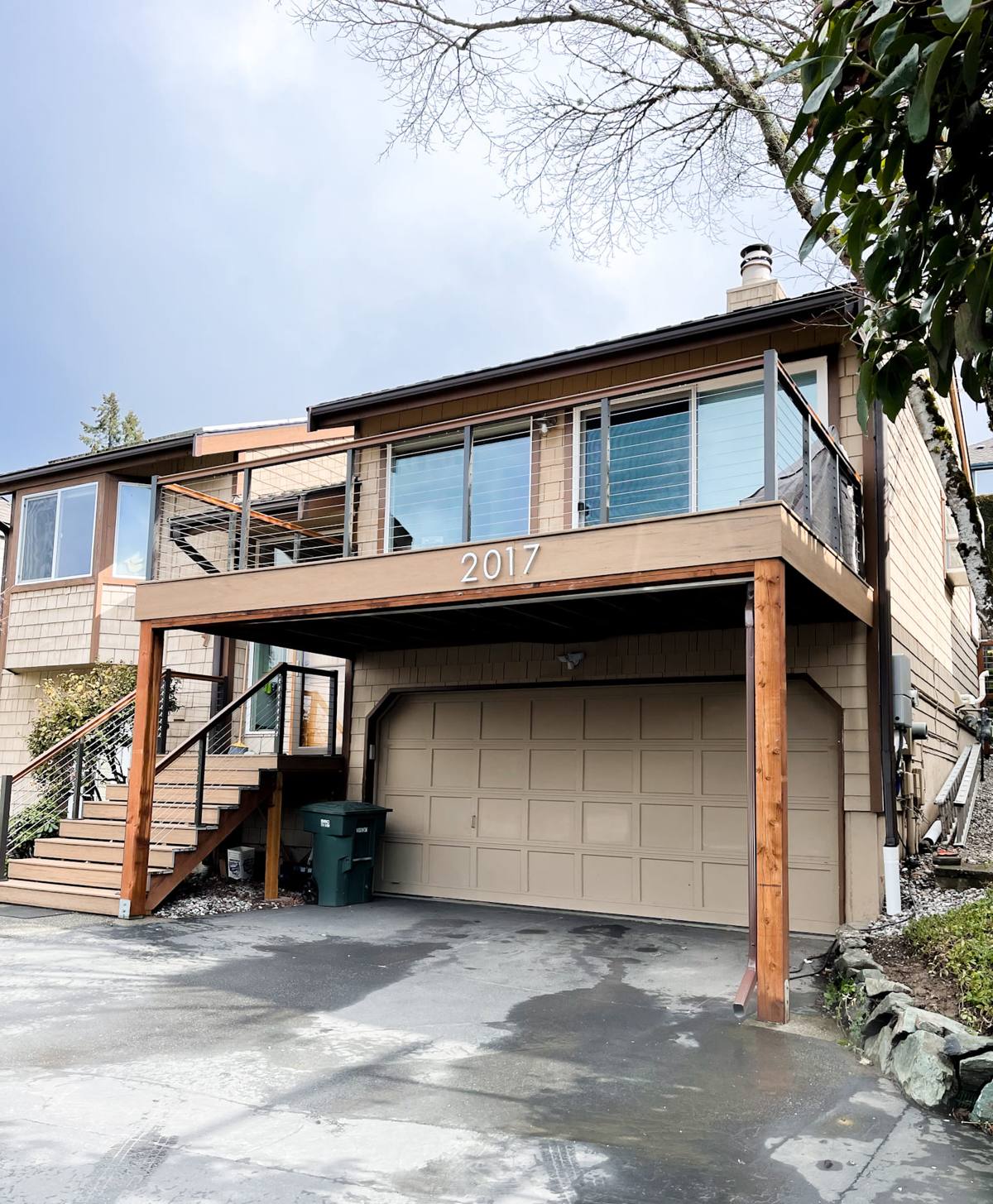
What Everett's Weather Does to an Unprotected Deck
Most deck failures we get called out to look at weren't caused by one big storm. They were caused by years of ordinary local weather working on a detail that got overlooked during the original build.
The patterns we see most often
- Moss and algae film on boards that stay shaded most of the day, especially decks under mature trees or on the north side of a house, which makes walking surfaces slick and traps moisture against the wood grain.
- Rot starting at the ledger board, the point where the deck attaches to the house, when flashing was skipped or installed incorrectly and rain works its way behind the siding season after season.
- Corroded fasteners and connector hardware on older decks, where standard-grade hardware rusts and streaks the decking around it, weakening the connection long before the boards themselves look worn.
None of these show up overnight. That's exactly why they get missed until a board feels soft underfoot or a railing post has some give in it.
Choosing Decking Material That Fits This Neighborhood
There's no single "best" material for every deck, but there is a right material for a given budget, sun exposure, and how much upkeep a homeowner actually wants to take on. In a climate with this much rain and shade, we talk through moisture behavior and real maintenance honestly, rather than steering everyone toward the most expensive option by default.
| Material | How it handles Delta's moisture | Upkeep | Typical lifespan |
|---|---|---|---|
| Pressure-treated wood | Performs fine if sealed and re-sealed on schedule; absorbs water fastest of the group, which speeds moss growth in shade | Annual cleaning, resealing every 1-3 years | 10-15 years with upkeep |
| Cedar | Naturally more rot- and insect-resistant than treated pine, but still needs sealing to resist our rain load | Cleaning plus periodic sealing or staining | 15-20 years with upkeep |
| Capped composite | Shrugs off moisture and won't absorb water into the core; surface can still grow a light film of algae in deep shade | Periodic washing, no sealing or staining | 25-30+ years |
| PVC decking | Fully synthetic, essentially immune to moisture damage; performs well in low, damp spots | Occasional washing | 25-30+ years |
For a lot of Delta lots, especially anything shaded or close to grade, we lean toward capped composite or PVC on the walking surface simply because they don't give moss and mildew the organic material to feed on. That said, plenty of homeowners still want the look and feel of real wood, and a well-built, properly sealed cedar deck is a perfectly sound choice as long as the maintenance schedule actually gets followed.
The Structural Work That Determines Whether a Deck Lasts
The decking surface is the part everyone sees, but the parts underneath decide whether the deck is still solid in fifteen years.
Ledger attachment and flashing
The ledger board bolts the deck to the house, and it's the single most common failure point on decks we've been asked to repair or rebuild in this area. We flash it correctly with proper counter-flashing under the siding and a drainage gap behind the ledger, so wind-driven rain off the Sound doesn't get trapped against the house framing.
Footings and framing
Footings get sized and set to depth for the soil conditions on the actual lot, not a generic minimum. Joist spacing and beam sizing are matched to the decking material chosen, since composite and PVC products often call for tighter joist spacing than solid lumber to avoid flexing over time.
Board spacing and airflow
Gapping between boards and clearance underneath the deck both matter more here than in a dry climate. Tight gaps and blocked airflow trap moisture against the underside of the decking, which is exactly the environment moss and mildew need.
Hardware That Won't Fail Near Salt Air
Fastener choice sounds like a minor detail until you're the one prying up a board because a bargain-grade screw rusted through. We use stainless steel or coated, corrosion-rated fasteners and structural connectors on every build, particularly on posts, ledger bolts, and joist hangers, since those carry the most load and are the hardest to inspect once the deck is finished. Hidden fastener systems on composite and PVC decking also help here, since they eliminate exposed screw heads on the walking surface that would otherwise be the first thing to show rust staining.
Site Conditions in Delta's Lower Ground
Because parts of Delta sit in low-lying ground near the river, drainage around and under a deck deserves real attention rather than an afterthought. Before we build, we look at how water actually moves across the yard: where downspouts discharge, whether the ground under the deck holds standing water after a heavy rain, and whether post footings need to sit above the typical high-water mark for the site rather than at the legal minimum depth alone.
Simple grading fixes, a gravel drainage bed under the deck, or routing a downspout further from the footings can prevent years of slow moisture problems that would otherwise show up as soft framing or a leaning post down the road.
How We Build a Custom Deck, Start to Finish
- Site visit and design. We walk the property, talk through how the deck will actually be used, and take note of sun exposure, drainage, and existing structure before recommending materials.
- Written estimate and material selection. You get a clear, itemized quote and an honest comparison of material options for your budget and how much maintenance you want to sign up for.
- Permitting. Most deck projects in Everett neighborhoods, Delta included, require a building permit. We handle the application and inspections so you don't have to chase paperwork.
- Construction. Footings, framing, ledger flashing, decking, and railings are built in sequence with inspections at the structural stages, not just a final walkthrough.
- Final walkthrough. We go over the finished deck together, cover basic care for whatever material you chose, and make sure everything meets what was quoted.
Keeping a Delta Deck Looking Good Through Moss Season
Whatever material you choose, a little seasonal attention goes a long way in this climate. This is the same checklist we walk homeowners through after a build:
- Sweep leaves and debris off the deck regularly in fall, since trapped organic matter is what feeds moss in the first place.
- Clean the deck surface at least once a year with a deck-safe cleaner, more often on shaded sections that stay damp longest.
- Check and clear gutters and downspouts above and near the deck before the winter rains set in.
- Reseal or restain wood decking on schedule; don't wait until it's visibly gray or absorbing water.
- Trim back overhanging branches and shrubs that keep sections of the deck shaded and slow to dry.
- Walk the underside once a year to check for soft framing, loose hardware, or standing water near footings.
Why a Crew That Already Works in Delta Matters
Deck-building advice that isn't grounded in Snohomish County conditions can steer homeowners toward the wrong material or the wrong detail for this climate. A crew that already builds in Delta knows which lots hold water, which parts of the neighborhood stay shaded long enough to grow moss year-round, and what the local permitting process actually requires, so there are fewer surprises mid-project. It also means a shorter drive if something needs a follow-up look after the first hard winter puts a new deck to the test.
If you're considering a custom deck for your home in Delta, we're happy to walk the property, talk through honest material options for your budget, and put together a straightforward estimate. There's no pressure and no obligation. Fill out the form below and we'll get in touch to schedule a time.