 Everett
 Building a Deck in Edmonds Starts With the Climate
Edmonds sits right on Puget Sound, and that location shapes every deck we build there. Homes close to the water deal with salt-laden air that speeds up corrosion on anything metal. Homes further up the hill still get the same driving rain off the Sound, funneled through gaps between houses and across open yards. And almost every property in Snohomish County shares the same long, wet stretch from fall through spring where moss, algae, and standing moisture become the default condition rather than the exception.
A deck built without those three factors in mind — salt air, driving rain, and a moss season that can run six months or more — will look fine for a year or two and then start showing problems: rust streaks at the fasteners, soft spots at the ledger board, green film on the walking surface by February. A deck built for this climate accounts for all of it from the framing up, not just at the surface.
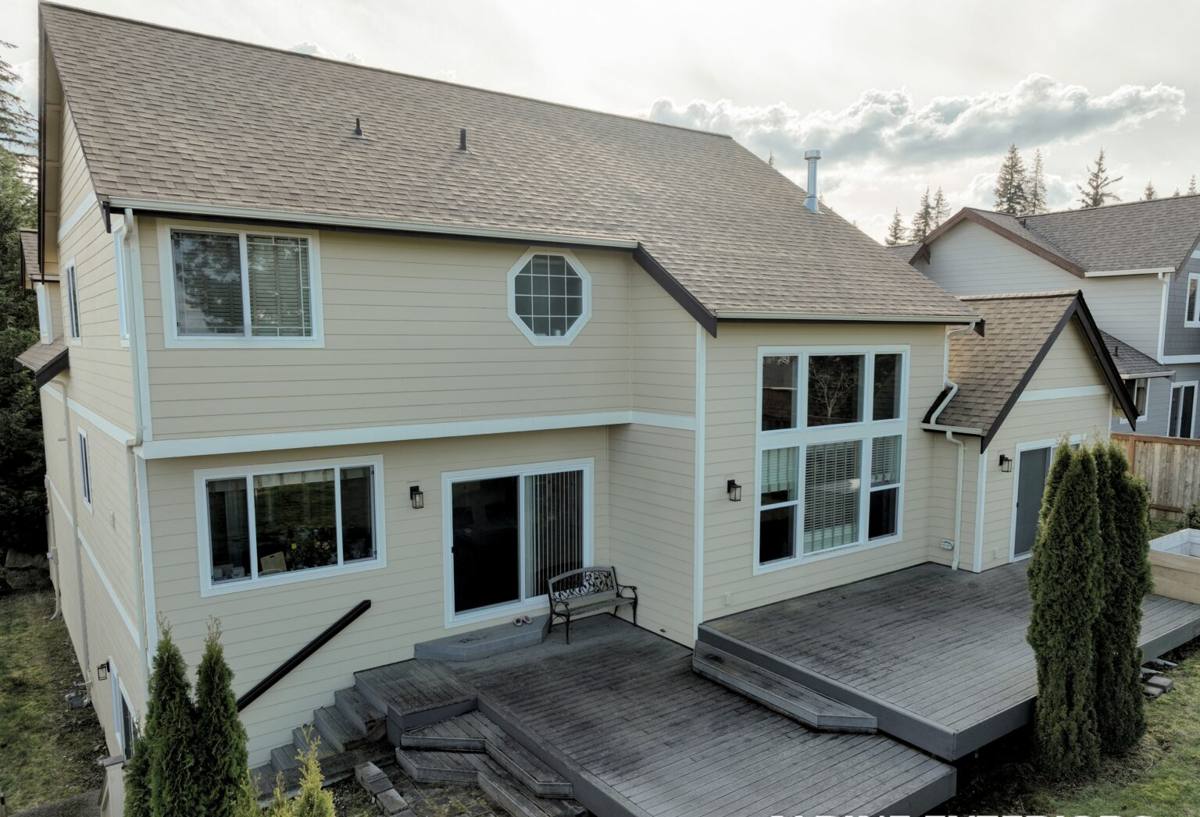
Picking Decking Material That Can Handle the Weather
There's no single "best" decking material — there's a best material for your budget, your sun exposure, and how close you are to the water. Here's how the common options actually perform in an Edmonds yard.
Cedar and Pressure-Treated Wood
Wood is still the most affordable option and, when it's western red cedar, it has natural rot resistance that holds up reasonably well in the Pacific Northwest. The trade-off is maintenance: wood needs to be cleaned and resealed on a regular schedule, or moisture works into the grain and checking, splintering, and mold follow. In a yard with a lot of shade or tree cover, that maintenance schedule gets tighter, not looser.
Composite Decking
Composite boards trade upfront cost for lower maintenance. They don't absorb water the way wood does, so they resist the swelling and splintering that shaded, damp areas cause. The trade-off is that older or lower-grade composite can still trap moisture at the board's core if the capping is compromised, so installation quality — proper gapping, proper fastening, keeping boards off standing water — matters more than the marketing suggests.
PVC Decking
Fully cellular PVC decking has no wood content at all, so it's effectively immune to rot and largely indifferent to moisture. It costs more than composite up front and can flex more in temperature swings, which matters for fastening and joist spacing. For decks close to the shoreline or in deep shade where wood and even composite struggle, it's often the most honest long-term choice.
| Material | Upfront Cost | Maintenance | Moisture / Salt Air Behavior |
|---|---|---|---|
| Cedar / Pressure-Treated Wood | Lowest | Annual cleaning and periodic resealing | Good if maintained; suffers fast if neglected |
| Composite | Mid-range | Occasional washing, no sealing | Good; installation quality matters most |
| PVC / Cellular | Highest | Minimal — occasional washing | Excellent; best for shoreline-adjacent lots |
Framing and Substructure: Where Problems Actually Start
Homeowners judge a deck by the surface, but the surface is rarely where failures begin. In our experience, the framing and connection points are where a rushed job shows up first — usually two to five years in, after the first few wet seasons have had time to work.
Three details matter more here than almost anywhere else in the region:
- Ledger board flashing. Where the deck attaches to the house, water has to be directed away from the wall assembly, not trapped behind the ledger. This is the single most common source of hidden rot we find on older decks.
- Footing depth and bearing. Snohomish County soil varies from sandy and well-draining to dense clay that holds water. Footings need to be sized and set for the specific soil on your lot, not a generic spec.
- Post bases off the ground. Posts should sit on metal bases above the concrete, never buried in it or resting directly on soil, so end-grain wood isn't sitting in standing moisture after every storm.
Drainage, Airflow, and Keeping Water Moving
A deck is essentially a structure designed to shed water, and how well it does that determines how long it lasts. Grading beneath the deck needs to slope away from the house so water doesn't pool under the frame. The gap between deck boards needs to be sized correctly for the material — too tight and debris packs in and holds moisture against the board edges; too wide and it's a trip and drainage nuisance without adding any real benefit.
Airflow under the deck matters just as much as the slope. A low-clearance deck with no ventilation becomes a shaded, damp box that never fully dries between rain events — which is exactly the environment moss and mold need. Where clearance is tight, we look at venting or skirting options that still let air move through.
Salt Air and Hardware: The Detail Most Decks Get Wrong
This is the piece that gets skipped most often, and it's the one that fails fastest in an Edmonds waterfront or near-waterfront yard. Standard galvanized fasteners and connectors are built for general outdoor use, not for sustained exposure to salt-laden air. Over a few seasons that exposure accelerates corrosion at every screw head, joist hanger, and post connector — long before the wood or decking itself would need replacing.
Fasteners and Connectors
The fix is straightforward but often skipped to save cost: stainless steel or heavy-duty coated fasteners and structural connectors rated for coastal exposure. It costs more per box of screws. It's a fraction of the cost of tearing up a deck surface a decade early because the hardware failed first.
| Hardware Type | Typical Use | Salt Air Performance |
|---|---|---|
| Standard galvanized | Interior framing, low-exposure builds | Corrodes noticeably faster near the Sound |
| Heavy-duty coated (e.g. ZMAX-type) | Most exterior structural connectors | Solid mid-range performance for near-water lots |
| Stainless steel | Fasteners and connectors in high-exposure areas | Best available resistance to salt corrosion |
Moss, Algae, and Slip Safety Through the Wet Season
Snohomish County's moss season isn't a short shoulder period — shaded, north-facing, or tree-covered decks can stay damp enough to grow moss and algae for most of the year. That's not just a cosmetic issue; a mossy or algae-slick deck surface is genuinely slippery, and it's one of the more common reasons we get called out to look at an "old" deck that's really just been neglected in a tough spot for growth.
Board selection helps — grooved or heavily textured composite can actually hold more moisture and debris than a smooth-profile board in a shaded yard, which surprises a lot of homeowners who assume texture always means better grip. Beyond material choice, the honest answer is a basic seasonal maintenance routine.
- Sweep leaves and debris out of board gaps before they hold moisture through winter
- Rinse or wash the surface a few times through the wet season, more often in heavy shade
- Check railing posts and stair stringers for movement at least once a year
- Keep overhanging branches trimmed back to let more light and air reach the deck
- Address any green film as soon as it appears rather than waiting for it to spread
Permits and Code Considerations for Edmonds Decks
Most deck projects in Edmonds and the surrounding Snohomish County jurisdictions require a permit, particularly once the deck is attached to the house or elevated above a certain height. Guardrails are generally required once a walking surface reaches roughly 30 inches above grade, and stair and railing details are inspected as part of that process. Exact requirements — setbacks, footing inspections, height triggers — vary by jurisdiction and by the specifics of your lot, so we don't guess on this: we pull the correct permit for your property and build to the inspection requirements that apply to it, rather than treating code as an afterthought.
Our Deck Building Process
The process is the same whether the project is a straightforward ground-level deck or a larger elevated structure with stairs and rails:
- On-site estimate. We walk the yard, look at sun and shade exposure, drainage, soil, and how close the site is to the water, and talk through material options honestly, including the trade-offs.
- Design and material selection. We size the structure to the site, not a generic template, and help you weigh cost against long-term maintenance for your specific conditions.
- Permitting. We handle the permit application and coordinate inspections so you're not chasing paperwork.
- Framing. Footings, posts, ledger flashing, and joists go in first, with hardware selected for the exposure level of your specific lot.
- Decking and rails. Boards, fascia, and railing go on with attention to gapping, fastening pattern, and stair details.
- Final walkthrough. We go over the finished deck with you, including a straightforward maintenance rundown so you know what to expect through the first wet season.
Why an Everett-Based Crew That Works Edmonds Regularly Matters
We're based in Everett and work throughout Snohomish County, including Edmonds on a regular basis. That matters for a few practical reasons beyond just proximity. We're familiar with the permitting process for this area, so there aren't surprises mid-project. We've seen how decks in this specific stretch of Puget Sound weather actually age — which framing shortcuts show up as problems first, which hardware holds up and which doesn't, which shaded yards need a different material recommendation than a sunny one two streets over.
A crew that only occasionally works this far north, or that builds mostly in a drier inland climate, doesn't have that same reference point. It's the difference between a deck that's built to a general standard and one that's built for the conditions it will actually sit in for the next twenty years.
If you're planning a new deck in Edmonds or want an honest look at an existing one, we're happy to come out for a free, no-pressure estimate — use the form below to get started.