 Everett
 Building a Deck in Glenhaven: A Different Climate Than It Looks
Glenhaven is a quiet, established part of Everett, and that maturity is exactly what makes deck building here different from a generic new-construction job. Mature tree canopy, proximity to Puget Sound, and Snohomish County's long wet season all put a deck through more than most manufacturers' spec sheets assume. A deck built to a national average — average rainfall, average humidity, average sun exposure — is not built for Glenhaven's actual conditions.
Salt-tinged air moving in off the water accelerates corrosion on anything metal. Driving rain, often coming in sideways during fall and winter storms, finds every gap in flashing and fastening. And the shaded, moisture-retentive yards common in older, tree-lined neighborhoods create a moss season that can run eight months or longer. None of this makes a deck impossible to build well here — it just means the details that get ignored elsewhere can't be ignored in Glenhaven.
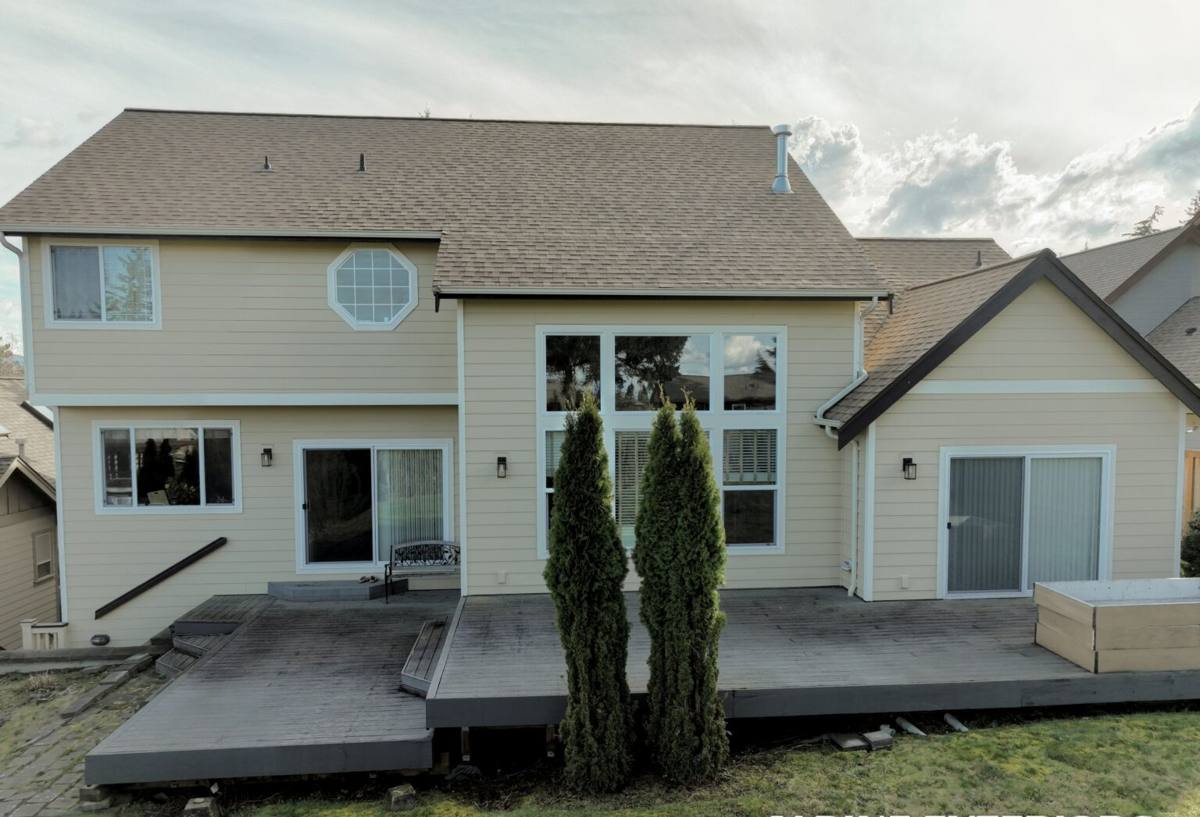
What Salt Air, Rain, and Moss Actually Do to a Deck Over Time
It helps to understand the failure modes before talking about how to prevent them.
Salt air and corrosion
Standard electro-galvanized screws, brackets, and joist hangers can start showing surface rust within a few seasons this close to Puget Sound. Once a fastener corrodes, it loses holding strength long before it looks obviously bad — which is why the choice of hardware matters as much as the choice of decking.
Driving rain and hidden rot
Wind-driven rain doesn't fall straight down — it gets pushed sideways, up under boards, and into any seam that isn't properly flashed or sloped away from the house. The result is rot that starts in framing and ledger connections long before it's visible on the surface.
Moss and slip hazards
Moss thrives on decking that stays damp and shaded, and it does two things badly: it holds moisture against the wood or composite surface, and it turns stairs and walking surfaces slick — a real safety issue, not just a cosmetic one.
Choosing a Decking Material That Matches This Climate
There's no single "right" decking material for every home — it depends on budget, how much upkeep you want to do, and how shaded the site is. Here's how the common options actually perform under Everett's rain-and-moss conditions:
| Material | Upfront Cost | Moss/Moisture Behavior | Maintenance Reality |
|---|---|---|---|
| Pressure-treated wood | Lowest | Absorbs moisture readily; needs sealing to resist moss and rot | Annual cleaning and re-sealing recommended in shaded yards |
| Cedar | Moderate | Naturally rot-resistant but still needs finish upkeep in constant damp | Periodic oiling or staining to hold color and resist moss |
| Composite (capped) | Higher | Doesn't absorb water into the core; surface moss wipes off rather than rooting in | Occasional wash-down; no sealing or staining |
| PVC decking | Highest | Fully synthetic, most resistant to standing moisture | Lowest ongoing upkeep; higher material cost |
Our standard is to talk through this table honestly with every Glenhaven homeowner rather than push whatever's easiest to install. A well-built cedar deck that gets a yearly cleaning can last a very long time; a composite deck installed with poor drainage underneath can still trap moisture and fail early. Material choice matters less than getting the fundamentals right underneath it.
What's Underneath Matters More Than What's On Top
Most deck failures we get called out to inspect aren't decking problems — they're framing, flashing, or fastener problems that the decking was hiding.
Ledger board flashing
The ledger board — where the deck attaches to the house — is the single most common source of hidden rot. It needs proper flashing that directs water out and away from the house wall, not just a bead of caulk.
Fasteners and connectors
Given the salt air this close to the Sound, we treat corrosion-resistant fasteners and joist hardware as standard, not an upgrade. It costs more up front and saves the structure for the long run.
Footings
Footings need to be sized and set below the frost line and on undisturbed soil. In a neighborhood like Glenhaven, with mature trees, root systems can also affect where a footing can safely go — something worth checking on site rather than assuming from a plan.
Designing Against Moss and Standing Water
A deck's shape and slope decide how long it stays wet after every Everett rain, which in turn decides how fast moss takes hold.
- Decking is sloped slightly away from the house so water sheds instead of pooling against the ledger.
- Board gaps are sized for airflow and drainage, not just appearance.
- Under-deck space is kept ventilated rather than sealed in, so moisture doesn't sit trapped against framing.
- Where a site is heavily shaded by trees, we factor that into material choice and cleaning schedule up front rather than let it become a surprise later.
None of this eliminates moss entirely — Snohomish County's climate is what it is — but it's the difference between a deck that needs an occasional wash and one that's fighting a losing battle against standing moisture every winter.
Our Deck-Building Process, Start to Finish
- On-site assessment: we look at sun exposure, tree cover, drainage patterns, and how the deck will tie into the house before recommending anything.
- Design and material selection: layout, size, and material are worked out together based on how you'll actually use the space and how much upkeep you want long-term.
- Permitting: most new decks in Everett require a building permit; we handle that process rather than leave it to you.
- Framing: ledger flashing, corrosion-resistant hardware, and properly set footings go in first — this is the part that determines the deck's real lifespan.
- Decking and railing installation: boards, fascia, and railing are installed to the agreed spec, with attention to drainage and gap spacing throughout.
- Final walkthrough: we go over care and maintenance specific to the material you chose and the site conditions on your property.
Permits, Code, and Doing It Right in Snohomish County
Most new decks and many significant deck rebuilds in Everett require a building permit, and inspections typically check footing depth, ledger attachment, and guardrail height on elevated decks. Skipping this step is a common shortcut with unlicensed labor, and it can come back to bite a homeowner at resale, when a buyer's inspector or the title company asks for permit records that don't exist.
We pull permits as a standard part of the job. It adds a step to the timeline, but it means the deck is inspected by the county, not just by us, and that record follows the house.
Signs an Existing Deck Needs More Than a Cleaning
If you're not building new but wondering whether your current deck needs attention, a few signs are worth taking seriously:
- Soft or spongy spots when you walk across the boards.
- Rust staining running down from screw heads or brackets.
- Gaps or separation where the deck meets the house.
- Persistent green or black growth that comes back within weeks of cleaning.
- Railings that flex or feel loose under hand pressure.
Maintaining Your New Deck Through the Wet Season
A well-built deck still needs some seasonal attention in this climate. A simple annual routine goes a long way:
- Clear leaves and debris from board gaps before fall rains set in, so water keeps draining instead of pooling.
- Rinse off moss and algae early in the season, before it has a chance to root into the surface.
- Check and re-tighten railing hardware once a year.
- Re-seal or re-stain wood decking on the schedule appropriate to that finish — don't wait until it visibly fails.
- Keep gutters and downspouts near the deck clear so runoff isn't dumping extra water onto or under the structure.
Why Hire a Crew That Already Works in Glenhaven
A deck built by a crew unfamiliar with this area tends to make the same avoidable assumptions: standard fasteners instead of corrosion-resistant ones, drainage details borrowed from a drier climate, or a material recommendation that ignores how shaded the lot actually is. Working regularly in Glenhaven and the surrounding Everett neighborhoods means we've already seen how tree cover, lot grading, and the local weather pattern play out on decks over years, not just at handoff.
That familiarity shows up in small decisions — where to slope a deck, which hardware to spec, how much airflow to leave underneath — that don't show up on a quote but matter enormously five winters later.
If you're planning a new deck or replacing one that's struggling with this climate, we're glad to take a look and give you a straightforward, no-pressure estimate — just fill out the form below.