 Everett
 Why Eastmont Decks Take a Beating
Eastmont sits like most of Everett does — close enough to the Sound to catch salt-laden air, and squarely inside a Pacific Northwest rain pattern that keeps wood damp for long stretches of the year. That combination is hard on decks. Salt air accelerates corrosion on fasteners and hardware. Driving rain, especially the sideways kind that blows in off the water during fall and winter storms, finds its way into every gap, screw hole, and seam that isn't properly flashed or sealed. And Snohomish County's long, mild, wet winters mean moss and algae have months to establish themselves on any deck surface that doesn't get regular sun or airflow.
None of this means a deck in Eastmont is doomed — it means a deck here needs to be built and repaired with this climate in mind, not treated like it's in Arizona or Eastern Washington. A repair that would hold up fine in a dry climate can fail here in a couple of seasons if it ignores moisture and drainage.
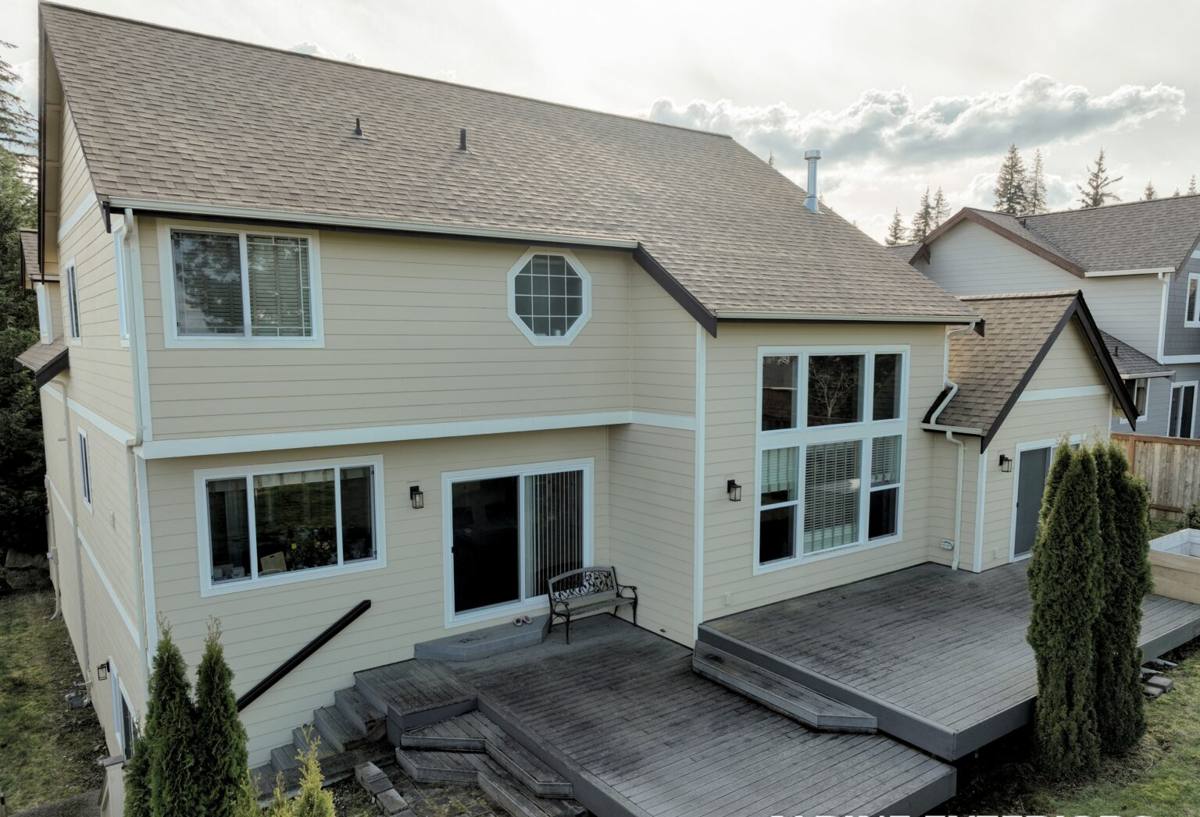
Common Signs of Deck Trouble We See in This Area
Most homeowners call us for one of a handful of recurring issues. Knowing what to look for can help you catch problems before they get expensive.
- Soft, spongy, or bouncy spots when you walk across the deck
- Rust streaks running down from screws, bolts, or joist hangers
- Gaps or dark staining where the deck meets the house (a sign the ledger board flashing is failing)
- Moss or black-green growth on boards that stay shaded most of the day
- Wobbly or loose railings and posts
- Cracked, splintering, or visibly cupped decking boards
- Stairs that feel less solid than they used to, or stringers with visible cracking
A little gray, weathered-looking wood is normal and mostly cosmetic. Soft wood, rust bleeding from fasteners, or movement in the structure is not — those are the signs that moisture has gotten past the surface and into the framing.
What a Correct Deck Repair Actually Involves
Deck repair gets treated as a cosmetic job more often than it should. Replacing a few gray boards and calling it done can leave the actual problem — usually moisture intrusion at a structural connection — untouched. A repair that's actually going to last starts with figuring out where the water is getting in, not just where the wood looks bad.
Ledger Board and Flashing
The ledger board is where the deck bolts to the house, and it's the single most common failure point we find on older decks in this area. If the flashing behind it was installed poorly, or wasn't installed at all, rainwater runs behind the ledger and slowly rots both the ledger and the house framing behind it. This is also the connection that matters most for safety — a compromised ledger is a structural problem, not a cosmetic one, and it's the kind of thing that doesn't show itself until it's gone quite far.
Framing and Structural Repairs
Joists, beams, posts, and the hardware connecting them all take on moisture over time, particularly where wood contacts wood or where a post meets a footing at grade level. We check for rot at these connection points, look at whether joist hangers and structural screws have corroded, and confirm that footings are still doing their job. One detail that trips up a lot of repairs: mixing incompatible metals. Modern treated lumber reacts with the wrong type of fastener and causes accelerated corrosion — a repair using mismatched hardware can fail faster than the problem it was meant to fix.
Decking Boards, Railings, and Stairs
This is the visible layer — the boards you walk on, the rails you lean on, the stairs you use every day. Beyond swapping damaged boards, this is also where we check that railings meet current guardrail height and baluster-spacing requirements, since older decks were often built to looser standards than are expected today.
Repair or Replace? How We Help You Decide
Not every deck problem calls for a full rebuild, and not every deck is worth patching indefinitely. The honest answer usually comes down to how much of the structure — versus just the surface — has been affected.
| Factor | Leans Toward Repair | Leans Toward Replacement |
|---|---|---|
| Extent of rot | Isolated to a few boards or one connection point | Spread across multiple joists, the ledger, and posts |
| Age of structure | Under 15-20 years, built to reasonable standards | Older, undersized framing or unknown history |
| Footings and posts | Solid, no movement or cracking | Settling, cracked, or undersized for current code |
| Railings and stairs | Sound but dated in appearance | Out of compliance with current guardrail spacing |
| Typical cost range | Several hundred to a few thousand dollars | Several thousand and up, depending on size and material |
We'll always tell you honestly when a repair is the right call and when you'd be pouring money into a structure that's past the point of patching. We don't have a reason to push a bigger job than the deck actually needs.
Our Deck Repair Process
- On-site inspection. We walk the deck, probe suspect wood with an awl or screwdriver to check for hidden rot, and inspect the ledger, framing, posts, and footings — not just the surface boards.
- Written scope and estimate. You get a clear breakdown of what's failing, what we recommend fixing, and what it costs — no vague "we'll see once we open it up" pricing on the parts we can inspect up front.
- Permit check. If the repair touches structural framing, footings, or guardrails, we confirm what Everett or Snohomish County permitting requires before work starts.
- Repair work. Damaged framing, flashing, and boards get replaced with appropriately rated materials and fasteners for our climate — not just whatever matches the color.
- Walkthrough. We show you what was done and why, and flag anything else worth keeping an eye on going forward.
Materials We Use, and Why
Material choice matters more here than it does in drier climates, because everything on a deck spends a good chunk of the year wet. For framing repairs, we use pressure-treated lumber rated for ground contact where appropriate, paired with fasteners and hardware designed to resist corrosion — stainless steel or heavy-duty coated hardware rather than standard galvanized, especially this close to salt air. Cutting corners on fasteners is one of the most common causes of repeat failures we see on older repairs.
For decking surfaces, both wood and composite have a place, and the right call depends on your priorities:
| Wood (cedar, treated) | Composite | |
|---|---|---|
| Upfront cost | Lower | Higher |
| Maintenance | Periodic cleaning, sealing, or staining | Occasional washing, no sealing needed |
| Moss/algae resistance | Prone to growth in shaded, damp spots without upkeep | More resistant, but not immune in heavy shade |
| Appearance over time | Weathers naturally; needs refinishing to keep original look | Color holds longer with minimal care |
Neither option is wrong — it's a trade-off between upfront cost and long-term maintenance, and we'll walk through it honestly rather than steering you toward whichever is easier for us to install.
Moss, Mildew, and Long-Term Deck Care
Snohomish County's moss season runs long — realistically, several months of the year where shaded or poorly draining deck surfaces stay damp enough for growth to take hold. This isn't just cosmetic. Moss holds moisture against the wood surface, which speeds up rot underneath it, and it makes stairs and walking surfaces genuinely slippery. As part of a repair, we look at drainage — making sure boards are properly spaced and pitched so water actually sheds instead of pooling — and we'll flag areas of the deck that are shaded enough that they'll need more frequent cleaning regardless of material. A repair that ignores drainage is a repair that's going to need doing again sooner than it should.
Why Hire a Crew That Already Works in Eastmont
A contractor who works this neighborhood regularly already knows what tends to fail first on decks around here — usually ledger flashing and fastener corrosion — instead of treating every job as a generic deck repair. We know what Everett and Snohomish County expect for permitting on structural and guardrail work, so there are no surprises partway through the job. And because we're local, follow-up is straightforward if you ever have a question about the work later — you're not chasing down a crew that drove in from out of the area for a single job and moved on.
Questions to Ask Before Hiring a Deck Repair Contractor
- Are they licensed, bonded, and insured in Washington?
- Will they actually inspect the ledger, framing, and posts — or just replace the boards you can see?
- Do they pull permits when the scope requires it?
- What fasteners and hardware do they use, and are they rated for a wet, coastal climate?
- Is there a warranty on the repair work itself, not just the materials?
- Can they explain, in plain terms, why they're recommending repair versus replacement?
If a deck at your Eastmont home has soft spots, rust stains, moss buildup, or railings that don't feel as solid as they used to, we're happy to take a look and give you a straight answer on what it needs. Estimates are free, there's no pressure to sign anything on the spot, and you can use the form below to get started.