 Everett
 Riverside's Climate Is Hard on Decks
Riverside sits close to the Snohomish River on the north side of Everett, and that location shapes what happens to an outdoor deck over time. Homes here tend to sit under mature tree canopy and get more shade than lots on higher, more open ground elsewhere in Snohomish County. Shade plus river-adjacent humidity is a recipe for moss, algae, and slow-drying wood — the three things that do more long-term damage to a deck than any single storm.
Add in the Pacific Northwest's long wet season and the driving, wind-blown rain that comes off the water, and you get moisture finding its way into places it shouldn't: under flashing, behind ledger boards, into end grain that was never sealed. Salt-tinged air off the Sound doesn't help fastener life either. None of this means a deck in Riverside is doomed — it means the repair work has to account for how this specific neighborhood behaves, not just what a national how-to guide says about decks in general.
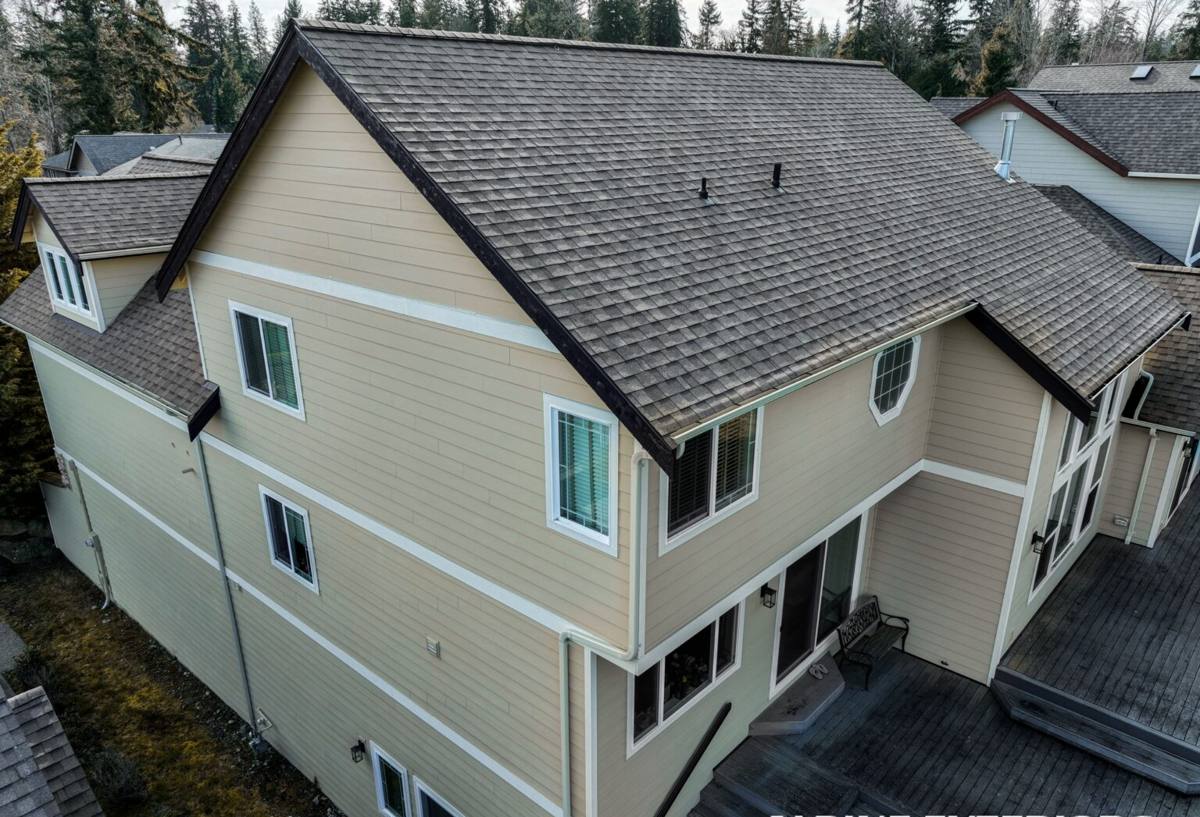
Signs Your Riverside Deck Needs Repair (Not Necessarily Replacement)
Most decks we're called out to in this neighborhood don't need to be torn out — they need targeted repair before a small problem becomes a structural one. The trick is telling the difference early.
Surface-Level Wear vs. Structural Damage
Surface problems are the ones homeowners usually notice first: graying or splintering boards, a slick green film on shaded areas, small gaps opening up between deck boards, or a railing that's started to feel loose under hand pressure. These are worth fixing, but they're not emergencies.
Structural problems are the ones that matter more and get missed more often: a ledger board pulling slightly away from the house, soft or spongy spots underfoot, visible daylight or staining where a support post meets its footing, or fasteners that have rusted and bled orange streaks down the wood. Any of these is a sign moisture has been working on the frame, not just the surface, and it's worth having someone look underneath the deck, not just at the top of it.
What a Correct Deck Repair Actually Involves
A repair that only addresses what's visible from the top usually fails again within a season or two in a climate like this. Doing it right means checking three areas every time, even if the homeowner only called about one.
Ledger Board and Flashing
The ledger board — where the deck attaches to the house — is the single most important structural connection on most decks, and it's also the point where water damage is most likely to hide. Proper flashing directs water away from this connection instead of letting it pool and soak into the rim joist behind it. If we open up a ledger area and find staining, soft wood, or missing flashing, that gets addressed before any cosmetic work happens, because a deck can look fine on top and still be unsafe at the attachment point.
Framing and Fasteners
Joists and beams get checked for rot, especially near post bases and anywhere debris or standing water tends to collect. Corroded or undersized fasteners get replaced with hardware rated for exterior, wet-use conditions — this matters more here than in drier climates, because standard interior-grade fasteners fail faster under constant damp exposure.
Decking Boards and Railings
Individual boards get replaced where they're cracked, cupped, or rotted rather than the whole surface being torn up unnecessarily. Railings get re-secured to solid framing, not just re-screwed into the same compromised wood that let them loosen in the first place.
Repair or Replace?
Homeowners often assume any rot means a full teardown. That's rarely true. The honest answer depends on where the damage is and how far it's spread.
| Factor | Repair Usually Makes Sense | Full Replacement Usually Makes Sense |
|---|---|---|
| Location of damage | Isolated boards, railings, or stair treads | Damage at multiple structural connections |
| Ledger condition | Solid, with only flashing needing correction | Rotted or separating from the house rim joist |
| Framing and posts | Sound with a few compromised joists | Widespread soft spots or failed post bases |
| Deck age | Under 15-20 years, built to a reasonable standard | Original construction was undersized or poorly detailed |
| Typical cost impact | A fraction of full rebuild cost | Approaches or exceeds rebuild cost once framing is opened up |
We'll always tell you honestly which category your deck falls into. There's no upside for us in talking someone into a full rebuild they don't need, and no upside for you in patching over a frame that's already failed.
Our Process for Riverside Deck Repairs
We keep this simple and low-pressure, especially for a first-time repair on a deck we haven't worked on before.
- On-site inspection — we look at the deck from both above and below, including the ledger connection and post bases, not just the walking surface.
- Straight assessment — you get a clear explanation of what's cosmetic, what's structural, and what we'd genuinely recommend if it were our own deck.
- Written scope and estimate — no vague verbal promises, so you know exactly what's being repaired and why.
- Repair work — done in the order that matters most: structure and moisture protection first, then boards and railings, then finish work.
- Final walkthrough — we check the deck with you before we consider the job done, including anything you should keep an eye on going forward.
Materials and Fasteners We Stand Behind
For structural framing repairs, we use lumber and hardware rated for exterior, wet-service conditions rather than general-purpose materials — this isn't optional in a neighborhood that stays damp as long as Riverside does. For decking surfaces, both quality pressure-treated wood and composite boards have a place, and which one fits your deck depends on your budget, your maintenance appetite, and how much shade the deck actually gets.
Wood costs less up front but needs periodic sealing or staining to keep moisture out, especially on a shaded lot where boards dry slowly between rains. Composite costs more up front and needs far less upkeep, but it's less forgiving of poor installation — gaps, fastening, and drainage details matter even more because the material itself won't visibly warn you of a moisture problem the way wood eventually will. We'll walk you through the honest trade-offs for your specific deck rather than push whatever's easiest for us to install.
Seasonal Deck Maintenance Checklist
A few habits go a long way toward keeping repairs small and infrequent, particularly on shaded, river-adjacent lots like the ones common in Riverside.
- Sweep leaves and debris out from between deck boards regularly — trapped organic matter holds moisture and feeds moss growth.
- Rinse moss and algae off the surface gently rather than letting it build up through the wet season; avoid high-pressure washing, which can drive water into the wood grain.
- Check for soft or spongy spots underfoot at the start of each fall and spring.
- Look at the ledger board and flashing area for staining or gaps at least once a year.
- Make sure gutters and downspouts near the deck are clear so runoff isn't draining directly onto or under it.
- Reseal any fresh cuts or exposed end grain on wood decking promptly.
- Check post bases after heavy rain for standing water that isn't draining away.
- Test railings by hand periodically — a wobble usually means the fastening point has loosened, not just the railing itself.
Why Hiring a Crew That Already Works Riverside Matters
A deck repair in a drier, sunnier part of Snohomish County can get away with shortcuts that simply don't hold up on a shaded, river-adjacent lot in Everett. Knowing which corners of a deck fail first here — the ledger connection, the north-facing shaded boards, the post bases nearest low-lying, slower-draining ground — comes from working on decks in this specific area repeatedly, not from a general contracting background alone. That local pattern recognition is what keeps a repair from becoming a repeat call eighteen months later.
It also means showing up with the right expectations about weather windows for the work itself, since curing sealants, adhesives, and coatings all behave differently in Everett's damp climate than they would somewhere drier.
If you've got a deck in Riverside that's showing rot, moss buildup, a loose railing, or just needs an honest second opinion, we're glad to come take a look. The estimate is free, there's no pressure to book anything on the spot, and you'll get a straight answer about what actually needs fixing — use the form below to get started.