 Everett
 Silver Lake sits inland from Puget Sound, ringed by mature trees and older homes with a lot of shade cover. That combination — shade, standing humidity off the lake, and Snohomish County's long stretch of wet months — puts a specific kind of stress on an outdoor deck. A deck replacement built for this neighborhood has to account for moisture that lingers longer than it does on an open, sun-exposed lot, and moss and algae that come back faster than most homeowners expect. Get the framing, flashing, and material choice right and a Silver Lake deck can handle all of that for decades. Get it wrong and you're looking at soft boards and a wobbly railing in under ten years.
Why Silver Lake Decks Wear Out Faster Than You'd Expect
Everett's climate is wet most of the year, but Silver Lake's tree canopy and proximity to the water change the math a little further. Shaded decks dry out slower after rain, which means wood fibers stay damp longer and rot has more time to take hold at joints, fastener holes, and anywhere two boards meet. Homes closer to the lake also deal with a steady low-level humidity that keeps surfaces from ever fully drying between storms, even in months that aren't technically "rainy season."
Shade, Moisture, and Moss
Moss and algae need three things to thrive: shade, moisture, and a surface to grip. A shaded Silver Lake deck offers all three for most of the year. Once moss gets established in the grain of a wood board or in the texture of an older composite product, it holds moisture against the surface around the clock, which accelerates decay underneath even when the top of the board still looks fine. This is one of the most common reasons a deck that "looks okay" turns out to have soft, rotted joists once we pull the boards.
Salt Air and Fastener Corrosion
Everett's location near Puget Sound means a mild but real amount of salt-laden air moves through the region, and it accelerates corrosion on lower-grade fasteners, joist hangers, and structural screws. On an older deck built with standard galvanized hardware, this shows up as rust streaks bleeding out around screw heads and, eventually, hardware that's lost enough integrity to matter. It's a slow process, but over 15-20 years it adds up — especially combined with the moisture load from the shade and lake air.
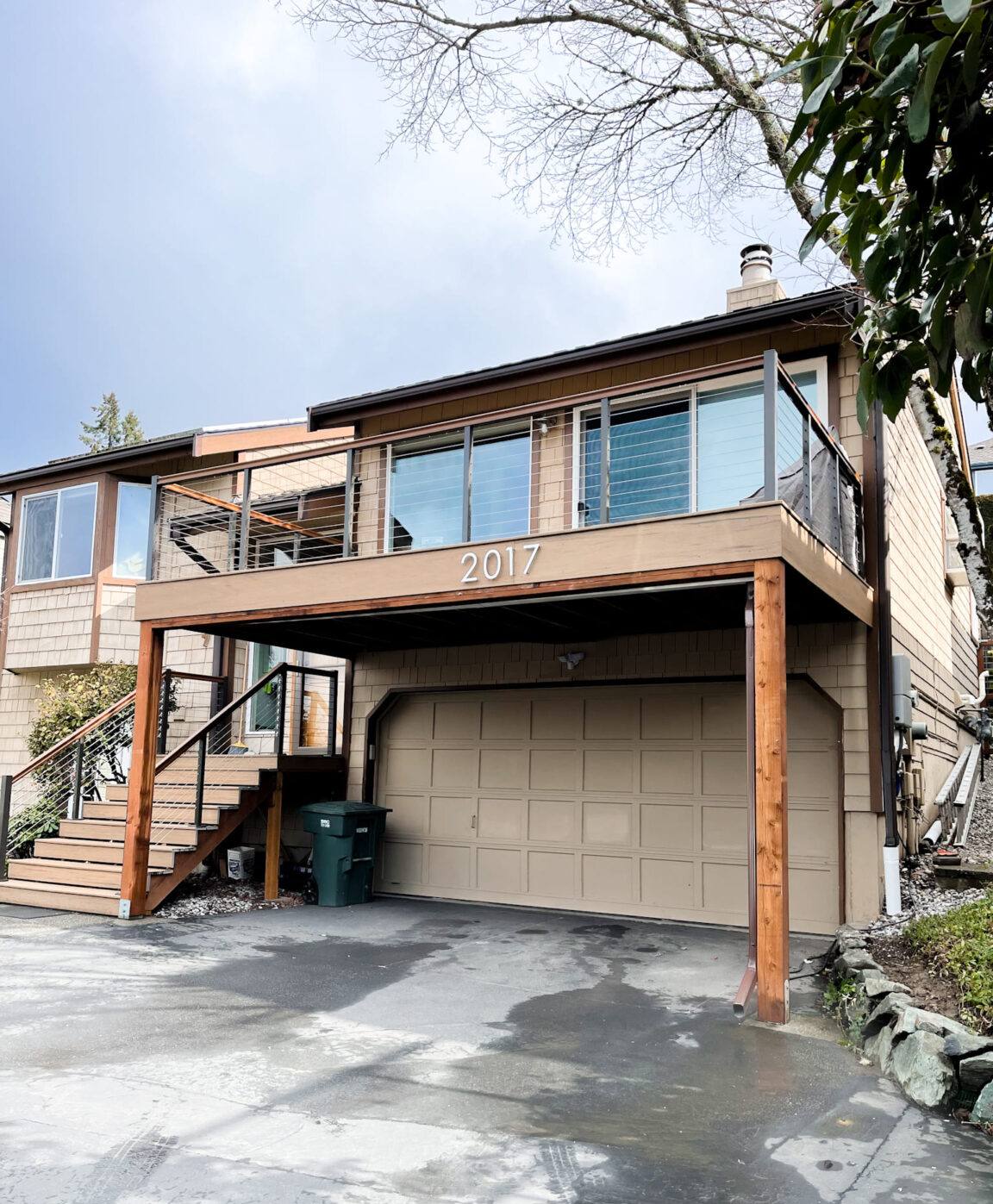
Signs Your Silver Lake Deck Needs Replacement, Not Just Repair
Not every deck problem calls for a full teardown. But there's a point where patching boards is throwing money at a structure that's already compromised underneath. Walk your deck and look for these signs before deciding between repair and replacement:
- Soft or spongy spots underfoot, especially near the house or around post bases
- Gaps between boards that have widened noticeably since installation
- Rust streaks bleeding from screw heads or around joist hangers
- Any separation or daylight gap where the ledger board meets the house
- Railings or posts that flex or wobble when pushed
- Moss or algae that returns within weeks of cleaning
- Visible sagging between joists when you sight down the deck's edge
- A wood deck older than 15-20 years that hasn't had structural components replaced
If you're seeing two or more of these, the underlying framing is usually the real issue, and that's not something surface repairs fix.
What a Correct Deck Replacement Involves
A deck replacement is a structural project first and a decking-material choice second. The parts homeowners don't see are the parts that determine whether the new deck lasts.
Tear-Off and Structural Inspection
We remove the decking, railings, and as much framing as needed to see the condition of what's underneath — posts, footings, and the ledger connection to the house. This is where hidden rot, undersized framing from an older build, or a failing ledger attachment usually turns up. It's also the point where the scope of a job can shift once we see what's actually there, which we'll walk you through before any work continues.
Ledger Board Flashing and Moisture Barrier
The ledger board — where the deck attaches to the house — is the single most common failure point on decks in wet climates, and it's the detail that matters most in a shaded, humid spot like Silver Lake. Correct flashing directs water away from the house band board and prevents moisture from tracking behind the siding, which is a slow, hidden path to rot that can go unnoticed for years. This is not an area to cut corners on, and it's often skipped or done poorly on older or lower-bid decks.
Footings and Post Layout
Footings need to be sized and set to the frost depth and load requirements in the Snohomish County and City of Everett building codes, depending on where your property falls. On lake-adjacent lots, soil conditions can vary from what you'd find on higher, drier ground nearby, which affects how footings are dug and poured. Undersized or shallow footings are a common shortcut on older decks and one of the reasons a deck can develop a slow lean or bounce over time.
Joist Framing and Joist Tape
Modern deck framing should use joist tape — a self-adhering membrane over the top of each joist — to keep water from soaking into the end grain and top surface of the framing lumber, which is where rot typically starts. This is a small material cost that pays for itself many times over in a climate where boards rarely get a long, uninterrupted dry stretch.
Choosing the Right Decking Material for a Shaded, Damp Lot
Every decking material has trade-offs, and the right choice depends more on your specific lot's shade and moisture exposure than on style preference alone. For heavily shaded Silver Lake properties, moisture and moss resistance usually matter more than they would on a sunny, open lot.
| Material | Upfront Cost | Moss/Moisture Resistance | Maintenance | Typical Lifespan |
|---|---|---|---|---|
| Pressure-treated wood | Lowest | Fair — porous, needs sealing | Annual cleaning and resealing | 10-15 years in shaded spots |
| Cedar | Moderate | Good, but softens with neglect | Regular cleaning, periodic oil/seal | 15-20 years with upkeep |
| Composite decking | Higher | Very good — non-porous surface | Occasional wash, no sealing | 25-30+ years |
| PVC decking | Highest | Excellent — fully synthetic | Occasional wash | 30+ years |
For lots with heavy tree cover around Silver Lake, we generally steer homeowners toward composite or PVC decking as our professional standard, not because wood is a bad product, but because a shaded, rarely-dry surface is exactly the environment where wood's maintenance demands are highest and moss takes hold fastest. If you want the look and feel of real wood and are prepared for the upkeep it requires in this climate, cedar remains a solid choice — we'll give you an honest read on what that maintenance schedule looks like for your specific lot before you decide.
Railings, Stairs, and Code Requirements
Deck permits in Everett and unincorporated Snohomish County follow the same core structural and safety requirements, though which office you file with depends on your property's exact location. Guardrails on residential decks generally need to be at least 36 inches high, with baluster spacing that prevents a 4-inch sphere from passing through. Stair railings have their own height and graspability requirements. These aren't just paperwork — they're the difference between a railing that holds up under real load and one that looks fine until someone leans on it. A permitted, inspected deck replacement also protects you at resale, since an unpermitted deck can become a negotiating point or disclosure issue when you sell.
Our Deck Replacement Process
- Site visit and estimate. We look at your existing deck, the shade and moisture exposure of the specific spot, and talk through material options and realistic costs.
- Permit filing. We handle the permit application through the correct local office for your property before any demolition starts.
- Tear-off and disposal. Old decking, railings, and compromised framing come out, with debris hauled away — no leftover materials sitting in your yard.
- Framing and inspection. New footings, posts, joists, and ledger flashing go in to code, and we schedule required inspections at the appropriate stages.
- Decking and railing installation. Your chosen material goes down, followed by railings, stairs, and any finishing trim.
- Final walkthrough. We go over the finished deck with you, answer questions about care and maintenance, and make sure everything meets what we discussed at the estimate.
What Deck Replacement Costs in Silver Lake
Costs vary widely based on size, material, and site conditions, and we'll always give you specifics for your property rather than a generic number. That said, these are the main factors that move the price up or down:
| Cost Factor | How It Affects the Project |
|---|---|
| Deck size and shape | More square footage and complex shapes mean more material and labor |
| Decking material | Pressure-treated wood costs least upfront; PVC and premium composites cost more but need less upkeep |
| Height and multi-level design | Taller decks and multiple levels require more framing, footings, and stair work |
| Railing style | Cable, glass, and custom railing systems cost more than standard baluster railings |
| Demo and disposal | Larger or multi-material tear-offs take more labor and disposal fees |
| Permit fees | Set by the City of Everett or Snohomish County depending on your address |
| Access and site conditions | Tight lake-adjacent lots or limited equipment access can add labor time |
Maintenance After Your New Deck Is Installed
The maintenance a new deck needs depends heavily on the material you chose, but a few habits matter for almost any deck in a shaded, humid spot like Silver Lake:
- Sweep debris and leaf litter off regularly — trapped organic matter holds moisture and feeds moss growth
- Rinse or wash the deck surface a few times a year, more often on heavily shaded sections
- Check that gutters and downspouts near the deck are directing water away, not onto it
- Inspect the ledger flashing area yearly for any sign of water tracking behind the siding
- For wood decking, plan on resealing on the schedule the manufacturer or we recommend — skipping a cycle in this climate shows up fast
Why Hire a Crew That Already Works in Silver Lake
A deck replacement crew that hasn't worked this specific area before is guessing at things we already know: how shaded lots around the lake hold moisture longer, which soil conditions to expect when digging footings near the water, and which local permit office to file with for a given address. That familiarity shows up in small decisions throughout the job — the flashing details we don't skip, the material recommendation we give a heavily-shaded lot versus a sunnier one nearby, and the realistic maintenance conversation we have with you before you pick a decking product. None of that replaces a careful, honest assessment of your specific property, but it means we're not learning the neighborhood's quirks on your project.
If your deck is showing any of the signs above, or you'd just like an honest read on whether repair or full replacement makes sense for your Silver Lake home, we're happy to take a look. Fill out the form below for a free, no-pressure estimate — we'll walk the deck with you and give you a straight answer, not a sales pitch.