 Everett
 Why Delta's Roofs Take More Punishment Than Most
Delta sits close to the water, and that changes what a roof has to deal with year after year. Homes here get a steady mix of salt-laden marine air, wind-driven rain off Puget Sound and the Snohomish River corridor, and long stretches of gray, wet weather that give moss every chance it needs to take hold. None of that is unique to one street or one house — it's the baseline for this part of Snohomish County, and it's why a roof that would be perfectly fine in a drier inland town can start showing problems here in half the time.
Salt Air and Corrosion
Airborne salt doesn't just affect homes right on the shoreline. It travels with the wind and settles on roofing, gutters, and exposed fasteners for a good distance inland. Over years, that salt accelerates corrosion on unprotected or poorly coated metal, works into small gaps around fasteners, and speeds up the breakdown of cheaper finishes. A metal roof that isn't specified correctly for a marine environment can corrode faster than the homeowner expects, especially at cut edges and fastener heads.
Wind-Driven Rain and Water Intrusion
Rain here rarely falls straight down. Wind pushes it sideways and up under laps, around penetrations, and into any seam that wasn't detailed properly. A roof in Delta needs underlayment, flashing, and seam design that assume water will be pushed where gravity alone wouldn't take it — not just a system built for calm, vertical rainfall.
Moss, Shade, and Debris
Tree cover and consistent moisture make moss and algae a near-constant presence on Everett roofs for much of the year. Moss holds water against roofing materials, works into surface texture, and on the wrong material can trap enough moisture to cause real damage over time. It also collects in valleys and around low-slope transitions, which is exactly where a poorly installed roof is most likely to leak.
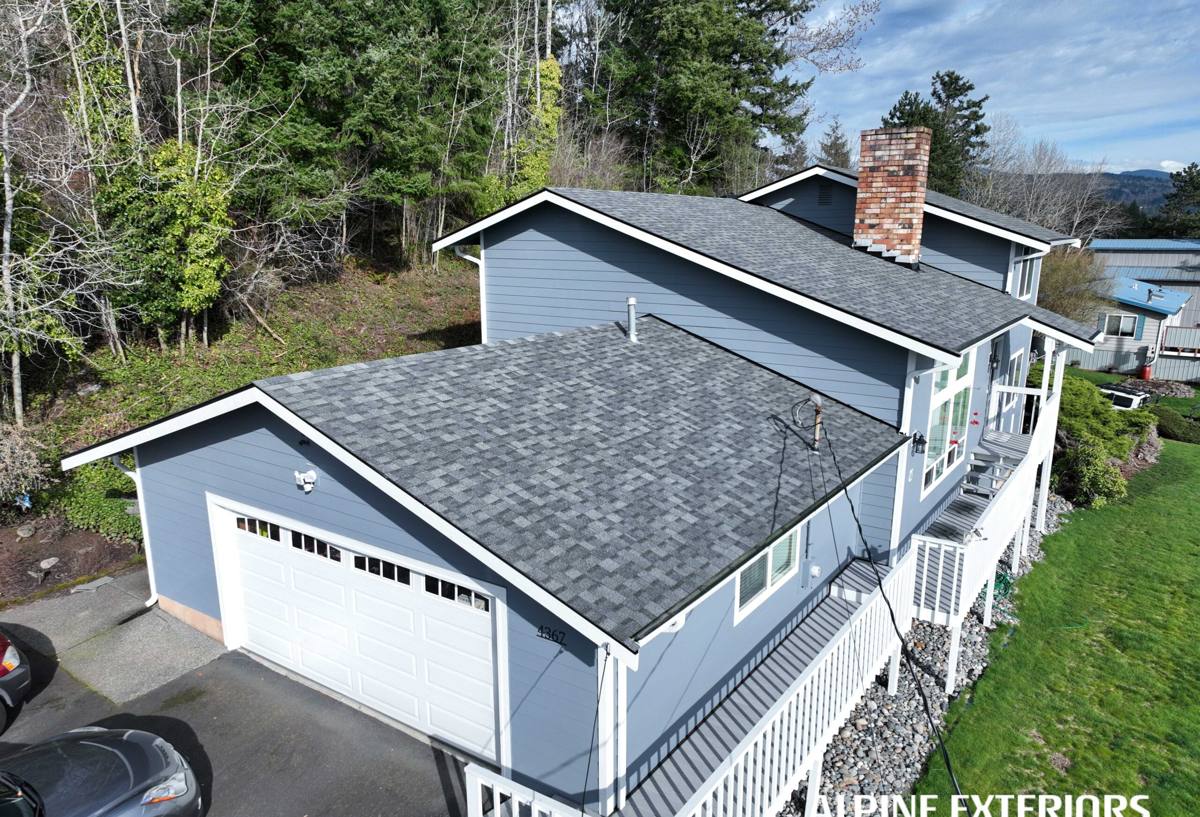
Why Metal Roofing Makes Sense for This Climate
Metal roofing isn't the right fit for every home or every budget, but for the conditions Delta deals with, it has real advantages over other roofing types when it's installed correctly with the right materials.
- Sheds wind-driven rain more effectively than materials with more exposed laps and edges
- Doesn't provide the porous surface texture moss and algae need to establish and spread
- Handles decades of freeze-thaw and wet-dry cycling without the granule loss or cracking that shortens the life of other materials
- Stands up to wind uplift better than lighter, more exposed roofing systems when fastened correctly
- With the right coating system, resists the corrosive effects of marine air far longer than untreated or poorly coated metal
That last point matters more here than almost anywhere else in the county. A metal roof's finish and coating package isn't a cosmetic upgrade near the water — it's the difference between a roof that holds up and one that starts corroding at the fastener heads within a few years.
Metal Roofing Systems We Install
Not all metal roofing is built the same way, and the differences matter more in a salt-air, high-moisture environment than they would somewhere drier. Here's how the main options compare for a Delta home.
| System | How It's Attached | Best For | Trade-Offs |
|---|---|---|---|
| Standing seam | Concealed fasteners, interlocking vertical seams | Long-term performance in wet, wind-driven conditions | Higher upfront cost; requires skilled installation |
| Exposed-fastener panel | Screws driven through the panel face into the deck | Budget-conscious projects, outbuildings, some home styles | Fasteners and washers age and need periodic checking; more entry points for water over time |
| Metal shingles/shakes | Interlocking panels styled to mimic shake or shingle look | Homeowners who want a traditional look with metal's durability | More seams and details than standing seam; installation quality matters even more |
For most homes in Delta, we lean toward standing seam because it has the fewest penetration points for wind-driven rain to exploit and the concealed fastener design ages better in salt air. Exposed-fastener systems can still be a sound choice on the right structure, but we're upfront that they carry more long-term maintenance in this climate, not less.
Steel vs. Aluminum
Both steel and aluminum panels are used for residential metal roofing, and both can perform well near the water when they're finished correctly. Steel is typically more affordable and very strong, but needs a quality galvanized or Galvalume coating underneath the paint finish to resist corrosion. Aluminum costs more but doesn't rust, which makes it a reasonable option for homes closest to the water or with a history of corrosion issues on existing metal components. We'll talk through which makes sense for your specific property rather than defaulting to one option.
What a Correct Metal Roofing Installation Actually Involves
A metal roof is only as good as what's underneath it and how it's detailed. Most metal roofing problems we get called out to fix on other contractors' work trace back to shortcuts in these steps, not the panels themselves.
Deck Inspection and Prep
Before anything goes down, the existing roof deck needs to be inspected for rot, soft spots, and prior water damage — common on older Everett homes that have dealt with decades of wet winters. Any compromised sheathing gets replaced before new material goes on. Skipping this step is the single most common cause of early failure, regardless of what's installed on top.
Underlayment and Ice/Water Barrier
A synthetic underlayment rated for the panel type goes down first, with self-adhering ice-and-water barrier at eaves, valleys, and other vulnerable areas. In a climate with as much sustained rain as Delta gets, this layer is what protects the structure if wind ever pushes water past the metal itself.
Fastening, Flashing, and Sealants
Every penetration — vents, chimneys, skylights — needs flashing detailed for the specific panel profile, not a generic solution. Fasteners and sealants need to be rated for exterior, coastal-adjacent exposure. This is where salt-air corrosion shows up first if lower-grade hardware was used to save money.
Ventilation
Proper attic and roof ventilation keeps moisture from condensing under the metal panels, which matters as much in our wet climate as it does in extreme heat. A well-installed metal roof with poor ventilation can still develop moisture problems from the inside out.
Our Process From Estimate to Cleanup
- On-site assessment — we walk the roof, check the deck condition where accessible, and look at drainage, tree cover, and exposure specific to your property
- Written estimate — a clear scope covering material, underlayment, flashing details, and any deck repair, with no vague allowances
- Material selection — we walk through panel profile, gauge, and finish options based on your home, budget, and how close you are to the water
- Tear-off and deck prep — old roofing removed, deck inspected and repaired as needed before anything new goes down
- Installation — underlayment, flashing, and panels installed to manufacturer specifications and detailed for wind-driven rain
- Final walkthrough and cleanup — magnetic sweep for stray fasteners, full site cleanup, and a walkthrough so you know what was done and what to watch for
What Metal Roofing Costs Depend On
We won't quote a number without seeing the roof, but these are the main factors that move the price up or down on a Delta project.
| Factor | Why It Matters |
|---|---|
| Panel material (steel vs. aluminum) | Aluminum costs more but resists corrosion without a protective coating |
| Panel system (standing seam vs. exposed-fastener) | Standing seam costs more upfront but has fewer long-term maintenance needs |
| Roof complexity | Valleys, dormers, and multiple roof planes add labor and flashing detail |
| Deck condition | Rot or soft sheathing found during tear-off adds repair cost before installation |
| Coating and finish quality | Better paint systems (like PVDF-based finishes) cost more but hold color and resist salt corrosion far longer |
As a general range, metal roofing typically costs more than asphalt shingles upfront, but the gap narrows over the life of the roof when you factor in the shingle roof's shorter lifespan and moss-related maintenance in this climate. We'll break down the real numbers for your specific home during the estimate.
Keeping a Metal Roof Performing Long-Term
Metal roofing is low-maintenance compared to other materials, but "low-maintenance" doesn't mean "no maintenance" — especially in a salt-air environment. A few habits go a long way:
- Clear debris and needles from valleys and low-slope areas a couple of times a year, especially after fall
- Check gutters and downspouts for clogs so water isn't backing up under the roof edge
- Rinse off salt spray and grime periodically if you're close to the water
- Have flashing and sealant points inspected every few years, since these age faster than the panels themselves
- Watch for any scratches through the finish and have them touched up before bare metal is exposed to the weather
Why It Matters to Hire a Crew That Already Works in Delta
A lot of roofing problems in this area aren't caused by bad materials — they're caused by installers using details and assumptions from a different climate. A crew that regularly works Everett and greater Snohomish County knows to plan for wind-driven rain instead of straight-down rain, to spec hardware and coatings that hold up against salt air, and to recognize what moss and prolonged moisture do to a roof deck over time. That local knowledge shows up in the small decisions — flashing details, fastener choice, underlayment placement — that determine whether a metal roof lasts twenty years or forty in this specific climate.
If you're weighing metal roofing for a home in Delta, we're happy to take a look and walk you through what your roof actually needs — no pressure, no upsell. Fill out the form below for a free estimate.