 Everett
 Why Window Installation Is Different in South Everett
South Everett sits close enough to Puget Sound that homes deal with salt-laden air on top of everything else the Pacific Northwest throws at a house: long stretches of low-intensity rain, occasional wind-driven downpours that hit walls sideways instead of straight down, and a gray season that runs long enough for moss and algae to take hold on anything that stays damp. Windows sit right at the intersection of all of that. They're a hole cut into the weather barrier, and every seam around that hole is a place water, wind, and salt-carrying moisture can work their way in if the install isn't done right.
A window that looks fine from the curb can still be letting moisture into the wall cavity behind it. That's the part homeowners usually can't see until there's already damage — soft framing, stained drywall, or a musty smell that shows up out of nowhere. Getting the installation right the first time matters more here than it does in a drier climate, because the margin for error is smaller.
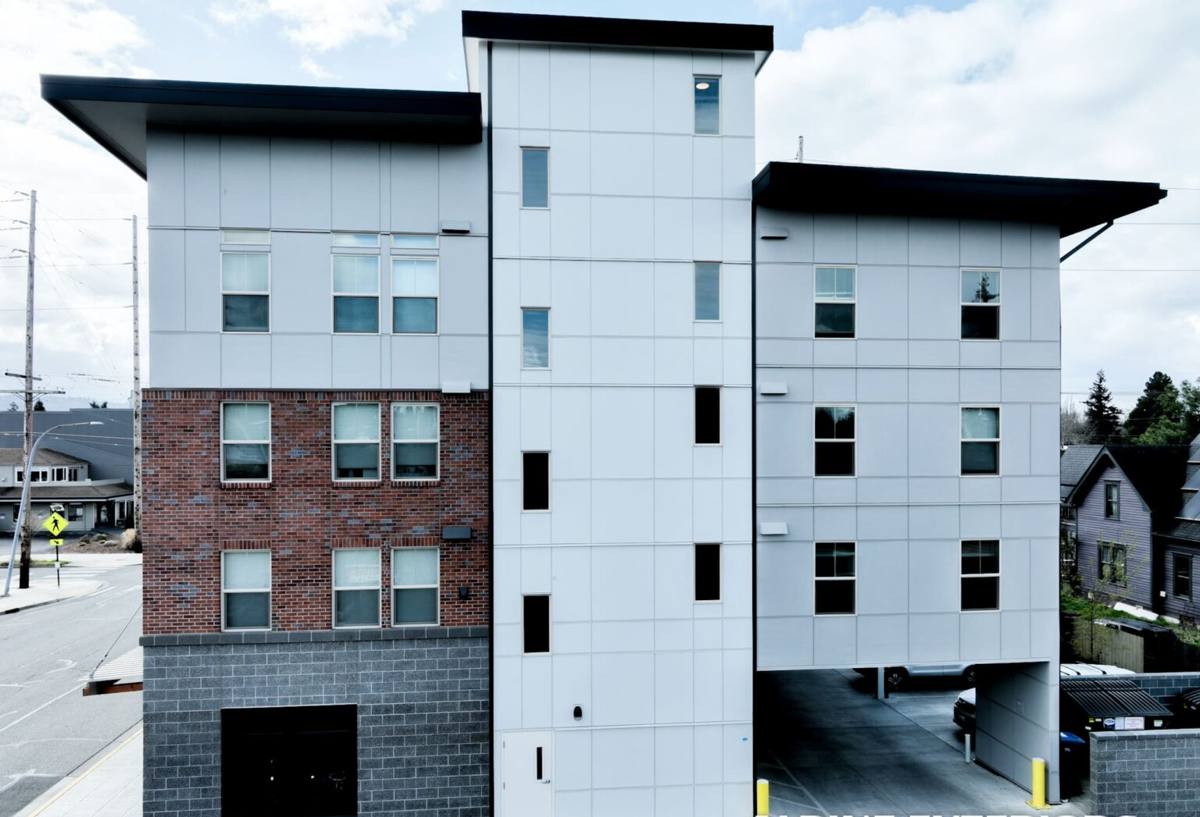
Signs Your Windows Need Attention, Not Just an Upgrade
Not every window problem means you need full replacement, but in a marine climate the symptoms tend to show up faster and mean more than they would somewhere dry. Watch for:
- Fogging or a milky haze between the panes of a double-pane window — the seal has failed and the insulating gas or dry air has escaped
- Drafts you can feel with your hand near the frame on a windy day
- Soft or discolored wood at the sill, especially on walls that face prevailing weather
- Paint that bubbles or peels repeatedly at the same spot on the trim
- Windows that are hard to open, close, or lock — frames can rack out of square as moisture cycles through wet and dry seasons
- Moss, algae, or dark streaking building up on the trim or sill faster than on the rest of the wall
That last one is worth paying attention to specifically. If trim around one window stays damp and mossy while the rest of the wall dries out normally, that's usually a sign water is getting behind the trim, not just sitting on top of it.
What a Correct Window Installation Actually Involves
Setting a new window into an opening is the easy part. What separates a job that lasts from one that leaks in three years comes down to details most homeowners never see once the trim goes back on.
Flashing and Water Management
The window has to be integrated into the wall's weather-resistive barrier in the correct order — sill pan flashing first, side flashing lapped over that, and head flashing lapped over the siding's weather barrier above the window, so water is always directed outward and down, never trapped behind the frame. In a climate with this much sustained rain, a sill pan isn't optional — it's the difference between water draining away harmlessly and water sitting against bare framing.
Air Sealing and Insulation
The gap between the window frame and the rough opening needs to be filled with a low-expansion foam or backer rod and sealant rated for exterior use — not just stuffed with fiberglass, which does nothing to stop air or moisture movement. Over-filling with high-expansion foam can bow the frame and cause operating problems later, so this step takes some restraint, not just volume.
Fit, Shimming, and Reveal
Every window needs to be shimmed plumb, level, and square at the right points — not just at the corners — so the frame doesn't twist when fasteners are driven. A window that's slightly out of square will bind, won't lock properly, and puts uneven stress on the seals, which shortens their life regardless of how good the window itself is.
Choosing a Window for a Marine Climate
Material choice matters more here than in a dry inland climate, because the window has to handle constant humidity, salt-laden air, and repeated wet-dry cycling without the frame degrading. There's no single "correct" answer for every home — it depends on budget, the home's style, and how much upkeep you're willing to do.
| Frame Material | Moisture & Salt Air Resistance | Maintenance | Typical Lifespan |
|---|---|---|---|
| Vinyl | Good — won't rot or corrode, though quality varies a lot between manufacturers | Low — occasional cleaning | 20-30+ years |
| Fiberglass | Very good — dimensionally stable through wet/dry and hot/cold cycling | Low | 30-40+ years |
| Aluminum-clad wood | Good on the exterior face, but any breach in the cladding exposes wood to moisture | Moderate — cladding seams and interior wood finish need occasional attention | 20-30 years, cladding-dependent |
| Bare wood | Poor without diligent upkeep in this climate — most vulnerable to rot at joints and sills | High — regular painting/sealing required | Varies widely with maintenance |
We steer most South Everett homeowners toward vinyl or fiberglass for straightforward replacements, mainly because they hold up with the least ongoing maintenance in a climate that doesn't give wood or exposed metal much of a break. That's a maintenance-and-moisture-behavior call, not a knock on any specific product — wood-clad windows still have a place on homes where matching a historic look matters more than minimizing upkeep.
Our Window Installation Process
The steps don't change much from job to job, but skipping or rushing any one of them is where problems start.
- On-site assessment of the existing opening, including a check for hidden rot or moisture damage before we quote the job
- Careful removal of the old window and inspection of the rough opening and sheathing underneath
- Repair of any damaged framing or sheathing found during removal — this gets communicated before we proceed, not buried in the invoice after
- Sill pan flashing installed first, followed by the new window, then side and head flashing integrated with the existing weather barrier
- Shimming, leveling, and fastening per the manufacturer's instructions
- Low-expansion foam or backer rod and sealant at the interior gap
- Exterior trim and caulking finished to shed water properly
- Final operation check — every window opens, closes, and locks the way it should before we call the job done
Window Replacement and Siding Work Go Together
If your siding is being replaced or repaired at the same time, that's the best possible moment to address windows — the wall is already open, and flashing can be integrated cleanly with the new weather barrier in one continuous system instead of two separate systems butted against each other. Replacing windows on their own, with the siding staying in place, is completely normal too — it just means extra care at the tie-in points where new flashing meets existing siding.
Retrofit vs. Full-Frame Replacement
A retrofit (or "pocket") replacement reuses the existing frame and trims a new window into it — faster, less invasive, and often the right call when the existing frame is sound. A full-frame replacement pulls everything down to the rough opening, which costs more and takes longer but is the only real option when there's rot, the opening needs resizing, or you want to correct a flashing problem that's been causing leaks for years. We'll tell you honestly which one your house needs rather than defaulting to whichever is easier to sell.
Local Factors We Watch For in South Everett
A lot of South Everett's housing stock includes homes built across several decades, with older wood or early-generation vinyl windows that were never detailed with today's flashing standards. On lots with heavier tree cover, north- and west-facing walls tend to stay damp longer after a storm, which is exactly where we see the most moss and algae buildup around trim and sills. Wind-driven rain direction also isn't uniform across every property — a wall that's fully protected on one house can be exposed on the next depending on how it sits relative to open ground or tree lines. None of that changes the fundamentals of a correct install, but it does change where we pay closest attention on a given house, and it's part of why local installation experience is worth something.
What Affects the Cost of Window Installation
Costs vary enough between homes that a single number isn't useful — but the factors driving that variation are consistent.
| Factor | Why It Matters |
|---|---|
| Number and size of windows | More openings and larger units mean more material, labor, and disposal |
| Frame material | Vinyl is generally the most budget-friendly; fiberglass and clad-wood cost more upfront |
| Retrofit vs. full-frame | Full-frame replacement takes longer and often uncovers repair work |
| Hidden rot or moisture damage | Framing repairs add cost but are far cheaper to fix now than after further water intrusion |
| Access and height | Second-story or hard-to-reach windows take more time and equipment |
| Trim and finish work | Matching existing trim profiles or painting adds labor beyond the window itself |
As a broad reference point, homeowners in this region typically see somewhere in the range of several hundred to a couple thousand dollars per window installed, depending on the factors above — but the only way to get a real number is a walk-through of your specific windows and openings.
Why Hire a Crew That Already Works South Everett
A contractor who works this specific area regularly has already seen how the local climate ages window installations — which details fail first, which orientations take the worst weather, and what the housing stock from different eras actually needs. That's the difference between a crew that follows a generic checklist and one that knows to double-check sill flashing on a west-facing wall that catches wind-driven rain, or recognizes early moss growth as a symptom rather than just a cosmetic issue. It also means one point of contact if you're coordinating window work with siding repair or replacement, instead of two separate crews leaving the tie-in between systems as someone else's problem.
If you're seeing drafts, fogged glass, or trim that never quite dries out, we're glad to take a look and give you a straight answer about what's going on and what it would take to fix it. Fill out the form below for a free, no-pressure estimate on window installation for your South Everett home.