 Everett
 Why Siding Repair Works Differently in Delta
Delta sits close enough to Everett's waterfront that salt-laden air is a daily fact of life for the homes there, not an occasional nuisance. Add Snohomish County's long wet season — driving rain off the Sound, months of overcast humidity, and a moss season that can run from fall through spring — and you have a climate that finds every weak point in a home's siding faster than it would inland. Repair calls in this part of Everett tend to cluster around the same culprits: salt-accelerated corrosion on fasteners and trim, moisture that got behind the siding through a bad joint or missing flashing, and moss or algae holding water against the surface long enough to do real damage underneath.
That doesn't mean every Delta home needs a full re-side. Plenty of siding problems in this neighborhood are legitimate repairs — caught early, fixed correctly, and left to do their job for years more. But it does mean a repair here has to account for exposure that a siding crew working further from the water might not think about at all.
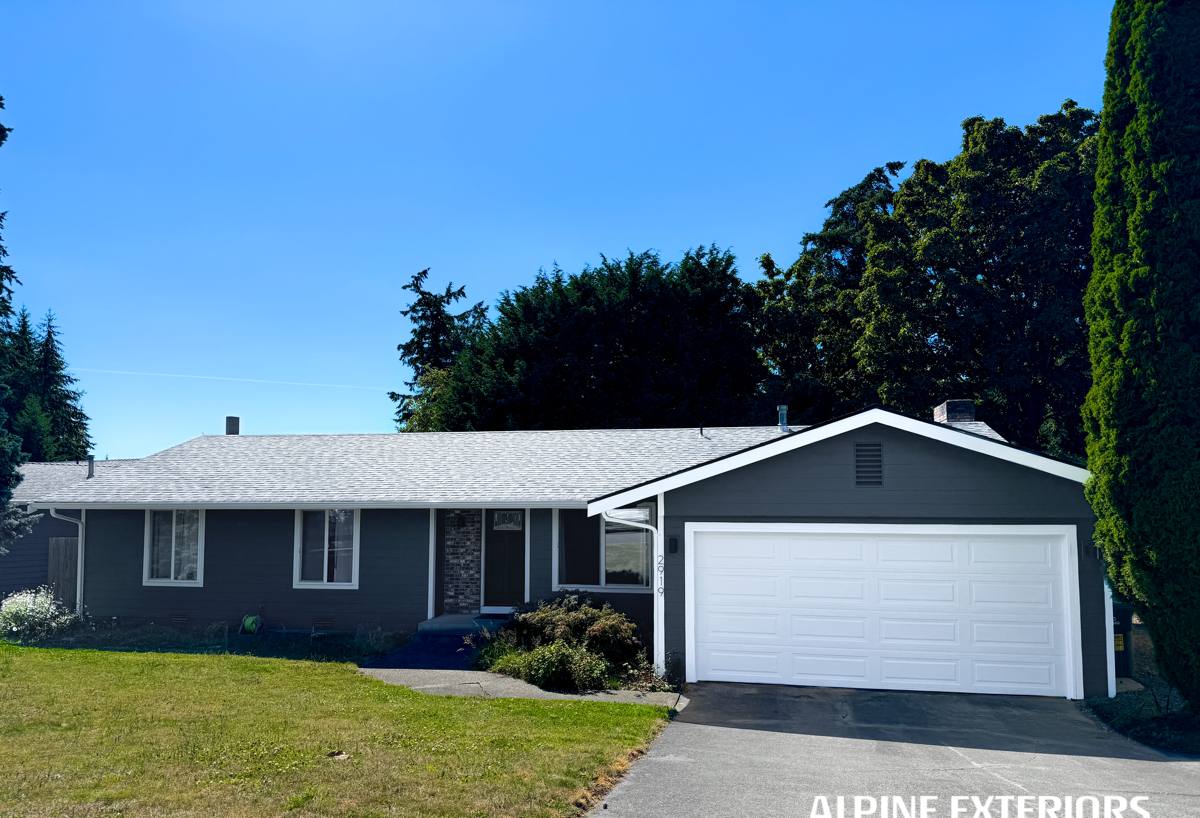
Signs a Delta Home Needs Siding Repair
Most homeowners notice siding trouble long before they call anyone about it — they just don't always read the signs correctly. Some of the most common indicators we see on repair calls in this area:
- Soft or spongy spots when you press on the siding, especially near the bottom courses or around windows and doors
- Visible cracking or chipping at butt joints, corners, or wherever two pieces of siding meet
- Persistent moss, algae, or black streaking that keeps coming back within weeks of cleaning
- Rust bleeding from fastener heads or trim, a sign of corrosion working on the metal underneath the finish
- Bubbling, peeling, or flaking paint in a localized area rather than across the whole wall
- A musty smell or visible staining on interior walls that back onto exterior siding
- Gaps opening up around window and door trim, or caulk that's cracked and pulling away
Any one of these can be a small, contained repair. Several of them together, or damage that shows up in more than one wall section, usually means moisture has been moving behind the siding for a while and the repair needs to start with finding out how far it's traveled — not just patching what's visible.
What Salt Air Adds to the List
Homes closer to Possession Sound and Everett's harbor see a specific pattern: metal components fail before the siding material itself does. Fastener heads, flashing, and trim hardware corrode faster in salt air than they would a few miles inland, and once a fastener starts to go, the siding panel it's holding starts to move — which opens gaps, which lets in water, which starts the next round of damage. On a Delta repair, we're checking fastener and flashing condition as closely as we check the siding panels themselves.
What a Correct Repair Actually Involves
A siding repair that only addresses what's visible from the ground is a repair that comes back. Done right, it starts with figuring out why that section failed in the first place — because replacing a damaged board without fixing the cause just buys a few more years before the same spot fails again.
Step One: Find the Real Extent of the Damage
We pull the damaged section and check what's behind it — house wrap, flashing, and framing — before deciding how much needs to come out. Water rarely stays exactly where it entered; it's common to find that the visible damage is smaller than what's actually happened behind the wall.
Step Two: Fix the Cause, Not Just the Symptom
If the failure traces back to a flashing gap, a caulking joint that dried out, or a clearance issue where siding sits too close to grade or a roofline, that gets corrected as part of the repair. Otherwise the new material is exposed to the same conditions that damaged the old material.
Step Three: Match the Material and the Finish
This is where a lot of repairs go wrong. Mismatched siding profile, thickness, or paint sheen is obvious from the curb even when the repair itself is structurally sound. We match the existing product line, profile, and factory finish as closely as the manufacturer allows, so the repaired section reads as part of the wall instead of a patch.
Step Four: Reinstall to Spec
Correct fastener placement, proper clearances, and manufacturer-specified overlaps and gaps matter as much on a repair as they do on a full installation. A repair installed loosely or without the right clearances just becomes the next repair call.
Repair or Replace: How We Help You Decide
Not every damaged section is worth repairing on its own, and not every home with a repair need is a candidate for full replacement. The honest answer depends on how much of the siding is affected, how old the existing material is, and whether the underlying moisture problem is isolated or spread across the house.
| Factor | Leans toward repair | Leans toward replacement |
|---|---|---|
| Extent of damage | One or two isolated sections | Multiple walls or recurring failures |
| Age of existing siding | Under 10-15 years, otherwise sound | Near or past expected service life |
| Cause of failure | A single fixable defect (flashing, caulking, impact damage) | Systemic moisture intrusion behind large areas |
| Material match available | Existing profile/finish still obtainable | Discontinued line, obvious patch appearance unavoidable |
| Underlying sheathing condition | Dry, intact where exposed | Soft, stained, or rotted sheathing found during inspection |
We'll tell you plainly which side of that table your home falls on. If a repair is the honest answer, that's what we'll recommend and price — we don't upsell a full re-side to a homeowner who just needs a section fixed.
Why Fiber Cement Repairs Differently Than Other Siding
We install and repair James Hardie fiber cement exclusively, and that shapes how repairs on Delta homes get handled. Fiber cement doesn't rot, and it isn't a food source for the moss and algae that thrive in this climate, so the damage we're usually chasing is water intrusion at a joint, seam, or fastener point rather than the material breaking down on its own. That's a meaningfully different repair than what you'd see on wood or engineered wood siding, where the board itself can be the thing failing.
It's also why matching matters so much on a repair. Hardie's ColorPlus factory finish is baked on and warranted against fading in a way field-applied paint isn't, so when we replace a section, we're sourcing the same product line and finish rather than repainting to approximate it. Get that match right and the repair disappears into the wall. Get it wrong and you've got a visible patch for the life of the siding.
Our Repair Process for Delta Homes
- On-site inspection of the damaged area and a check of adjoining sections for related issues
- Removal of affected siding to assess house wrap, flashing, and sheathing condition underneath
- A clear explanation of what caused the damage and what it will take to fix it correctly
- Written estimate covering material, labor, and any flashing or moisture-barrier corrections needed
- Repair completed to manufacturer installation spec, with matched material and finish
- Final walk-through so you can see the completed work before we consider the job done
We don't start pulling siding off a wall without explaining what we're looking for and why. If the inspection turns up more than the original repair call, you'll hear about it before any additional work happens — not after.
Why Local Experience in Delta Matters
A siding crew that mostly works subdivisions well inland doesn't necessarily know what to check first on a home exposed to salt air and Sound-driven weather. Working in and around Delta and the rest of Everett regularly means we already know where moisture tends to collect on homes near the water, which flashing details hold up and which don't, and how aggressively moss and algae come back in this specific microclimate versus other parts of Snohomish County. That local pattern recognition shortens the diagnostic part of a repair and reduces the chance of missing a related problem while fixing the one you called about.
It also matters for permitting and code familiarity specific to the City of Everett, and for knowing which repair approaches actually hold up through a full Pacific Northwest wet season rather than just looking fixed until the next one arrives.
Keeping a Repair From Becoming a Recurring Call
Once a repair is done, a little routine attention keeps it — and the rest of the siding — from needing another visit:
- Rinse off moss, algae, and salt residue a couple of times a year, more often on walls facing the water or prevailing rain
- Keep gutters and downspouts clear so water isn't sheeting down the siding face
- Trim back vegetation and maintain clearance between siding and grade, decking, or roof lines
- Check caulking at trim, windows, and penetrations annually and recaulk before it cracks through
- Walk the exterior after major windstorms to catch impact damage or loosened panels early
None of this requires special equipment or a contractor visit every time — it's the same kind of basic upkeep that keeps small problems from turning into repair calls in the first place.
If you're seeing damage, staining, or recurring moss on your Delta home's siding, we're happy to take a look and give you a straight answer on what it actually needs. Reach out for a free, no-pressure estimate using the form below.