 Everett
 Building a Deck That's Actually Right for Eastmont
Eastmont sits on Everett's south side, close enough to Puget Sound that homes here deal with a specific mix of weather most inland decks never see: salt-tinged air, long stretches of driving rain, and a moss season that can run from fall well into spring. A deck built with generic, big-box assumptions will show its age fast in this environment — soft spots at the ledger board, rusted fastener heads bleeding rust streaks into the wood, and a green film on the north side by the second winter. A custom deck means we design and build to your actual lot: its sun and shade pattern, its drainage, its exposure to wind off the Sound, and how you actually plan to use the space.
This page is about doing that one job right, for this one neighborhood — not a generic rundown of deck styles. If you're comparing bids for a deck addition, replacement, or repair in Eastmont, this is what a correctly built one actually involves.
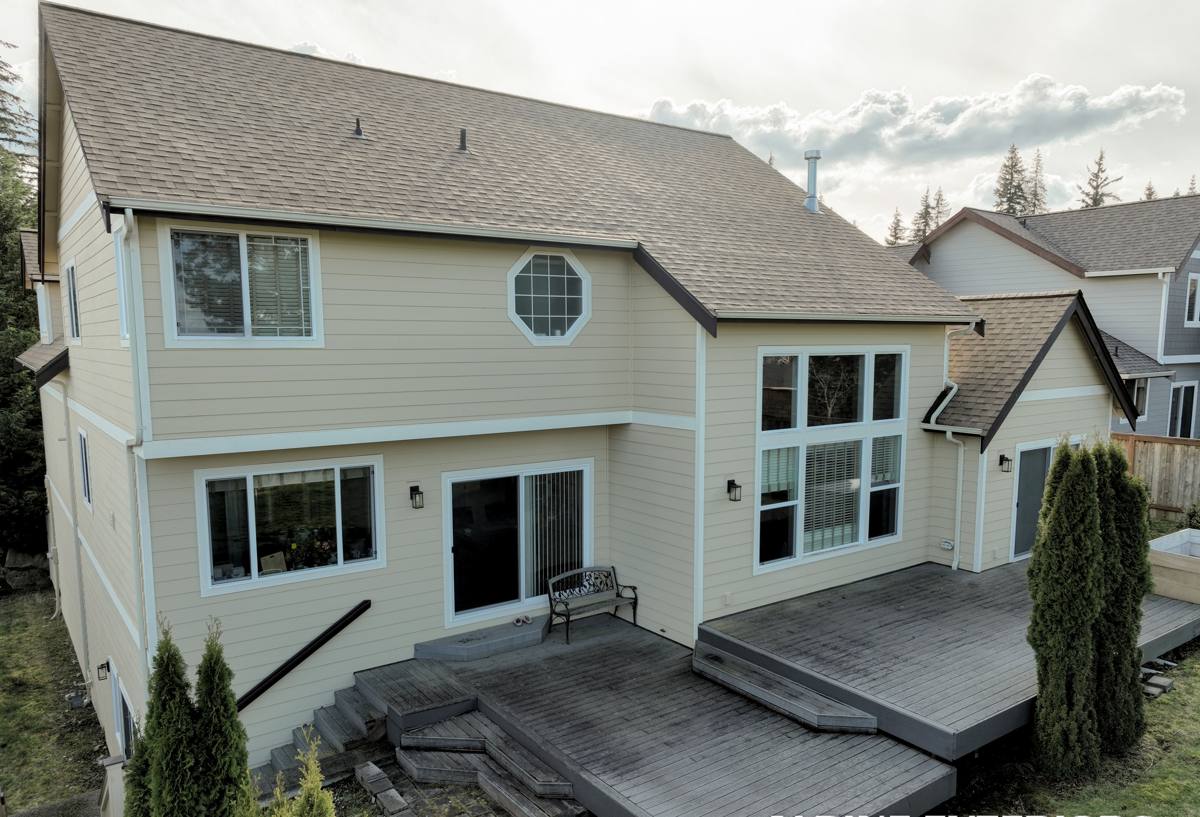
What Snohomish County Weather Does to an Ordinary Deck
Everett's marine climate is mild compared to a lot of the country, and that mildness is deceptive — it's the combination of moisture and mild temperatures that causes the real damage, not extreme cold or heat.
Salt air and corrosion
Homes closer to Puget Sound pick up airborne salt that settles on exposed metal. Standard zinc-coated screws and mending plates start showing surface rust within a season or two once that coating is compromised, and once rust starts, it works its way into the wood fibers around the fastener, weakening the grip long before the board itself fails.
Driving rain and end grain
Rain in this part of Snohomish County often comes in sideways, driven by wind off the water. That matters because wood and composite decking absorb moisture fastest through cut ends and exposed fastener holes, not through the flat face of a board. A deck built without attention to end-grain sealing and proper flashing at the ledger board will trap water exactly where it does the most damage — against the house.
The long moss season
Shaded, north-facing decks and any deck under mature trees stay damp for months at a time here. Moss and algae take hold on boards that don't get direct sun or airflow underneath, and once established, they hold moisture against the decking surface and make it slick and hazardous underfoot. A deck built without gapping and ventilation in mind is fighting moss from day one.
Choosing a Decking Material for This Climate
There's no single "best" decking material — the right choice depends on your budget, how much upkeep you're willing to do, and how much sun or shade the deck actually gets. Here's how the common options hold up specifically against Eastmont's conditions.
| Material | How it handles rain & salt air | Moss/algae resistance | Maintenance |
|---|---|---|---|
| Pressure-treated wood | Good if sealed and re-sealed regularly; end grain needs attention | Low without regular cleaning | Annual cleaning, re-sealing every 1-2 years |
| Cedar | Naturally moisture-resistant, but softer and needs finish upkeep | Moderate; still needs cleaning in shaded areas | Regular sealing/staining to hold its resistance |
| Composite decking | Very good; doesn't absorb water into the board itself | Better than wood, but still needs washing in shaded spots | Periodic washing, no sealing/staining |
| PVC/capped decking | Excellent; fully sealed surface resists moisture intrusion | Best of the group; least likely to hold surface moisture | Occasional washing only |
We'll walk you through the real trade-offs for your specific deck — a small, sunny deck can often get by fine with well-maintained wood, while a larger deck with shaded sections usually earns back the extra cost of composite or capped boards in reduced upkeep over time.
What Correct Framing and Substructure Looks Like Here
The decking surface is what you see, but the framing underneath is what determines whether the deck is still solid in ten years. This is also where a lot of corner-cutting happens because it's hidden once the boards go down.
- Ledger board flashing that actually sheds water away from the house rim joist, not just a bead of caulk
- Footings set to local frost depth requirements, sized to the soil conditions on your lot
- Joist tape or equivalent protection on the tops of joists and beams, so fasteners aren't driving straight into bare, moisture-exposed wood
- Proper board spacing and airflow underneath the deck so water and shaded areas can actually dry out between rain events
- Beam and joist sizing matched to the actual span and load, not just "what's always worked"
None of this is unusual or exotic — it's standard good practice. But it's also exactly what gets skipped when a crew is trying to hit a low bid, and it's the part a homeowner can't easily inspect once the deck is finished.
Fasteners and Hardware That Hold Up Near Salt Air
Given Eastmont's proximity to the Sound, fastener grade is one of the areas we don't cut corners on. Standard electro-galvanized screws are fine for a lot of inland construction, but closer to salt air they corrode faster than the wood around them, which is how you end up with rust-streaked decking and loosening boards years before the lumber itself would have failed. We use stainless steel or hot-dip galvanized fasteners and structural hardware rated for exterior, coastal-adjacent use, and we specify hidden fastener systems where the decking product supports it, both for a cleaner look and one less exposed metal surface for moisture to work on.
Railings, Stairs, and Permit Requirements
Most custom deck projects in Everett and unincorporated Snohomish County trigger a building permit once the deck is elevated above a certain height or attached to the structure of the house — the exact thresholds depend on your specific project and lot, and we handle that determination and the permit application as part of the job rather than leaving it on you. Code also governs guard rail height, baluster spacing (to prevent a small child from passing through), and stair rise-and-run consistency. These aren't optional style choices; they're safety requirements, and an inspector will check them. Building to code from the start avoids the expensive alternative — tearing out and rebuilding a railing or stair run that doesn't pass inspection.
Our Process for a Custom Deck Project in Eastmont
Every property is different, but the sequence we follow stays consistent:
- Site visit — we look at sun exposure, drainage, existing structure condition, and how you actually want to use the space before we talk materials.
- Design and material selection — we walk through the honest trade-offs between wood, composite, and capped decking for your specific spot, including shaded areas that will need more attention.
- Permitting — we prepare and submit what's required for your project so the deck is built and signed off correctly, not something you have to untangle later at resale.
- Construction — proper flashing, footings, framing, and fastener grade as described above, not just what's fastest to close out.
- Final walkthrough — we go over the finished deck with you, including basic care so it holds up through its first moss season and beyond.
Keeping a New Deck Ahead of Moss Season
A well-built deck still needs some seasonal attention in this climate — the difference is that a correctly built one is much easier to keep up. Before the wet months set in, or once a year at minimum:
- Sweep debris and leaves out of gaps between boards so water and moisture-holding organic matter don't sit and collect there
- Rinse shaded and north-facing sections where moss and algae are most likely to establish
- Check fastener heads and hardware for any early rust bleed, especially near the ledger board and stair stringers
- Confirm gutters and downspouts near the deck are directing water away rather than onto the deck surface
- For wood decking, check the sealant/finish annually — once it starts wearing thin, water gets into the grain faster than most people expect
Why Hire a Crew That Already Works in Eastmont
A lot of what separates a deck that lasts from one that doesn't happens below the surface — the flashing detail at the ledger, the fastener grade, the footing depth, the airflow underneath. Those choices matter more here than in a drier inland climate, because Eastmont's combination of salt air, driving rain off Puget Sound, and a long moss season punishes shortcuts faster than most parts of the country. A crew that already builds decks in this neighborhood knows the local drainage patterns, the permit process for Everett and Snohomish County, and which material and hardware choices actually hold up here versus which ones just look fine on the showroom floor.
If you're planning a new deck, a replacement, or aren't sure whether your current deck needs repair or a full rebuild, we're happy to take a look and give you a straightforward, no-pressure estimate — just fill out the form below.