 Everett
 Siding Repair Built for Eastmont's Climate, Not Just Its Symptoms
Eastmont is a well-established residential pocket of Everett, and like the rest of Snohomish County it sits in a climate that is genuinely hard on exterior siding. Homes here deal with salt-laden air moving in off Puget Sound, long stretches of driving rain in fall and winter, and a moss season that can run from early autumn through late spring. None of that is unique to any one street or subdivision, but it does mean that siding repair in this area has to be approached differently than it would be in a drier, inland climate. A patch that would hold up fine in Eastern Washington can fail within a season here if it isn't detailed for moisture.
Most of the siding repair calls we get in Eastmont aren't cosmetic emergencies. They start small — a soft spot near a downspout, a discolored patch on the north wall, a seam that's opened up after a few winters — and they get worse quietly, behind the wall, before they ever show up as an obvious problem on the surface. Repairing siding correctly in this neighborhood means treating every repair as a moisture-management job first and a cosmetic fix second.
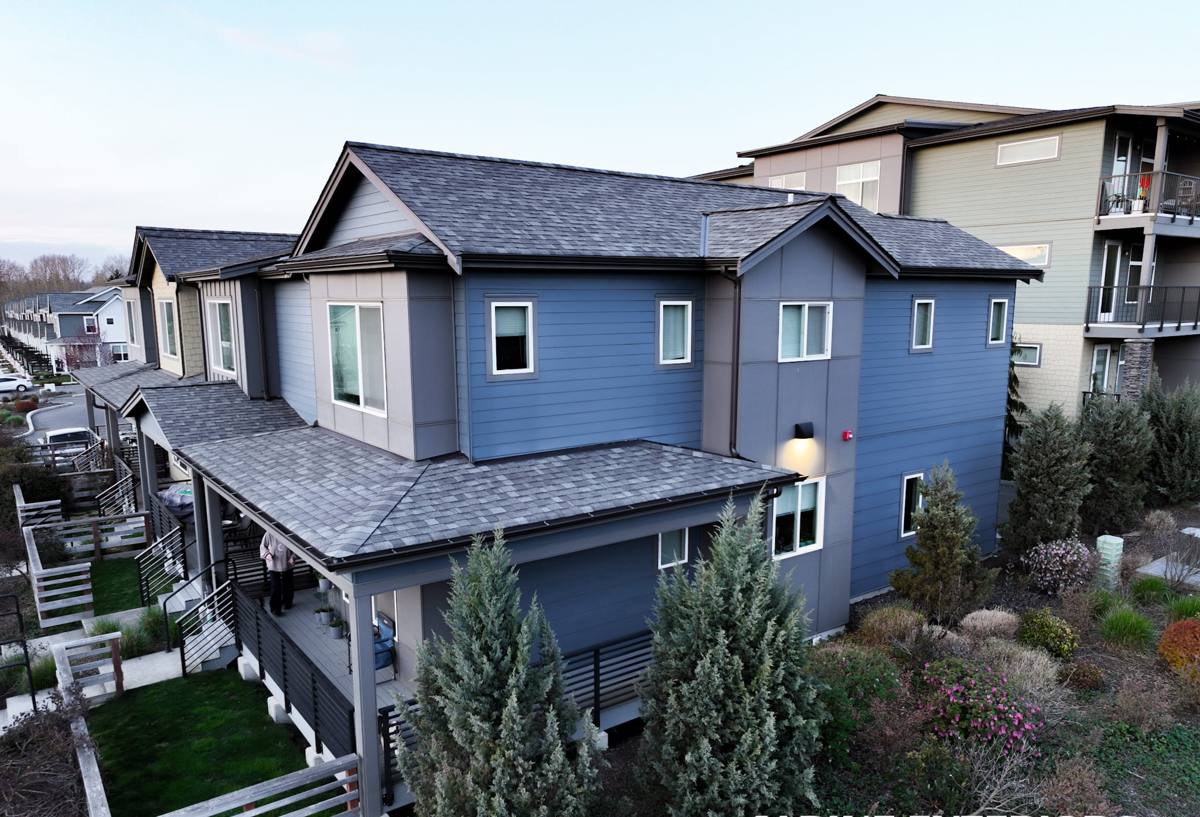
Why Eastmont's Climate Is Tougher on Siding Than It Looks
Salt Air
Everett's proximity to Puget Sound means a steady low-level exposure to salt-carrying air, even well inland from the water. Salt accelerates corrosion on fasteners, trim flashing, and any exposed metal components, and it speeds up the breakdown of lower-grade siding materials and coatings. Repairs that don't account for this — using the wrong fastener type, for example — tend to fail again within a few years.
Driving Rain
Wind-driven rain doesn't just wet the surface of a wall; it pushes moisture sideways and upward, testing every seam, joint, and piece of flashing on a home. A repair that looks tight in dry weather can still let water in during a real Pacific Northwest storm if the underlying water-resistive barrier and flashing details weren't restored properly.
Moss Season
Snohomish County's long, mild, wet stretch from fall through spring is close to ideal moss-growing weather. Moss and algae hold moisture directly against the siding surface for extended periods, which is exactly the condition that rots wood-based products, degrades paint film, and — over time — can compromise even durable materials if trapped moisture isn't given a way to escape.
Signs an Eastmont Home Needs Siding Repair
Because moisture damage in this climate often starts hidden, it's worth checking your home's exterior a couple of times a year rather than waiting for something obvious. Common warning signs include:
- Soft, spongy, or bubbling siding, especially near ground level, under windows, or below downspouts
- Visible cracks, splits, or buckled panels after a windstorm
- Persistent moss, algae, or dark staining that keeps coming back even after cleaning
- Peeling or bubbling paint on wood or composite siding
- Gaps opening up at seams, corners, or where siding meets trim, windows, or doors
- A musty smell or visible staining on interior walls that share an exterior wall with damaged siding
- Fastener heads that have rusted, backed out, or left streaking down the siding face
Any one of these on its own might be minor. Several appearing together, or appearing in the same area repeatedly, usually points to a moisture path that needs to be traced and corrected, not just patched over.
What a Correct Repair Actually Involves
A siding repair that's done right is not just cutting out a damaged section and nailing in a replacement piece. In a climate like Everett's, a repair that skips the underlying details tends to fail again — often in the same spot — within a couple of wet seasons. A correct repair should include:
- Diagnosis before demolition. Finding out why the damage happened — a failed flashing, a clogged gutter, missing kick-out flashing, a caulk joint that was never designed to be a primary water seal — so the same failure doesn't repeat.
- Checking for hidden moisture. Damage visible on the surface is often smaller than the moisture damage behind it. A proper repair opens up enough of the wall to confirm the sheathing and framing underneath are sound before closing it back up.
- Restoring the water-resistive barrier. The house wrap or building paper behind the siding is what actually keeps a home dry; siding is the first line of defense, not the only one. Repairs need to re-integrate new material into the existing barrier with correct lapping, not just staple over a tear.
- Correct flashing details. Window heads, door heads, and any horizontal trim need flashing that sheds water outward, not caulk alone. This is one of the most commonly skipped steps in a rushed repair.
- Matching material and finish. A patch that doesn't match the existing siding's profile, reveal, or finish is a visible flag that corners were cut — and often a sign the water-management details were rushed too.
Repair or Replace? How We Help Eastmont Homeowners Decide
Not every damaged section needs full replacement, and not every home is a candidate for a simple patch. The right call depends on a few factors we walk through on-site.
| Factor | Leans Toward Repair | Leans Toward Replacement |
|---|---|---|
| Extent of damage | Isolated to one or two small areas | Spread across multiple walls or elevations |
| Underlying sheathing | Dry, sound wood behind the damage | Soft, rotted, or delaminated sheathing found |
| Siding age and material | Newer material still in good general condition | Original material near or past its service life |
| Material availability | Matching profile/color still obtainable | Discontinued profile or faded finish that won't blend |
| Root cause | Easily corrected (gutter, flashing, caulk failure) | Systemic issue affecting the whole envelope |
We'll always tell you honestly which side of that table your home falls on. A repair that's likely to fail again within a year or two isn't a favor to anyone.
Why We Repair With — and Recommend — James Hardie Fiber Cement
We install only James Hardie fiber cement siding, and that standard carries into how we handle repairs too. When we're patching or replacing a damaged section, we match into Hardie's engineered lines wherever possible, because fiber cement handles Everett's wet, salt-exposed climate in ways that lower-cost materials struggle to match. It's non-combustible, dimensionally stable in freeze-thaw and wet-dry cycling, and resistant to the kind of moisture-driven rot, warping, and pest damage that shows up in wood-based and some composite sidings after repeated moss seasons.
Hardie's ColorPlus factory finish also matters for repair work specifically: a factory-baked finish gives us a far better chance of matching color and sheen on a patched section than field-applied paint does, and it holds up to UV and salt air without the fading that makes patches stand out a year or two later. If your existing siding is a different material, we'll be straightforward about whether a like-for-like patch is realistic or whether the damaged section is a better candidate for a Hardie-based repair or a broader replacement conversation. We won't push a full replacement on a home that just needs a sound, well-detailed repair.
Why It Matters to Hire a Crew That Already Works in Eastmont
Siding repair is very site-specific work. A crew that regularly works Eastmont and the surrounding Everett neighborhoods has already seen how this area's combination of salt air, wind exposure, and moss growth tends to attack different orientations of a home — which walls fail first, which flashing details get skipped most often in older construction, and which fixes actually last through a full wet season rather than just looking good on installation day. That local pattern recognition is the difference between a repair that solves the problem and one that just delays it.
It also means faster, more accurate estimates. When a crew already understands the typical construction methods and siding ages common to this part of Snohomish County, there's less guesswork and fewer surprises once the wall is opened up.
Caring for Your Siding After a Repair
A well-done repair should hold up for years, but a little routine attention extends that further — especially given how long moss season runs here. After a repair (or as general upkeep), we recommend:
- Rinsing siding gently once or twice a year to keep moss and algae from establishing, especially on shaded, north-facing walls
- Keeping gutters clear so overflow doesn't run down or pool against siding
- Trimming back landscaping that traps moisture against the wall or blocks airflow and drying
- Re-caulking exposed joints around trim, windows, and doors every few years as sealants age
- Doing a quick visual walk-around after major windstorms to catch new damage early
Catching a small issue in year one is far cheaper and simpler than dealing with hidden rot in year five.
Get an Honest Look at Your Eastmont Home's Siding
If you're seeing soft spots, recurring moss stains, or damage after a storm, it's worth getting a straight answer on what's actually going on behind the siding — not just a quote to cover it up. We offer free, no-pressure estimates for Eastmont homeowners, and we'll tell you plainly whether your home needs a repair, a partial replacement, or nothing at all right now. Fill out the form below to get started.