 Everett
 Why Edmonds Siding Takes More Than a Standard Install
Edmonds sits right on the Puget Sound shoreline, which means homes here deal with a combination of weather stresses that inland Snohomish County properties simply don't see as often. Salt-laden air off the water accelerates corrosion on fasteners and trim. Driving rain, pushed sideways by wind off the Sound, gets forced into seams and laps that would stay dry on a calmer site. And the long, damp shoulder seasons that define western Washington create a moss and algae season that can stretch for eight months or more on north- and west-facing walls.
None of that makes siding installation in Edmonds fundamentally different from siding installation anywhere else in Snohomish County — but it does raise the stakes on details that get treated as optional in drier, calmer climates. A wall assembly that's "close enough" in Spokane will show problems in Edmonds years sooner. That's the lens we use on every job here: build for the actual exposure the house gets, not a generic install.
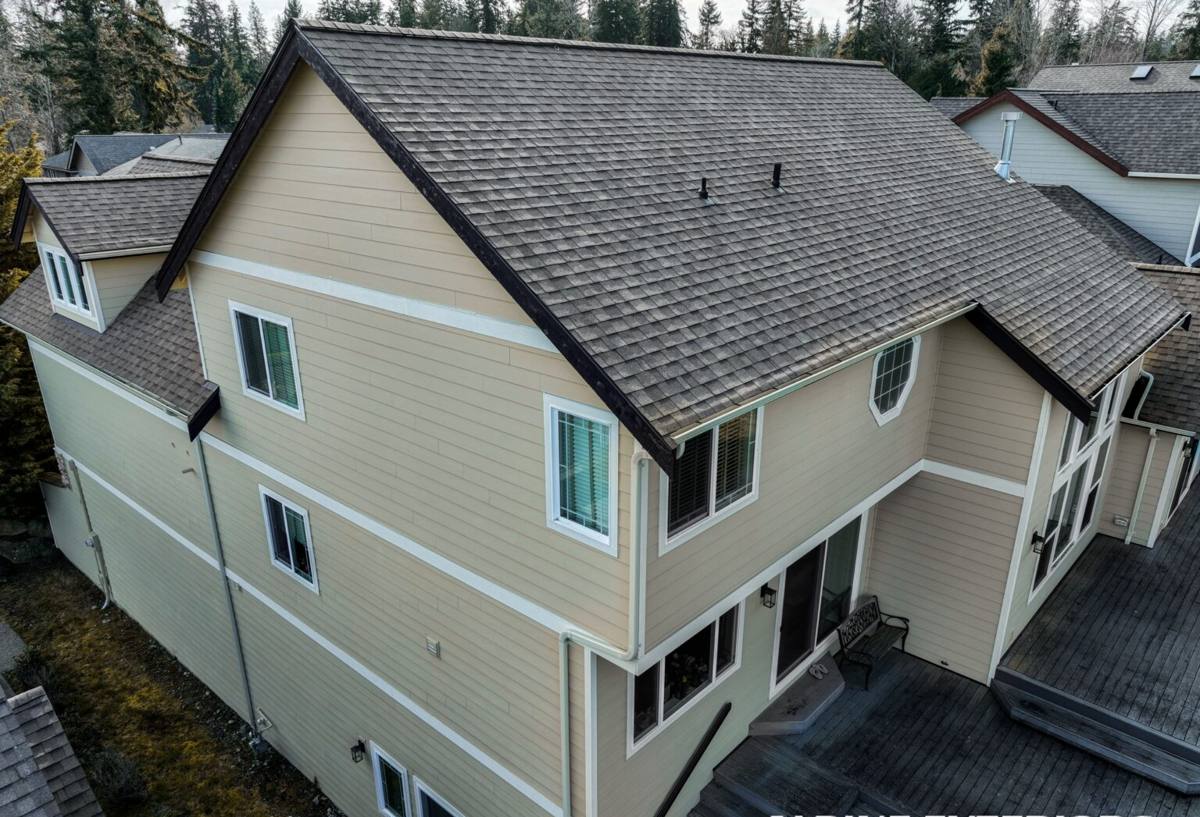
What a Correct Installation Actually Involves
Drainage Behind the Siding, Not Just On Top of It
Water finds its way behind siding eventually — through nail holes, laps, and trim joints, especially in wind-driven rain. The question isn't whether some moisture gets behind the cladding, it's whether the wall assembly is built to let that moisture drain and dry out before it causes damage. That means a proper weather-resistive barrier installed shingle-style (so water sheds down and out, not into seams), and in most cases a drainage gap or rain screen strategy so bulk water has somewhere to go besides the sheathing.
Flashing Every Transition
Windows, doors, deck ledgers, roof-to-wall intersections, and any penetration through the siding are where installations fail first. Each of these needs flashing detailed to shed water down and away, lapped correctly with the weather barrier above and below it. This is slow, unglamorous work, and it's exactly where corners get cut on rushed jobs — and exactly where Edmonds's wind-driven rain finds those shortcuts.
Fastening for Coastal Exposure
Fastener choice matters more near the water. Corrosion-resistant nails and screws, installed at the correct depth and spacing, keep the siding secured without splitting the material or leaving gaps for water intrusion. Over-driven or under-driven fasteners are a common source of premature siding failure, and it's a detail that's easy to get wrong when a crew is moving fast.
Clearance and Grade
Siding that starts too close to grade, a walkway, or a roofline stays wet longer and invites moss and rot at the bottom edge. Correct starter strip height and clearance from hard surfaces is a small detail with an outsized effect on how long the bottom courses last.
Why We Install Only James Hardie Fiber Cement
We standardized on James Hardie fiber cement siding for every job we do, including here in Edmonds, and we don't install vinyl, LP SmartSide, or other fiber cement alternatives. That's a deliberate choice, not a default. Fiber cement is non-combustible, dimensionally stable in the wet-dry cycling that defines Puget Sound weather, and it holds paint and factory finish far better over time than wood-based or vinyl alternatives exposed to the same salt air and moisture.
James Hardie's ColorPlus finish is baked on at the factory under controlled conditions, which gives it better fade and chip resistance than field-applied paint — a real advantage in a climate where repainting siding is disruptive and expensive to schedule around the rain. Hardie also builds specific product lines engineered for different climate zones (HZ5 for areas that see freeze-thaw cycling, for example), which lets us match the product to what a given wall actually faces rather than installing one generic version everywhere. Combined with a strong transferable warranty when installation meets their spec, it's the product we're comfortable standing behind on homes that take the kind of weather Edmonds delivers.
Our Process for Edmonds Siding Projects
- On-site assessment. We look at current siding condition, moisture damage if any, window and door flashing, and wall orientation relative to prevailing wind and rain exposure.
- Wall assembly plan. We identify what needs to be replaced versus what can stay — sheathing, weather barrier, and trim get evaluated, not just the visible siding.
- Tear-off and inspection. Removing the old siding lets us actually see the sheathing and framing underneath, which is often where hidden moisture damage shows up.
- Weather barrier and flashing installation. This is the step that determines how the house performs in wind-driven rain for the next several decades, done before a single piece of siding goes up.
- Hardie installation to manufacturer spec. Correct fastener type, spacing, and clearances, installed to the standard that keeps the warranty valid.
- Trim, caulking, and finish detailing. The places where two materials meet are where failures start, so this step gets the same attention as the field of the siding.
- Final walkthrough. We go over the finished work with the homeowner before calling the job done.
Signs Your Edmonds Home's Siding Needs Attention
Some of these show up gradually enough that homeowners don't notice until the damage is significant. Worth checking for:
- Persistent moss or algae staining that comes back within weeks of cleaning, especially on north-facing walls
- Soft spots, bubbling, or visible warping, particularly near the bottom courses or below windows
- Paint that's peeling or bubbling rather than just fading — often a sign moisture is trapped behind it
- Visible gaps or separation at seams, corners, or trim joints
- Rust streaks below fasteners or trim, a sign the hardware is corroding
- A musty smell or visible staining on interior walls that share an exterior wall with problem siding
- Siding that flexes or feels spongy when pressed near the base
Any one of these on its own might be minor. Several together, or anything near a window or door, is worth having looked at before it becomes a larger repair.
What Drives Cost on an Edmonds Siding Project
| Factor | Why It Matters Here |
|---|---|
| Wall exposure and orientation | West- and south-facing walls that take direct Sound wind and rain often need more attention to flashing and drainage detail than sheltered walls |
| Extent of hidden damage | Long-term moisture intrusion behind old siding can mean sheathing or framing repair, which isn't visible until tear-off |
| Trim and detail complexity | Homes with more windows, dormers, and roof intersections have more transitions that need flashing, which adds labor |
| Siding profile and finish | Lap width, texture, and ColorPlus finish selection affect material cost within the Hardie product line |
| Access and site conditions | Steep lots, limited driveway access, or proximity to neighboring structures affect setup and staging time |
Why a Crew That Already Works Edmonds Matters
Building envelope decisions in this area are made against a specific set of conditions — salt air corrosion, sustained wind-driven rain off the water, and a moss season long enough to matter. A crew that installs siding across a range of Puget Sound conditions learns which details actually earn their keep here versus which ones are just spec-sheet boilerplate. That shows up in small, practical choices: how much drainage gap to build in on a west-facing wall, which fastener finish holds up near the shoreline, how tight to run clearances at grade given how wet the ground stays.
It also matters for scheduling and sequencing. Getting a tear-off wall dried in before the next rain system rolls through isn't optional here — it's the difference between a clean install and a callback. A crew used to working around this weather plans for it instead of getting caught by it.
Living With Fiber Cement Siding in a Salt Air, High-Moss Climate
Correctly installed Hardie siding is low-maintenance, but "low" isn't "none," especially this close to the water. A yearly rinse-down helps keep salt residue and early moss growth from taking hold, particularly on shaded or north-facing walls. Keeping gutters clear prevents overflow from running down the siding face and feeding algae growth. Trimming back vegetation that shades a wall or holds moisture against it goes a long way toward keeping moss from establishing in the first place. Beyond that, an occasional visual check — especially after a hard windstorm off the Sound — is enough to catch a loose piece of trim or a compromised caulk joint before it becomes a moisture problem.
Get a Straightforward Look at Your Siding
If your Edmonds home's siding is showing its age, or you're planning ahead for a replacement, we're happy to come take a look and give you a straight answer about what's going on and what it would take to fix it right. There's no pressure and no obligation — just an honest assessment from a crew that works this exact stretch of Snohomish County. Use the form below to request a free estimate.