 Everett
 Why Eastmont Windows Need to Handle More Than Temperature
Eastmont sits inside Everett, which means every window on your house is dealing with Puget Sound weather year-round — not just cold snaps in January. Salt-laden air off the Sound, long stretches of driving rain, and a moss season that can run from fall through spring all put steady mechanical and chemical stress on window frames, seals, and hardware. A window that's rated efficient in a lab test still has to survive an Everett winter, and that's a different bar than most national energy ratings account for.
When we talk about "energy-efficient windows" for a home in this part of Snohomish County, we're not just talking about keeping heat in. We're talking about a window assembly — frame, glass, flashing, and sealant — that keeps wind-driven moisture out, resists the corrosion that salt air accelerates, and doesn't need babying every year to keep performing. That's the standard we build to on every Eastmont job.
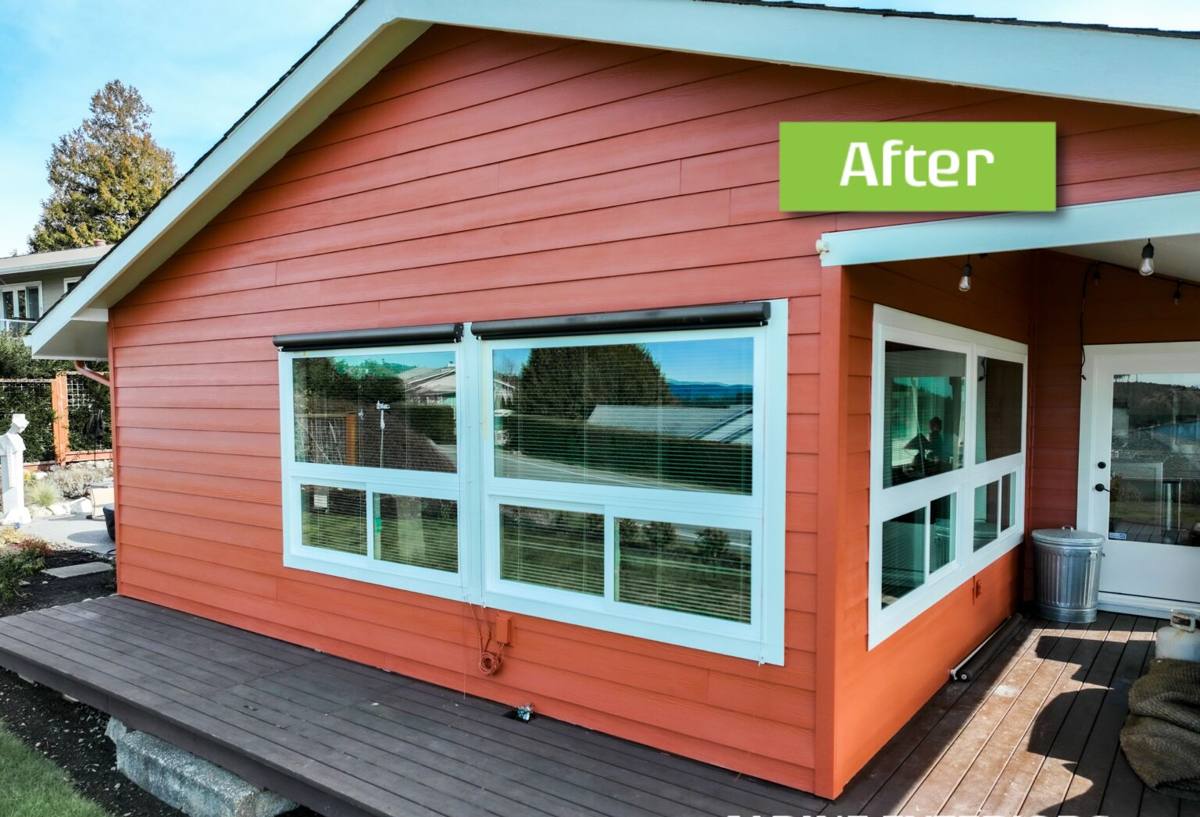
What "Energy-Efficient" Actually Means Here
Efficiency on paper comes from a handful of measurable factors: U-factor (how much heat escapes), Solar Heat Gain Coefficient, air infiltration rate, and condensation resistance. All four matter in Everett, but condensation resistance and air infiltration deserve extra attention because of how often this area cycles between damp and cold.
Glass and Coatings
Low-E (low-emissivity) coatings and argon or krypton gas fills between panes are standard on any window we'd call efficient today. What changes house to house is the specific glass package — how many coatings, what gas fill, and whether the spacer between panes is a warm-edge design. Warm-edge spacers matter more here than in drier climates because they resist condensation forming at the edge of the glass, which is where moisture problems usually start on a marine-climate window.
Frame Material Trade-Offs
Frame material affects both energy performance and how the window holds up to salt air and constant moisture. Vinyl, fiberglass, and aluminum-clad wood all have legitimate use cases, but they age differently under Puget Sound conditions, and we'll walk you through which one fits your specific exposure — a window on the weather side of the house facing prevailing wind and rain has different needs than one on a sheltered elevation.
Frame and Glass Comparison for Marine-Climate Homes
There's no single "best" window material — the right call depends on your home's exposure, your maintenance appetite, and your budget. Here's how the common options stack up specifically for a coastal Snohomish County climate:
| Frame Type | Salt Air / Moisture Resistance | Maintenance | Typical Trade-Off |
|---|---|---|---|
| Vinyl | Good — won't rust or rot | Low | Can flex slightly on very large openings |
| Fiberglass | Very good — dimensionally stable in temperature swings | Low | Higher upfront cost than vinyl |
| Aluminum-clad wood | Moderate — cladding protects wood core if sealed well | Moderate — seams need periodic inspection | Best look for some homes, more upkeep |
| Bare wood | Poor in direct weather exposure without diligent upkeep | High | Traditional appearance, ongoing sealing required |
We don't push one material on every house. On exposed elevations that catch the brunt of driving rain, we lean toward vinyl or fiberglass because they don't give moisture a path into a wood core. On more sheltered walls, clad-wood options are often a fine choice if the homeowner is comfortable with the maintenance.
Signs Your Current Windows Are Working Against You
Most Eastmont homeowners don't call us because a window is dramatically broken — it's usually a slow accumulation of small problems. Before your next heating season, take a walk around the house and check for these:
- Fogging or a permanent haze between the panes (a sign the seal has failed and gas fill has escaped)
- Visible black staining or soft spots on the sill or surrounding trim
- A noticeable draft when you hold your hand near the frame on a windy day
- Windows that are hard to open, close, or lock — often a sign the frame has swollen or shifted
- Moss or algae growth on the sill, frame, or nearby trim that keeps coming back within weeks of cleaning
- Condensation forming on the inside of the glass regularly, not just on the coldest mornings
- Rooms near older windows that feel noticeably colder or draftier than the rest of the house
Any one of these on its own isn't an emergency. Several of them together, especially on the same window, usually means the assembly has reached the point where repair is a short-term patch and replacement is the honest recommendation.
What a Correct Installation Actually Involves
The window itself only accounts for part of how it performs. In a climate with as much wind-driven rain as Everett gets, the installation details around the window are just as important as the product.
Flashing and Water Management
Proper flashing directs any water that gets behind the trim back out and away from the wall assembly, rather than letting it sit against sheathing. This is the step most likely to get rushed on a low-bid job, and it's the one that causes hidden rot years later — long after the crew that installed it is gone.
Sealing and Insulation
The gap between the window frame and the rough opening needs to be insulated and sealed correctly — not overpacked with expanding foam, which can bow a frame out of square, and not left with gaps that let air and moisture through. We use backer rod and sealant rated for exterior exposure, and we check that weep holes (the small drainage channels built into most window frames) are clear and functioning before we call a job finished.
Fit and Level
A window that's shimmed and leveled correctly opens and closes smoothly for its entire service life. One that's slightly out of square will bind, wear its hardware faster, and eventually let air infiltrate even if the product itself was top quality.
How Our Process Works for Eastmont Homeowners
- On-site assessment. We look at each window's exposure, current condition, and the condition of the surrounding trim and sheathing — not just the glass.
- Product recommendation. We walk through frame material and glass package options based on that specific window's exposure, your budget, and your maintenance preferences — no one-size-fits-all package.
- Accurate measurement and ordering. Precise measurements avoid the on-site surprises that cause delays.
- Install day. Old windows come out, the opening is inspected for hidden moisture damage before the new unit goes in, flashing and sealing are done to spec, and the new window is set, shimmed, and tested.
- Cleanup and walkthrough. We clear debris, test every window for smooth operation, and walk you through anything you should know about care going forward.
If we find hidden rot or moisture damage behind an old window during removal — which does happen on older homes in this area — we'll stop, show you what we found, and talk through the fix before moving forward. We don't install a new window over a compromised opening and hope it holds.
Keeping Windows Performing Through Moss Season
New windows still need a little seasonal attention in a climate like this one. A few habits go a long way toward protecting the investment:
- Clear debris and moss growth from sills and tracks a couple of times a year, especially after fall leaf drop
- Rinse salt residue off frames periodically if your home is on an elevation with direct exposure to marine air
- Check that weep holes stay clear so water can drain instead of pooling
- Look at exterior sealant lines once a year and flag any cracking or separation early, before water gets behind it
None of this is heavy maintenance — it's the kind of thing that takes twenty minutes twice a year and prevents the slow moisture damage that shortens a window's life in this climate.
Why a Crew That Already Works in Eastmont Matters
Window performance in a marine climate comes down to details — flashing choices, sealant selection, frame material for a given exposure — that a crew learns by working this specific area repeatedly, not by reading a spec sheet. A crew that regularly works in Eastmont and elsewhere in Everett has already seen how homes in this part of Snohomish County age under salt air and driving rain, and that shapes every recommendation we make, from material choice to how we schedule install day around the weather.
Local familiarity also means straightforward, responsive service if a question comes up after the job — no long wait for someone unfamiliar with the area or the home to get back to you.
Cost Factors to Expect
Window replacement pricing varies by opening size, frame material, glass package, and how much work the surrounding trim or flashing needs. As a general guide:
| Factor | Impact on Cost |
|---|---|
| Frame material (vinyl vs. fiberglass vs. clad-wood) | Moderate to significant |
| Glass package (standard low-E vs. upgraded coatings/gas fill) | Moderate |
| Number of windows replaced at once | Per-unit cost typically drops with larger projects |
| Hidden trim, flashing, or sheathing repair discovered during removal | Variable — addressed only if found and always discussed first |
We'd rather give you a real number for your specific home than a broad estimate that doesn't hold up once we see the actual openings. If you're weighing energy-efficient windows for a home in Eastmont, we're glad to come take a look, walk the exterior with you, and put together a straightforward, no-pressure estimate using the form below.