 Everett
 Bayside Sits Right in the Path of Everett's Toughest Weather
Homes near the water on Everett's Bayside side of town take on a different kind of weather load than houses further inland in Snohomish County. Proximity to Port Gardner Bay means more salt-laden air moving across exterior walls, more wind-driven rain hitting siding at an angle instead of falling straight down, and a moss and algae season that, in this climate, is less a season than most of the year. None of that is unusual for anyone who's lived here a while, but it's worth spelling out because it directly changes what "good siding" needs to be able to do on a Bayside house compared to a similar home twenty miles inland.
Salt air accelerates the breakdown of a lot of common siding materials and finishes faster than plain rain does on its own. Driving rain finds its way into laps, seams, and fastener holes that would stay dry in a gentler climate. And a long moss season means anything organic, or anything that traps moisture against its surface, is going to host growth if it isn't detailed and maintained correctly. Fiber cement siding, installed the way it's engineered to be installed, is built to stand up to exactly this combination. This page is about what that looks like specifically for a Bayside home — not siding in general, but siding for this stretch of Everett.
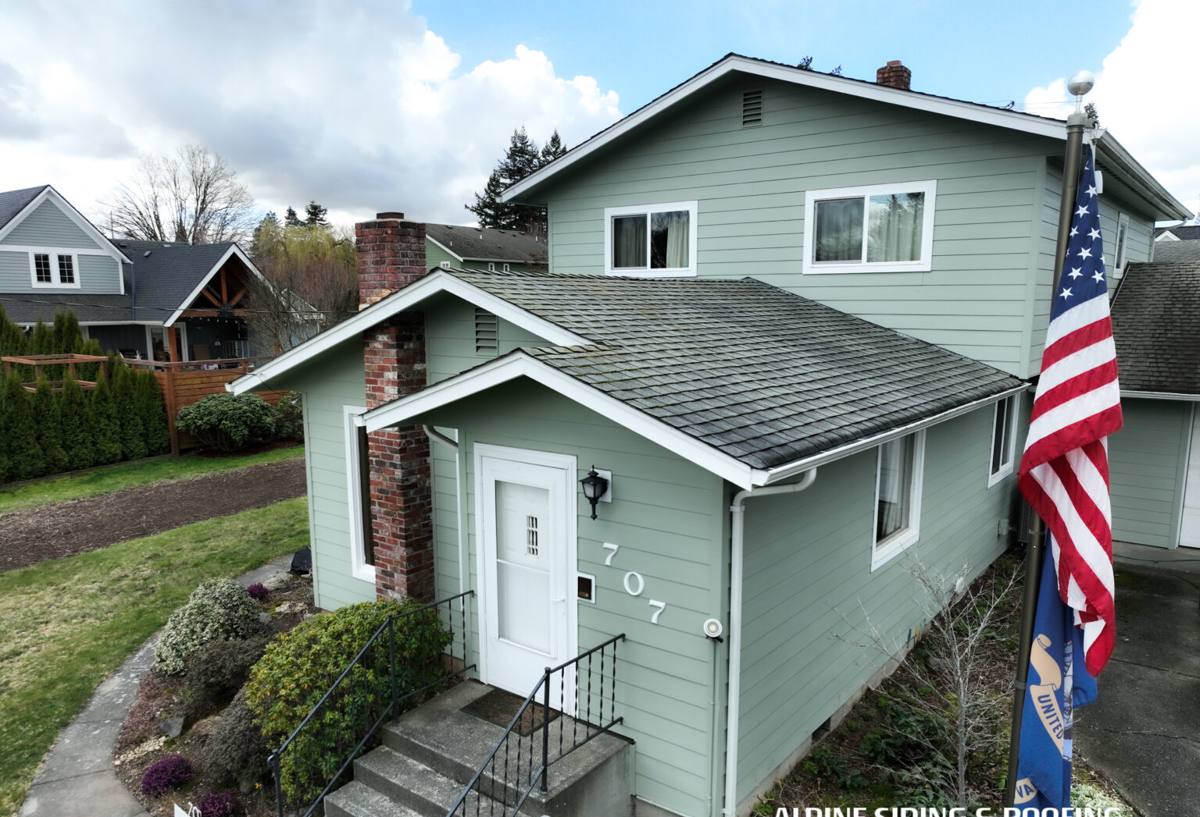
Why We Install James Hardie and Nothing Else
We install James Hardie fiber cement exclusively. That's not a marketing line — it's a standard we set after years of seeing how different siding products actually perform once they're a few years into a Puget Sound climate, especially on waterfront-adjacent lots like Bayside. Vinyl siding can warp and fade under sustained UV and temperature swings, and its seams give wind-driven rain more opportunities to get behind the panel over time. Cedar and primed spruce are natural materials that need active, ongoing maintenance to resist moisture and rot in a climate that rarely gives wood a long dry stretch to fully cure between rain events. Engineered wood products like LP SmartSide use a wood-strand substrate that, while treated, is still more sensitive to sustained moisture exposure than a cement-based board.
James Hardie fiber cement is a different category of material altogether — a blend of cement, sand, and cellulose fiber that doesn't rot, doesn't attract wood-boring insects, and is non-combustible. It doesn't expand and contract with moisture the way wood does, which matters enormously on a home that's rarely fully dry. That's the whole reason we standardized on it rather than offering several product lines and letting climate performance be an afterthought.
The HZ5 Climate Engineering Behind the Board
James Hardie doesn't make one generic fiber cement board for the whole country — the company engineers its products by climate zone, and the Pacific Northwest falls under the HZ5 designation, built specifically for regions with sustained damp conditions and moderate freeze-thaw exposure. That matters on a Bayside project because the board's moisture resistance and durability were engineered around a climate that looks a lot like this one, not adapted after the fact from a product designed for the Southwest or the Southeast.
On top of the substrate, most Hardie siding installed today carries a ColorPlus factory-applied finish rather than field paint. That finish is baked on under controlled factory conditions, which produces a more consistent, longer-lasting color than paint rolled on outdoors at the mercy of weather. In a salt-air environment, where field-applied paint tends to break down faster, that factory finish is one of the bigger practical advantages of going with an engineered product over a field-painted one.
What Correct Installation Actually Involves
Fiber cement siding is only as good as the water management system behind it. The board itself resists moisture well, but a house doesn't fail at the face of the siding — it fails at the seams, laps, penetrations, and transitions where water finds a path inward. This is where a huge share of the difference between a correct Hardie install and a rushed one shows up, and it's especially important on a home exposed to the kind of driving rain that comes off the bay.
Water Management Behind the Boards
Correct installation starts with a weather-resistant barrier and properly integrated flashing at every window, door, and penetration — vents, hose bibs, light fixtures, anywhere something interrupts the plane of the wall. Flashing has to be lapped correctly, top over bottom, so water sheds outward instead of being funneled behind the siding. On a Bayside home taking wind-driven rain at an angle, sloppy flashing work is often the single biggest cause of hidden moisture damage, and it's invisible from the outside until the damage has already spread.
Fastening and Clearances
James Hardie specifies exact fastener types, spacing, and placement for each product line, and those specs aren't arbitrary — they're what keeps the board performing as engineered and what keeps the manufacturer's warranty valid. Boards also need proper clearance from grade, roof lines, decks, and other siding to avoid trapping moisture against the material. We hold ground clearance and butt-joint gaps to spec on every project, which is a detail that's easy to shortcut and hard to notice until years later.
Joints, Caulking, and Painted Cut Edges
Every cut edge on a Hardie board needs to be sealed, and every joint needs the correct combination of flashing, caulk, or trim detail depending on its location. Left exposed, cut edges are a weak point where moisture can wick into the substrate over time. This is meticulous, unglamorous work, and it's exactly the kind of step that separates a siding job that looks fine on install day from one that's still performing well a decade later.
How Bayside's Conditions Compare to Everett's Inland Neighborhoods
| Factor | Bayside / Waterfront-Adjacent | Inland Snohomish County |
|---|---|---|
| Salt air exposure | Higher — direct proximity to Port Gardner Bay | Lower, but still present regionally |
| Wind-driven rain | More frequent, more angled impact on walls | Present but generally less severe |
| Moss and algae pressure | High, especially on shaded and north-facing walls | High but somewhat more manageable with sun exposure |
| Flashing and sealant priority | Critical — driving rain finds any weak point quickly | Important, but the margin for minor error is slightly larger |
| Recommended finish | Factory ColorPlus finish strongly preferred over field paint | Factory finish still preferred, field paint more viable |
None of this means an inland Everett home can get away with a careless install — it can't. But it does mean that on a Bayside property, the margin for error in water management and product selection is smaller, and the consequences of cutting corners show up faster.
Our Process on a Bayside Project
We start with an on-site assessment of the existing siding and wall assembly, looking specifically for signs of past moisture intrusion around windows, at the foundation line, and at any roof-to-wall transitions — issues that are more common on homes that have taken years of bay-side weather. From there we scope the tear-off, confirm the weather-resistant barrier and flashing plan for every penetration, and select the Hardie product line and ColorPlus color that fits the home and its exposure.
Installation follows manufacturer fastening and clearance specs throughout, with flashing integrated as we go rather than added after the fact. We seal and finish every cut edge, and we walk the completed exterior before we consider the job done, checking every joint, corner, and penetration against spec. Cleanup includes site debris removal, and we're available afterward if anything needs a look.
Estimate and Planning Checklist
- Confirm which sides of your home face prevailing wind and rain, since exposure varies wall by wall
- Ask what weather-resistant barrier and flashing details are included, not just the visible board
- Confirm the Hardie product line and whether it's factory ColorPlus finish or field-painted primed board
- Get clarity on tear-off scope — full removal versus siding over existing material
- Ask how the crew handles wall penetrations like vents, hose bibs, and light fixtures
- Confirm permit responsibility with the city of Everett or Snohomish County, depending on your location
- Ask about the manufacturer warranty and what installation practices are required to keep it valid
Living With Fiber Cement Siding Near the Water
Even correctly installed, fiber cement siding benefits from basic upkeep in a climate like this one. Periodic gentle washing — a garden hose and soft brush, not a pressure washer aimed directly at seams — keeps salt residue and organic buildup from accumulating, especially on shaded or north-facing walls where moss gets the most encouragement. Caulked joints should be checked every so often for cracking or separation, since caulk is one of the few components on a Hardie exterior that does eventually need attention over a long ownership period. None of this is heavy maintenance compared to wood siding, but it's not zero-maintenance either, and it's worth knowing what to look for.
Trimming back vegetation that shades or brushes against exterior walls also helps, since dense landscaping close to the house holds moisture against siding longer after rain and gives moss more of a foothold. On a lot with mature trees or dense shrubs near the walls, that's often as important to long-term siding performance as the installation itself.
Why the Crew Matters as Much as the Product
James Hardie makes a strong, climate-engineered product, but the product's real-world performance depends heavily on installation quality — the flashing, the fastening, the sealed edges, all the details that aren't visible once the job is finished. A crew that regularly works Bayside and similar Everett waterfront-adjacent neighborhoods has already seen how salt air, driving rain, and moss pressure show up on real houses in this specific setting, not just in a training manual. That familiarity shows up in where they pay extra attention — south- and west-facing walls that take the brunt of weather off the water, shaded sides prone to moss, transitions where past installs in this area have historically failed.
We're a Snohomish County crew that installs James Hardie fiber cement siding and nothing else, and we'd rather walk your Bayside property, look at your specific exposure, and give you a straight assessment than talk in generalities. If you're weighing a re-side or dealing with siding that's showing its age, we're happy to put together a free, no-pressure estimate based on what your home actually needs.