 Everett
 West Everett's Weather Is Harder on Siding Than People Think
West Everett sits close enough to Puget Sound that homes here deal with a mix of weather most siding products were never designed to handle for the long haul. It's not one big storm that causes the damage — it's the steady grind of salt-tinged air, sideways rain off the water, and long stretches of shade and dampness that keep exterior walls wet longer than homes further inland. A siding job that looks fine on install day can start failing within a few years if it wasn't matched to this climate and put on correctly.
We work on homes throughout West Everett regularly, which means we're not guessing at how this neighborhood's weather behaves — we see the same failure patterns on the same types of homes, year after year. This page walks through what that climate actually does to a wall, what a correct fiber cement installation looks like in response, and how our process is built around getting it right the first time.
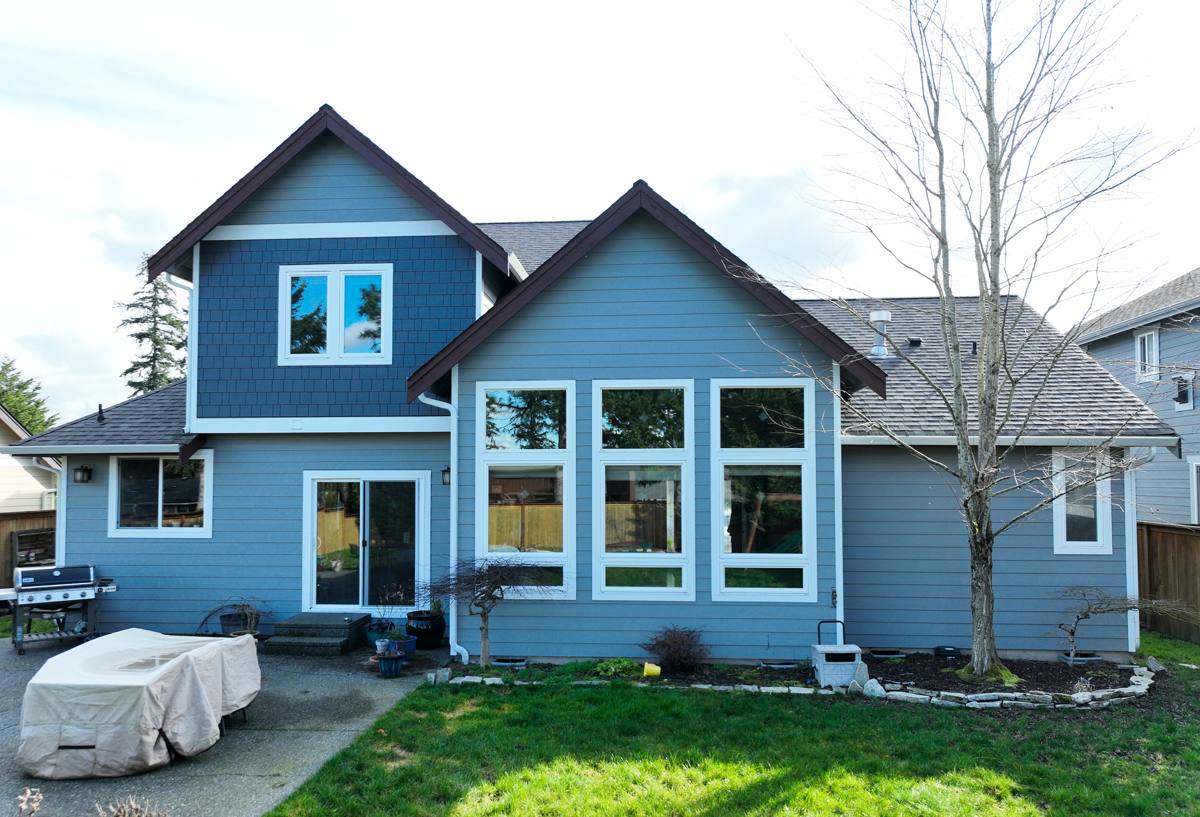
What Salt Air, Driving Rain, and Moss Actually Do to a Wall
Salt-laden air and marine exposure
Proximity to Puget Sound means the air carries a fine mist of salt and moisture, especially on windier days. Over time, that salt exposure accelerates corrosion on fasteners, trim flashing, and any metal components on the exterior. It also speeds up the breakdown of paint films that aren't formulated to resist it. Siding and finishes that hold up fine in a dry inland climate can chalk, fade, or fail years ahead of schedule closer to the water.
Wind-driven rain and the building envelope
Snohomish County doesn't just get rain — it gets rain pushed sideways by wind off the Sound, which forces water into places a vertical rain never would: lap joints, butt seams, window and door trim, and any gap where the siding meets a penetration. If the water-resistive barrier, flashing, and siding gaps underneath aren't detailed correctly, that wind-driven moisture finds its way behind the cladding and into the sheathing, where it does damage you can't see until it's expensive.
Shade, moisture, and moss season
Mature trees and long overcast stretches keep a lot of West Everett homes shaded through much of the year, which means siding surfaces stay damp longer between rain events. That's exactly the environment moss and algae need. On untreated wood, engineered wood, or poorly finished siding, you'll see green and black staining creep in within a few seasons — and once moss gets a foothold in a seam or lap joint, it holds moisture against the material and accelerates rot from the inside out.
Why We Install Only James Hardie Fiber Cement
We standardized on James Hardie fiber cement siding — and we don't install LP SmartSide, vinyl, or other fiber cement brands — because of how this specific climate treats exterior materials over 20-plus years, not just how a product looks on day one.
- Non-combustible material — fiber cement doesn't feed a fire the way wood-based or vinyl products can, which matters for insurance and long-term risk, not just wildfire-prone areas.
- Climate-engineered product lines — Hardie's HZ5 formulation is built specifically for wetter, colder Pacific Northwest conditions, with moisture and freeze-thaw performance in mind.
- Factory-applied ColorPlus finish — the color and protective coating are baked on in a controlled factory environment, which holds up far better against salt air and UV than field-applied paint.
- Proven long-term track record — fiber cement has decades of real-world performance data in coastal and marine climates, not just lab testing.
- Strong transferable warranty — when the product is installed to spec, the warranty coverage is meaningful, and it transfers if the home sells.
We're honest that other products have their own selling points — lower upfront cost, lighter weight, faster install. But for a home that has to stand up to salt air, driving rain, and a long moss season year after year, we've made the call that fiber cement installed correctly is what belongs on the wall, and James Hardie is the manufacturer whose product and warranty structure back that up.
What a Correct Fiber Cement Installation Involves
Fiber cement siding is only as good as the installation underneath it. Most of the failures we get called out to fix in this climate aren't a problem with the siding material itself — they're a problem with how it was hung. A correct install in a wet, salt-air environment has to get every one of these right:
- A continuous, properly lapped water-resistive barrier behind the siding, with no gaps or reverse laps that let water travel inward
- Correct flashing at every window, door, and roof-to-wall intersection, directing water back out rather than trapping it
- Proper fastener placement and type — corrosion-resistant fasteners driven at the manufacturer's specified location, not just "close enough"
- Correct gapping and clearance at butt joints, corners, and where siding meets trim, so the material can move without binding or wicking water
- Adequate clearance between the bottom of the siding and grade, decks, or roof lines to avoid constant wicking
- Caulking only where the manufacturer specifies it — over-caulking traps moisture just as often as it keeps it out
- Field-cut edges properly sealed, since raw cut edges are the most common entry point for moisture over time
Skip any one of these steps and you can end up with a beautiful-looking wall that's quietly failing behind the surface within a few years — which defeats the entire point of paying for a premium siding material.
Fiber Cement vs. Other Siding Options for This Climate
Homeowners comparing siding often start with sticker price, but the more useful comparison is how each material actually performs against West Everett's specific conditions over time.
| Factor | James Hardie Fiber Cement | Vinyl | Engineered Wood (e.g., LP SmartSide) |
|---|---|---|---|
| Moisture tolerance | Strong when installed to spec; not wood-based, so it won't swell or rot from moisture intrusion | Doesn't absorb water, but seams and panels can warp or buckle | Wood-based core is more vulnerable to swelling and edge rot if moisture gets in |
| Salt air / coastal exposure | Factory finish holds color and integrity well near water | Can chalk and become brittle faster in coastal exposure | Factory finish helps, but wood-based substrate is more exposure-sensitive over time |
| Moss / algae resistance | Dense, non-organic material resists moss growth better than wood-based products | Resists moss on the surface, but seams can trap grime | Wood fiber content can be more hospitable to moss and fungal growth if finish is compromised |
| Fire resistance | Non-combustible | Combustible, can melt or deform under heat | Wood-based, combustible |
| Typical lifespan when correctly installed | Multiple decades | Multiple decades, but seams and fasteners are common failure points | Shorter than fiber cement in consistently wet climates if maintenance lapses |
| Upfront cost | Higher | Lowest | Mid-range |
None of these products are inherently "bad" — they're built for different priorities. Our position is simply that for a Pacific Northwest home dealing with sustained moisture, salt air, and moss pressure, fiber cement installed correctly gives you the best odds of the siding still looking and performing well in 20 years.
Our Process for West Everett Homes
- On-site assessment — we look at your home's exposure: how much direct weather it takes, how shaded it is, what condition the current siding and trim are in, and whether there's any existing moisture damage to address before new siding goes on.
- Honest scope and estimate — you get a clear breakdown of what's being replaced, what product line and profile makes sense for your home, and what the job will actually cost, with no pressure to decide on the spot.
- Prep and moisture check — before any new siding goes up, we address whatever's underneath: damaged sheathing, compromised barrier, old flashing that needs replacing.
- Installation to manufacturer spec — flashing, gapping, fastening, and sealing done the way Hardie's installation guidelines require, not shortcuts that only hold up until the first hard winter.
- Final walkthrough — we go over the finished work with you directly so you know what was done and what to expect going forward.
Because we already work in this neighborhood, we're familiar with the kind of exposure and existing conditions common to West Everett homes — which means fewer surprises once a job is underway.
Signs Your Current Siding Is Losing the Fight
If you're not sure whether your current siding still has years left in it, these are the signs we look for first on a West Everett home:
- Persistent green or black staining that comes back shortly after cleaning
- Soft or spongy spots when you press on the siding, especially near the bottom edge or below windows
- Visible warping, buckling, or panels that no longer sit flat
- Paint that's peeling, chalking heavily, or bubbling rather than just fading
- Gaps opening up at seams, corners, or trim joints
- A musty smell or visible staining on interior walls that share an exterior wall with problem siding
Any one of these on its own isn't necessarily an emergency, but they're worth having a professional look at before the next wet season adds to the damage.
Caring for Fiber Cement Siding After Installation
Fiber cement is low-maintenance compared to wood, but "low-maintenance" doesn't mean "no maintenance" — especially in a climate that pushes moss and algae growth. A rinse with a garden hose once or twice a year, keeping gutters clear so water isn't running down the wall, and trimming back vegetation that keeps siding shaded and damp will go a long way toward protecting your investment. Avoid pressure washing directly at seams and joints, since that can force water in rather than clean it off. If you ever notice caulking pulling away from trim or fasteners backing out, those are small fixes that are worth handling before they become bigger ones.
If you're weighing your options for your West Everett home, we're happy to walk the property with you and give you a straight answer on what your siding actually needs — no pressure, no sales script. Reach out for a free estimate using the form below.